CAPB stands for Cocamidopropyl Betaine — a mild, amphoteric surfactant derived from coconut oil.
✅ Full Name:
Cocamidopropyl Betaine
What It Is:
A gentle cleansing agent made by reacting coconut fatty acids with dimethylaminopropylamine
Commonly used in mild shampoos, body washes, face cleansers, and even baby products
Uses in Cosmetics & Personal Care:
Cleansing:
Helps remove oil, dirt, and impurities
Often combined with harsher surfactants (like SLS) to reduce irritation
Foaming Agent:
Boosts foam quality and stability in shampoos and body washes
Thickening Agent:
Helps improve the texture and viscosity of formulas
Conditioning Effect:
Leaves a soft, non-stripping feel on hair and skin
Benefits:
✅ Conclusion:
CAPB is a versatile, mild surfactant widely used to enhance mildness, foam, and conditioning in cosmetic products. It’s especially useful in formulations where reduced irritation is important.
✅ Benefits:
Mild and less irritating than SLS or other harsh surfactants
Biodegradable and generally considered environmentally safer
Often used in “sulfate-free” or “sensitive skin” products
Suitable for baby care and gentle facial cleansers
Sodium Lauryl Sulfate is a surfactant — a substance that helps products like shampoos, body washes, and facial cleansers to foam, lather, and remove oils and dirt from the skin and hair.
.
Common Uses:
Shampoos
Toothpastes
Body washes
Facial cleansers
Bubble baths
✅ Safety Overview:
Approved by:
U.S. FDA (Food and Drug Administration)
EU Cosmetics Regulation
Cosmetic Ingredient Review (CIR) Expert Panel
Common Concentration:
Typically used at <2% in rinse-off products (like shampoo or face wash)
Up to 10–30% in industrial or specialty use, which can cause irritation
⚠️ Potential Issues:
Skin & Eye Irritation:
SLS can irritate skin, especially at high concentrations or with prolonged contact.
More likely to cause dryness or itching in people with sensitive skin, eczema, or rosacea.
Misconceptions:
SLS is not proven to be carcinogenic (i.e., it doesn’t cause cancer).
Many online claims are misleading or based on confusion with industrial-grade SLS.
✅ When Is It Safe?
In shampoos, soaps, and cleansers that are rinsed off within minutes
MSDS data sheet? MSDS in Cosmetics: Meaning and Importance
MSDS stands for Material Safety Data Sheet. In the cosmetics industry, it is a critical document that provides detailed information about the chemical ingredients used in cosmetic products. It helps ensure the safe handling, storage, transport, and disposal of cosmetic raw materials and finished goods.
Key Contents of an MSDS:
1. Product Identification:
Name of the substance or mixture
Manufacturer details
Recommended uses
2. Hazard Identification:
Potential health hazards (e.g., skin irritation, allergic reactions)
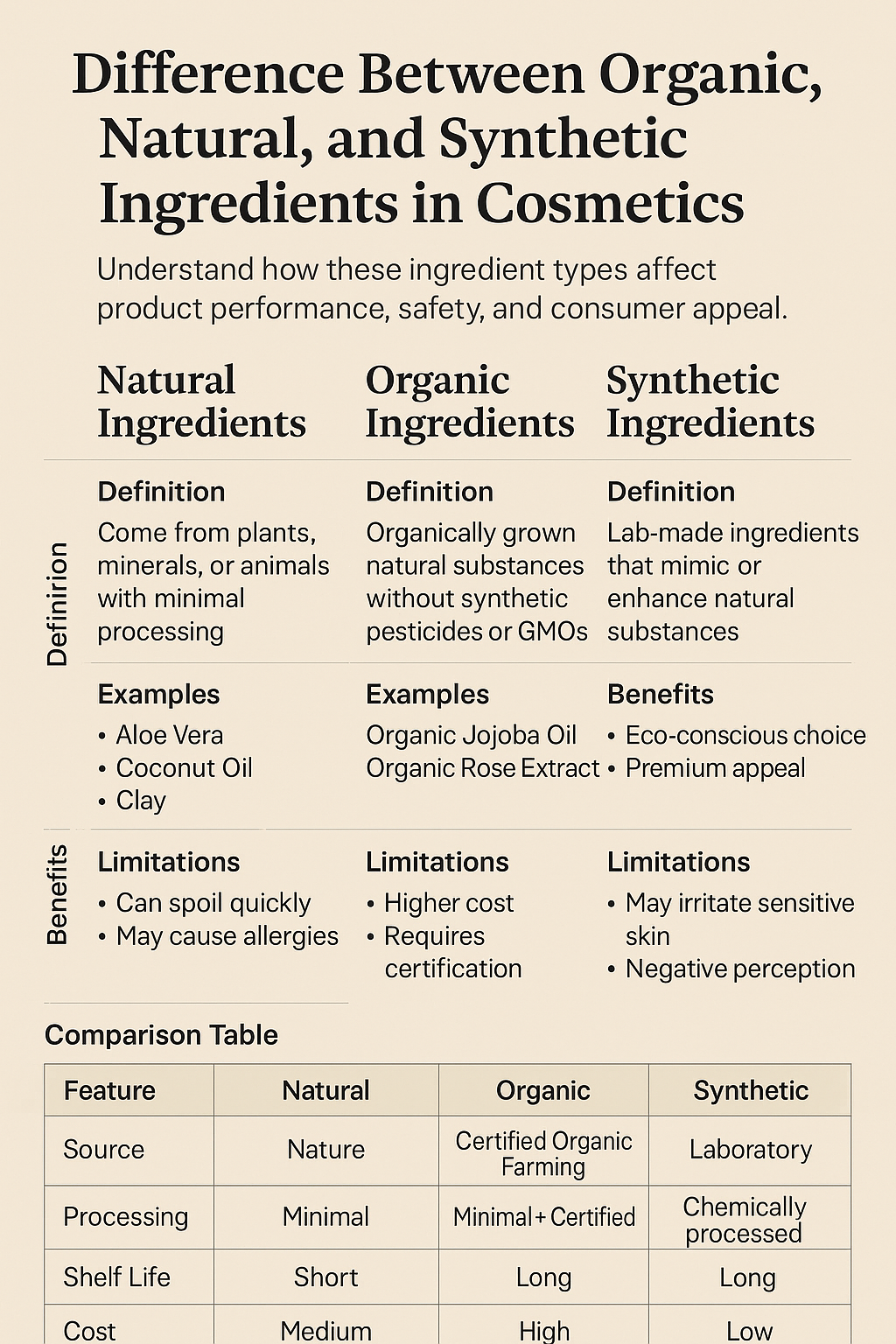
Understand how these ingredient types affect product performance, safety, and consumer appeal.*
Introduction
Cosmetic products are often labeled as organic, natural, or synthetic, but many consumers—and even professionals—are confused about what these terms truly mean. Understanding the difference between them is essential not just for compliance and marketing, but also for product development and consumer education. In this blog, we will explore the definitions, benefits, and concerns associated with each category of cosmetic ingredients.
Best three products information
1. Natural Ingredients
Definition: Natural ingredients are derived directly from plants, minerals, or animals and are minimally processed. They are typically found in nature and used in cosmetics without synthetic modification.
Examples:
Aloe Vera
Coconut Oil
Honey
Clay
Shea Butter
Benefits:
Biodegradable and eco-friendly
Often gentle on the skin
Perceived as safer and healthier by consumers
Limitations:
May cause allergies
Shorter shelf life
Prone to contamination if not preserved properly
2. Organic Ingredients
Definition: Organic ingredients are natural substances that are grown without the use of synthetic pesticides, fertilizers, or genetically modified organisms (GMOs). They must be certified by recognized bodies (like USDA, COSMOS, or ECOCERT).
Examples:
Certified Organic Jojoba Oil
Organic Rose Water
Organic Green Tea Extract
Benefits:
Safer for the environment and farm workers
May contain higher nutrient content
Marketed as premium and pure
Limitations:
More expensive to source
May still require preservatives
Limited availability in large-scale production
3. Synthetic Ingredients
Definition: Synthetic ingredients are man-made compounds, often created in laboratories to mimic or improve upon natural substances.
Examples:
Parabens (Preservatives)
Silicones (e.g., Dimethicone)
Synthetic Fragrances
PEGs (Polyethylene Glycols)
Benefits:
More consistent quality
Longer shelf life
Cost-effective and scalable
Can be tailored for specific functions (e.g., anti-aging, UV protection)
Source Nature Certified Organic Farming Laboratory Processing Minimal Minimal + Certified Chemically processed Shelf Life Short Short Long Cost Medium High Low Consumer Appeal High Very High Low to Moderate
Conclusion
Choosing between organic, natural, and synthetic ingredients depends on your brand’s goals, target audience, and formulation needs. While organic and natural products appeal to eco-conscious and health-aware consumers, synthetic ingredients offer stability and innovation. A balanced approach often works best—combining safe synthetics with high-quality natural extracts.
LED (Light Emitting Diode) therapy ek non-invasive skincare treatment hai jisme specific light wavelengths ka use karke skin concerns jaise acne, pigmentation, aging aur inflammation ko target kiya jata hai. Ye technology pehle sirf dermatologists ke clinic mein milti thi, lekin ab at-home LED face masks ke zariye ye har kisi ke liye accessible ho gayi hai.
Har Light Color Ka Apna Role Hota Hai
LED masks alag-alag color ki lights use karte hain, jinka specific skincare function hota hai:
Ghar Baithe LED Therapy Mask Kaise Kaam Karta Hai?
1. Cleanse: Skin ko ache se clean karo
2. Apply: Mask ko face par set karo (5–20 mins)
3. Mode Choose Karo: Skin concern ke hisaab se light color choose karo
4. Relax: Treatment ke baad regular skincare apply karo
✅ Yeh poora process pain-free aur time-saving hota hai — perfect for busy logon ke liye.
Top Trending LED Masks (2025 ke Favorite Brands)
Brand Features Price Range
Dr. Dennis Gross Medical-grade, FDA-cleared ₹30,000+ Foreo UFO 2 LED + facial massage ₹25,000+ CurrentBody Skin Used by celebrities ₹30,000–₹40,000 Masktini India Budget-friendly ₹8,000–₹12,000
💡 Pro Tip: Always buy FDA-approved masks for safety and effectiveness.
LED Therapy Mask Ke Fayde (Benefits)
✅ Acne aur pimples ka effective solution
✅ Wrinkles aur fine lines me improvement
✅ Collagen boost karta hai (skin tightening)
✅ Safe for daily or alternate day use
✅ Ghar baithe salon jaisa glow
LED Mask Use Karne Se Pehle Ye Dhyan Dein
👁️ Eyes pe direct light na padne dein — protect with goggles
⏱️ Usage time limit: 10–20 mins (zyada na karein)
🚫 Pregnant women ya photosensitive skin wale log doctor se consult karein
LED Therapy Future of Skincare Kyun Hai?
LED technology ek safe, science-backed aur sustainable skincare solution hai. As awareness grows, zyada se zyada brands AI-integrated smart LED devices bhi launch kar rahe hain jo skin ko scan karke customized light mode suggest karte hain.
✍️ Final Thoughts
LED light therapy masks ek naye zamane ka skincare solution ban gaye hain — jahan aapko na costly salon jaane ki zarurat hai, na invasive treatments ki. Bas mask pehno, relax karo aur apni skin ko self-heal karne do — woh bhi apne ghar ki comfort mein.
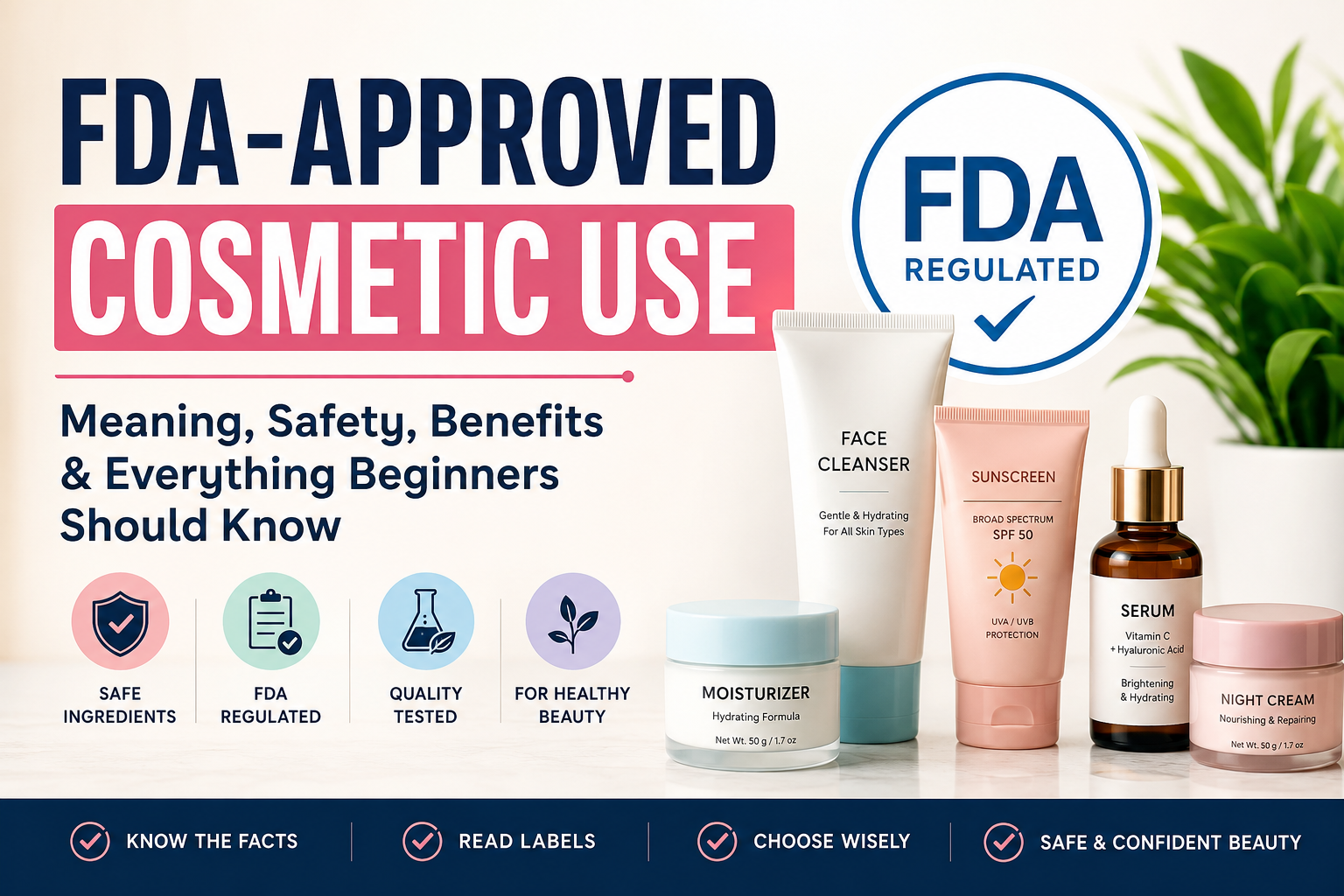
Many people believe that every cosmetic product sold in the market is approved by the FDA before reaching store shelves. This is one of the biggest misconceptions in the beauty and skincare industry.
The truth is much more interesting.
Most cosmetics are not approved by the U.S. Food and Drug Administration (FDA) before they are sold. Instead, cosmetic companies are legally responsible for making sure their products are safe for consumers when used according to the directions on the label.
Understanding what FDA-approved cosmetic use really means can help you become a smarter shopper. It also helps you avoid misleading marketing claims that make products appear more trustworthy than they actually are.
Whether you are buying a moisturizer, sunscreen, lipstick, face serum, shampoo, or anti-aging cream, knowing how FDA regulations work allows you to make informed decisions instead of relying on attractive packaging or social media trends.
What Does FDA-Approved Cosmetic Use Mean?
The term FDA-approved cosmetic use often creates confusion because many consumers think it means every beauty product has been tested and officially certified by the FDA.
In reality, this is not how cosmetic regulation works.
The FDA regulates cosmetics sold in the United States, but most cosmetic products and cosmetic ingredients do not need FDA approval before being marketed.
This is one of the most important things beginners should understand.
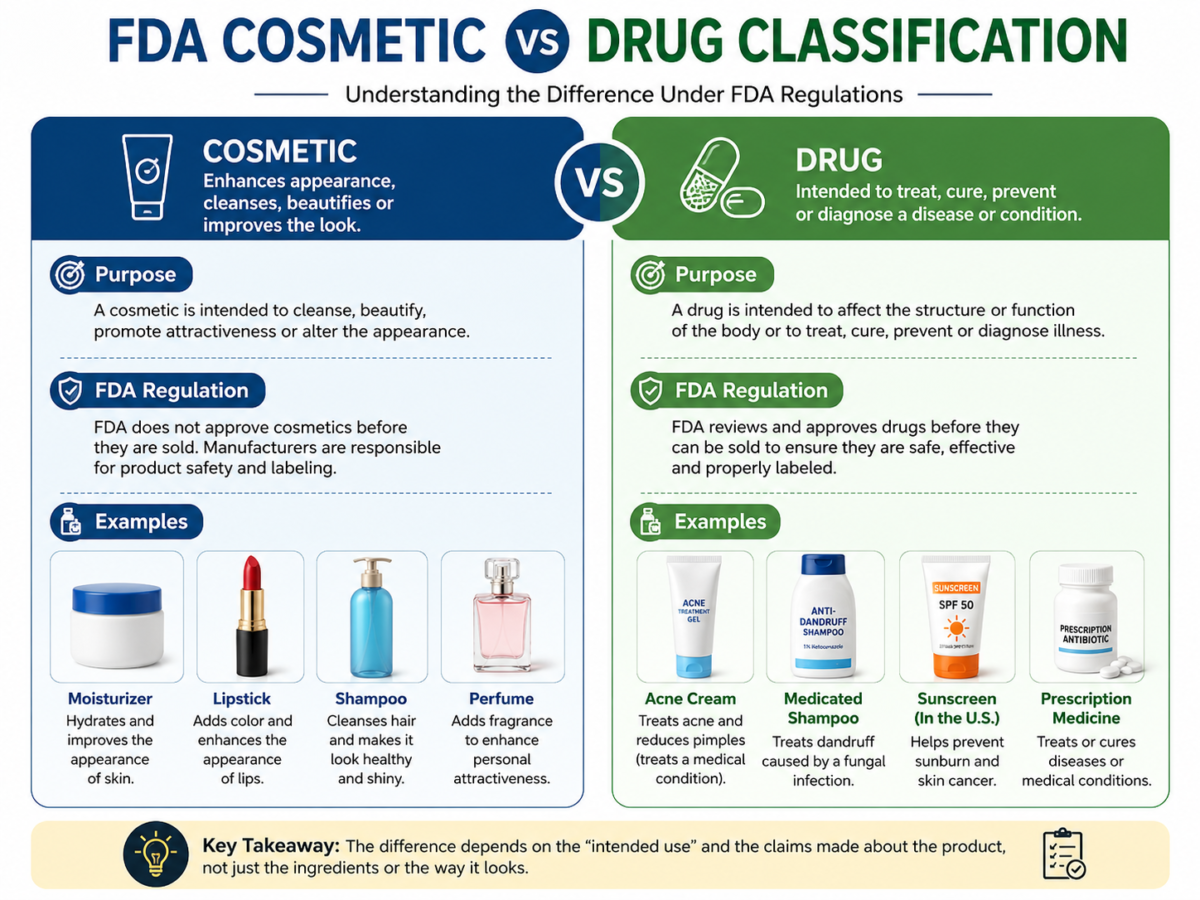
Some products require FDA approval because they are classified as drugs rather than cosmetics.
Examples include:
Product
FDA Approval Needed?
Lipstick
No
Face Moisturizer
No
Perfume
No
Shampoo
Usually No
Hair Conditioner
No
Foundation
No
Acne Treatment Cream
Yes (drug regulations apply)
Prescription Skin Cream
Yes
Medicated Dandruff Shampoo
Yes
Certain Sunscreens (US)
Yes
The difference depends mainly on the claims made by the product, not simply on its appearance.
Cosmetic vs Drug: Understanding the Difference
This is where many skincare brands must be very careful.
A cosmetic simply improves appearance.
A drug claims to affect the body’s structure or function or to treat or prevent disease.
Cosmetic Claims
These are generally acceptable cosmetic claims:
Moisturizes skin
Makes skin softer
Adds shine
Improves appearance
Gives a healthy glow
Reduces the appearance of fine lines
Provides hydration
Drug Claims
These may classify a product as a drug:
Treats acne
Heals eczema
Removes fungal infection
Cures psoriasis
Eliminates wrinkles permanently
Stimulates collagen production to repair damaged skin
Prevents skin disease
Once a product makes medical claims, different regulations may apply.
Why FDA Regulation Is Still Important
Even though most cosmetics are not pre-approved, the FDA still plays an important role in protecting consumers.
The FDA can:
Inspect manufacturing facilities.
Monitor product safety.
Investigate consumer complaints.
Take action against unsafe products.
Remove harmful products from the market.
Warn companies about misleading claims.
Monitor contamination issues.
This system encourages companies to maintain high safety standards before products reach consumers.
How Does the FDA Regulate Cosmetics?
Although most cosmetic products do not require FDA approval before they are sold, the FDA still has an important role in protecting consumers. The agency monitors cosmetic products after they enter the market and can take action if a product is found to be unsafe, contaminated, or marketed with false claims.
Think of it this way: cosmetic companies are responsible for making safe products, while the FDA acts as a regulatory authority that can investigate and enforce the law when necessary.
For example, if several customers report skin irritation after using a newly launched face cream, the FDA may review the complaints, inspect the manufacturing facility if needed, and require corrective action if safety issues are found.
This system encourages cosmetic manufacturers to maintain high-quality standards throughout product development.
How Cosmetic Companies Ensure Product Safety
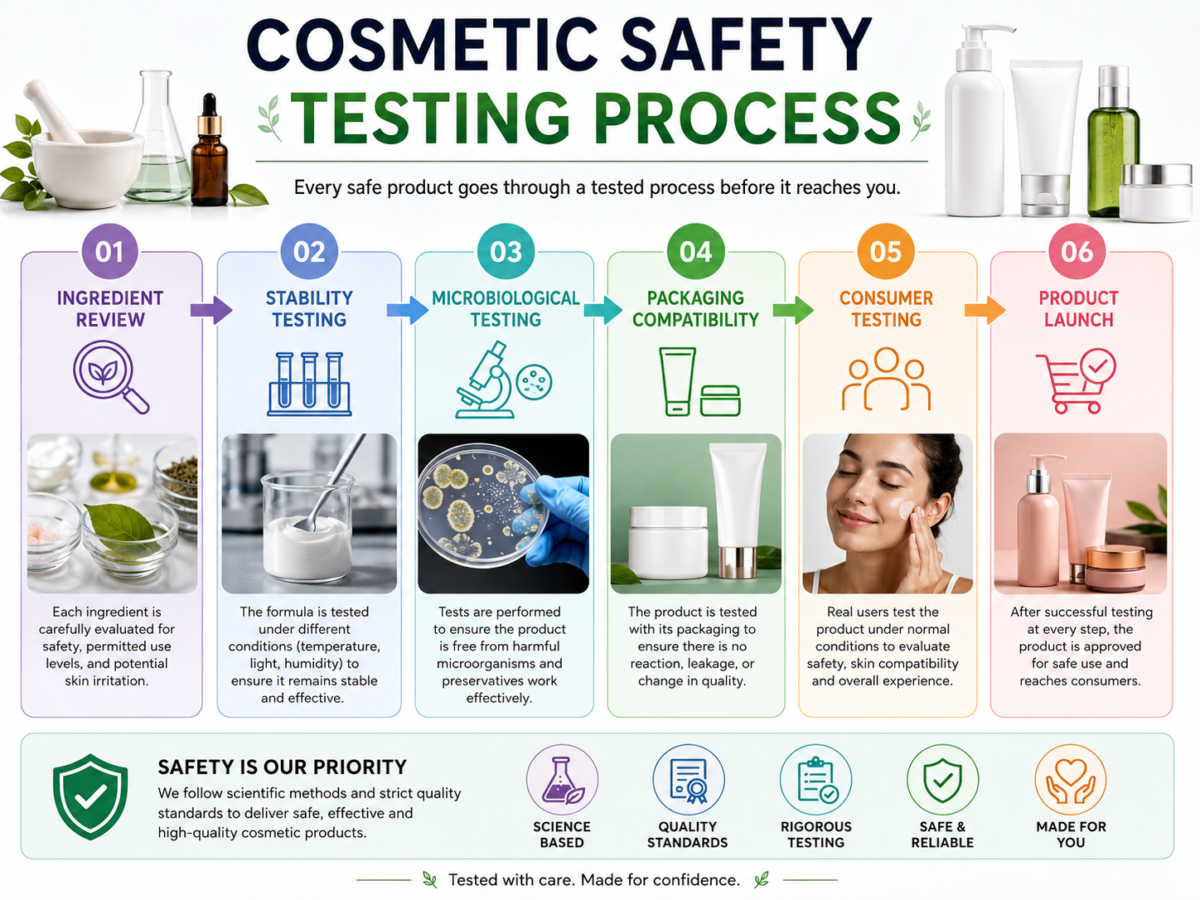
Before launching a cosmetic product, responsible manufacturers carry out several safety checks. While these tests may vary depending on the product type, the goal is always the same—to ensure that consumers can use the product safely when following the directions on the label.
Some of the most common safety evaluations include:
1. Ingredient Safety Review
Every ingredient is carefully reviewed before being included in a formulation.
Manufacturers evaluate factors such as:
Safe concentration levels
Possible skin irritation
Allergy risks
Compatibility with other ingredients
Scientific research supporting safe use
For instance, a preservative that works well in a shampoo may not be suitable for use around the eyes in an eye cream.
2. Stability Testing
A cosmetic product should remain safe and effective throughout its shelf life.
Stability testing helps determine whether the product maintains its:
Texture
Color
Fragrance
pH level
Performance
under different storage conditions such as heat, humidity, and light.
Practical Example
Imagine leaving a moisturizer inside a hot car during summer. If the formula separates into layers or develops an unusual odor, it may no longer be stable. Stability testing helps manufacturers identify and prevent these issues before products reach customers.
3. Microbiological Testing
Cosmetics that contain water can become contaminated by bacteria, yeast, or mold if they are not properly preserved.
Microbiological testing checks whether:
Harmful microorganisms are absent
Preservatives are effective
The product remains safe during normal use
This testing is especially important for creams, lotions, gels, and serums.
4. Compatibility Testing
The cosmetic formula must work well with its packaging.
Manufacturers check whether the product reacts with:
Plastic containers
Glass bottles
Pumps
Tubes
Caps
A poor packaging choice can reduce product quality or even contaminate the formula over time.
5. Consumer Use Testing
Many companies also conduct controlled user trials before launching a product.
Volunteers use the product under normal conditions while researchers monitor:
Skin comfort
Ease of application
Product performance
Any signs of irritation
This helps identify potential problems before the product becomes widely available.
Does the FDA Approve Cosmetic Ingredients?
This is another area where many people become confused.
In general, most cosmetic ingredients are not individually approved by the FDA before they are used. However, manufacturers are responsible for ensuring that every ingredient is safe when used as intended.
There are also certain ingredients that are restricted or prohibited because they may pose health risks.
Companies must stay updated with current regulations and avoid using banned substances in their formulations.
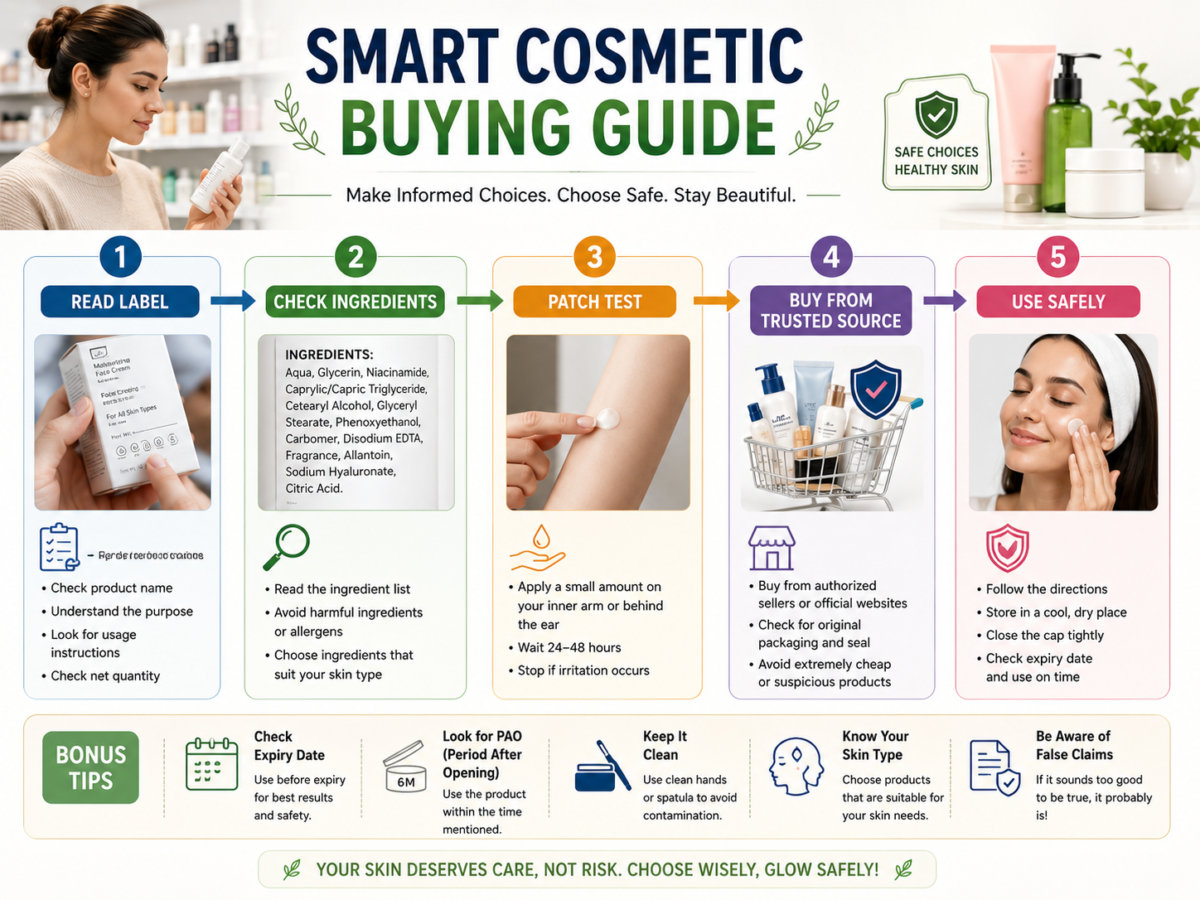
A cosmetic label is much more than attractive packaging. It provides essential information that helps consumers use the product safely.
A properly labeled cosmetic usually includes:
Product name
Intended purpose
Ingredient list
Net quantity
Directions for use (if needed)
Manufacturer or distributor details
Necessary safety warnings
Accurate labeling also helps consumers compare products and identify ingredients they may wish to avoid.
Why Reading Ingredient Labels Matters
Many shoppers focus only on the front of the package, where marketing messages are displayed.
However, the ingredient list often provides far more useful information.
Reading the label can help you:
Identify potential allergens
Avoid ingredients that irritate your skin
Compare similar products
Understand what the product actually contains
Beginner Tip
If you have sensitive skin, always check for ingredients that have previously caused irritation. Even a highly rated product may not suit every skin type.
Common Myths About FDA-Approved Cosmetics
There are many misconceptions surrounding cosmetic safety. Let’s clear up some of the most common ones.
Myth 1: Every Cosmetic Is FDA Approved
Reality: Most cosmetics are not approved by the FDA before they are sold. Manufacturers are responsible for ensuring product safety.
Myth 2: FDA-Approved Means a Product Is Perfect
Even if a product falls under FDA drug regulations, no product is guaranteed to work perfectly for everyone.
Individual factors such as:
Skin type
Allergies
Existing skin conditions
Environmental conditions
can all affect how a product performs.
Myth 3: Natural Products Are Always Safer
Natural ingredients can still cause allergic reactions or skin irritation.
For example, some people may react to:
Essential oils
Plant extracts
Natural fragrances
Botanical ingredients
“Natural” does not automatically mean “risk-free.”
Myth 4: Expensive Cosmetics Are Always Better
A higher price does not always indicate better quality.
Many affordable products contain well-researched ingredients and perform just as well as premium brands.
The best cosmetic is one that suits your skin type, addresses your concerns, and is formulated safely.
How to Choose Safe Cosmetic Products
Choosing the right product becomes much easier when you follow a few practical guidelines.
Look for Transparent Brands
Reliable companies usually provide:
Complete ingredient lists
Clear usage instructions
Customer support
Honest product claims
Transparency is often a sign of good manufacturing practices.
Buy From Trusted Sellers
Purchase cosmetics from:
Official brand websites
Authorized retailers
Reputable pharmacies
Well-known beauty stores
This reduces the risk of receiving counterfeit or expired products.
Avoid Unrealistic Claims
Be cautious of products that promise results such as:
Permanent wrinkle removal in one day
Instant skin whitening
Guaranteed acne cure overnight
Zero side effects for everyone
Skincare improvements usually take time and vary from person to person.
What Happens If a Cosmetic Product Is Found Unsafe?
Even after a cosmetic product is available in the market, its safety continues to be monitored. If a product is linked to serious health concerns, contamination, or misleading claims, regulatory authorities can investigate the issue.
Depending on the situation, the manufacturer may need to:
Stop selling the product
Correct labeling mistakes
Improve manufacturing practices
Recall affected products
Inform customers about potential risks
These actions help reduce harm and improve consumer safety.
Example
Suppose a face cream becomes contaminated with harmful bacteria due to poor manufacturing practices. Customers begin reporting skin infections after using the product.
In such a case, the company may voluntarily recall the product while regulatory authorities investigate the problem. This prevents more people from being exposed to the unsafe product.
What Is a Cosmetic Recall?
A cosmetic recall is the process of removing a product from the market because it may not meet safety or quality standards.
Recalls can happen for several reasons, including:
Microbial contamination
Incorrect labeling
Undeclared allergens
Packaging defects
Manufacturing errors
Presence of prohibited ingredients
Not every recall means people have been seriously harmed. Sometimes companies identify a problem early and remove the product as a precaution.
Signs That a Cosmetic Product May Not Be Safe
Before using any skincare or beauty product, take a few minutes to inspect it carefully.
You should avoid using a product if you notice:
A broken or damaged seal
An unusual smell
Changes in color
Separation of the formula
Mold or visible contamination
An expired date
Leaking packaging
These signs may indicate that the product has deteriorated or become contaminated.
Practical Tip
If your moisturizer suddenly changes color or develops an unpleasant odor after a few months, stop using it—even if some product is still left. Using spoiled cosmetics can increase the risk of skin irritation or infection.
How to Store Cosmetics Safely
Proper storage helps maintain product quality and extends shelf life.
Here are some simple storage tips:
Keep Products Away from Direct Sunlight
Heat and sunlight can break down active ingredients and affect the product’s texture.
Store products in a cool, dry place instead of leaving them near windows or inside a hot car.
Close Containers Tightly
Always close lids and caps after use.
This helps prevent:
Air exposure
Moisture entry
Bacterial contamination
Use Clean Hands
Whenever possible, avoid dipping dirty fingers into jars of creams or masks.
Instead:
Wash your hands before use.
Use a clean spatula for products in jars.
This simple habit helps reduce bacterial contamination.
Follow the Expiry Date
Every cosmetic product has a recommended shelf life.
Using products long after they expire may increase the risk of:
Skin irritation
Reduced effectiveness
Contamination
When in doubt, replace old products with fresh ones.
Practical Skincare Tips for Safe Cosmetic Use
Choosing a safe product is important, but using it correctly matters just as much.
1. Perform a Patch Test
Whenever you try a new skincare product, test a small amount on a small area of skin, such as behind your ear or on the inside of your forearm.
Wait 24–48 hours to check for:
Redness
Itching
Burning
Swelling
If irritation occurs, avoid using the product on your face.
2. Introduce One New Product at a Time
Trying several new products at once makes it difficult to identify which one is causing irritation.
Instead:
Start with one product.
Use it consistently for a few days.
Add another product only if your skin responds well.
This approach is especially helpful for beginners.
3. Follow the Directions
Using more product does not always produce better results.
For example:
Applying a thick layer of moisturizer won’t necessarily hydrate your skin better.
Overusing exfoliating products can damage your skin barrier.
Always follow the instructions provided by the manufacturer.
4. Don’t Share Personal Cosmetics
Items such as mascara, lipstick, eyeliner, and makeup brushes can transfer bacteria between users.
Sharing these products increases the risk of infections, particularly around the eyes and lips.
5. Clean Makeup Tools Regularly
Dirty makeup brushes and sponges collect:
Oil
Dead skin cells
Dust
Bacteria
Wash brushes with a gentle cleanser at least once a week if you use them regularly.
How to Report Problems with Cosmetic Products
If you experience an unexpected reaction after using a cosmetic, stop using it immediately.
You should also:
Keep the product and packaging.
Take photos if visible skin reactions occur.
Contact the manufacturer.
Seek medical advice if symptoms are severe.
Report serious adverse reactions to the appropriate regulatory authority in your country.
Reporting safety issues helps authorities identify patterns and protect other consumers.
FDA Regulation Compared with Other Countries
Different countries regulate cosmetics in different ways.
While the FDA oversees cosmetics in the United States, other regions have their own regulatory systems.
For example:
The European Union has detailed cosmetic safety requirements before products reach the market.
India regulates cosmetics through the Central Drugs Standard Control Organization (CDSCO) under the Drugs and Cosmetics Act.
Other countries have their own standards for manufacturing, labeling, and product safety.
Although regulations vary, the common goal is the same: protecting consumer health.
Key Takeaways About FDA-Approved Cosmetic Use
Before buying any cosmetic product, keep these important points in mind:
Most cosmetics do not require FDA approval before being sold.
Cosmetic manufacturers are responsible for ensuring product safety.
The FDA monitors cosmetic safety and can take action against unsafe or misleading products.
Products that claim to treat or prevent medical conditions may be regulated as drugs and may require FDA approval.
Reading ingredient labels and following usage instructions helps you make safer skincare choices.
Proper storage and hygiene can extend the life of your cosmetics and reduce the risk of contamination.
Buying from trusted brands and authorized sellers lowers the risk of purchasing counterfeit or unsafe products.
Understanding these basics allows you to shop with confidence and avoid being misled by marketing claims.
Common Mistakes to Avoid When Buying Cosmetics
Many beginners unknowingly make mistakes that can affect both their skin and their wallet. Here are a few to avoid:
Believing Every “FDA” Claim
Some products display phrases like “FDA Registered Facility” or “FDA Compliant.” These statements do not necessarily mean the cosmetic product itself has been approved by the FDA. Always understand what the claim actually refers to.
Ignoring the Ingredient List
Attractive packaging should never be the only reason for purchasing a product. Reading the ingredient list helps you identify ingredients that suit—or don’t suit—your skin.
Using Expired Products
Old cosmetics may lose their effectiveness and, in some cases, become contaminated. Regularly check expiry dates and replace products when needed.
Skipping Patch Tests
Even products made with gentle or natural ingredients can cause irritation in some individuals. A simple patch test can help prevent unwanted skin reactions.
Following Every Social Media Trend
Not every viral skincare product is suitable for every skin type. Choose products based on your skin’s needs rather than online popularity.
Final Thoughts
Understanding FDA-approved cosmetic use is an important step toward becoming a smarter skincare consumer.
One of the biggest misconceptions is that every cosmetic product must be approved by the FDA before it reaches store shelves. In reality, most cosmetics are not pre-approved. Instead, manufacturers are responsible for ensuring that their products are safe, properly labeled, and suitable for their intended use.
The FDA continues to play an important role by monitoring cosmetic safety, investigating complaints, and taking action when products are found to be unsafe or marketed with misleading claims.
As a consumer, you can further protect yourself by reading labels carefully, purchasing from trusted brands, storing products correctly, and introducing new skincare products gradually.
Healthy skin starts with informed decisions—not marketing buzzwords. By understanding how cosmetic regulation works, you can confidently choose products that fit your skin type and beauty goals while avoiding unnecessary risks.
Frequently Asked Questions (FAQs)
1. Are all cosmetics approved by the FDA?
No. Most cosmetic products sold in the United States do not require FDA approval before they are marketed. Manufacturers are responsible for ensuring product safety and compliance with applicable regulations.
2. What does “FDA-approved” actually mean?
“FDA-approved” means the FDA has officially evaluated and authorized certain products—typically drugs or specific medical products—for their intended use. Most standard cosmetics do not go through this approval process.
3. Does FDA approval guarantee that a product will work for everyone?
No. Skin type, allergies, lifestyle, and environmental factors all influence how a product performs. A product that works well for one person may not be suitable for another.
4. Can natural cosmetics still cause allergic reactions?
Yes. Natural ingredients such as essential oils, botanical extracts, and plant-based fragrances can trigger irritation or allergies in some people. A patch test is recommended before using any new product.
5. How can I identify a trustworthy cosmetic product?
Look for products that provide:
A complete ingredient list
Clear directions for use
Manufacturer or distributor details
Realistic product claims
Proper packaging and expiry information
Buying from authorized retailers and reputable brands is also a good practice.
6. Should I stop using a product if it causes irritation?
Yes. If you experience redness, itching, burning, swelling, or any unusual reaction, discontinue use immediately. If symptoms are severe or persist, consult a qualified healthcare professional.
7. Why is a patch test important?
A patch test helps identify potential allergic reactions before you apply a product to a larger area of your skin. It is especially useful for people with sensitive skin or when trying a new skincare product.
8. Can expired cosmetics harm my skin?
Yes. Expired cosmetics may become less effective and, in some cases, may be contaminated with bacteria or fungi, increasing the risk of irritation or infection.
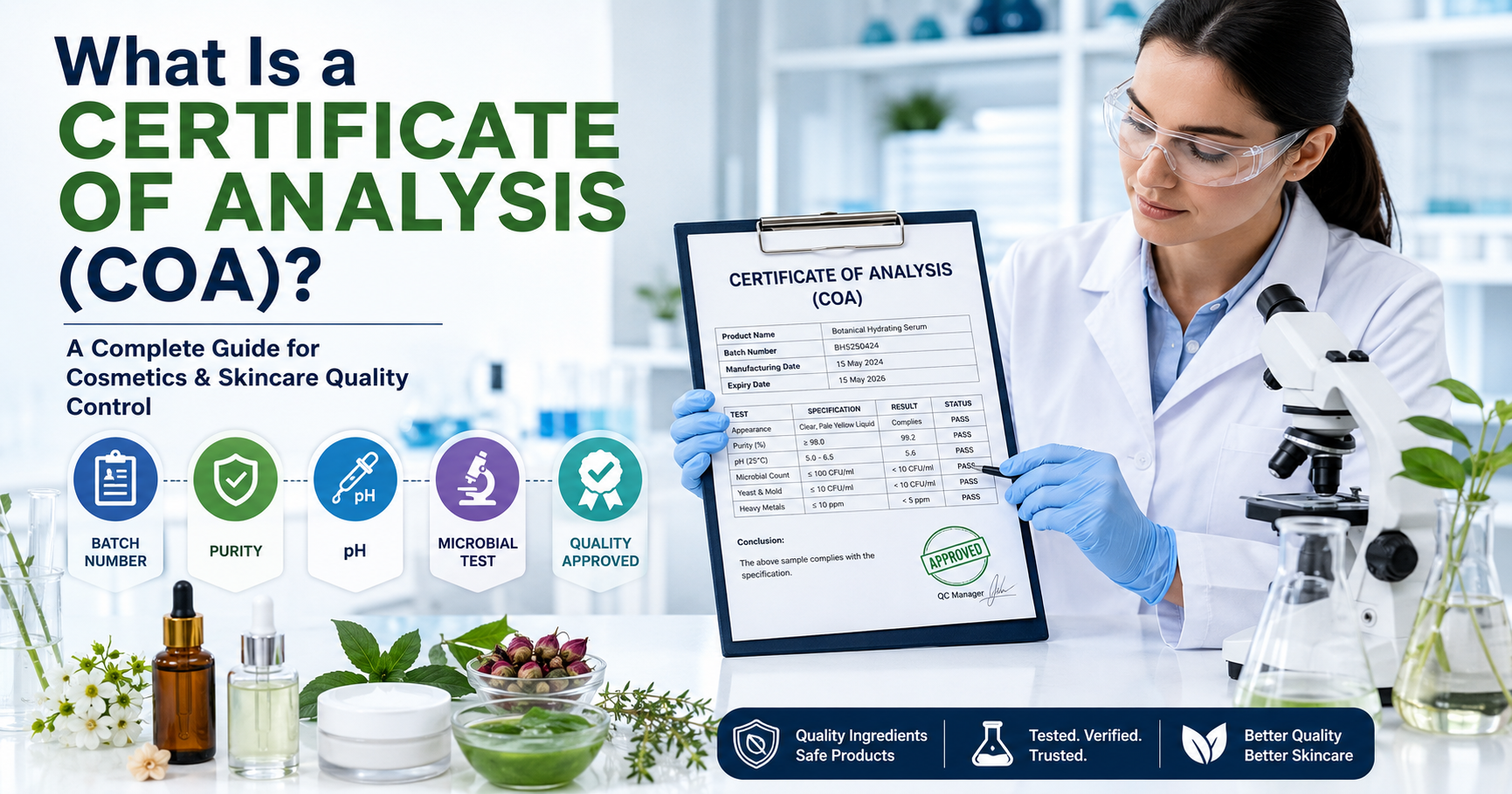
A bottle of face serum may look attractive on the outside, but how do you know the ingredients inside are safe, pure, and meet quality standards? The answer often lies in an important quality document called the Certificate of Analysis (COA).
Whether you are a skincare enthusiast, cosmetic brand owner, manufacturer, or simply someone who wants to understand how quality products are made, learning about a COA is extremely valuable. It provides evidence that a product or raw material has been tested and meets specific quality requirements before it is used or sold.
In the cosmetics industry, every ingredient matters. A small variation in purity, pH, microbial count, or active ingredient concentration can affect the safety and performance of the final product. This is why cosmetic manufacturers rely on Certificates of Analysis to verify that every batch meets the required specifications.
What Is a Certificate of Analysis (COA)?
A Certificate of Analysis (COA) is an official quality document issued after laboratory testing. It confirms that a specific batch of a raw material, ingredient, or finished product meets predetermined quality standards and specifications.
Think of it as a quality report card for a product.
Just as students receive report cards showing their performance in different subjects, a COA shows how a cosmetic ingredient or product performed in various laboratory tests.
For example, before a cosmetic manufacturer uses Vitamin C powder to make a facial serum, the supplier provides a Certificate of Analysis showing details such as:
If all values meet the required specifications, the ingredient can be approved for production.
Why Is a Certificate of Analysis Important?
A COA is much more than just paperwork. It plays a critical role in maintaining product quality throughout the manufacturing process.
Here are some of the biggest reasons why Certificates of Analysis are important.
1. Confirms Product Quality
The primary purpose of a COA is to verify that a material meets quality specifications before it is used.
Imagine purchasing Hyaluronic Acid from two different suppliers.
Supplier A provides a detailed COA showing:
99.8% purity
Low moisture content
No harmful microbes
Supplier B provides no quality documentation.
Which supplier would you trust more?
Most manufacturers would choose Supplier A because the COA provides confidence in the material’s quality.
2. Improves Consumer Safety
Cosmetic products are applied directly to the skin, lips, scalp, or around the eyes. Poor-quality ingredients may lead to irritation, contamination, or reduced product performance.
Laboratory testing helps identify problems before products reach consumers.
For example, if a batch of Aloe Vera Extract contains excessive microbial contamination, it can be rejected immediately instead of being used in thousands of skincare products.
This simple step helps protect consumers from unsafe products.
Imagine a company is producing a Niacinamide Face Serum.
Before manufacturing begins, they receive several raw materials from different suppliers.
These include:
Niacinamide
Glycerin
Hyaluronic Acid
Preservative
Distilled Water
Each ingredient arrives with its own Certificate of Analysis.
The Quality Control team reviews every COA carefully.
For example:
Niacinamide purity meets the required specification.
Glycerin passes identity and moisture testing.
Hyaluronic Acid meets viscosity requirements.
The preservative passes microbial testing.
Distilled water meets purity standards.
Since all ingredients meet the required specifications, the manufacturing process can begin with greater confidence that the final serum will be safe, stable, and effective.
Components of a Certificate of Analysis (COA)
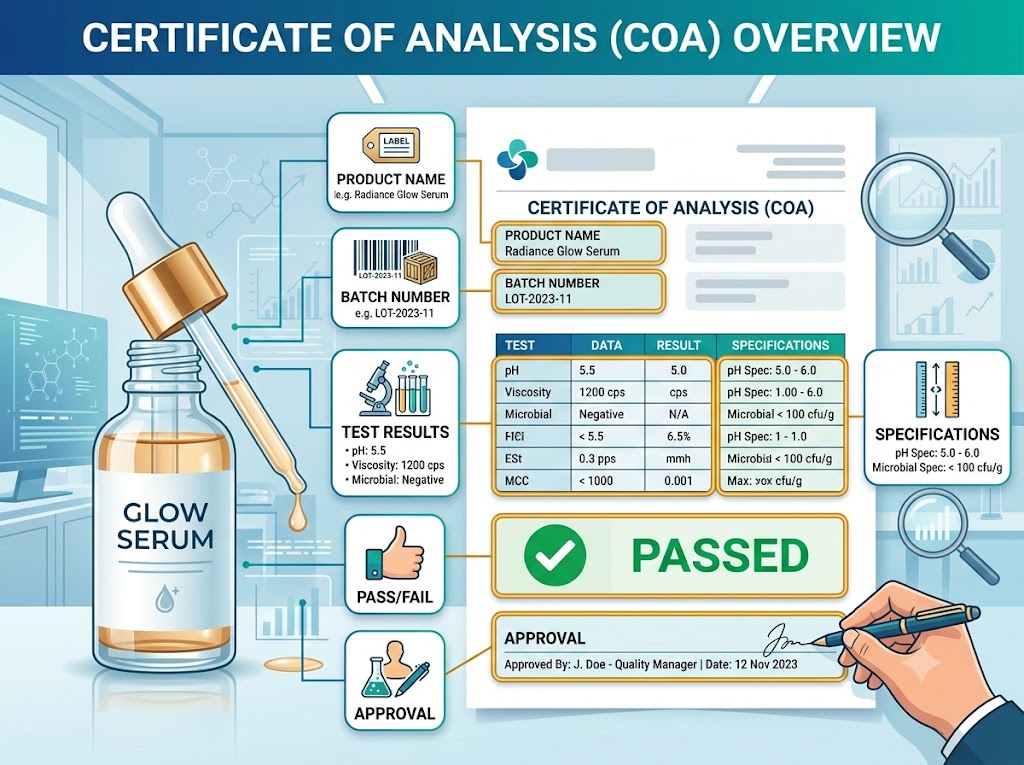
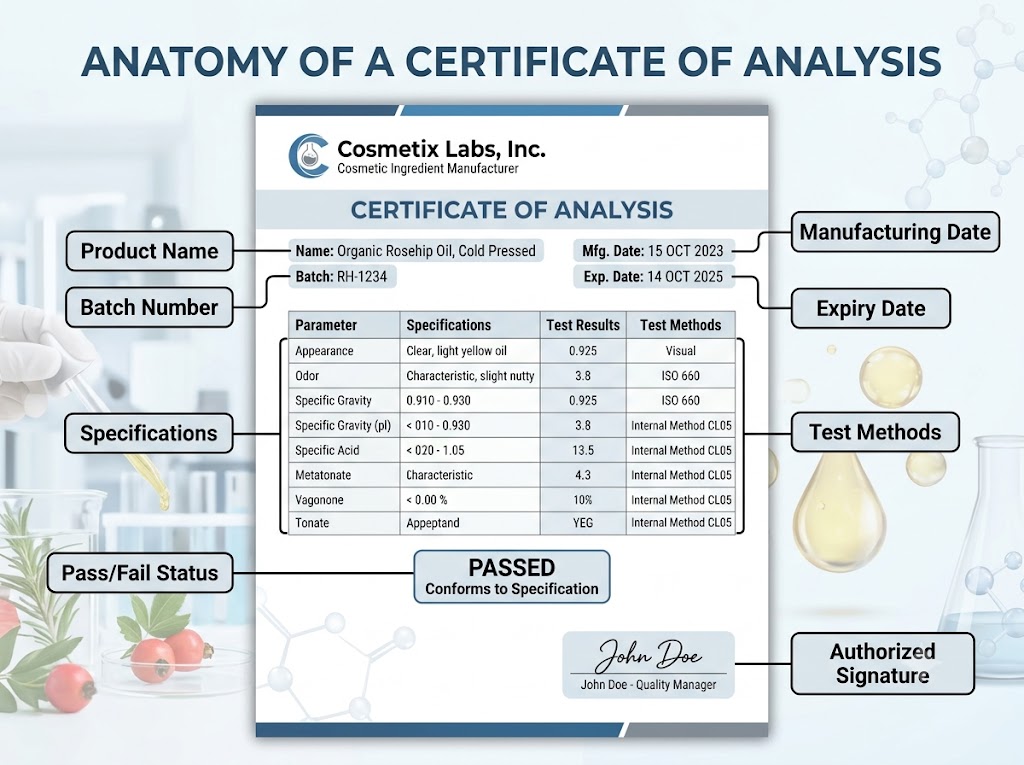
Although the layout of a Certificate of Analysis may vary from one company to another, most COAs contain similar information. Every section helps manufacturers confirm that the product or ingredient meets the required quality standards before it is approved for use.
Let’s look at the most common parts of a COA and understand why each one is important.
1. Product Name
The product name clearly identifies the raw material or finished cosmetic product that has been tested.
For example:
Niacinamide Powder
Hyaluronic Acid Solution
Aloe Vera Extract
Vitamin E Oil
Face Wash
Moisturizing Cream
The product name helps avoid confusion, especially when a manufacturer receives many different ingredients from the same supplier.
Example
A skincare company receives two white powders:
Niacinamide
Allantoin
They may look almost identical, but the product name on the COA ensures that the correct ingredient is used in production.
2. Product Code or Item Number
Many manufacturers assign a unique code to every ingredient or product.
Instead of relying only on the product name, companies can quickly identify the exact material using this code.
For example:
NIA-001
HA-250
GLY-100
This coding system makes inventory management easier and reduces the chance of using the wrong ingredient.
3. Batch Number (Lot Number)
One of the most important details on a COA is the Batch Number, also called the Lot Number.
A batch number identifies a specific production batch.
Every batch is tested separately because slight variations can occur during manufacturing.
Why is the batch number important?
Suppose a supplier manufactures Vitamin C powder every week.
Instead of producing one huge batch for the entire year, they manufacture multiple smaller batches.
Example:
Batch VC24001
Batch VC24002
Batch VC24003
Each batch receives its own laboratory testing and its own Certificate of Analysis.
This system allows manufacturers to trace exactly where an ingredient came from if any quality issue arises later.
4. Manufacturing Date
The Manufacturing Date tells when the product or raw material was produced.
This helps companies:
Track product age
Manage inventory
Follow First In, First Out (FIFO) inventory practices
Ensure fresh materials are used in production
Using older ingredients without proper evaluation can affect product quality and stability.
5. Expiry Date or Retest Date
Many cosmetic ingredients remain stable for several years if stored correctly.
Depending on the ingredient, the COA may include either:
Expiry Date – the last recommended date for use.
Retest Date – the date after which the material should be tested again before use.
Example
A batch of Hyaluronic Acid manufactured in January 2026 may have:
Manufacturing Date: January 2026
Retest Date: January 2028
If the ingredient is still in storage after two years, it should be retested to confirm that it still meets quality specifications.
6. Specifications
Specifications are the predefined quality limits that every batch must meet.
Think of specifications as the “acceptable range” for each test.
For example:
Test
Acceptable Specification
Appearance
White powder
Purity
≥ 99%
Moisture
≤ 1%
pH
5.5–7.0
Odor
Characteristic
Microbial Count
Within acceptable limits
If the laboratory results fall within these limits, the material passes.
If not, it may be rejected.
7. Test Results
This section shows the actual laboratory values obtained during testing.
For example:
Test
Specification
Result
Appearance
White Powder
White Powder
Purity
≥99%
99.6%
Moisture
≤1%
0.4%
pH
5.5–7.0
6.2
Odor
Characteristic
Characteristic
The Quality Control team compares these results with the specifications before approving the batch.
8. Test Methods
Every laboratory test follows a defined scientific procedure.
The COA often mentions the method used.
Examples include:
Internal laboratory methods
Standard Operating Procedures (SOPs)
Pharmacopoeia methods
International standard methods
This information helps demonstrate that the testing was performed consistently and according to established procedures.
9. Pass or Fail Status
At the end of testing, the laboratory determines whether the batch meets all required specifications.
The result is usually shown as:
Pass
Complies
Meets Specification
or
Fail
Does Not Comply
Out of Specification (OOS)
Only materials that meet the required specifications should move forward for manufacturing.
10. Authorized Signature or Approval
Most Certificates of Analysis include approval from an authorized person, such as:
Quality Control Manager
Laboratory Manager
Quality Assurance Representative
This signature confirms that the laboratory results have been reviewed and officially approved.
Many companies now use secure electronic signatures instead of handwritten ones.
Common Laboratory Tests Found in a COA
The exact tests depend on the ingredient or finished product, but some quality checks appear on most Certificates of Analysis.
Appearance Test
This verifies that the material looks as expected.
The laboratory checks characteristics such as:
Color
Texture
Physical form
Clarity
Example
Vitamin C powder should appear as a white to slightly off-white crystalline powder.
If it appears brown or has visible contamination, the batch may require further investigation.
Odor Test
Many cosmetic ingredients have a characteristic smell.
An unusual odor may indicate contamination, degradation, or improper storage.
Example
Lavender essential oil should have a fresh floral aroma.
If it smells burnt or rancid, it may no longer be suitable for use.
pH Test
The pH value measures how acidic or alkaline a product is.
This test is especially important for:
Face wash
Shampoo
Toners
Moisturizers
Serums
Cleansers
Maintaining the correct pH helps improve product stability and supports skin compatibility.
Purity Test
Purity testing determines how much of the desired ingredient is actually present.
Example
A supplier claims that Niacinamide has a purity of at least 99%.
Laboratory testing confirms whether the batch meets this claim.
Higher purity generally means greater consistency and fewer unwanted impurities.
Moisture Content
Some powdered cosmetic ingredients absorb moisture from the environment.
Excess moisture can reduce shelf life and affect product stability.
Testing moisture content helps ensure that ingredients remain suitable for manufacturing.
Microbiological Testing
One of the most critical sections of a COA is microbiological testing.
The laboratory checks for harmful microorganisms such as:
Bacteria
Yeast
Mold
Microbial contamination can spoil cosmetic products and increase the risk of skin irritation or infection.
Only batches that meet acceptable microbiological limits should be approved for use.
Practical Example: Reading a COA
Imagine you receive a COA for Aloe Vera Extract.
You review the following details:
Appearance: Clear pale yellow liquid ✔
Odor: Characteristic ✔
pH: 5.8 ✔
Microbial Count: Within acceptable limits ✔
Batch Number: AV26015 ✔
Expiry Date: March 2028 ✔
Status: Pass ✔
Since every result matches the required specifications, the Quality Control team approves the ingredient for production.
If even one critical parameter—such as microbial count—fails, the batch may be quarantined until further investigation is completed.
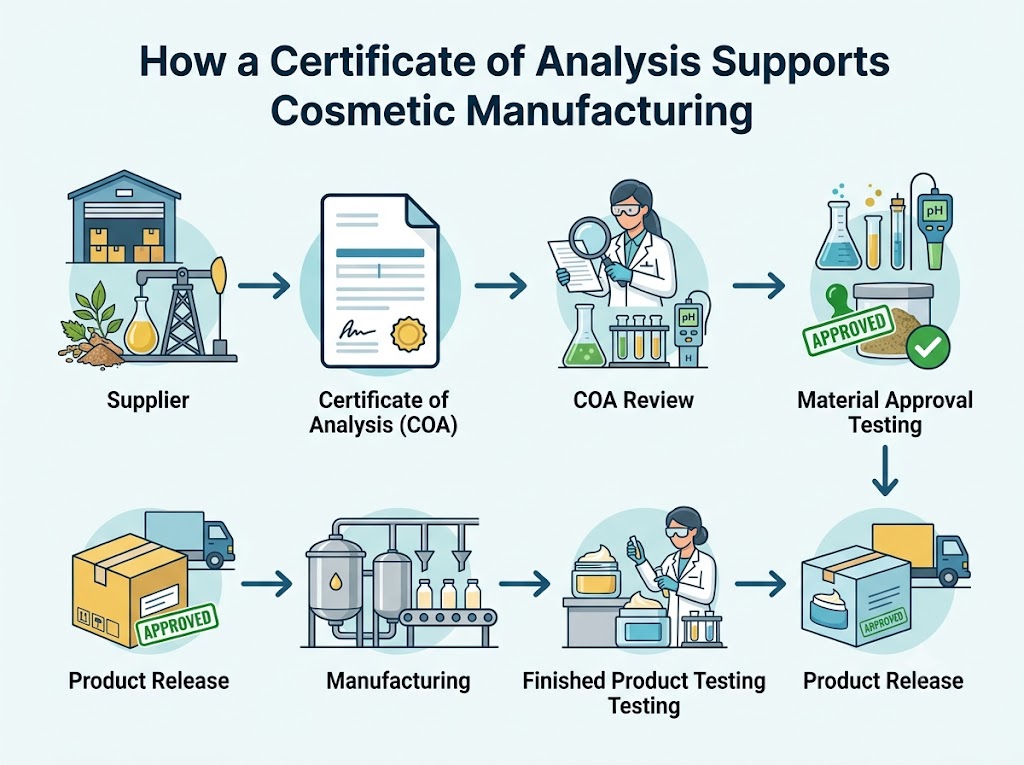
How Is a Certificate of Analysis (COA) Used in Cosmetic Manufacturing?
A Certificate of Analysis is not just a document that gets filed away after receiving a shipment. It is used throughout the manufacturing process to ensure that only quality-approved materials are used.
From the moment raw materials arrive at the factory until the finished product reaches customers, the COA plays an important role in quality control.
Let’s follow the journey of a cosmetic ingredient to understand how this works.
Step 1: Receiving Raw Materials
Every cosmetic product starts with raw materials such as:
Niacinamide
Hyaluronic Acid
Aloe Vera Extract
Shea Butter
Glycerin
Emulsifiers
Preservatives
Fragrances
When these ingredients arrive at the manufacturing facility, they are not immediately used in production.
Instead, the Quality Control (QC) team first checks the shipment and reviews the Certificate of Analysis provided by the supplier.
They verify details such as:
Product name
Batch number
Manufacturing date
Expiry or retest date
Laboratory test results
Approval status
If any information is missing or does not match the purchase order, the material may be placed on hold until the issue is resolved.
Step 2: Verifying Laboratory Results
Receiving a COA does not always mean the material is automatically accepted.
Many cosmetic manufacturers compare the supplier’s results with their own quality standards.
For example, a supplier’s COA may state:
Test
Supplier Result
Purity
99.5%
Moisture
0.5%
pH
6.1
The manufacturer checks whether these values fall within its approved specifications.
If everything meets the required limits, the ingredient can move to the next stage.
Step 3: In-House Confirmation Testing
Some companies perform additional laboratory testing before approving the material.
This process is known as incoming quality inspection or confirmation testing.
For high-value or high-risk ingredients, the in-house laboratory may verify:
Identity
Appearance
pH
Purity
Microbial quality
This extra step reduces the risk of using incorrect or contaminated ingredients.
Example
A company receives Vitamin E Oil from a new supplier.
Although the supplier provides a COA, the QC laboratory also checks:
Color
Odor
Identity
Purity
Once the internal results match the supplier’s COA, the batch is approved for production.
Step 4: Approval Before Production
Only approved materials are released to the production department.
If a batch fails testing, it is usually:
Quarantined
Rejected
Returned to the supplier
Investigated further
This prevents poor-quality ingredients from entering the manufacturing process.
Step 5: Manufacturing the Cosmetic Product
After all raw materials are approved, production begins.
Whether the company is making:
Face wash
Moisturizer
Sunscreen
Shampoo
Face serum
Body lotion
every ingredient used should have supporting quality documentation.
This helps maintain consistency from one production batch to the next.
Step 6: Testing the Finished Product
Quality checks do not stop after manufacturing.
The finished cosmetic product is also tested.
Common tests include:
Appearance
Color
Odor
pH
Viscosity
Stability
Microbiological quality
After testing is complete, the manufacturer may issue a Certificate of Analysis for the finished product before it is released for sale.
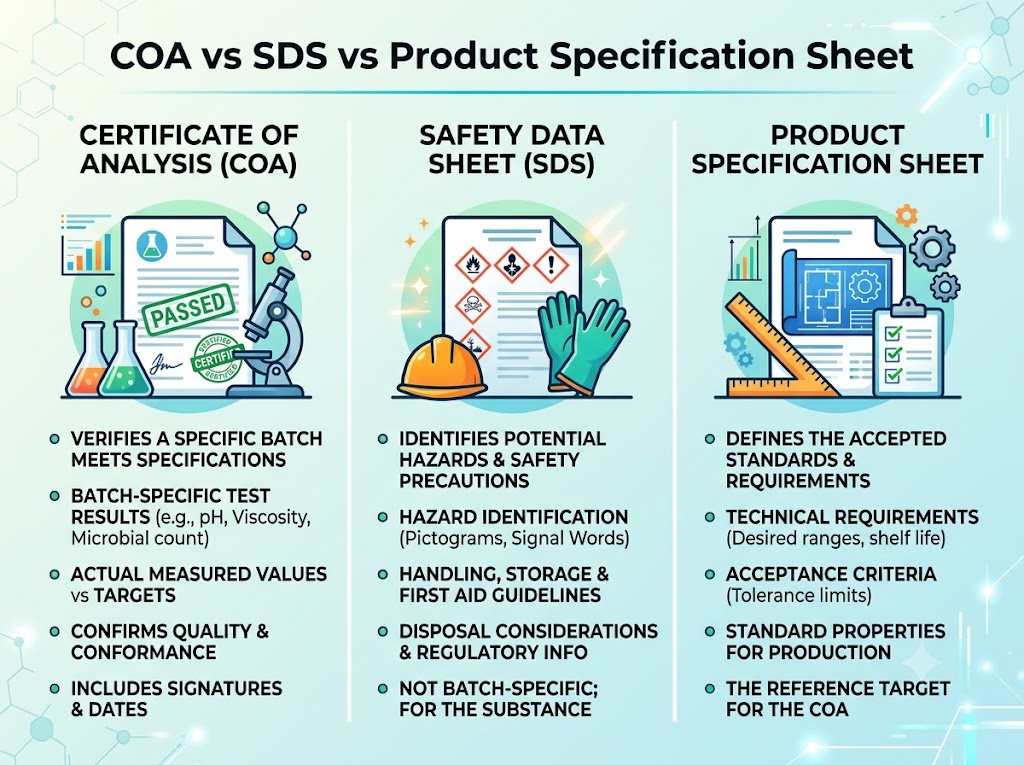
COA vs. SDS (MSDS) vs. Product Specification Sheet
Many beginners confuse these documents because they are often supplied together. However, each serves a different purpose.
Document
Main Purpose
Typical Contents
Certificate of Analysis (COA)
Confirms the quality of a specific batch after testing
Batch number, test results, specifications, Pass/Fail status
Safety Data Sheet (SDS/MSDS)
Explains safe handling, storage, transport, and emergency measures
Hazards, first aid, storage instructions, PPE, disposal guidance
Product Specification Sheet
Defines the expected quality requirements for a product
Target limits for appearance, pH, purity, odor, viscosity, and other quality parameters
Simple Way to Remember
COA = “This batch was tested and passed.”
SDS = “Here is how to handle this material safely.”
Specification Sheet = “These are the quality standards every batch must meet.”
Each document has a unique role, and together they help ensure safe and consistent cosmetic manufacturing.
Common Mistakes When Reading a COA
A COA is only useful if it is reviewed carefully. Even experienced professionals follow a checklist to avoid missing important details.
Here are some common mistakes beginners should avoid.
Ignoring the Batch Number
A COA applies only to the specific batch listed on the document.
Always confirm that the batch number on the container matches the batch number on the COA.
Using the wrong COA could result in approving an untested material.
Not Checking the Expiry or Retest Date
An ingredient may have passed laboratory testing when it was manufactured, but quality can change over time.
Always make sure the material is still within its expiry or retest period before use.
Looking Only at the “Pass” Status
It is tempting to focus only on the final approval, but it is also important to review the actual test results.
For example, if your company requires a purity of at least 99.5% and the COA shows 99.1%, the material may not meet your internal specification, even if the supplier has marked it as “Pass.”
Overlooking Missing Information
A complete COA should include essential details such as:
Product name
Batch number
Test results
Specifications
Test methods (where applicable)
Approval or signature
If key information is missing, request clarification from the supplier before using the material.
Assuming All Suppliers Use the Same Format
There is no single universal COA format.
Different suppliers may arrange information differently, but the core quality data should still be present.
Learning to identify these key sections makes it easier to review COAs from different manufacturers.
Benefits of a Certificate of Analysis for Cosmetic Brands
Using Certificates of Analysis offers several advantages for cosmetic companies.
Consistent Product Quality
Testing every batch helps ensure that products perform consistently, regardless of when they are manufactured.
Better Supplier Management
COAs make it easier to compare suppliers and identify those who consistently deliver high-quality materials.
Easier Traceability
If a quality issue is reported, the batch number on the COA helps trace the affected material quickly.
Improved Regulatory Readiness
Maintaining organized COAs demonstrates good documentation practices during inspections and audits.
Reduced Product Recalls
Identifying quality issues before production helps prevent costly recalls and protects the brand’s reputation.
Why Should Consumers Care About COAs?
Most consumers never see a Certificate of Analysis, but they still benefit from it.
When cosmetic brands use quality-tested ingredients and follow good manufacturing practices, consumers are more likely to receive products that are:
Safe to use
Consistent from batch to batch
Free from unacceptable contamination
Manufactured under controlled quality standards
While a COA alone does not guarantee that a product will suit every individual’s skin, it does provide evidence that the batch met the manufacturer’s defined quality specifications.
Practical Skincare Tip
If you have sensitive skin, try to buy skincare products from reputable brands that emphasize quality testing and Good Manufacturing Practices (GMP). Although consumers don’t usually receive a COA with retail products, brands that invest in strong quality control are generally more likely to produce consistent and reliable formulations.
Best Practices for Managing Certificates of Analysis (COAs)
Whether you are a cosmetic manufacturer, private label brand, raw material supplier, or quality professional, following good COA management practices helps maintain product quality and regulatory compliance.
Here are some recommended practices:
Keep COAs Organized
Store Certificates of Analysis in a well-organized digital or physical filing system.
Organize them by:
Product name
Supplier
Batch number
Manufacturing date
Expiry or retest date
This makes it easier to retrieve documents during internal reviews, customer inquiries, or regulatory inspections.
Verify Every New Batch
Never assume that two batches of the same ingredient have identical quality.
Each production batch should have its own COA because test results can vary slightly.
For example, one batch of glycerin may have a moisture content of 0.2%, while another batch may show 0.5%. Both values may meet specifications, but they should still be documented separately.
Review COAs Before Production
Always review the Certificate of Analysis before releasing raw materials to the production floor.
Checking the document early helps identify potential issues before they affect manufacturing, saving both time and cost.
Work with Reliable Suppliers
Choose suppliers that consistently provide:
Accurate COAs
Complete laboratory reports
Clear batch traceability
Timely documentation
Reliable documentation is often a sign of a mature quality management system.
Train Employees
Quality Control, Quality Assurance, warehouse, and production teams should understand how to read and verify a COA.
Regular training helps reduce documentation errors and ensures that only approved materials are used in manufacturing.
Common Industries That Use Certificates of Analysis
Although COAs are widely used in the cosmetics industry, they are equally important in many other sectors where quality and consistency matter.
These include:
Cosmetics and personal care
Skincare manufacturing
Pharmaceutical manufacturing
Food and beverage industry
Nutraceuticals and dietary supplements
Essential oils and herbal extracts
Chemical manufacturing
Laboratory reagents
Medical devices (for certain materials)
In all of these industries, a COA helps verify that products meet predefined quality standards before they are released or used.
Key Takeaways
Before we wrap up, let’s quickly summarize the most important points.
A Certificate of Analysis (COA) is an official laboratory document that confirms a specific batch has been tested against predefined quality specifications.
It helps verify the identity, purity, safety, and consistency of raw materials and finished cosmetic products.
Common sections include the product name, batch number, manufacturing date, expiry or retest date, specifications, laboratory test results, and approval status.
Cosmetic manufacturers use COAs to approve incoming ingredients, support quality control, improve traceability, and reduce manufacturing risks.
A COA is different from a Safety Data Sheet (SDS) and a Product Specification Sheet because it reports the actual test results for a specific batch.
Careful review of every COA helps maintain product quality, regulatory readiness, and consumer confidence.
Conclusion
A Certificate of Analysis (COA) is one of the most important quality documents in cosmetic manufacturing. While it may seem like a simple laboratory report, it plays a vital role in ensuring that every ingredient and finished product meets established quality standards before reaching the market.
From verifying purity and pH to checking microbial quality and confirming batch traceability, a COA supports safer manufacturing and more consistent skincare products. It also strengthens communication between suppliers, manufacturers, quality teams, and regulatory authorities by providing reliable evidence that each batch has been tested.
Frequently Asked Questions (FAQs)
1. What is a Certificate of Analysis (COA)?
A Certificate of Analysis (COA) is a laboratory-issued document that confirms a specific batch of a raw material or finished product has been tested and meets predefined quality specifications.
2. Why is a COA important in the cosmetics industry?
A COA helps ensure that cosmetic ingredients and finished products meet quality standards before they are used or sold. It supports product consistency, consumer safety, traceability, and regulatory compliance.
3. Who issues a Certificate of Analysis?
A COA is typically issued by the manufacturer, supplier, or an accredited testing laboratory after completing quality tests on a specific production batch.
4. What information is included in a COA?
A typical COA includes:
Product name
Batch or lot number
Manufacturing date
Expiry or retest date
Product specifications
Laboratory test results
Test methods (where applicable)
Pass/Fail or compliance status
Authorized approval or signature
5. Is a COA the same as a Safety Data Sheet (SDS)?
No. A COA confirms the quality test results of a specific batch, while an SDS explains how to safely handle, store, transport, and dispose of a material.
6. Can consumers request a COA for skincare products?
Some cosmetic brands may provide a COA upon request, especially for professional, bulk, or business-to-business products. Retail brands do not always share COAs publicly, but many maintain them as part of their internal quality documentation.
7. Does a COA guarantee that a product will work for everyone?
No. A COA confirms that a batch meets quality specifications, but individual skin types, sensitivities, allergies, and product usage can still affect personal results. Performing a patch test before using a new skincare product is always recommended.
In today’s world, where water pollution is becoming a growing concern, RO Water—short for Reverse Osmosis Water—has become one of the most trusted sources of clean and safe water. But what exactly is RO water, and how is it useful in our daily lives and industries like cosmetics, pharmaceuticals, and more?
Let’s dive in.
What is RO Water?
RO (Reverse Osmosis) is an advanced water purification process. It works by forcing water through a semi-permeable membrane that filters out:
Dissolved salts and minerals
Heavy metals (like lead, arsenic, and mercury)
Bacteria and viruses
Chemicals and pesticides
Unwanted particles and odors
🌟 Uses of RO Water
1. 🧴 Cosmetics Industry
RO water is widely used in making beauty and skincare products like lotions, shampoos, and creams. It acts as a neutral base, ensuring the formula is free from impurities that could irritate the skin or affect product stability.
2. 💊 Pharmaceuticals
In the pharmaceutical industry, RO water is used in drug manufacturing and cleaning processes. High purity is essential here to avoid contamination and ensure product safety.
3. 🚰 Household Drinking Water
Many homes now have RO purifiers because it removes harmful substances and makes tap water safe for drinking. It’s especially important in areas with poor water quality.
4. 🏭 Industrial Applications
RO water is also used in industries like electronics, food processing, and power generation. Any process that requires clean, mineral-free water benefits from RO treatment.
🆚 RO Water vs. Regular Tap Water
.
Feature
RO Water
Regular Tap Water
Purity Level
Very high
Depends on source
Mineral Content
Very low
May be high or inconsistent
Safe for Skin?
Yes
Sometimes harsh on sensitive skin
Taste
Soft and clean
Can taste metallic or salty
✅ Why You Should Care
Whether you’re a skincare formulator, a health-conscious consumer, or someone working in a tech-driven industry, RO water provides a level of purity that regular tap water simply can’t match. It ensures safety, stability, and effectiveness—no matter the application.
🔚 Final Thoughts
.
Clean water means a healthier life. With RO water, you’re not just getting hydration—you’re getting trust, safety, and peace of mind in every drop.
What is DM water in cosmetics? why DM Water is used in cosmetics?
DM water, or Demineralized Water, is a highly purified form of water commonly used in the cosmetics industry as a base ingredient in a wide range of products, such as:
Lotions
Creams
Shampoos
Conditioners
Toners
Serums
Why DM Water is Used in Cosmetics:
.
Purity and Stability DM water is free from minerals and salts that could react with active ingredients or destabilize formulations.
Non-Reactive Medium It ensures that sensitive cosmetic ingredients—like vitamins, botanical extracts, or preservatives—remain stable and effective.
Microbial Safety Although not sterile, DM water has fewer impurities that could promote microbial growth, reducing contamination risks (often used along with preservatives or further sterilized).
Consistency in Formulation Tap water varies in quality, but DM water offers consistent quality for reliable product performance.
How It's Made:
DM water is produced by removing mineral ions using: