
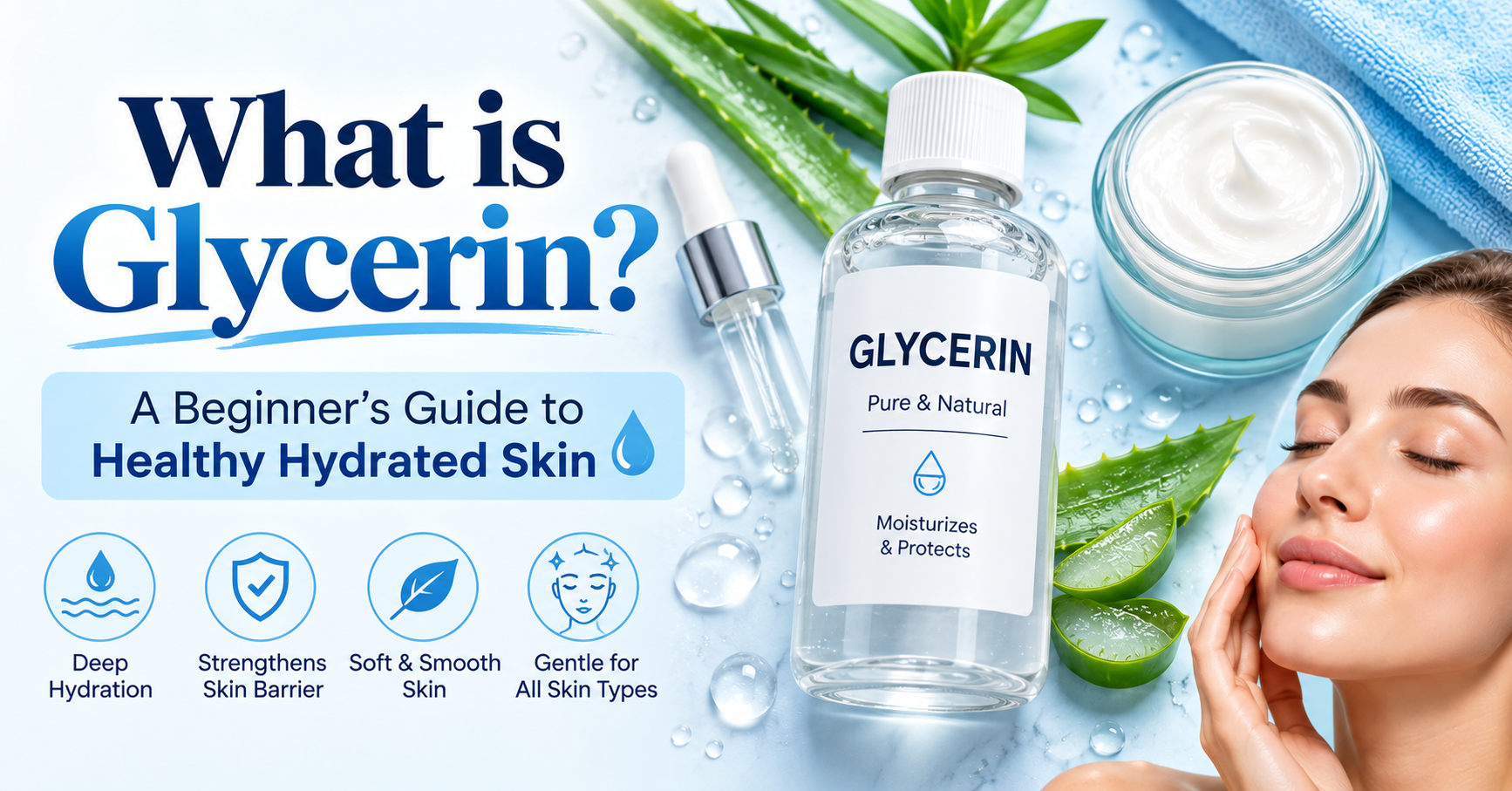
Have you ever looked at the ingredients list on your moisturizer, face wash, serum, or body lotion and noticed the word glycerin? It is one of the most common skincare ingredients in the world, yet many people don’t know what it actually does.
Some people believe glycerin is only meant for dry skin, while others think it is too sticky or can make the skin oily. The truth is very different. Glycerin is one of the safest, most effective, and most affordable skincare ingredients available today. Whether you have dry, oily, combination, or sensitive skin, glycerin can play an important role in keeping your skin healthy.
What makes glycerin special is its ability to attract water. Instead of simply sitting on the surface of your skin, it helps your skin hold on to moisture for longer. This makes the skin feel softer, smoother, and more comfortable throughout the day.
In this beginner-friendly guide, you’ll learn exactly what glycerin is, how it works, why skincare experts recommend it, and how to use it correctly for the best results.
Read More: What Is the Cosmetic Industry? A Beginner’s Complete Guide (2026)
What is Glycerin?
Glycerin, also called glycerol, is a clear, colorless, odorless liquid that has a slightly sweet taste. In skincare, it is mainly used as a humectant, which means it attracts moisture and helps keep the skin hydrated.
Imagine your skin as a sponge. When a sponge is dry, it becomes rough and stiff. But when it absorbs water, it becomes soft and flexible again. Glycerin works in a similar way. It attracts moisture and helps your skin stay hydrated, making it look healthier and feel smoother.
Because of this amazing property, glycerin is included in thousands of skincare and cosmetic products worldwide.
You can find glycerin in products such as:
- Moisturizers
- Face creams
- Cleansers
- Face serums
- Toners
- Body lotions
- Lip balms
- Hand creams
- Sheet masks
- Hair conditioners
- Soaps
- Sunscreens
Many dermatologists consider glycerin one of the most reliable ingredients because it works well for almost every skin type.
Where Does Glycerin Come From?
Glycerin can come from different natural and synthetic sources. Regardless of its source, purified cosmetic-grade glycerin works in the same way on the skin.
The most common sources include:
1. Vegetable Glycerin
Vegetable glycerin is produced from plant oils such as:
- Coconut oil
- Palm oil
- Soybean oil
- Sunflower oil
This is the type most commonly used in skincare products because it is gentle and suitable for daily use.
2. Animal-Based Glycerin
Some glycerin is obtained during the processing of animal fats. While it performs similarly on the skin, many modern skincare brands now prefer plant-based glycerin.
3. Synthetic Glycerin
Scientists can also produce glycerin in laboratories using chemical processes. It has the same moisturizing ability as natural glycerin and is commonly used in cosmetic manufacturing.
How Does Glycerin Work on the Skin?
To understand glycerin, think about watering a plant.
When a plant doesn’t receive enough water, its leaves become dry and weak. Once watered, the leaves become fresh and healthy again.
Your skin behaves in a similar way.
Every day, your skin loses moisture because of:
- Sun exposure
- Air conditioning
- Cold weather
- Hot showers
- Harsh soaps
- Pollution
- Aging
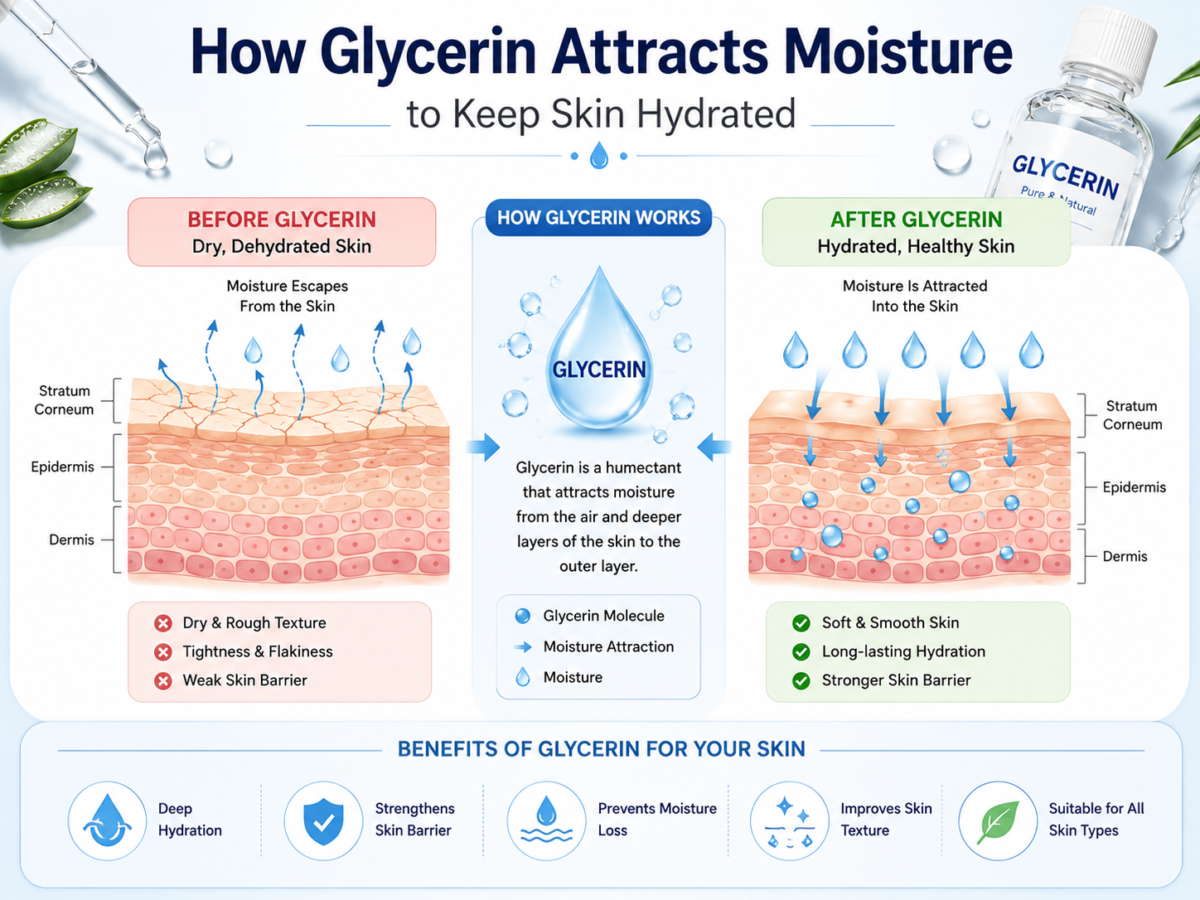
When your skin loses too much water, it may become:
- Dry
- Rough
- Tight
- Flaky
- Dull
- Irritated
Glycerin helps solve this problem by attracting water from the surrounding environment and the deeper layers of your skin to the outer surface. This extra moisture keeps your skin soft and comfortable.
After applying a glycerin-based moisturizer, your skin often feels smoother within minutes.
Read More: BMR. What is Batch Manufacturing Record in the Cosmetic Industry?
Why is Glycerin So Popular in Skincare?
There are thousands of moisturizing ingredients available today, but glycerin continues to be one of the favorites among skincare experts.
Here are a few reasons why:
It Works for Almost Everyone
Unlike some active ingredients that may cause irritation, glycerin is generally well tolerated by most skin types.
It is Affordable
Many luxury skincare products contain glycerin, but even budget-friendly moisturizers use it because it is highly effective.
It Mixes Well with Other Ingredients
Glycerin works beautifully alongside ingredients like:
- Hyaluronic acid
- Ceramides
- Niacinamide
- Panthenol
- Aloe vera
This makes it suitable for almost every skincare routine.
It Can Be Used Every Day
Most people can safely use glycerin-based skincare products both morning and night without worrying about overuse.
Top Benefits of Glycerin for Skin
1. Deeply Hydrates the Skin
Hydration is the biggest reason people use glycerin.
Instead of simply coating the skin with oil, glycerin attracts water and helps the skin maintain moisture.
As a result, your skin feels:
- Softer
- Plumper
- Healthier
- More comfortable
People with dehydrated skin often notice visible improvement after using glycerin consistently.
2. Helps Strengthen the Skin Barrier
Your skin has a protective barrier that keeps moisture inside while blocking harmful environmental irritants.
When this barrier becomes weak, your skin may become:
- Sensitive
- Dry
- Red
- Itchy
Glycerin supports the skin barrier by improving hydration levels, allowing the skin to repair itself more effectively over time.
A stronger skin barrier also helps reduce moisture loss throughout the day.
3. Reduces Dryness and Flakiness
Cold weather, frequent face washing, and harsh cleansers can leave your skin feeling dry.
Using products that contain glycerin helps reduce rough patches and flaky skin by restoring lost moisture.
Many winter moisturizers contain glycerin because it helps the skin stay comfortable even in dry weather.
4. Makes Skin Feel Softer
Healthy skin contains enough moisture to remain smooth and flexible.
When glycerin improves hydration, the skin naturally feels softer to the touch.
This is one reason why body lotions and hand creams often include glycerin as one of their main ingredients.
Is Glycerin Good for Every Skin Type?
One of the biggest reasons glycerin is so popular is that it works well for almost every skin type. Unlike some active ingredients that target only one concern, glycerin focuses on improving the skin’s moisture balance. Healthy hydration benefits nearly everyone, whether your skin is dry, oily, or sensitive.
Let’s understand how glycerin works for different skin types.
Read More: The Best Acne Patches 2026 : Your Complete Guide
Glycerin for Dry Skin
Dry skin often feels rough, tight, or flaky because it lacks enough moisture. Cold weather, hot showers, harsh soaps, and aging can make dryness even worse.
Glycerin helps by attracting water to the skin, making it feel softer and more comfortable. When used regularly in a moisturizer, it can reduce the appearance of dry patches and improve overall skin texture.
Practical Tip
If you have dry skin:
- Apply a glycerin-based moisturizer immediately after washing your face.
- Use it while your skin is still slightly damp to help lock in moisture.
- Follow with a richer cream during winter if your skin feels extra dry.
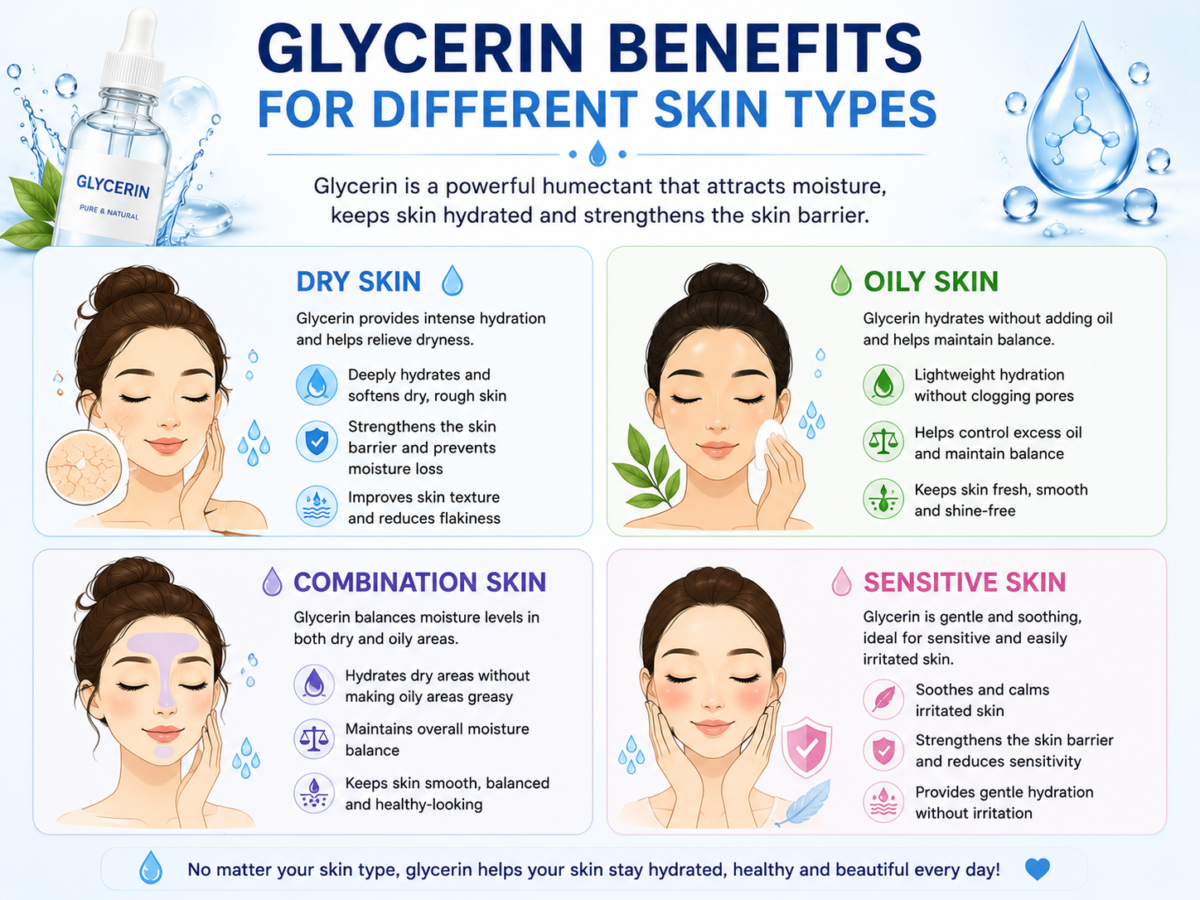
Glycerin for Oily Skin
Many people with oily skin avoid moisturizers because they think extra hydration will make their face oilier. In reality, oily skin can also become dehydrated.
When your skin lacks water, it may produce even more oil to compensate. This can lead to a shiny appearance and clogged pores.
Glycerin provides lightweight hydration without leaving a greasy feeling. That’s why many gel moisturizers for oily skin include glycerin as one of their main ingredients.
Practical Tip
Choose products labeled:
- Oil-free
- Non-comedogenic
- Lightweight gel moisturizer
These formulas usually hydrate the skin without making it feel heavy.
Glycerin for Combination Skin
Combination skin has both oily and dry areas. For example:
- Oily forehead, nose, and chin (T-zone)
- Dry or normal cheeks
Finding products that suit both areas can be difficult.
Because glycerin is lightweight yet effective, it hydrates dry areas without overwhelming oily zones. This balanced hydration makes it an excellent everyday ingredient for combination skin.
Glycerin for Sensitive Skin
Sensitive skin can react easily to environmental changes, harsh skincare products, or strong fragrances.
Pure glycerin itself is generally gentle and is often recommended in skincare products designed for sensitive skin.
However, the overall formula matters. A moisturizer containing glycerin but also packed with alcohol or strong fragrance may still irritate sensitive skin.
Practical Tip
Look for products that are:
- Fragrance-free
- Alcohol-free
- Dermatologist-tested
- Suitable for sensitive skin
Always patch test a new product before applying it to your entire face.
Glycerin for Acne-Prone Skin
People with acne sometimes skip moisturizers because they worry about clogged pores.
The good news is that glycerin itself is non-comedogenic, meaning it does not typically clog pores.
Keeping acne-prone skin properly hydrated is important because many acne treatments, such as benzoyl peroxide and retinoids, can cause dryness.
A lightweight moisturizer containing glycerin can help reduce this dryness while supporting the skin barrier.
Read More: Dermatologist Skincare: A Complete Guide to Premium, Clinically Backed Skincare
Scientific Benefits of Glycerin
Beyond making the skin feel soft, glycerin offers several scientifically recognized skincare benefits.
1. Improves Skin Hydration
Hydration is the most well-known benefit of glycerin.
By attracting water to the outer layer of the skin, glycerin helps maintain a healthy moisture balance throughout the day.
Well-hydrated skin often looks:
- Fresher
- Smoother
- More radiant
- Healthier
2. Reduces Transepidermal Water Loss (TEWL)
Our skin naturally loses water every day through a process called Transepidermal Water Loss (TEWL).
Excessive water loss can make the skin:
- Dry
- Tight
- Dull
- Irritated
Glycerin helps reduce this moisture loss by improving the skin’s hydration and supporting its natural protective barrier.
3. Supports Skin Barrier Repair
A damaged skin barrier can cause:
- Redness
- Irritation
- Dryness
- Increased sensitivity
Hydrated skin repairs itself more effectively than dehydrated skin.
Because glycerin keeps the skin moisturized, it supports the skin’s natural recovery process and helps maintain a healthier barrier over time.
4. Makes Skin Look Healthier
Healthy hydration improves the overall appearance of the skin.
While glycerin is not a whitening or anti-aging ingredient, skin that is well hydrated often appears:
- More even
- More supple
- Less rough
- Naturally glowing
Many people mistake hydrated skin for “fairer” skin because it reflects light more evenly.
5. Enhances the Performance of Other Skincare Products
Many skincare routines combine glycerin with ingredients such as:
- Hyaluronic acid
- Niacinamide
- Ceramides
- Panthenol
- Aloe vera
Together, these ingredients create products that hydrate, soothe, and strengthen the skin more effectively than using a single ingredient alone.
Common Skincare Products That Contain Glycerin
You may already be using glycerin without realizing it.
Here are some of the most common products that include glycerin.
Moisturizers
This is the most popular use of glycerin.
Whether you buy an affordable moisturizer or a premium cream, glycerin is often listed among the first few ingredients because it helps maintain skin hydration.
Face Washes
Many gentle cleansers include glycerin to prevent the skin from feeling tight after washing.
Instead of stripping away moisture, these cleansers help keep the skin comfortable.
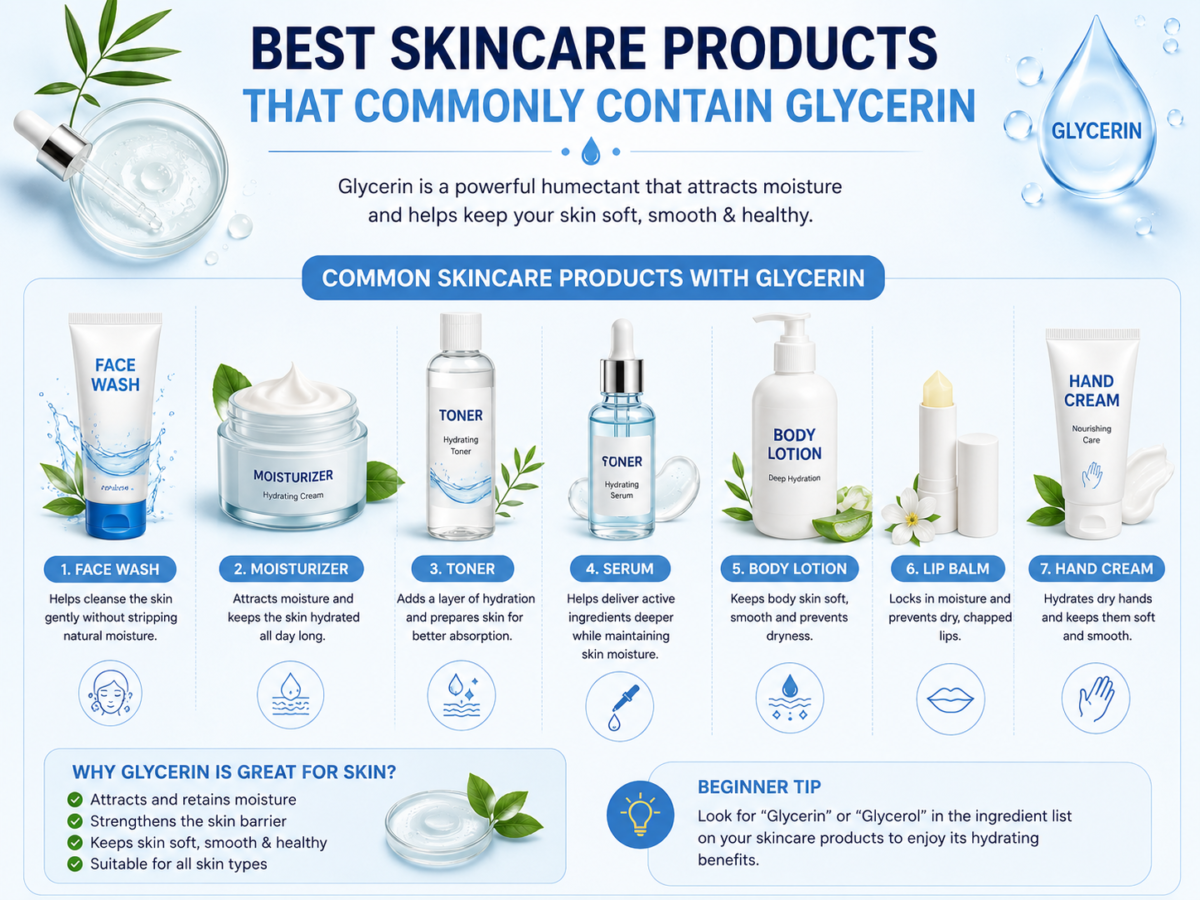
Face Serums
Hydrating serums often combine glycerin with hyaluronic acid and panthenol for an extra boost of moisture.
These serums are especially useful if your skin feels dehydrated after cleansing.
Toners
Modern hydrating toners frequently contain glycerin.
Unlike older alcohol-based toners that could dry out the skin, hydrating toners prepare the skin for moisturizers and serums by adding a layer of moisture.
Body Lotions
The skin on the body loses moisture just like the face.
Body lotions containing glycerin help reduce roughness on areas such as:
- Elbows
- Knees
- Hands
- Feet
Regular use leaves the skin feeling smoother and more comfortable.
Lip Balms
Dry, cracked lips need moisture to heal.
Many lip balms include glycerin because it attracts water and helps keep lips soft throughout the day.
Hand Creams
Frequent handwashing can dry out the skin.
Hand creams with glycerin help restore moisture and protect the hands from becoming rough or cracked.
How to Choose the Right Glycerin Product
Not every glycerin product is the same. Choosing the right formula depends on your skin type and concerns.
Here are a few tips:
Read the Ingredient List
If glycerin appears near the top of the ingredient list, the product likely contains a useful amount.
Match the Product to Your Skin Type
- Dry skin: Creams or rich moisturizers.
- Oily skin: Lightweight gel moisturizers.
- Sensitive skin: Fragrance-free and alcohol-free formulas.
- Combination skin: Lightweight lotions or gel-creams.
Look for Helpful Ingredients
Glycerin works especially well when combined with:
- Ceramides
- Hyaluronic acid
- Panthenol
- Squalane
- Aloe vera
These combinations provide hydration while supporting the skin barrier.
How to Use Glycerin Correctly
Glycerin is easy to use, but using it the right way makes a big difference. Many beginners think they should apply pure glycerin directly to their skin every day. In reality, the best method depends on the product you’re using and your skin type.
The safest and easiest option is to use skincare products that already contain glycerin in a balanced formula.
Using a Glycerin-Based Moisturizer
For most people, a moisturizer containing glycerin is the best choice.
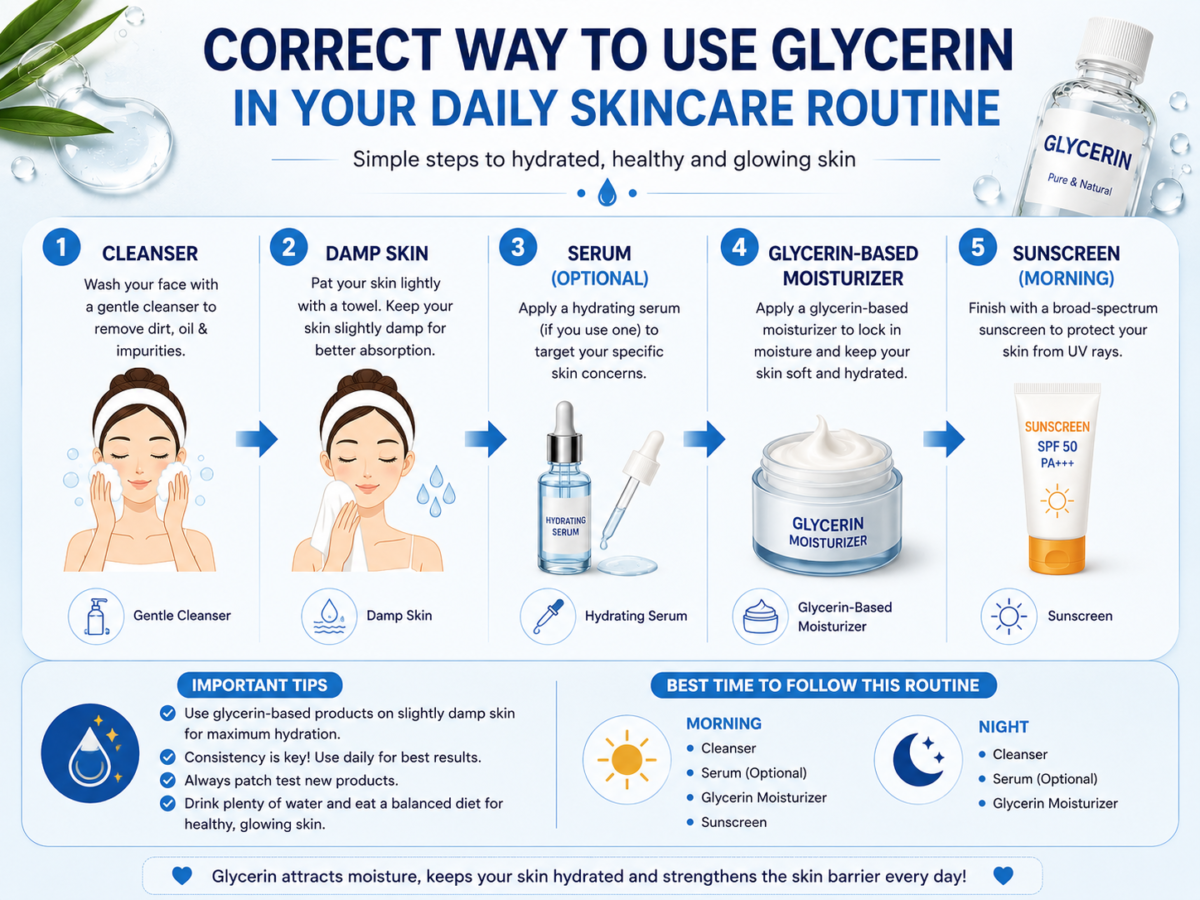
Step-by-Step Routine
Step 1: Wash your face with a gentle cleanser.
Step 2: Pat your skin lightly with a towel, leaving it slightly damp.
Step 3: Apply your serum (if you use one).
Step 4: Apply a glycerin-based moisturizer.
Step 5: In the morning, finish with sunscreen.
This simple routine helps your skin stay hydrated throughout the day.
When Should You Apply Glycerin?
Timing is important because glycerin works best when applied to slightly damp skin.
Morning Routine
- Cleanser
- Hydrating toner (optional)
- Serum
- Glycerin-based moisturizer
- Sunscreen
Night Routine
- Cleanser
- Treatment serum (optional)
- Glycerin-based moisturizer
Nighttime is when your skin naturally repairs itself, so applying a moisturizer before bed can help support overnight hydration.
Can You Apply Pure Glycerin Directly to Your Face?
This is one of the most common questions beginners ask.
The answer is yes, but with caution.
Pure glycerin is highly concentrated. Applying a large amount directly to the skin may leave it feeling sticky or uncomfortable. In very dry environments, it may even draw moisture from the deeper layers of the skin instead of the air, which can increase dryness if it’s not paired with other moisturizing ingredients.
Because of this, dermatologists usually recommend using formulated skincare products that contain glycerin rather than using pure glycerin on its own.
If You Want to Use Pure Glycerin
If you choose to use cosmetic-grade pure glycerin:
- Mix a few drops with water or rose water before applying.
- Use only a small amount.
- Follow with a moisturizer to help seal in hydration.
- Avoid applying thick layers.
If you notice irritation, discontinue use and switch to a ready-made moisturizer containing glycerin.
Common Mistakes to Avoid
Even though glycerin is beginner-friendly, a few common mistakes can reduce its effectiveness.
1. Applying Too Much
More is not always better.
Using excessive glycerin can leave the skin feeling sticky and uncomfortable.
Better approach: Use a thin, even layer.
2. Skipping Moisturizer
Some people apply diluted glycerin and stop there.
A moisturizer helps lock in hydration and supports the skin barrier, so it’s a good idea to apply one after glycerin if you’re using pure glycerin.
3. Forgetting Sunscreen
Hydrated skin still needs protection from UV rays.
Daily sunscreen helps prevent:
- Premature aging
- Sun damage
- Dark spots
- Uneven skin tone
A simple morning routine of moisturizer followed by sunscreen is one of the best habits for healthy skin.
4. Ignoring the Ingredient List
Not every product containing glycerin is suitable for everyone.
Some products may also include:
- Strong fragrance
- Drying alcohols
- Harsh exfoliating ingredients
Always read the ingredient list, especially if you have sensitive skin.
5. Expecting Instant Results
Glycerin improves hydration quickly, but healthier-looking skin develops with consistent daily use.
Most people notice the best improvements after several weeks of regular skincare.
Possible Side Effects of Glycerin
Glycerin is considered one of the safest skincare ingredients, but no ingredient is perfect for everyone.
Possible side effects are uncommon but may include:
- Mild irritation
- Temporary stickiness
- Redness (rare)
- Allergic reaction (very rare)
If you experience persistent irritation, stop using the product and consult a dermatologist.
Who Should Be Careful?
Although glycerin is suitable for most people, extra care is recommended if you:
- Have very sensitive skin.
- Have a known allergy to a product ingredient.
- Are using prescription acne or eczema treatments.
In these cases, introduce new products gradually and patch test first.
How to Patch Test a New Product
Before applying a new skincare product to your face:
- Apply a small amount behind your ear or on your inner forearm.
- Wait for 24 hours.
- Watch for redness, itching, burning, or swelling.
- If no reaction occurs, the product is generally safe to use on your face.
Patch testing is a simple habit that can help prevent unnecessary skin irritation.
Can Glycerin Be Used Every Day?
Yes.
Most people can safely use glycerin-containing skincare products every morning and every night.
Regular use helps maintain healthy hydration and supports the skin’s natural barrier over time.
Consistency is more important than using large amounts.
DIY Glycerin Skincare Tips
If you enjoy simple homemade skincare, glycerin can be used in easy DIY recipes. Always use cosmetic-grade glycerin, keep everything clean, and patch test before use.
1. Simple Hydrating Mist
Ingredients:
- 1 tablespoon glycerin
- 4 tablespoons rose water
Mix in a clean spray bottle and lightly mist your face before applying moisturizer.
2. Dry Hands Treatment
Before bed:
- Wash your hands.
- Apply a glycerin-rich hand cream.
- Wear soft cotton gloves overnight.
This can help improve rough, dry hands with regular use.
3. Lip Care Routine
For dry lips:
- Gently exfoliate with a soft, damp cloth.
- Apply a lip balm containing glycerin.
- Reapply throughout the day as needed.
This routine helps keep lips smooth and comfortable.
Common Myths About Glycerin
There are many misconceptions about glycerin. Let’s separate fact from fiction so you can use this ingredient with confidence.
Myth 1: Glycerin Is Only for Dry Skin
Fact: Glycerin benefits almost every skin type.
Whether your skin is oily, combination, sensitive, or dry, proper hydration is essential. Glycerin adds water to the skin without making it greasy, which is why it appears in products designed for all skin types.
Myth 2: Glycerin Makes Skin Oily
Fact: Glycerin hydrates, but it does not add oil.
Oil and water are different. Glycerin helps your skin hold moisture, but it doesn’t increase oil production. Many lightweight gel moisturizers for oily and acne-prone skin contain glycerin because it provides hydration without leaving a heavy finish.
Myth 3: Pure Glycerin Works Better Than Skincare Products
Fact: Not necessarily.
Most dermatologists recommend using well-formulated skincare products containing glycerin instead of applying pure glycerin directly. Professional formulations combine glycerin with ingredients that improve absorption, strengthen the skin barrier, and reduce stickiness.
Myth 4: Glycerin Can Replace a Moisturizer
Fact: Glycerin is only one part of a good moisturizing routine.
While glycerin attracts moisture, a moisturizer often contains additional ingredients such as ceramides, squalane, or nourishing oils that help keep that moisture in the skin.
Expert Tips for Getting the Best Results
If you want to make the most of glycerin, follow these simple skincare habits.
Apply on Slightly Damp Skin
After cleansing, gently pat your face with a towel but don’t let it dry completely. Applying a glycerin-based product to slightly damp skin helps improve hydration.
Use It Consistently
Healthy skin develops over time.
Instead of expecting overnight results, use glycerin-containing products every day as part of your regular skincare routine.
Choose Products Based on Your Skin Type
Different skin types need different textures.
- Dry skin: Rich cream moisturizers.
- Oily skin: Lightweight gel moisturizers.
- Combination skin: Gel-cream formulas.
- Sensitive skin: Fragrance-free, dermatologist-tested products.
Choosing the right formula is just as important as choosing the right ingredient.
Don’t Forget Sunscreen
Hydrated skin still needs protection from the sun.
Every morning, apply a broad-spectrum sunscreen with SPF 30 or higher after your moisturizer. This helps reduce sun damage, uneven skin tone, and premature signs of aging.
Drink Enough Water
Skincare products support hydration from the outside, while drinking enough fluids supports your body’s overall hydration. Although drinking more water alone won’t cure dry skin, staying well hydrated contributes to healthy skin function.
Who Should Use Glycerin?
Glycerin is a great choice for people who want to:
- Improve skin hydration.
- Reduce dryness and rough patches.
- Support a healthy skin barrier.
- Keep skin soft and comfortable.
- Add a gentle moisturizing step to their skincare routine.
It is especially useful during winter, after frequent face washing, or whenever the skin feels dehydrated.
Final Thoughts
Glycerin may not be the trendiest skincare ingredient, but it has earned its place as one of the most trusted. Its ability to attract and retain moisture makes it a valuable addition to daily skincare routines for beginners and experienced users alike.
Unlike many ingredients that target a single concern, glycerin supports the skin’s overall health by improving hydration and helping maintain a strong skin barrier. It works well with other skincare ingredients, suits most skin types, and is found in everything from cleansers to moisturizers and lip balms.
If you’re building a skincare routine from scratch, choosing products that contain glycerin is a simple and effective way to keep your skin soft, comfortable, and healthy throughout the year. Consistent care, a gentle routine, and daily sun protection will always deliver better long-term results than chasing quick fixes.
Frequently Asked Questions (FAQs)
1. What is glycerin used for in skincare?
Glycerin is mainly used to attract moisture to the skin. It helps keep the skin hydrated, soft, smooth, and supports the natural skin barrier.
2. Is glycerin good for oily skin?
Yes. Glycerin provides lightweight hydration without adding oil, making it suitable for oily and acne-prone skin when used in non-comedogenic products.
3. Can I use glycerin every day?
Yes. Most people can safely use glycerin-containing skincare products every morning and evening as part of their daily routine.
4. Can glycerin help with dry skin?
Yes. Glycerin is one of the most effective moisturizing ingredients for reducing dryness, roughness, and flaky skin by helping the skin retain moisture.
5. Can glycerin be applied directly to the face?
Pure cosmetic-grade glycerin can be used carefully, but it is usually better to use skincare products that already contain glycerin in a balanced formula. If using pure glycerin, dilute it with water or rose water and apply only a small amount.
6. Is glycerin safe for sensitive skin?
Generally, yes. Glycerin is considered gentle and is commonly included in products for sensitive skin. However, always patch test a new product before full application.
7. Does glycerin clog pores?
No. Glycerin is generally considered non-comedogenic and does not typically clog pores.
8. Which ingredients work well with glycerin?
Glycerin pairs well with hyaluronic acid, ceramides, niacinamide, panthenol, aloe vera, and squalane to improve hydration and support the skin barrier.
9. Can glycerin brighten the skin?
Glycerin does not bleach or lighten the skin. However, well-hydrated skin often looks smoother, healthier, and naturally more radiant.
10. Is glycerin suitable for all seasons?
Yes. Glycerin can be used throughout the year. It helps protect against dryness in winter and maintains healthy hydration during warmer months when paired with a suitable moisturizer.