
Many people believe that every cosmetic product sold in the market is approved by the FDA before reaching store shelves. This is one of the biggest misconceptions in the beauty and skincare industry.
The truth is much more interesting.
Most cosmetics are not approved by the U.S. Food and Drug Administration (FDA) before they are sold. Instead, cosmetic companies are legally responsible for making sure their products are safe for consumers when used according to the directions on the label.
Understanding what FDA-approved cosmetic use really means can help you become a smarter shopper. It also helps you avoid misleading marketing claims that make products appear more trustworthy than they actually are.
Whether you are buying a moisturizer, sunscreen, lipstick, face serum, shampoo, or anti-aging cream, knowing how FDA regulations work allows you to make informed decisions instead of relying on attractive packaging or social media trends.
What Does FDA-Approved Cosmetic Use Mean?
The term FDA-approved cosmetic use often creates confusion because many consumers think it means every beauty product has been tested and officially certified by the FDA.
In reality, this is not how cosmetic regulation works.
The FDA regulates cosmetics sold in the United States, but most cosmetic products and cosmetic ingredients do not need FDA approval before being marketed.
Read More :What Is Cosmetic Research And Development (R&D)? A Complete Guide
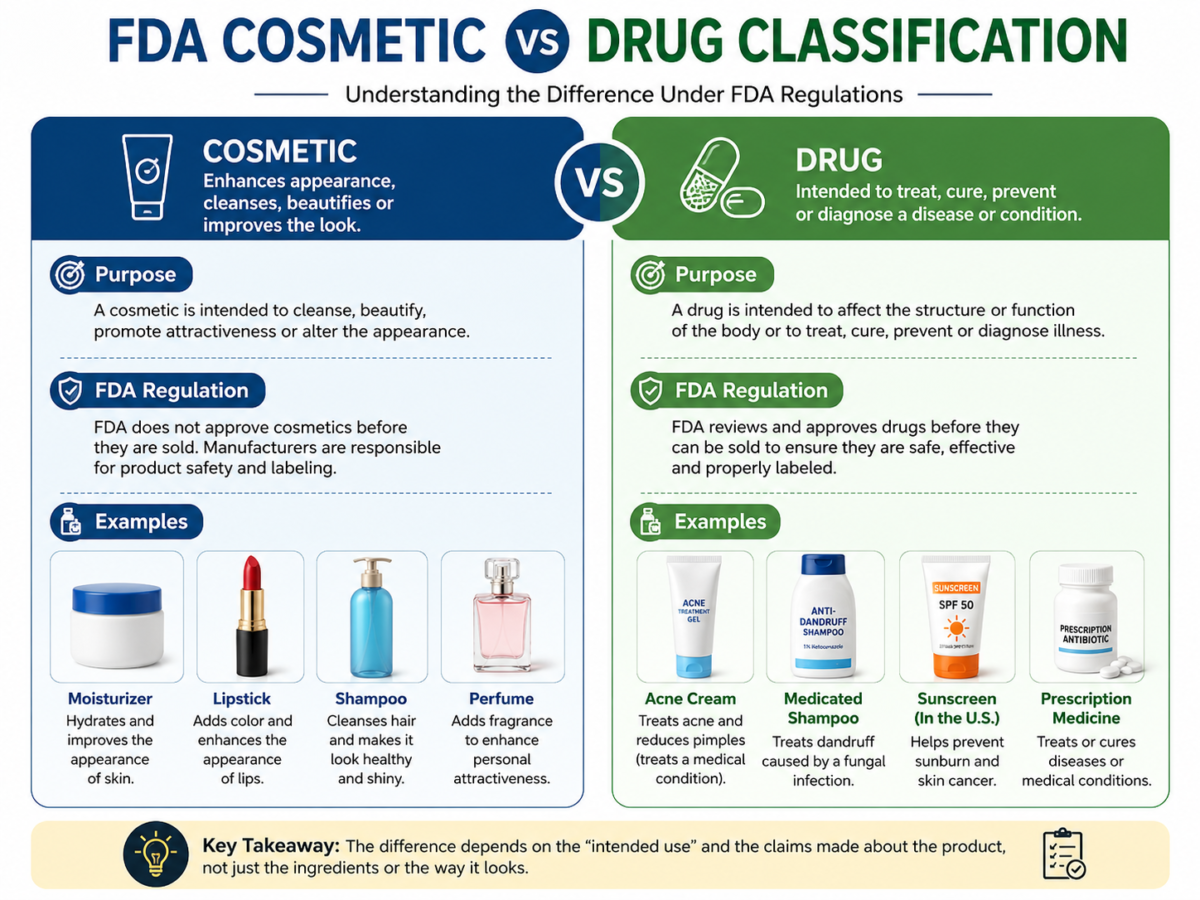
Instead, manufacturers must ensure that:
- Their products are safe when used correctly.
- Labels are truthful and not misleading.
- Products do not contain prohibited ingredients.
- Manufacturing follows good quality practices.
This means companies carry the primary responsibility for product safety.
Simple Example
Imagine a skincare company launches a new facial moisturizer.
Before selling it, the company should:
- Test the formula for safety.
- Check ingredient compatibility.
- Ensure preservatives work properly.
- Confirm the label contains accurate information.
- Avoid making false medical claims.
The company does not normally send the moisturizer to the FDA for approval before selling it.
Read More: The Best Acne Patches 2026 : Your Complete Guide
Why Do People Think All Cosmetics Are FDA Approved?
There are several reasons why this misunderstanding is so common.
Marketing Confusion
Some advertisements use phrases like:
- FDA Registered
- FDA Compliant
- Manufactured in FDA Registered Facility
These statements sound impressive but do not mean the cosmetic product itself has been approved by the FDA.
Medical Products vs Cosmetics
Many people also confuse cosmetics with drugs.
Certain skincare products are legally considered drugs because they claim to treat or prevent medical conditions.
For example:
- Acne treatment products
- Anti-dandruff shampoos
- Fluoride toothpaste
- Some medicated sunscreens in the United States
These products follow different regulations than ordinary cosmetics.
What Is Considered a Cosmetic?
According to U.S. regulations, a cosmetic is a product intended for:
- Cleansing
- Beautifying
- Improving appearance
- Adding fragrance
- Maintaining skin or hair appearance
Cosmetics are designed to improve how you look without changing the body’s structure or treating diseases.
Common Cosmetic Products
- Facial cleansers
- Moisturizers
- Lipsticks
- Lip balm
- Face powder
- Foundation
- Mascara
- Eyeshadow
- Blush
- Perfume
- Shampoo
- Conditioner
- Hair serum
- Nail polish
- Body lotion
These products generally fall under cosmetic regulations.
Read More: What is Cosmetic Production? Complete Guide to Process, Stages & Departments.
What Products Actually Need FDA Approval?
This is one of the most important things beginners should understand.
Some products require FDA approval because they are classified as drugs rather than cosmetics.
Examples include:
| Product | FDA Approval Needed? |
|---|---|
| Lipstick | No |
| Face Moisturizer | No |
| Perfume | No |
| Shampoo | Usually No |
| Hair Conditioner | No |
| Foundation | No |
| Acne Treatment Cream | Yes (drug regulations apply) |
| Prescription Skin Cream | Yes |
| Medicated Dandruff Shampoo | Yes |
| Certain Sunscreens (US) | Yes |
The difference depends mainly on the claims made by the product, not simply on its appearance.
Cosmetic vs Drug: Understanding the Difference
This is where many skincare brands must be very careful.
A cosmetic simply improves appearance.
A drug claims to affect the body’s structure or function or to treat or prevent disease.
Cosmetic Claims
These are generally acceptable cosmetic claims:
- Moisturizes skin
- Makes skin softer
- Adds shine
- Improves appearance
- Gives a healthy glow
- Reduces the appearance of fine lines
- Provides hydration
Drug Claims
These may classify a product as a drug:
- Treats acne
- Heals eczema
- Removes fungal infection
- Cures psoriasis
- Eliminates wrinkles permanently
- Stimulates collagen production to repair damaged skin
- Prevents skin disease
Once a product makes medical claims, different regulations may apply.
Why FDA Regulation Is Still Important
Even though most cosmetics are not pre-approved, the FDA still plays an important role in protecting consumers.
The FDA can:
- Inspect manufacturing facilities.
- Monitor product safety.
- Investigate consumer complaints.
- Take action against unsafe products.
- Remove harmful products from the market.
- Warn companies about misleading claims.
- Monitor contamination issues.
This system encourages companies to maintain high safety standards before products reach consumers.
How Does the FDA Regulate Cosmetics?
Although most cosmetic products do not require FDA approval before they are sold, the FDA still has an important role in protecting consumers. The agency monitors cosmetic products after they enter the market and can take action if a product is found to be unsafe, contaminated, or marketed with false claims.
Think of it this way: cosmetic companies are responsible for making safe products, while the FDA acts as a regulatory authority that can investigate and enforce the law when necessary.
For example, if several customers report skin irritation after using a newly launched face cream, the FDA may review the complaints, inspect the manufacturing facility if needed, and require corrective action if safety issues are found.
This system encourages cosmetic manufacturers to maintain high-quality standards throughout product development.
How Cosmetic Companies Ensure Product Safety
Before launching a cosmetic product, responsible manufacturers carry out several safety checks. While these tests may vary depending on the product type, the goal is always the same—to ensure that consumers can use the product safely when following the directions on the label.
Some of the most common safety evaluations include:
1. Ingredient Safety Review
Every ingredient is carefully reviewed before being included in a formulation.
Manufacturers evaluate factors such as:
- Safe concentration levels
- Possible skin irritation
- Allergy risks
- Compatibility with other ingredients
- Scientific research supporting safe use
For instance, a preservative that works well in a shampoo may not be suitable for use around the eyes in an eye cream.
2. Stability Testing
A cosmetic product should remain safe and effective throughout its shelf life.
Stability testing helps determine whether the product maintains its:
- Texture
- Color
- Fragrance
- pH level
- Performance
under different storage conditions such as heat, humidity, and light.
Practical Example
Imagine leaving a moisturizer inside a hot car during summer. If the formula separates into layers or develops an unusual odor, it may no longer be stable. Stability testing helps manufacturers identify and prevent these issues before products reach customers.
3. Microbiological Testing
Cosmetics that contain water can become contaminated by bacteria, yeast, or mold if they are not properly preserved.
Microbiological testing checks whether:
- Harmful microorganisms are absent
- Preservatives are effective
- The product remains safe during normal use
This testing is especially important for creams, lotions, gels, and serums.
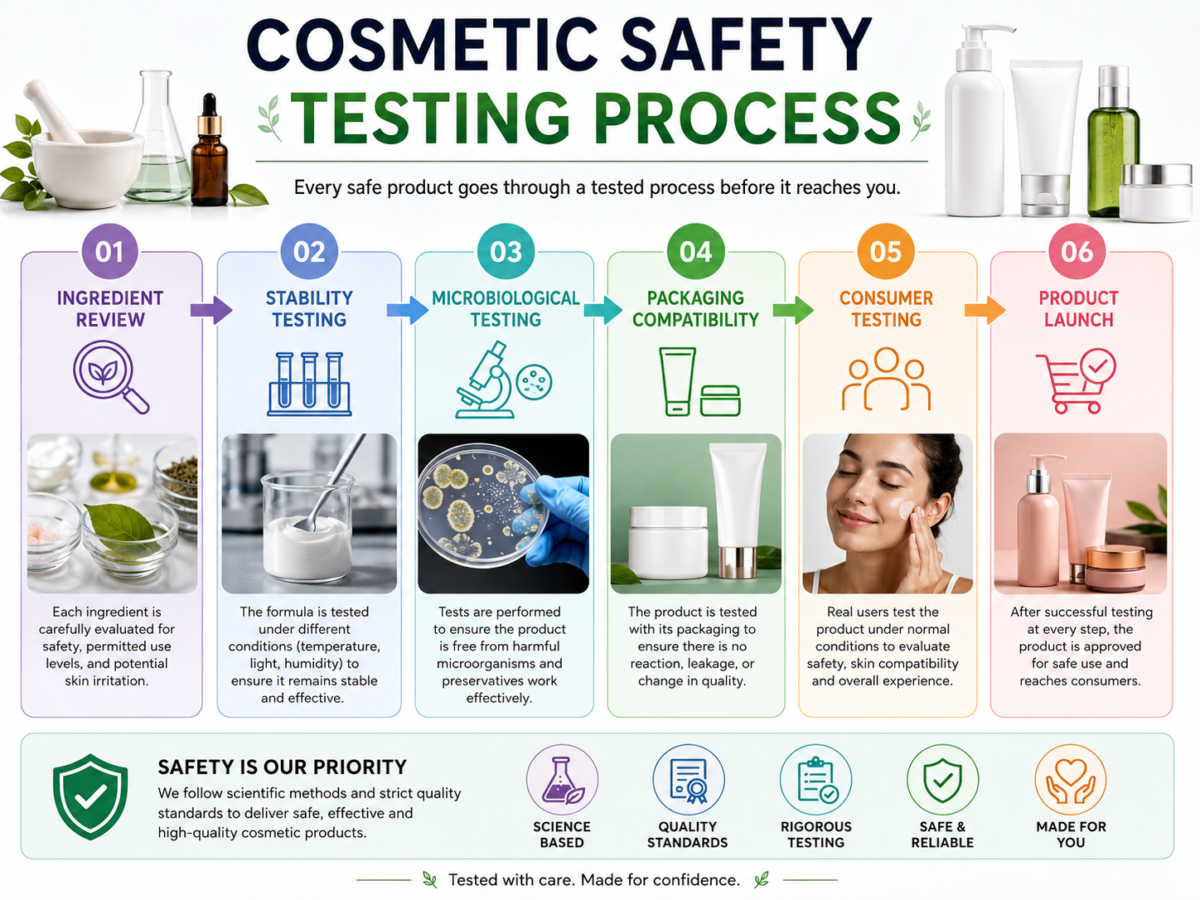
4. Compatibility Testing
The cosmetic formula must work well with its packaging.
Manufacturers check whether the product reacts with:
- Plastic containers
- Glass bottles
- Pumps
- Tubes
- Caps
A poor packaging choice can reduce product quality or even contaminate the formula over time.
5. Consumer Use Testing
Many companies also conduct controlled user trials before launching a product.
Volunteers use the product under normal conditions while researchers monitor:
- Skin comfort
- Ease of application
- Product performance
- Any signs of irritation
This helps identify potential problems before the product becomes widely available.
Does the FDA Approve Cosmetic Ingredients?
This is another area where many people become confused.
In general, most cosmetic ingredients are not individually approved by the FDA before they are used. However, manufacturers are responsible for ensuring that every ingredient is safe when used as intended.
There are also certain ingredients that are restricted or prohibited because they may pose health risks.
Companies must stay updated with current regulations and avoid using banned substances in their formulations.
Read More: Why Is PH Important In Skincare Products? Everything You Need To Know
What Information Must Cosmetic Labels Include?
A cosmetic label is much more than attractive packaging. It provides essential information that helps consumers use the product safely.
A properly labeled cosmetic usually includes:
- Product name
- Intended purpose
- Ingredient list
- Net quantity
- Directions for use (if needed)
- Manufacturer or distributor details
- Necessary safety warnings
Accurate labeling also helps consumers compare products and identify ingredients they may wish to avoid.
Why Reading Ingredient Labels Matters
Many shoppers focus only on the front of the package, where marketing messages are displayed.
However, the ingredient list often provides far more useful information.
Reading the label can help you:
- Identify potential allergens
- Avoid ingredients that irritate your skin
- Compare similar products
- Understand what the product actually contains
Beginner Tip
If you have sensitive skin, always check for ingredients that have previously caused irritation. Even a highly rated product may not suit every skin type.
Common Myths About FDA-Approved Cosmetics
There are many misconceptions surrounding cosmetic safety. Let’s clear up some of the most common ones.
Myth 1: Every Cosmetic Is FDA Approved
Reality: Most cosmetics are not approved by the FDA before they are sold. Manufacturers are responsible for ensuring product safety.
Myth 2: FDA-Approved Means a Product Is Perfect
Even if a product falls under FDA drug regulations, no product is guaranteed to work perfectly for everyone.
Individual factors such as:
- Skin type
- Allergies
- Existing skin conditions
- Environmental conditions
can all affect how a product performs.
Myth 3: Natural Products Are Always Safer
Natural ingredients can still cause allergic reactions or skin irritation.
For example, some people may react to:
- Essential oils
- Plant extracts
- Natural fragrances
- Botanical ingredients
“Natural” does not automatically mean “risk-free.”
Myth 4: Expensive Cosmetics Are Always Better
A higher price does not always indicate better quality.
Many affordable products contain well-researched ingredients and perform just as well as premium brands.
The best cosmetic is one that suits your skin type, addresses your concerns, and is formulated safely.
How to Choose Safe Cosmetic Products
Choosing the right product becomes much easier when you follow a few practical guidelines.
Look for Transparent Brands
Reliable companies usually provide:
- Complete ingredient lists
- Clear usage instructions
- Customer support
- Honest product claims
Transparency is often a sign of good manufacturing practices.
Buy From Trusted Sellers
Purchase cosmetics from:
- Official brand websites
- Authorized retailers
- Reputable pharmacies
- Well-known beauty stores
This reduces the risk of receiving counterfeit or expired products.
Avoid Unrealistic Claims
Be cautious of products that promise results such as:
- Permanent wrinkle removal in one day
- Instant skin whitening
- Guaranteed acne cure overnight
- Zero side effects for everyone
Skincare improvements usually take time and vary from person to person.
What Happens If a Cosmetic Product Is Found Unsafe?
Even after a cosmetic product is available in the market, its safety continues to be monitored. If a product is linked to serious health concerns, contamination, or misleading claims, regulatory authorities can investigate the issue.
Depending on the situation, the manufacturer may need to:
- Stop selling the product
- Correct labeling mistakes
- Improve manufacturing practices
- Recall affected products
- Inform customers about potential risks
These actions help reduce harm and improve consumer safety.
Example
Suppose a face cream becomes contaminated with harmful bacteria due to poor manufacturing practices. Customers begin reporting skin infections after using the product.
In such a case, the company may voluntarily recall the product while regulatory authorities investigate the problem. This prevents more people from being exposed to the unsafe product.
What Is a Cosmetic Recall?
A cosmetic recall is the process of removing a product from the market because it may not meet safety or quality standards.
Recalls can happen for several reasons, including:
- Microbial contamination
- Incorrect labeling
- Undeclared allergens
- Packaging defects
- Manufacturing errors
- Presence of prohibited ingredients
Not every recall means people have been seriously harmed. Sometimes companies identify a problem early and remove the product as a precaution.
Signs That a Cosmetic Product May Not Be Safe
Before using any skincare or beauty product, take a few minutes to inspect it carefully.
You should avoid using a product if you notice:
- A broken or damaged seal
- An unusual smell
- Changes in color
- Separation of the formula
- Mold or visible contamination
- An expired date
- Leaking packaging
These signs may indicate that the product has deteriorated or become contaminated.
Practical Tip
If your moisturizer suddenly changes color or develops an unpleasant odor after a few months, stop using it—even if some product is still left. Using spoiled cosmetics can increase the risk of skin irritation or infection.
How to Store Cosmetics Safely
Proper storage helps maintain product quality and extends shelf life.
Here are some simple storage tips:
Keep Products Away from Direct Sunlight
Heat and sunlight can break down active ingredients and affect the product’s texture.
Store products in a cool, dry place instead of leaving them near windows or inside a hot car.
Close Containers Tightly
Always close lids and caps after use.
This helps prevent:
- Air exposure
- Moisture entry
- Bacterial contamination
Use Clean Hands
Whenever possible, avoid dipping dirty fingers into jars of creams or masks.
Instead:
- Wash your hands before use.
- Use a clean spatula for products in jars.
This simple habit helps reduce bacterial contamination.
Follow the Expiry Date
Every cosmetic product has a recommended shelf life.
Using products long after they expire may increase the risk of:
- Skin irritation
- Reduced effectiveness
- Contamination
When in doubt, replace old products with fresh ones.
Practical Skincare Tips for Safe Cosmetic Use
Choosing a safe product is important, but using it correctly matters just as much.
1. Perform a Patch Test
Whenever you try a new skincare product, test a small amount on a small area of skin, such as behind your ear or on the inside of your forearm.
Wait 24–48 hours to check for:
- Redness
- Itching
- Burning
- Swelling
If irritation occurs, avoid using the product on your face.
2. Introduce One New Product at a Time
Trying several new products at once makes it difficult to identify which one is causing irritation.
Instead:
- Start with one product.
- Use it consistently for a few days.
- Add another product only if your skin responds well.
This approach is especially helpful for beginners.
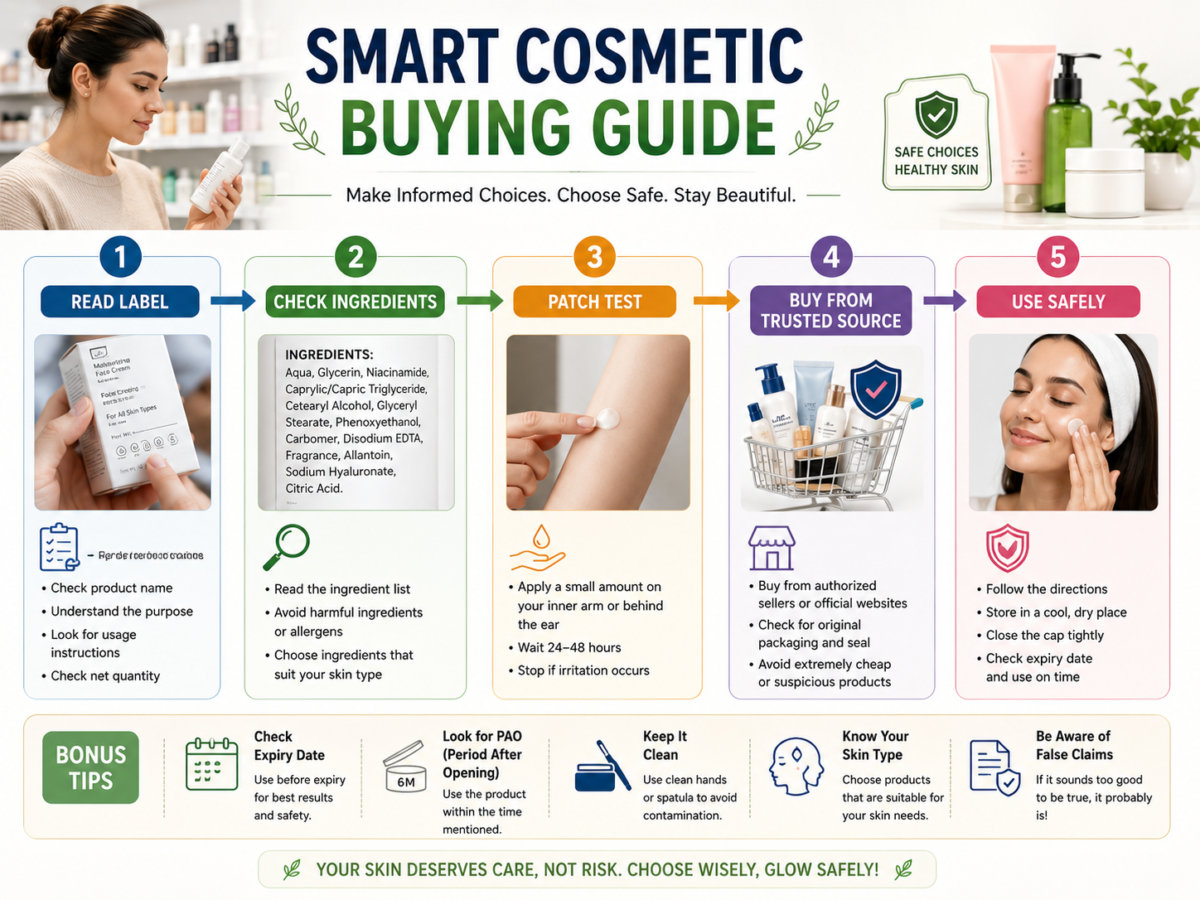
3. Follow the Directions
Using more product does not always produce better results.
For example:
- Applying a thick layer of moisturizer won’t necessarily hydrate your skin better.
- Overusing exfoliating products can damage your skin barrier.
Always follow the instructions provided by the manufacturer.
4. Don’t Share Personal Cosmetics
Items such as mascara, lipstick, eyeliner, and makeup brushes can transfer bacteria between users.
Sharing these products increases the risk of infections, particularly around the eyes and lips.
5. Clean Makeup Tools Regularly
Dirty makeup brushes and sponges collect:
- Oil
- Dead skin cells
- Dust
- Bacteria
Wash brushes with a gentle cleanser at least once a week if you use them regularly.
How to Report Problems with Cosmetic Products
If you experience an unexpected reaction after using a cosmetic, stop using it immediately.
You should also:
- Keep the product and packaging.
- Take photos if visible skin reactions occur.
- Contact the manufacturer.
- Seek medical advice if symptoms are severe.
- Report serious adverse reactions to the appropriate regulatory authority in your country.
Reporting safety issues helps authorities identify patterns and protect other consumers.
FDA Regulation Compared with Other Countries
Different countries regulate cosmetics in different ways.
While the FDA oversees cosmetics in the United States, other regions have their own regulatory systems.
For example:
- The European Union has detailed cosmetic safety requirements before products reach the market.
- India regulates cosmetics through the Central Drugs Standard Control Organization (CDSCO) under the Drugs and Cosmetics Act.
- Other countries have their own standards for manufacturing, labeling, and product safety.
Although regulations vary, the common goal is the same: protecting consumer health.
Key Takeaways About FDA-Approved Cosmetic Use
Before buying any cosmetic product, keep these important points in mind:
- Most cosmetics do not require FDA approval before being sold.
- Cosmetic manufacturers are responsible for ensuring product safety.
- The FDA monitors cosmetic safety and can take action against unsafe or misleading products.
- Products that claim to treat or prevent medical conditions may be regulated as drugs and may require FDA approval.
- Reading ingredient labels and following usage instructions helps you make safer skincare choices.
- Proper storage and hygiene can extend the life of your cosmetics and reduce the risk of contamination.
- Buying from trusted brands and authorized sellers lowers the risk of purchasing counterfeit or unsafe products.
Understanding these basics allows you to shop with confidence and avoid being misled by marketing claims.
Common Mistakes to Avoid When Buying Cosmetics
Many beginners unknowingly make mistakes that can affect both their skin and their wallet. Here are a few to avoid:
Believing Every “FDA” Claim
Some products display phrases like “FDA Registered Facility” or “FDA Compliant.” These statements do not necessarily mean the cosmetic product itself has been approved by the FDA. Always understand what the claim actually refers to.
Ignoring the Ingredient List
Attractive packaging should never be the only reason for purchasing a product. Reading the ingredient list helps you identify ingredients that suit—or don’t suit—your skin.
Using Expired Products
Old cosmetics may lose their effectiveness and, in some cases, become contaminated. Regularly check expiry dates and replace products when needed.
Skipping Patch Tests
Even products made with gentle or natural ingredients can cause irritation in some individuals. A simple patch test can help prevent unwanted skin reactions.
Following Every Social Media Trend
Not every viral skincare product is suitable for every skin type. Choose products based on your skin’s needs rather than online popularity.
Final Thoughts
Understanding FDA-approved cosmetic use is an important step toward becoming a smarter skincare consumer.
One of the biggest misconceptions is that every cosmetic product must be approved by the FDA before it reaches store shelves. In reality, most cosmetics are not pre-approved. Instead, manufacturers are responsible for ensuring that their products are safe, properly labeled, and suitable for their intended use.
The FDA continues to play an important role by monitoring cosmetic safety, investigating complaints, and taking action when products are found to be unsafe or marketed with misleading claims.
As a consumer, you can further protect yourself by reading labels carefully, purchasing from trusted brands, storing products correctly, and introducing new skincare products gradually.
Healthy skin starts with informed decisions—not marketing buzzwords. By understanding how cosmetic regulation works, you can confidently choose products that fit your skin type and beauty goals while avoiding unnecessary risks.
Frequently Asked Questions (FAQs)
1. Are all cosmetics approved by the FDA?
No. Most cosmetic products sold in the United States do not require FDA approval before they are marketed. Manufacturers are responsible for ensuring product safety and compliance with applicable regulations.
2. What does “FDA-approved” actually mean?
“FDA-approved” means the FDA has officially evaluated and authorized certain products—typically drugs or specific medical products—for their intended use. Most standard cosmetics do not go through this approval process.
3. Does FDA approval guarantee that a product will work for everyone?
No. Skin type, allergies, lifestyle, and environmental factors all influence how a product performs. A product that works well for one person may not be suitable for another.
4. Can natural cosmetics still cause allergic reactions?
Yes. Natural ingredients such as essential oils, botanical extracts, and plant-based fragrances can trigger irritation or allergies in some people. A patch test is recommended before using any new product.
5. How can I identify a trustworthy cosmetic product?
Look for products that provide:
- A complete ingredient list
- Clear directions for use
- Manufacturer or distributor details
- Realistic product claims
- Proper packaging and expiry information
Buying from authorized retailers and reputable brands is also a good practice.
6. Should I stop using a product if it causes irritation?
Yes. If you experience redness, itching, burning, swelling, or any unusual reaction, discontinue use immediately. If symptoms are severe or persist, consult a qualified healthcare professional.
7. Why is a patch test important?
A patch test helps identify potential allergic reactions before you apply a product to a larger area of your skin. It is especially useful for people with sensitive skin or when trying a new skincare product.
8. Can expired cosmetics harm my skin?
Yes. Expired cosmetics may become less effective and, in some cases, may be contaminated with bacteria or fungi, increasing the risk of irritation or infection.