
Hyaluronic acid serum has become one of the most recommended skincare products for healthy, hydrated, and glowing skin. Whether your skin is dry, oily, combination, or sensitive, a good hyaluronic acid serum can improve your skin’s moisture levels without feeling heavy or greasy.
But with hundreds of brands available online and in stores, choosing the best hyaluronic acid serum can feel confusing. Every brand claims to be the best, making it difficult for beginners to know which one is actually worth buying.
The truth is that there isn’t one perfect serum for everyone. The best brand depends on your skin type, budget, ingredients, and skincare goals. Some formulas are made for deep hydration, while others also target fine lines, dullness, or damaged skin barriers.
What Is Hyaluronic Acid?
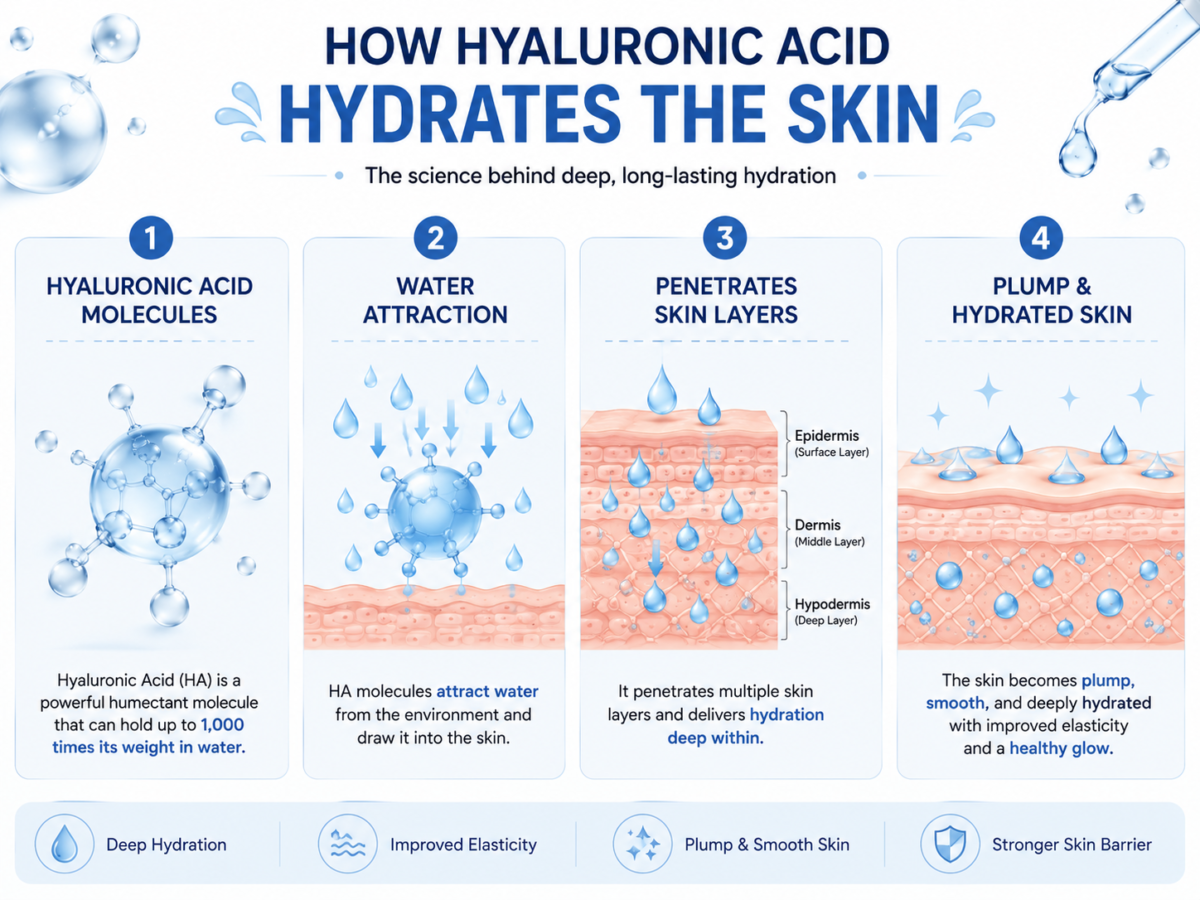
Hyaluronic acid is a naturally occurring substance found in your skin, eyes, and connective tissues. Its main job is to hold water and keep your skin hydrated.
One molecule of hyaluronic acid can attract and hold up to 1,000 times its weight in water, making it one of the most effective hydrating ingredients used in modern skincare.
As we age, our body’s natural hyaluronic acid levels gradually decrease. This can lead to:
- Dry skin
- Tightness
- Fine lines
- Loss of skin elasticity
- Dull-looking complexion
Using a hyaluronic acid serum helps replace some of that lost hydration and supports healthier-looking skin.
Read More:Which Hair Mask is The Best for Frizzy and Dry
Why Is Hyaluronic Acid Serum So Popular?
Unlike heavy creams, hyaluronic acid serums are lightweight and absorb quickly into the skin.
People love them because they:
- Instantly hydrate the skin
- Improve skin softness
- Make skin appear plumper
- Reduce the appearance of fine lines caused by dehydration
- Work well with almost every skincare routine
Another reason for its popularity is that hyaluronic acid is suitable for nearly all skin types, including oily and acne-prone skin.
What Makes a Hyaluronic Acid Serum the Best?
Not every serum delivers the same results. Some products contain only a small amount of hyaluronic acid, while others combine it with ingredients that improve hydration even more.
Here are the most important factors to consider.
1. Different Molecular Weights
A high-quality serum usually contains multiple molecular weights of hyaluronic acid.
This allows hydration at different levels of the skin instead of only on the surface.
Read More:Best Ayurvedic Skin Care Products in India (2026)
2. Added Hydrating Ingredients
Look for formulas that also contain ingredients such as:
- Glycerin
- Panthenol (Vitamin B5)
- Aloe Vera
- Ceramides
- Beta-Glucan
These ingredients help strengthen the skin barrier and lock in moisture.
3. Fragrance-Free Formula
If you have sensitive skin, choose products without added fragrance or unnecessary essential oils.
Simple formulas usually cause less irritation.
4. Alcohol-Free
Avoid serums with high amounts of drying alcohol, especially if your skin is dry or sensitive.
5. Trusted Brand Reputation
Established skincare brands invest more in research, quality testing, and ingredient stability.
Reading genuine customer reviews can also help you make a better decision.
Read More: 10 Best Sunscreens for Oily Skin in India (2026)
Best Hyaluronic Acid Serum Brands
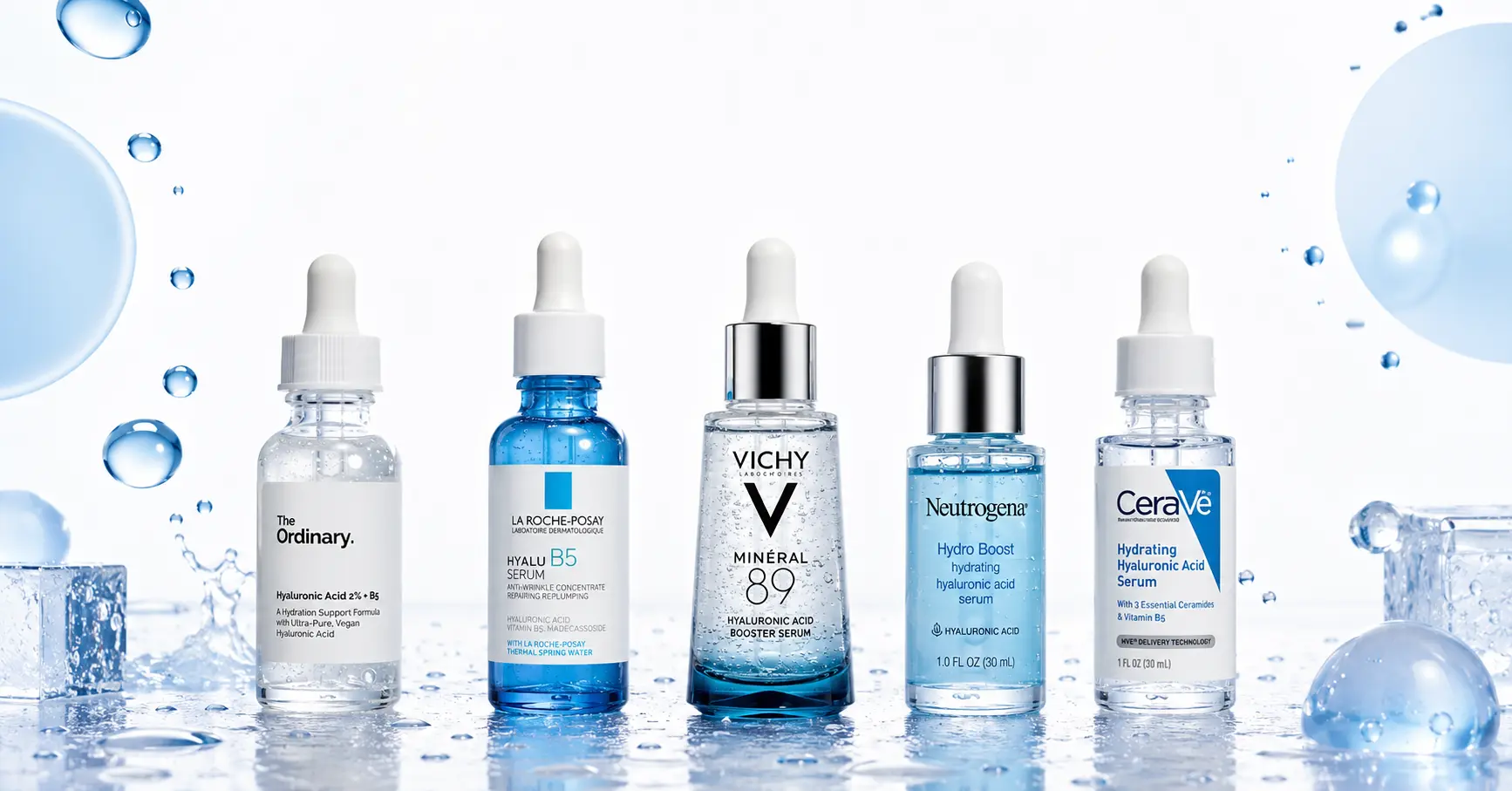
1. The Ordinary
The Ordinary is one of the most popular skincare brands worldwide because it offers effective products at affordable prices.
Why people like it
- Budget-friendly
- Fragrance-free
- Lightweight texture
- Suitable for beginners
- Multiple forms of hyaluronic acid
Best for:
- Dry skin
- Combination skin
- Normal skin
2. CeraVe
CeraVe combines hyaluronic acid with ceramides, making it excellent for repairing the skin barrier while providing long-lasting hydration.
Benefits
- Dermatologist recommended
- Contains ceramides
- Non-comedogenic
- Suitable for sensitive skin
Best for:
- Dry skin
- Sensitive skin
- Compromised skin barrier
3. La Roche-Posay
Known for gentle skincare, La Roche-Posay offers premium-quality hydration with minimal irritation.
Its hyaluronic acid serum also contains Vitamin B5, which helps soothe and repair the skin.
Ideal for:
- Sensitive skin
- Mature skin
- Dehydrated skin
4. Neutrogena
Neutrogena is well known for creating skincare products that are easy to use and suitable for everyday routines. Its hyaluronic acid serums focus on providing lightweight hydration without leaving a sticky feeling.
Why choose Neutrogena?
- Fast-absorbing formula
- Lightweight texture
- Suitable for daily use
- Works well under sunscreen and makeup
Best for:
- Oily skin
- Combination skin
- Normal skin
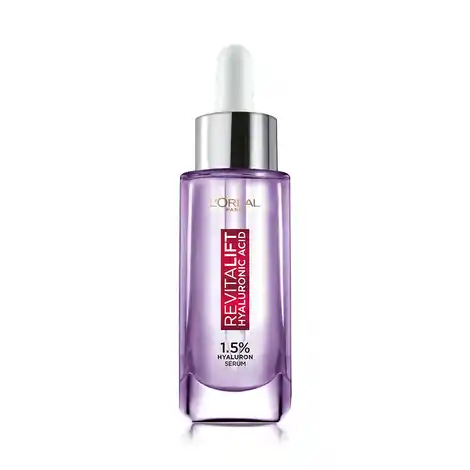
5. L’Oréal Paris
L’Oréal Paris offers hyaluronic acid serums that combine hydration with anti-aging benefits. Their formulas are designed to improve skin smoothness and reduce the appearance of dehydration lines.
Benefits
- Deep hydration
- Leaves skin looking plump
- Suitable for beginners
- Easily available in many countries
Best for:
- Dry skin
- Early signs of aging
- Dull skin
6. Vichy
Vichy is a premium skincare brand that combines hyaluronic acid with mineral-rich thermal water to support healthy-looking skin.
Why many skincare experts recommend it
- Gentle formula
- Strengthens the skin barrier
- Provides long-lasting hydration
- Suitable for sensitive skin
Best for:
- Sensitive skin
- Dehydrated skin
- Mature skin
7. Minimalist
Minimalist has become one of the most trusted Indian skincare brands because of its ingredient-focused formulations.
Its hyaluronic acid serum usually contains multiple molecular weights along with Vitamin B5 for better hydration.
Advantages
- Affordable pricing
- Transparent ingredient list
- Fragrance-free
- Beginner-friendly
Best for:
- All skin types
- Budget-conscious buyers
- First-time serum users
8. Cetaphil
Cetaphil is famous for making gentle skincare products that focus on protecting the skin barrier.
Its hydrating products are especially suitable for people whose skin becomes irritated easily.
Benefits
- Mild formula
- Dermatologist recommended
- Gentle enough for daily use
- Supports sensitive skin
Best for:
- Dry skin
- Sensitive skin
- Barrier repair routines
How to Choose the Best Hyaluronic Acid Serum for Your Skin Type
Buying the most expensive serum doesn’t always mean you’ll get the best results. Your skin type plays a major role in choosing the right formula.
For Dry Skin
If your skin feels tight after washing or looks flaky, choose a serum that also contains:
- Ceramides
- Glycerin
- Panthenol
- Squalane
These ingredients help lock moisture into the skin for longer.
Read More:Best Long Lasting Lipstick Brands in India (2026)
For Oily Skin
People with oily skin often avoid hydrating products because they think hydration causes more oil.
In reality, dehydrated skin can sometimes produce even more oil to compensate for moisture loss.
Choose:
- Lightweight formulas
- Oil-free products
- Non-comedogenic serums
Avoid thick or overly rich formulations.
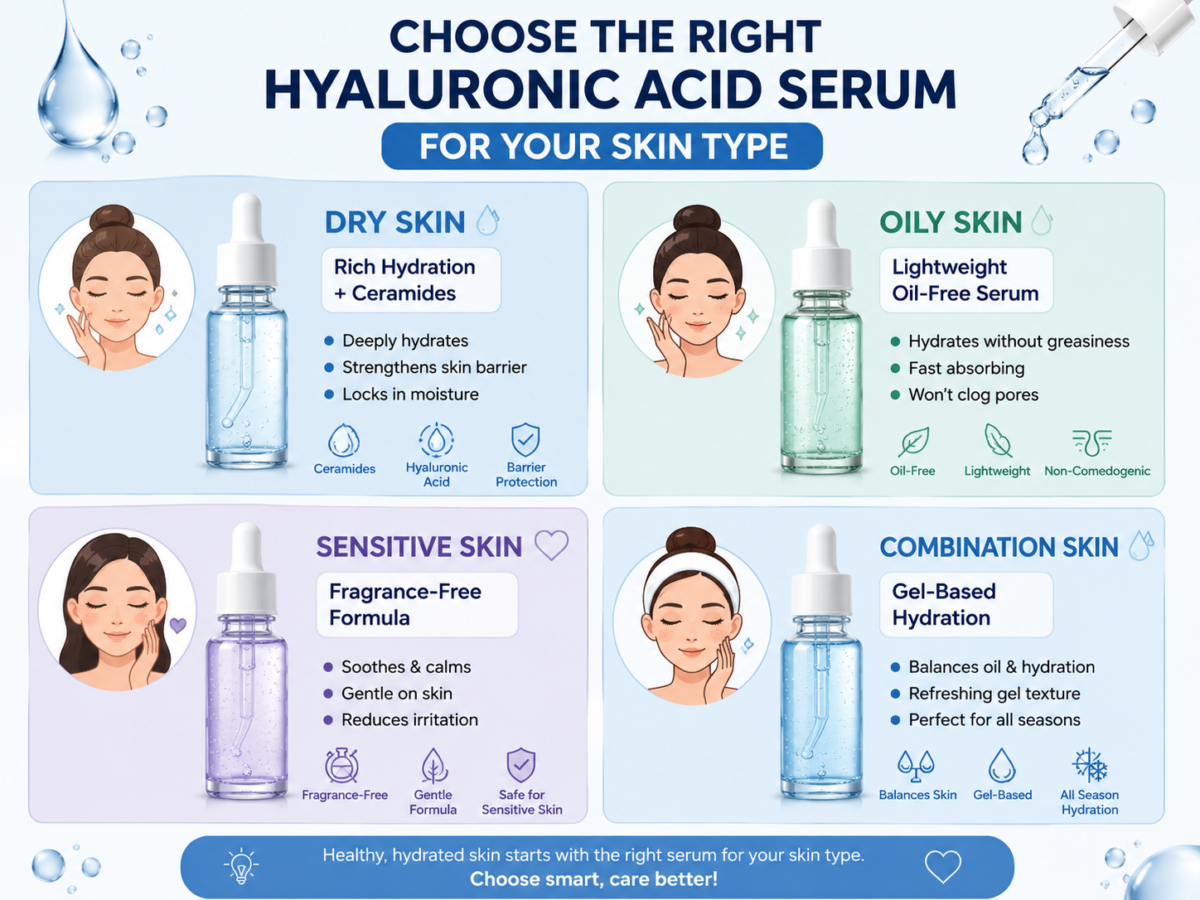
For Sensitive Skin
Sensitive skin needs simple formulations.
Look for products that are:
- Fragrance-free
- Alcohol-free
- Essential oil-free
- Dermatologist tested
Always patch test before using a new serum on your entire face.
For Combination Skin
Combination skin benefits from lightweight hydration that doesn’t clog pores while keeping dry areas comfortable.
Gel-based serums are often a great choice because they hydrate evenly without feeling heavy.
For Mature Skin
As skin ages, it naturally loses moisture and elasticity.
Choose serums that combine hyaluronic acid with ingredients like:
- Peptides
- Vitamin B5
- Ceramides
- Niacinamide
These ingredients support hydration while improving the overall appearance of aging skin.
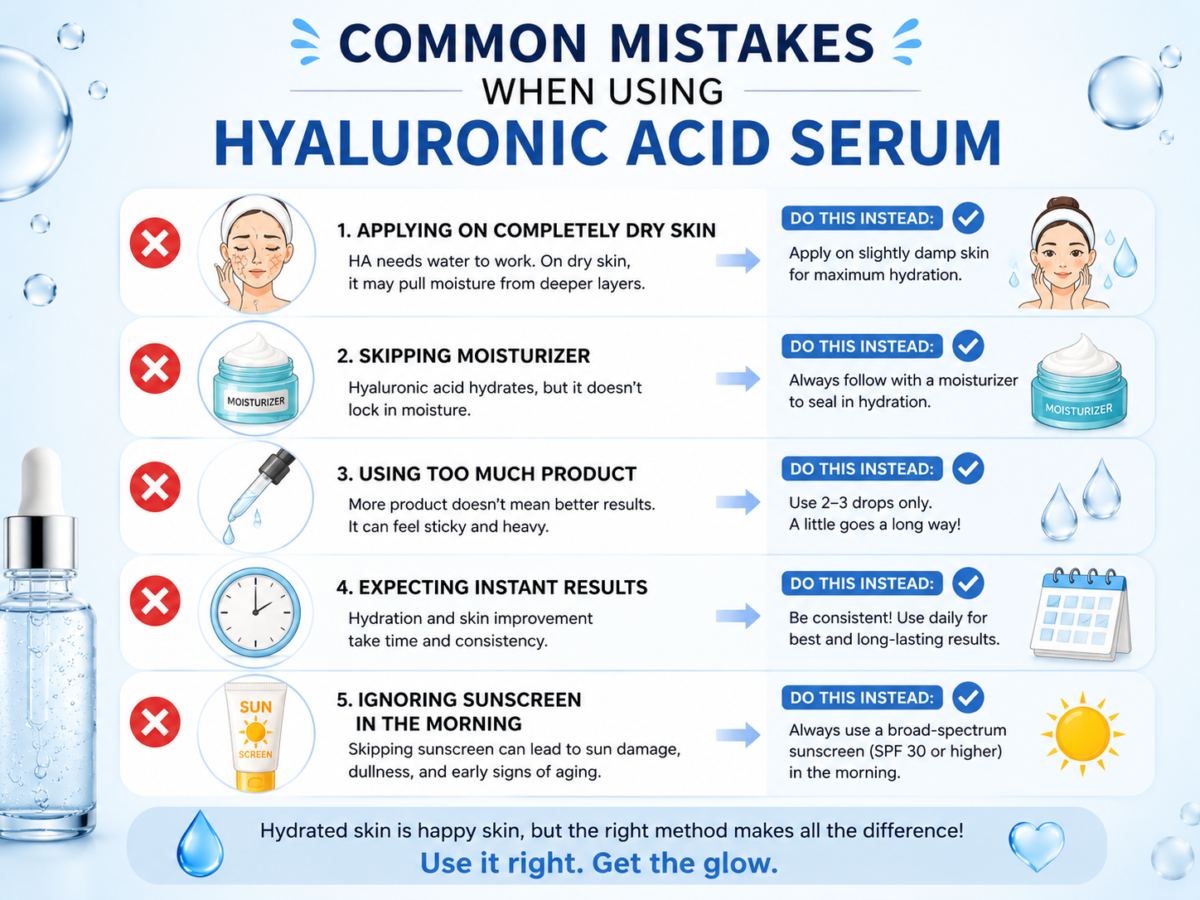
Common Mistakes People Make When Buying Hyaluronic Acid Serum
Many people purchase a serum based only on social media trends or attractive packaging. Instead, focus on the ingredient list and your skin’s needs.
Here are some common mistakes to avoid:
Buying Only Based on Price
An expensive serum isn’t automatically better. Many affordable brands offer excellent formulations with high-quality ingredients.
Ignoring the Ingredient List
The front label may highlight hyaluronic acid, but the rest of the formula matters too. Check for helpful ingredients and avoid unnecessary irritants if you have sensitive skin.
Choosing the Wrong Formula for Your Skin Type
A rich serum that works well for dry skin may feel too heavy for oily skin. Matching the product to your skin type improves comfort and results.
Expecting Overnight Results
Hyaluronic acid works by improving hydration. While your skin may feel softer after the first use, lasting improvements usually come with consistent daily use over several weeks.
Skipping Moisturizer
Hyaluronic acid attracts water but doesn’t seal it into the skin. Always apply a moisturizer afterward to help lock in hydration.
How to Use Hyaluronic Acid Serum Correctly, Ingredients That Work Well Together & Expert Tips
Choosing the best hyaluronic acid serum is only half the journey. Using it the right way is just as important. Even the highest-quality serum may not give the desired results if it is applied incorrectly.
The good news is that hyaluronic acid is one of the easiest skincare ingredients to use. It fits into almost every skincare routine and pairs well with many other active ingredients.
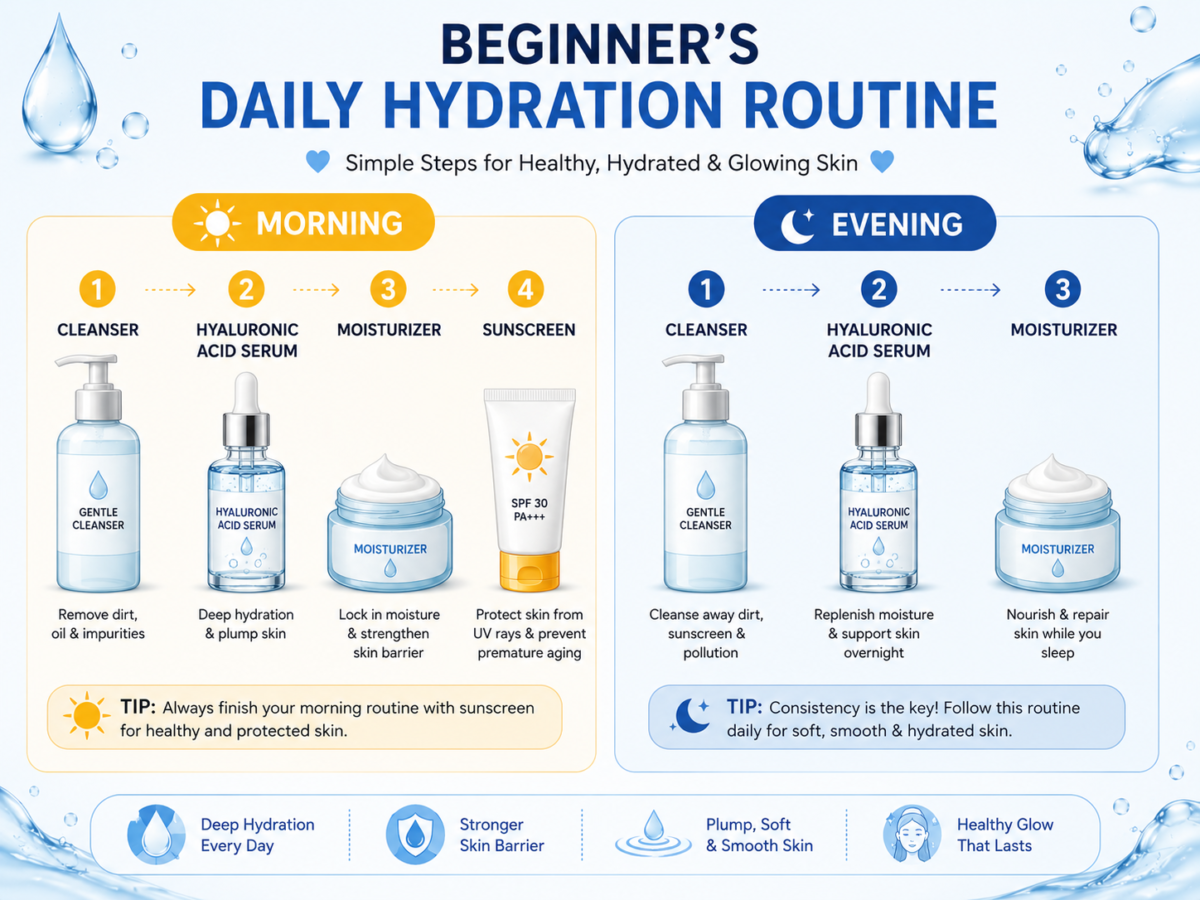
How to Apply Hyaluronic Acid Serum Step by Step
Following the correct order helps your skin absorb the serum more effectively.
Step 1: Cleanse Your Face
Start with a gentle cleanser to remove dirt, oil, sunscreen, and makeup.
Clean skin allows the serum to absorb evenly.
Step 2: Leave Your Skin Slightly Damp
This is one of the most important steps.
Instead of drying your face completely, gently pat it with a towel so it remains slightly damp.
Hyaluronic acid attracts water, so applying it to damp skin helps maximize hydration.
Step 3: Apply 2–3 Drops of Serum
Use only a small amount.
Spread the serum evenly over your face and neck using clean fingertips.
Avoid rubbing aggressively.
Step 4: Apply Moisturizer
Many beginners think hyaluronic acid replaces moisturizer.
It doesn’t.
A moisturizer helps lock the hydration into your skin and prevents moisture from evaporating.
Step 5: Finish with Sunscreen (Morning Routine)
If you’re using the serum during the day, always finish your skincare routine with a broad-spectrum sunscreen (SPF 30 or higher).
Hydrated skin still needs protection from UV damage.
Can You Use Hyaluronic Acid Every Day?
Yes.
Unlike some strong active ingredients, hyaluronic acid is gentle enough for daily use.
Regular application helps maintain healthy hydration levels and supports a stronger skin barrier over time.
Consistency is more important than using large amounts.
Ingredients That Work Well with Hyaluronic Acid
One reason skincare experts recommend hyaluronic acid is that it combines safely with many other ingredients.
Here are some of the best combinations.
1. Hyaluronic Acid + Vitamin C
This combination is excellent for people who want brighter, healthier-looking skin.
Benefits
- Improves hydration
- Supports a radiant complexion
- Helps reduce dullness
- Gives skin a fresh appearance
Example Routine (Morning):
- Gentle cleanser
- Vitamin C serum
- Hyaluronic acid serum
- Moisturizer
- Sunscreen
2. Hyaluronic Acid + Niacinamide
Niacinamide helps balance oil production, improve skin texture, and strengthen the skin barrier.
Together, these ingredients provide hydration while supporting smoother-looking skin.
Ideal for:
- Oily skin
- Combination skin
- Enlarged pores
- Uneven skin texture
3. Hyaluronic Acid + Ceramides
This is one of the best combinations for dry or sensitive skin.Ceramides help repair the skin barrier, while hyaluronic acid attracts moisture.
Together they reduce dryness and improve long-lasting hydration.
4. Hyaluronic Acid + Peptides
Peptides support skin firmness and elasticity.
Combined with hyaluronic acid, they help the skin appear smoother and more refreshed.This combination is often recommended for mature skin.
5. Hyaluronic Acid + Retinol
Retinol can sometimes cause dryness, especially when you first start using it.Hyaluronic acid helps reduce that feeling of dryness by adding extra hydration.
Evening Routine Example:
- Cleanser
- Hyaluronic acid serum
- Retinol
- Moisturizer
If you’re new to retinol, start slowly and follow the product instructions.
Which Hyaluronic Acid Serum Brand Is the Best?
The best hyaluronic acid serum isn’t necessarily the most expensive one—it’s the one that matches your skin type, skincare goals, and budget.
Here’s a quick comparison to help you decide:
| Brand | Best For | Key Highlights |
|---|---|---|
| The Ordinary | Beginners, normal & combination skin | Affordable, fragrance-free, multiple forms of hyaluronic acid |
| CeraVe | Dry & sensitive skin | Ceramides + hyaluronic acid for barrier support |
| La Roche-Posay | Sensitive & mature skin | Vitamin B5, gentle formula, dermatologist recommended |
| Neutrogena | Oily & combination skin | Lightweight, fast-absorbing texture |
| L’Oréal Paris | Dry & dull skin | Hydration with anti-aging benefits |
| Vichy | Dehydrated & sensitive skin | Mineral-rich hydration and skin barrier support |
| Minimalist | Budget-conscious users | Transparent ingredients, fragrance-free |
| Cetaphil | Sensitive & dry skin | Gentle daily hydration and skin comfort |
Remember that skincare is personal. A product that works well for one person may not give the same results for someone else. Consider your skin type, read the ingredient list, and introduce new products gradually.
Final Thoughts
Hyaluronic acid serum is one of the most beginner-friendly skincare products because it focuses on a simple but essential need—hydration. Well-hydrated skin often feels softer, looks healthier, and supports the rest of your skincare routine.
Whether you’re dealing with dryness, dehydration, or simply want smoother-looking skin, a quality hyaluronic acid serum can be a valuable addition to your routine. The key is to choose a formula that suits your skin type, apply it correctly on slightly damp skin, and always follow with a moisturizer. During the day, finish with sunscreen to help protect your skin from UV damage.
You don’t need an expensive routine to see improvements. Consistency, gentle skincare habits, and choosing products with well-formulated ingredients are often more important than following every new trend.
Frequently Asked Questions (FAQs)
1. Which brand makes the best hyaluronic acid serum?
There isn’t one perfect brand for everyone. Popular choices include The Ordinary, CeraVe, La Roche-Posay, Minimalist, Vichy, Cetaphil, Neutrogena, and L’Oréal Paris. The best option depends on your skin type and skincare goals.
2. Can I use hyaluronic acid serum every day?
Yes. Hyaluronic acid is gentle enough for daily use and can be applied in the morning, evening, or both.
3. Should I apply hyaluronic acid serum before or after moisturizer?
Apply hyaluronic acid serum before your moisturizer. The moisturizer helps seal in the hydration provided by the serum.
4. Is hyaluronic acid suitable for oily skin?
Yes. Lightweight, oil-free hyaluronic acid serums hydrate without making the skin feel greasy and are suitable for oily and acne-prone skin.
5. Can sensitive skin use hyaluronic acid?
Most people with sensitive skin can use hyaluronic acid. Choosing a fragrance-free and alcohol-free formula is generally a good option, and it’s wise to patch test any new product first.
6. Can I use Vitamin C and hyaluronic acid together?
Yes. They work well together. Vitamin C helps brighten the skin, while hyaluronic acid improves hydration.
7. Does hyaluronic acid reduce wrinkles?
Hyaluronic acid mainly hydrates the skin, which can make fine dehydration lines appear less noticeable. It does not permanently remove wrinkles.
8. Can I use hyaluronic acid with retinol?
Yes. Many people use hyaluronic acid with retinol because it helps reduce dryness and supports skin comfort.
9. How long does it take to see results?
Many users notice softer, more hydrated skin within a few days. More visible improvements in skin texture often develop after several weeks of consistent use.
10. At what age should I start using hyaluronic acid serum?
There is no fixed age. Many people begin using it in their early 20s to maintain hydration, while others introduce it later when they notice dryness or dehydration.