
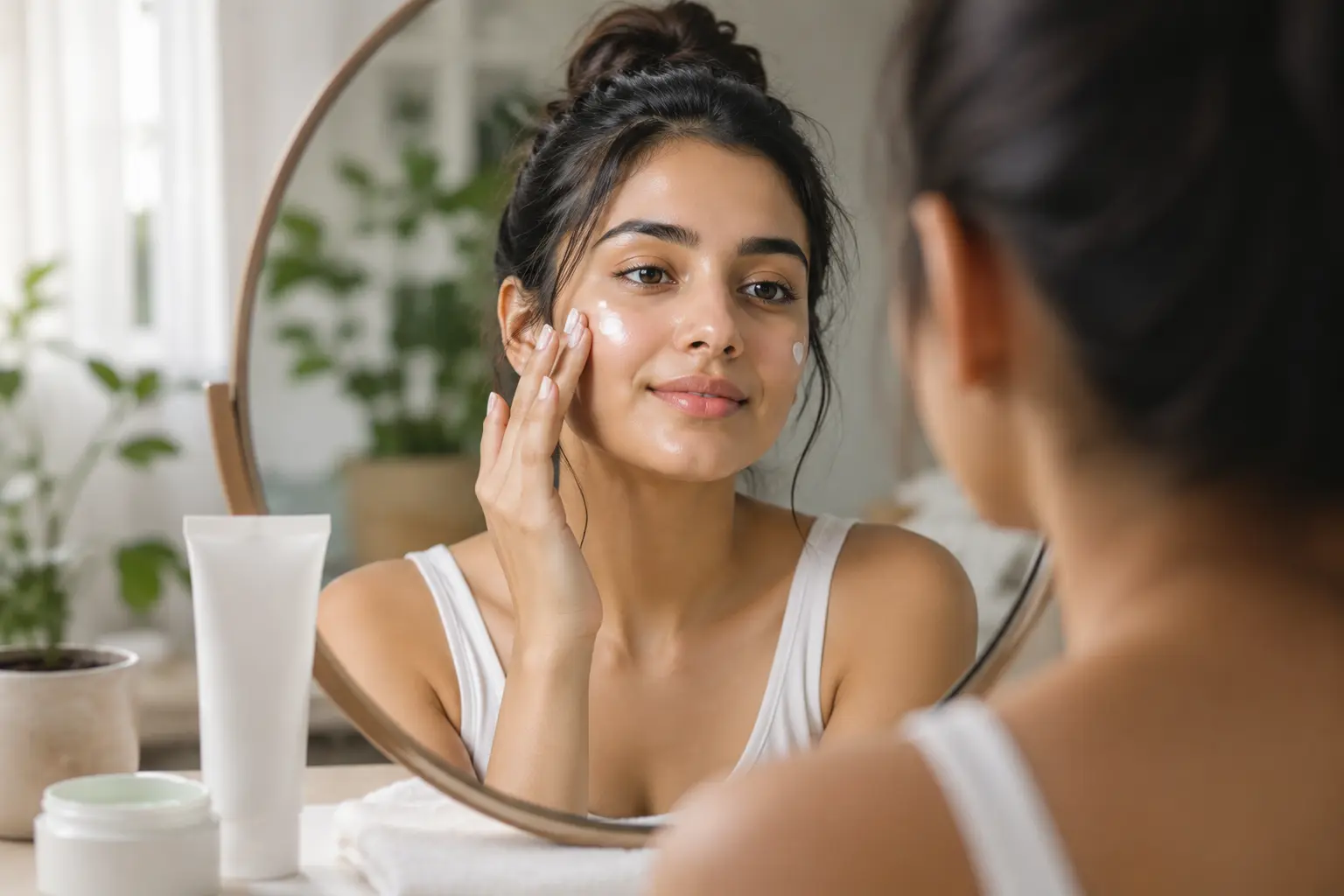
If you have oily skin, you probably know how difficult it can be to find a sunscreen that doesn’t make your face look greasy within an hour. Many people skip sunscreen because they think it causes pimples, makes their skin sticky, or leaves an unwanted white cast. Unfortunately, avoiding sunscreen can lead to bigger skin problems like tanning, pigmentation, premature aging, sunburn, and even long-term skin damage.
The good news is that sunscreen technology has improved a lot over the last few years. Today’s sunscreens are lighter, more comfortable, and specially designed for oily and acne-prone skin. Many modern formulas offer a matte finish, control excess oil, and protect your skin without clogging pores.
Whether you’re a college student, working professional, or someone who spends most of the day indoors, wearing sunscreen every morning should become a non-negotiable part of your skincare routine.
In this guide, you’ll learn exactly how to choose the right sunscreen for oily skin, understand which ingredients matter, compare chemical and mineral sunscreens, discover the best sunscreen options available in India in 2026, and learn the correct way to apply sunscreen for maximum protection.
Why Oily Skin Still Needs Sunscreen Every Day
Many people believe oily skin is naturally protected because it produces more sebum. This is a myth.
Oil does not protect your skin from harmful UV rays. In fact, oily skin can still experience:
- Sunburn
- Pigmentation
- Acne marks becoming darker
- Uneven skin tone
- Premature wrinkles
- Enlarged pores
- Loss of skin elasticity
If you use ingredients like Niacinamide, Salicylic Acid, Vitamin C, Retinol, Benzoyl Peroxide, or AHA/BHA exfoliants, sunscreen becomes even more important because these ingredients can increase your skin’s sensitivity to sunlight.
Daily sunscreen helps maintain healthy skin while preventing future skin damage.
Read More:Best Serum for Pigmentation and Dark Spots: A Complete Guide
What Makes a Sunscreen Good for Skin? (Non-Negotiables)
Not every sunscreen works well for oily skin. Some heavy creams can leave your face shiny, clog pores, or trigger breakouts. Choosing the right formula makes a huge difference.
Here are the most important things to look for before buying a sunscreen.
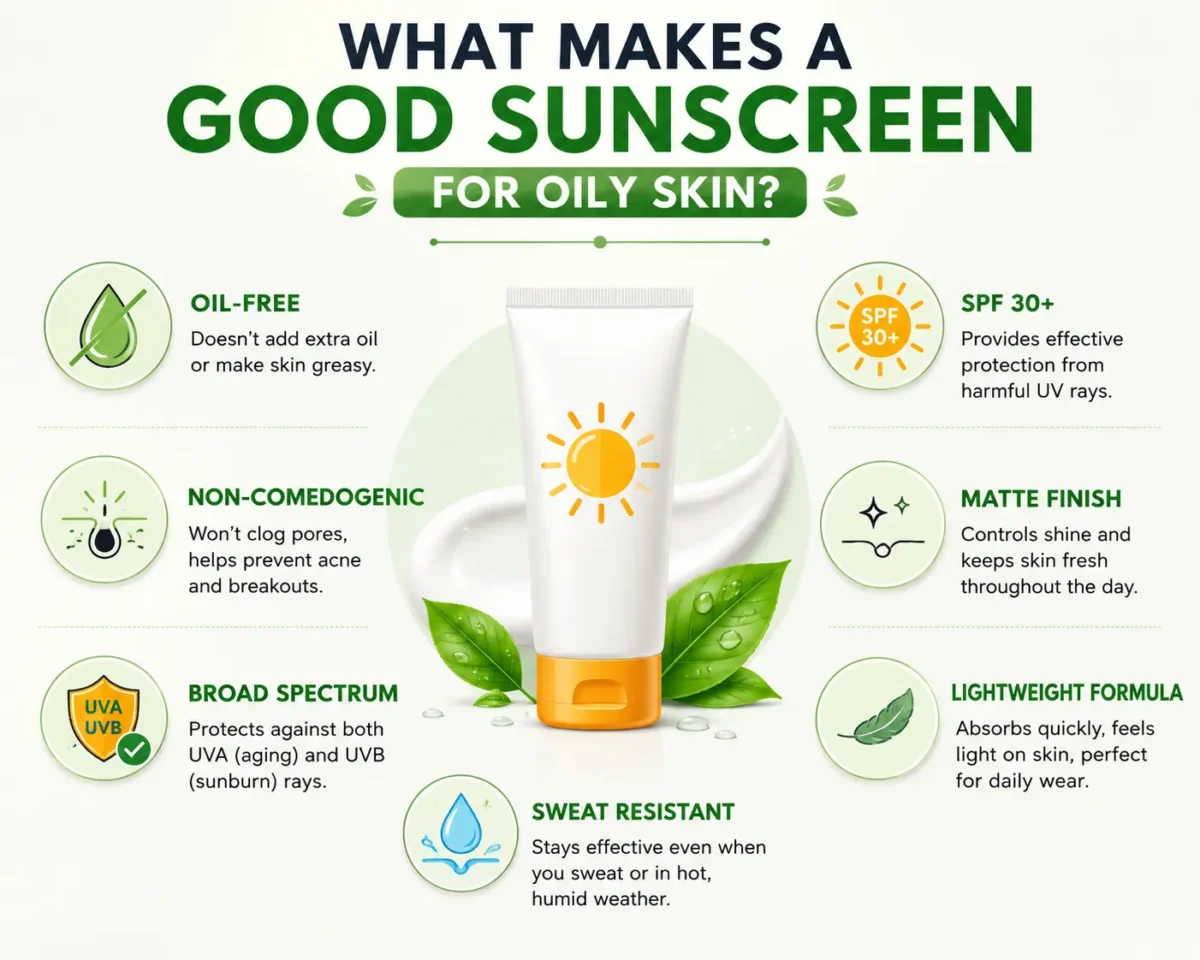
1. Oil-Free Formula: An oil-free sunscreen is specially designed to protect your skin without adding excess oil or making your face feel greasy. It helps control shine, reduces the risk of clogged pores, and is ideal for oily and acne-prone skin. These lightweight formulas provide effective sun protection while keeping your skin fresh, matte, and comfortable throughout the day.
2. Non-Comedogenic Formula: A non-comedogenic sunscreen is formulated to minimize the risk of clogging pores, making it an excellent choice for oily, acne-prone, and combination skin. Clogged pores are one of the main causes of blackheads, whiteheads, and acne breakouts, so using a non-comedogenic product can help keep your skin clear while protecting it from harmful UV rays.
These formulas are made with lightweight ingredients that allow your skin to breathe without leaving a heavy or greasy residue. If you struggle with frequent pimples or enlarged pores, choosing a non-comedogenic sunscreen can help prevent new breakouts while providing daily sun protection.
3. Broad-Spectrum Protection: Broad-spectrum protection means a sunscreen shields your skin from both UVA and UVB rays. This is one of the most important features to look for when choosing a sunscreen, especially if you have oily skin. While UVB rays are responsible for sunburn, UVA rays penetrate deeper into the skin and contribute to premature aging, dark spots, hyperpigmentation, and wrinkles. Both types of UV radiation can increase the risk of skin cancer over time.
A broad-spectrum sunscreen provides complete daily protection by blocking or absorbing both UVA and UVB rays. Whether you’re outdoors, driving, or working near a window, applying a broad-spectrum sunscreen every day helps keep your skin healthy and protected.
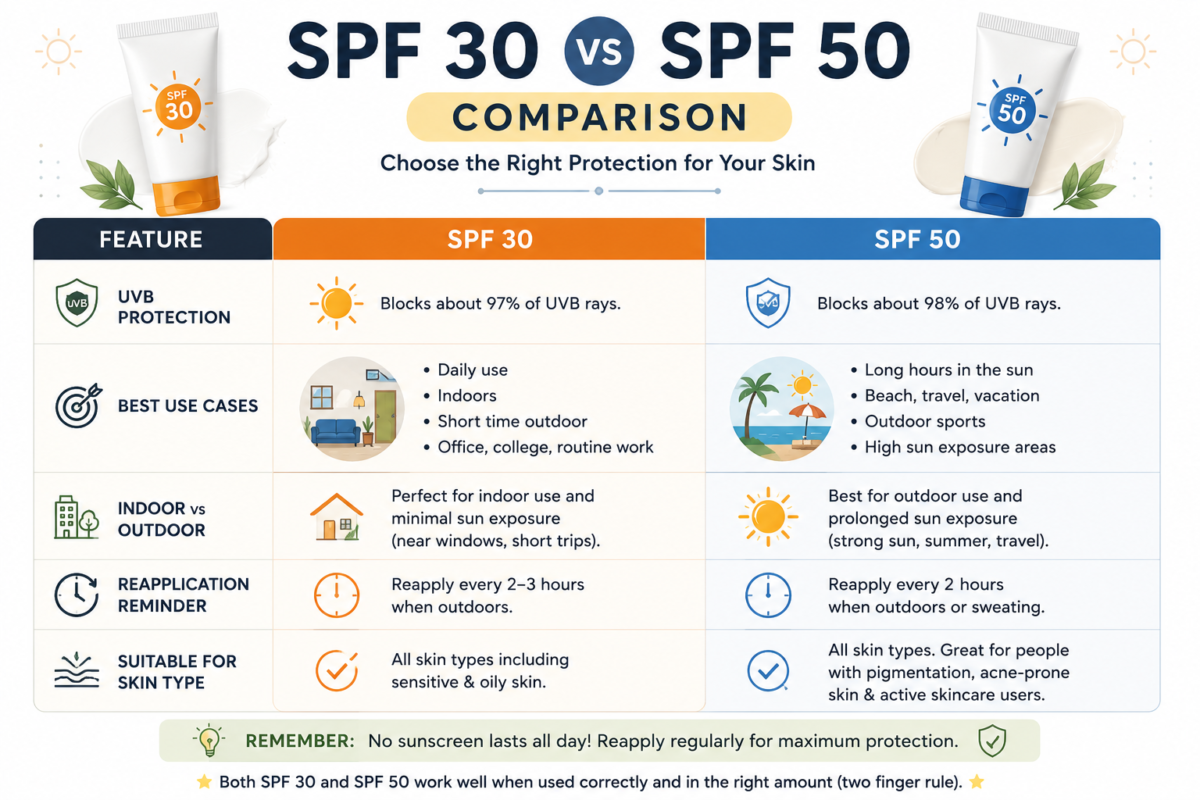
4. SPF 30 or Higher: SPF (Sun Protection Factor) measures how well a sunscreen protects your skin from UVB rays, which are the primary cause of sunburn. For everyday use, dermatologists generally recommend choosing a sunscreen with at least SPF 30. It blocks about 97% of UVB rays, making it suitable for daily activities such as commuting, working indoors near windows, or running errands.
If you spend long hours outdoors, travel frequently, or have prolonged sun exposure, an SPF 50 sunscreen is a better option. It provides slightly higher protection by blocking about 98% of UVB rays. While the difference in protection may seem small, it can be beneficial during intense sun exposure.
Remember that no sunscreen can block 100% of UV rays. To stay protected, apply a generous amount of sunscreen 15–20 minutes before going outside and reapply every 2 hours, or more often if you’re sweating heavily or swimming.
5. Sweat and Water Resistance: If you spend time outdoors, exercise regularly, or live in a hot and humid climate, choosing a sweat- and water-resistant sunscreen is essential. Unlike regular sunscreens, these formulas are designed to stay on the skin longer, even when you sweat or come into contact with water. This helps maintain more consistent sun protection during physical activities and outdoor exposure.
However, water-resistant doesn’t mean waterproof. No sunscreen is completely waterproof, so it’s important to reapply it every 2 hours, or immediately after swimming, towel drying, or excessive sweating to maintain effective protection.
For oil free skin, many sweat-resistant sunscreens also have lightweight, non-greasy formulas that help control excess shine while providing long-lasting UV protection.
6. Lightweight Texture: A lightweight-texture sunscreen feels comfortable on the skin without being heavy, sticky, or greasy. This is especially important for people with oil free skin, as thick creams can make the face feel oily and uncomfortable throughout the day. Lightweight sunscreens absorb quickly into the skin, leaving little to no residue while providing effective sun protection.
These sunscreens are often available as gels, fluids, or lightweight lotions that spread easily and work well under makeup. They also help control excess shine, making them ideal for everyday use, even in hot and humid weather.
Choosing a sunscreen with a lightweight texture ensures you’ll be more likely to wear it consistently, which is the key to protecting your skin from harmful UV rays.
Read More: Best Face Wash for Glowing Skin: A Complete Guide for Healthy and Radiant Skin
7. Matte Finish: A matte-finish sunscreen is specially designed to control excess oil and reduce unwanted shine, making it an excellent choice for people with oily or combination skin. Unlike dewy or glossy formulas, matte sunscreens leave your skin with a smooth, non-greasy finish that looks fresh throughout the day.
Many matte sunscreens contain oil-absorbing ingredients that help keep the skin looking less shiny for longer. This makes them especially useful in hot and humid weather, where shiny skin tends to produce more sebum. A matte finish also creates a smooth base for makeup, helping foundation and other products stay in place without slipping.
8. Fragrance-Free (Optional but Helpful): A fragrance-free sunscreen does not contain added perfumes or artificial fragrances, making it a great option for people with sensitive, acne-prone, or easily irritated skin. While fragrance itself doesn’t provide any skincare benefits, it can sometimes trigger redness, itching, or irritation in people with sensitive skin.
If you have oily free skin without sensitivity, a sunscreen with a mild fragrance may not necessarily cause problems. However, if your skin is prone to breakouts, irritation, or conditions like eczema or rosacea, choosing a fragrance-free formula can help reduce the risk of unwanted reactions.
Although being fragrance-free isn’t essential for everyone, it’s an added advantage for those looking for a gentle sunscreen suitable for daily use.
Read More: Best Ayurvedic Skin Care Products in India
Chemical vs. Mineral Sunscreen: Which Is Better for shine-prone Skin?
Chemical Sunscreen
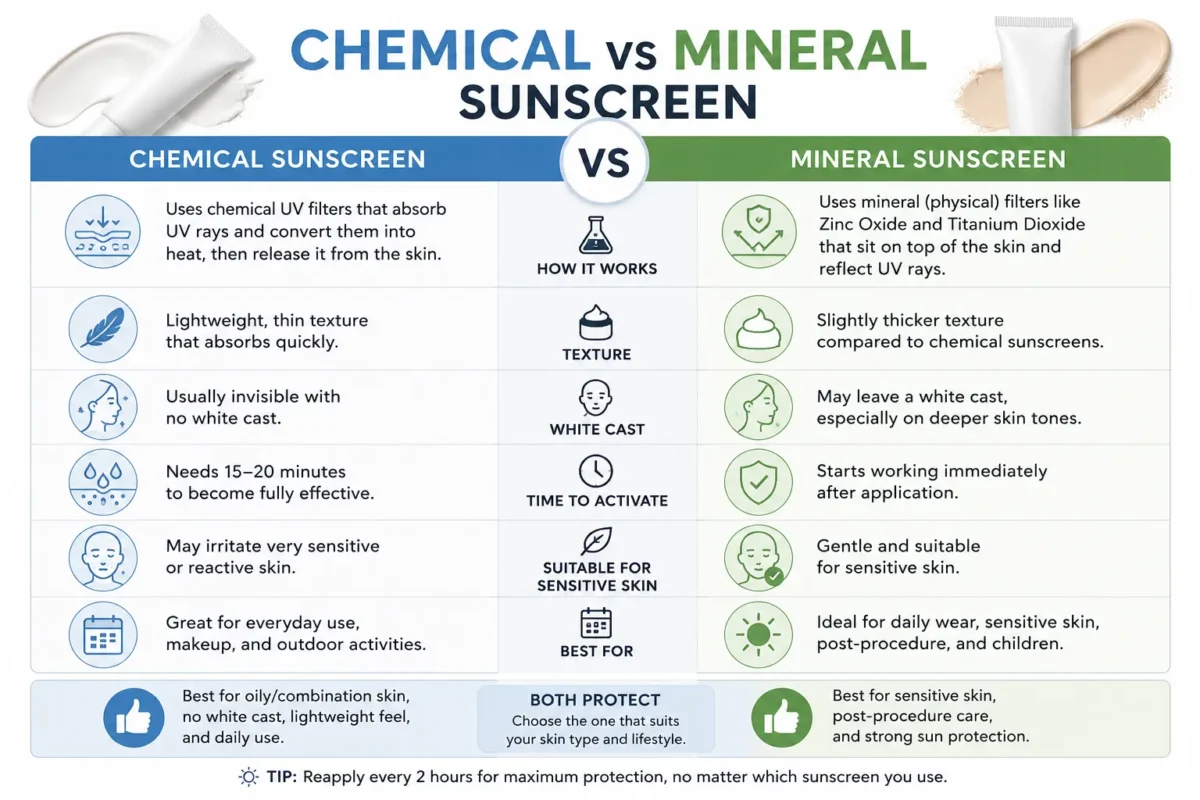
Chemical sunscreens use UV filters such as Avobenzone, Octinoxate, Octocrylene, Tinosorb S, and Tinosorb M to absorb harmful UV rays before they can damage the skin. These formulas are usually lightweight, fast-absorbing, and leave little to no white cast, making them an excellent choice for oily and combination skin.
Pros:
- Lightweight and non-greasy texture
- Absorbs quickly into the skin
- No visible white cast on most skin tones
- Comfortable to wear under makeup
- Ideal for everyday use in hot and humid weather
Mineral Sunscreen
Mineral sunscreens contain physical UV filters such as Zinc Oxide and Titanium Dioxide. Instead of absorbing UV rays, they form a protective layer on the skin that reflects and scatters sunlight. They are often recommended for people with sensitive or easily irritated skin.
Pros:
- Gentle on sensitive skin
- Less likely to cause irritation
- Suitable for acne-prone or post-treatment skin
- Provides broad-spectrum UV protection
Which Sunscreen Is Best for Oily Skin?
For most people with oily skin in India, a hybrid sunscreen is often the best option. Hybrid sunscreens combine modern chemical UV filters with a small amount of mineral filters like Zinc Oxide. This combination offers effective broad-spectrum protection while maintaining a lightweight, non-greasy feel.
Hybrid formulas also reduce the chances of a noticeable white cast and are more comfortable to wear in India’s hot and humid climate. If you have oily, acne-prone, or combination skin, a lightweight hybrid sunscreen with an oil-free, non-comedogenic formula is usually the most practical choice for daily use.
Read More:Which Hair Mask is The Best for Frizzy and Dry
Best Sunscreen for Oil free Skin in India (2026) Top Picks
The Indian skincare market now offers many excellent sunscreens made especially for oily and acne-prone skin. Instead of choosing the most expensive product, focus on finding one that matches your skin type, daily routine, and budget.
Below are some of the most recommended sunscreens for oily skin in 2026.
1. Minimalist Light Fluid SPF 50 PA++++
Best For: Daily office use and oily skin
Minimalist’s Light Fluid Sunscreen has become popular because of its extremely lightweight texture. It spreads easily, absorbs quickly, and leaves almost no greasy feeling on the skin.
Why You’ll Like It
- Lightweight fluid texture
- Broad-spectrum SPF 50 PA++++
- No visible white cast
- Suitable for humid weather
- Comfortable under makeup
2. Fixderma Shadow SPF 50+ Gel
Best For: Budget-friendly sun protection
Fixderma Shadow Gel is one of the most affordable dermatologist-recommended sunscreens available in India.
Its gel formula feels refreshing and works well for people whose face becomes oily quickly.
Why You’ll Like It
- Gel texture
- SPF 50+
- Budget-friendly
- Doesn’t feel heavy
3. Re’equil Ultra Matte Dry Touch Sunscreen Gel SPF 50 PA++++
Best For: oil free skin
This sunscreen is famous for its silky, matte finish. If your skin gets shiny within a few hours, this is one of the best options available.
Why You’ll Like It
- Ultra matte finish
- Sweat resistant
- Water resistant
- Great for Indian summers
4. La Shield Fisico SPF 50+
Best For: Sensitive and acne-prone skin
La Shield Fisico is a mineral sunscreen that provides strong sun protection while being gentle on sensitive skin.
It is often recommended by dermatologists for people with easily irritated skin.
Why You’ll Like It
- Mineral filters
- Broad-spectrum protection
- Gentle formula
- Suitable for sensitive skin
5. Acne-UV Gel SPF 50
Best For: Oily, acne-prone skin
Acne-UV Gel has been a trusted choice among dermatologists for years.
Its lightweight silicone gel texture provides a smooth finish without making the face greasy.
Why You’ll Like It
- Matte finish
- Oil control
- Non-comedogenic
- Suitable for acne-prone skin
6. UV Doux Silicone Sunscreen Gel SPF 50
Best For: Outdoor use
UV Doux offers excellent UV protection while maintaining a lightweight feel.
Its water-resistant formula makes it a good choice for outdoor activities.
Why You’ll Like It
- SPF 50
- Sweat resistant
- Silicone gel texture
- Broad-spectrum protection
7. Derma Co 1% Hyaluronic Sunscreen Aqua Gel SPF 50
Best For: Oil free skin with dehydration
Many people have oil freeskin but still experience dehydration. This sunscreen provides hydration without feeling greasy.
Why You’ll Like It
- Aqua gel texture
- Lightweight
- Hydrating formula
- Invisible finish
8. Aqualogica Glow+ Dewy Sunscreen SPF 50
Best For: Combination skin
Although it has a slightly dewy finish, many people with combination skin enjoy using it because of its comfortable texture.
Cons
- People with extremely shiy skin may prefer a matte sunscreen instead.
How to Choose the Right Sunscreen for Your Skin
Not every shiny skin type is the same. Use this simple guide to find the best match.
If Your Skin Gets Extremely Oily
Choose:
- Matte finish
- Gel texture
- Oil-free formula
- Silicone gel sunscreen
If You Have Acne-Prone Skin
Look for:
- Non-comedogenic
- Fragrance-free
- Lightweight gel
- Dermatologist-tested formula
If You Wear Makeup Daily
Choose:
- Invisible finish
- Lightweight fluid sunscreen
- No white cast
- Fast-absorbing formula
If You Spend Hours Outdoors
Pick:
- SPF 50 PA++++
- Sweat-resistant
- Water-resistant
- Reapply every two hours
If You Have Sensitive Skin
Choose:
- Mineral sunscreen
- Zinc oxide-based formula
- Fragrance-free
- Alcohol-free if possible
How to Apply Sunscreen on shiny Skin (Most People Get This Wrong)
Buying a good sunscreen is only half the job. The way you apply it determines how well it protects your skin. Many people unknowingly use too little sunscreen or apply it at the wrong time, reducing its effectiveness.
Here’s the correct way to apply sunscreen if you have shiny skin.
Step 1: Start with a Clean Face
Always wash your face with a gentle cleanser before applying sunscreen.
This removes excess oil, sweat, and dirt so the sunscreen can form an even protective layer.
If your face is already oily before application, the sunscreen may not spread evenly.
Morning skincare order:
- Cleanser
- Toner (optional)
- Serum (if using)
- Lightweight moisturizer (if needed)
- Sunscreen
Step 2: Don’t Skip Moisturizer
Many people with oil free skin think they don’t need a moisturizer.
In reality, dehydrated skin can produce even more oil to compensate for the lack of moisture.
Choose a lightweight, oil-free gel moisturizer and let it absorb for a minute before applying sunscreen.
Tip: If your sunscreen is already moisturizing enough, you may be able to skip moisturizer, especially during humid weather.
Step 3: Use Enough Sunscreen
The biggest mistake is applying too little.
Most adults need approximately two finger lengths of sunscreen (index and middle finger) for the face and neck.
Using half the recommended amount significantly reduces the level of sun protection.
Quick Tip: Cover your face, ears, neck, and the back of your neck if they are exposed to sunlight.
Step 4: Apply It 15–20 Minutes Before Going Outdoors
If you’re using a chemical sunscreen, apply it about 15–20 minutes before sun exposure so it has time to form an effective protective layer.
Mineral sunscreens provide protection as soon as they are applied, but it’s still a good habit to apply sunscreen before leaving home.
Step 5: Spread Evenly
Instead of rubbing vigorously, dot the sunscreen across your face:
- Forehead
- Nose
- Cheeks
- Chin
- Neck
Then gently spread it until it is evenly covered.
Avoid rubbing aggressively, as this can cause uneven coverage.
Step 6: Wait Before Applying Makeup
If you wear makeup, allow your sunscreen to settle for 3–5 minutes before applying primer or foundation.
This helps prevent pilling and gives the sunscreen time to form an even layer.
Correct Makeup Order:
Cleanser → Moisturizer → Sunscreen → Primer → Foundation → Concealer
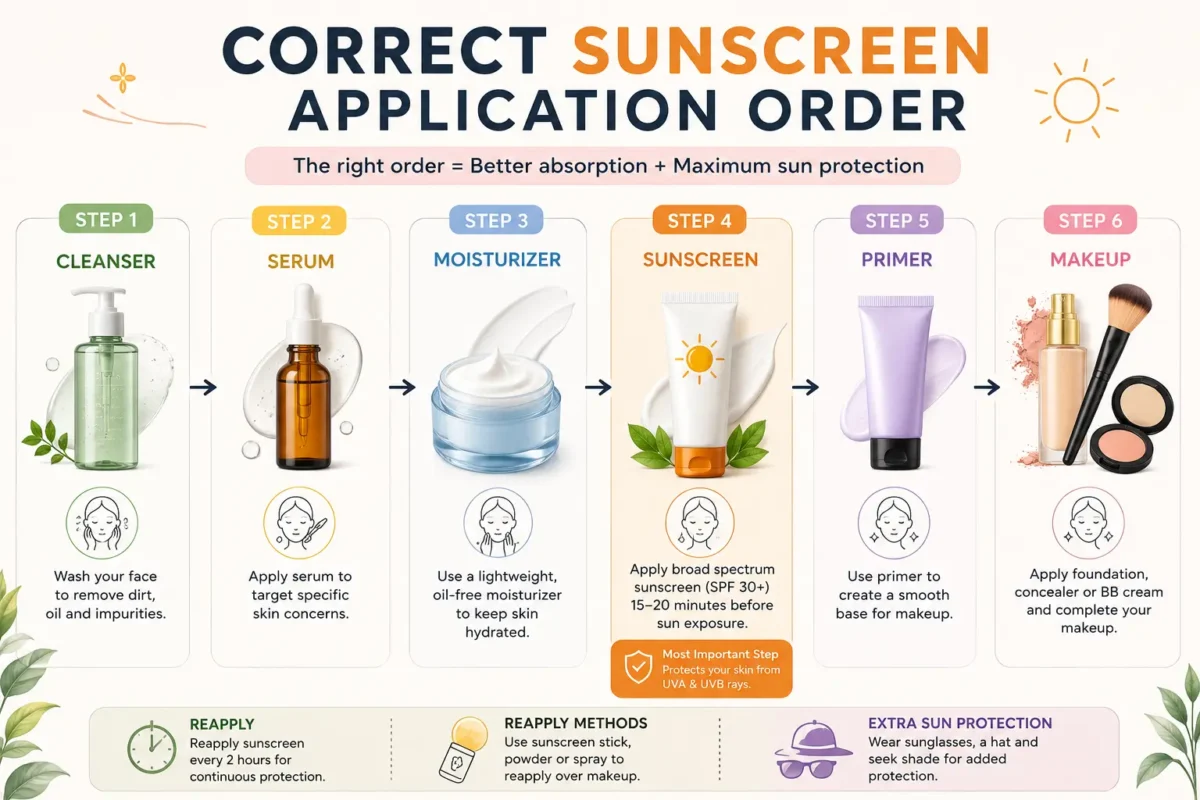
Step 7: Reapply Every Two Hours
No sunscreen lasts all day.
Reapply every 2 hours if you are outdoors.
If you stay indoors most of the day, one morning application may be enough, but reapply if:
- You sweat heavily
- You wash your face
- You towel-dry your skin
- You spend time near windows with direct sunlight
- You go outside again later in the day
Ingredients That Shiny Skin Usually Loves
Instead of focusing only on what to avoid, look for beneficial ingredients that work well with oily skin.
Niacinamide
Benefits:
- Helps control excess oil
- Supports the skin barrier
- Improves uneven skin tone
- Helps reduce the appearance of enlarged pores over time
Hyaluronic Acid
Despite the name, it is not an exfoliating acid.
It helps attract moisture to the skin without making it greasy, making it ideal for oily but dehydrated skin.
Read More:How to Use Lip Gloss: Steps, Benefits & Long-Lasting Tips (Complete Guide)
Zinc PCA
This ingredient is commonly used in products for oily skin because it helps manage excess sebum while keeping the skin comfortable.
Green Tea Extract
Green tea is rich in antioxidants and has soothing properties, making it a popular addition to sunscreens for acne-prone skin.
Vitamin E (in balanced amounts)
Vitamin E helps protect the skin from environmental stress. In lightweight formulations, it can support the skin without necessarily feeling heavy.
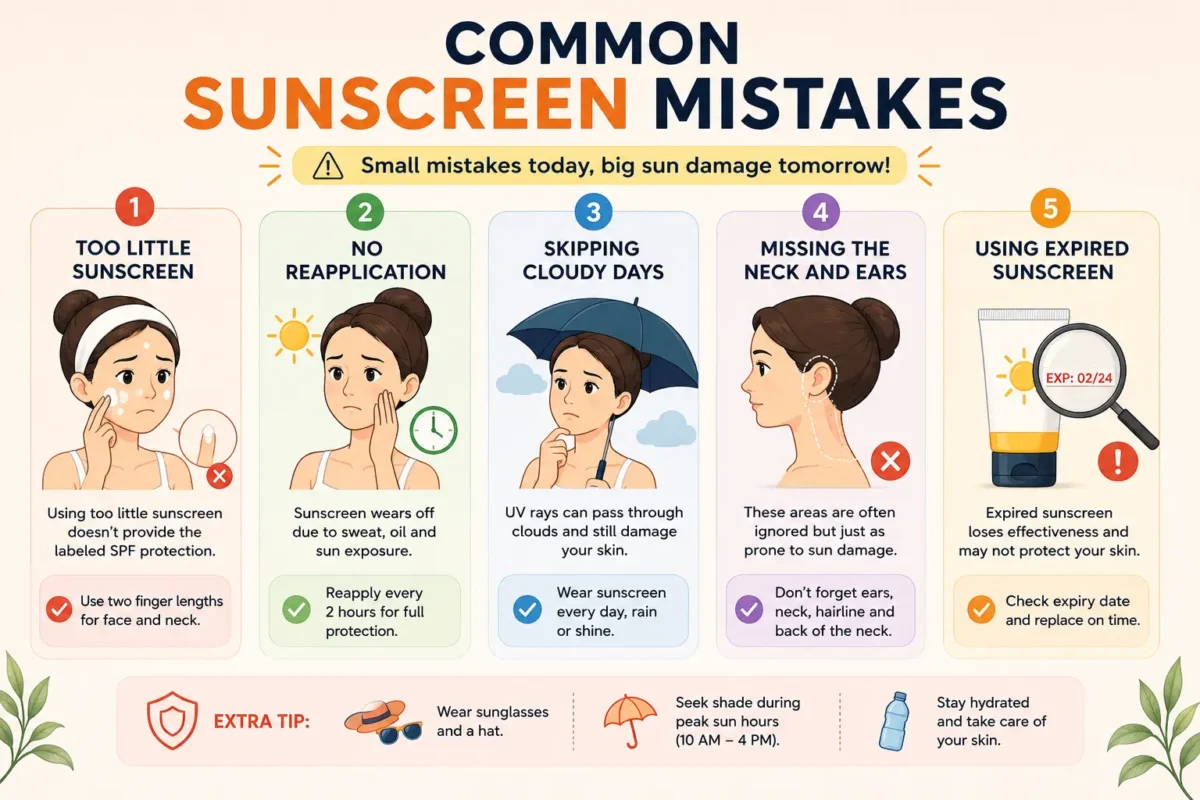
Common Sunscreen Mistakes to Avoid
Even after buying a good sunscreen, many people don’t get the full benefit because of simple mistakes in their daily routine. Avoiding these common errors will help keep your skin protected and healthier in the long run.
1. Skipping Sunscreen on Cloudy Days
Many people think sunscreen is only needed on sunny days.
In reality, UVA rays can pass through clouds and even glass windows. These rays contribute to premature aging, pigmentation, and uneven skin tone.
Tip: Apply sunscreen every morning, no matter the weather.
2. Applying Too Little Sunscreen
Using just a small drop of sunscreen is one of the biggest mistakes.
A thin layer cannot provide the SPF protection mentioned on the label.
For your face and neck, use approximately two finger lengths of sunscreen.
3. Applying Sunscreen Only Once a Day
A single morning application does not provide all-day protection.
If you are outdoors, sweating, or exposed to sunlight for long periods, reapply every two hours.
4. Choosing the Wrong Formula
Some people with oily skin buy rich moisturizing sunscreens designed for dry skin.
These heavier formulas can leave the face feeling greasy and uncomfortable.
Instead, choose products that are:
- Oil-free
- Non-comedogenic
- Lightweight
- Gel or fluid based
- Matte finish
5. Forgetting Important Areas
People often apply sunscreen only to the center of the face.
Don’t forget to protect:
- Ears
- Neck
- Hairline
- Jawline
- Back of the neck
- Around the eyes (if your sunscreen is suitable for that area)
These areas are just as vulnerable to sun damage.
6. Not Waiting Before Makeup
Applying foundation immediately after sunscreen can cause pilling and uneven coverage.
Allow your sunscreen to settle for 3–5 minutes before applying makeup.
7. Using Expired Sunscreen
Sunscreen loses effectiveness over time.
Check:
- Expiry date
- Texture
- Smell
- Color
If the product has changed significantly, replace it with a new one.
8. Depending Only on Sunscreen
Sunscreen is your first line of defense, but it works best when combined with other sun protection habits.
For better protection:
- Wear sunglasses.
- Use a wide-brimmed hat when outdoors.
- Carry an umbrella during peak sunlight.
- Seek shade whenever possible.
A combination of these habits provides better protection than sunscreen alone.
Final Word
Finding the best sunscreen for oily skin in India doesn’t have to be confusing. The key is to choose a sunscreen that matches your skin type, feels comfortable, and is easy to wear every day.
Look for a lightweight, oil-free, non-comedogenic, broad-spectrum sunscreen with at least SPF 30. If you spend a lot of time outdoors, SPF 50 PA++++ offers extra protection against India’s strong sunlight.
Remember, even the best sunscreen won’t work if you apply too little or forget to reapply. Consistency is what protects your skin from tanning, pigmentation, premature aging, and long-term sun damage.
Healthy skin isn’t about using dozens of expensive products—it’s about building simple habits you can follow every day. A good sunscreen, applied correctly, is one of the most valuable investments you can make for your skin.
Frequently Asked Questions (FAQs)
Q1. Which type of sunscreen is best for oily skin?
Answer:
A lightweight gel, fluid, or aqua-gel sunscreen that is oil-free, non-comedogenic, and offers broad-spectrum SPF 30 or SPF 50 protection is the best choice for oily skin.
Q2. Is SPF 50 better than SPF 30 for oily skin?
Answer:
Both provide excellent protection. SPF 50 is recommended for long outdoor exposure, while SPF 30 is suitable for everyday indoor use with short periods outside.
Q3. Can sunscreen cause pimples?
Answer:
Not necessarily. Breakouts usually occur when a sunscreen is too heavy or clogs pores. Choosing a non-comedogenic sunscreen helps reduce this risk.
Q4. Should oily skin skip moisturizer before sunscreen?
Answer:
No. Oily skin still needs hydration. Use a lightweight, oil-free moisturizer before sunscreen if your skin feels dehydrated.
Q5. How often should I reapply sunscreen?
Answer:
Reapply sunscreen every two hours when outdoors and after sweating, swimming, or washing your face.
Q6. Can I use sunscreen indoors?
Answer:
Yes. UVA rays can pass through windows, so wearing sunscreen indoors is recommended if you sit near natural light or go outside during the day.
Q7. Does sunscreen help prevent acne marks from becoming darker?
Answer:
Yes. Daily sunscreen protects acne marks from UV exposure, helping prevent them from becoming darker and supporting a more even skin tone.
Q8. Is gel sunscreen better than cream sunscreen for oily skin?
Answer:
In most cases, yes. Gel sunscreens are lighter, absorb faster, and leave a less greasy finish than thick cream formulas.
Q9. Can people with oily skin wear sunscreen under makeup?
Answer:
Absolutely. Apply sunscreen first, wait 3–5 minutes for it to absorb, and then apply primer and makeup.
Q10. What should I look for on a sunscreen label?
Answer:
Look for Broad-Spectrum Protection, SPF 30 or SPF 50, PA+++ or PA++++, Oil-Free, Non-Comedogenic, Lightweight Formula, and a Matte Finish.