
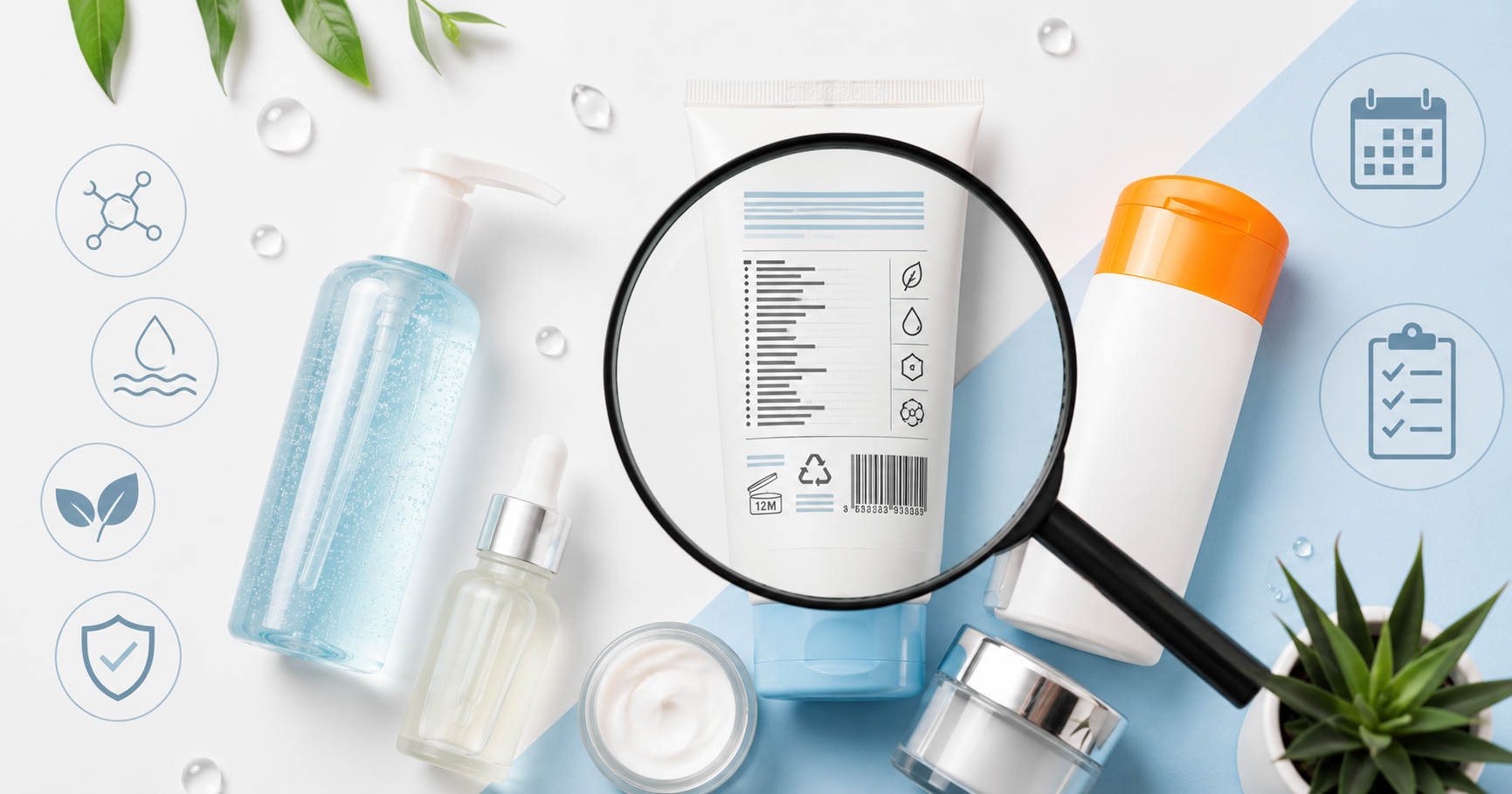
Have you ever picked up a skincare product because the packaging looked attractive, only to find that it didn’t work for your skin?
You’re not alone.
Many people spend money on creams, serums, face washes, and sunscreens without reading the product label. Instead, they trust advertisements, social media influencers, or eye-catching packaging. Unfortunately, beautiful packaging doesn’t always mean the product is suitable for your skin.
The label on a cosmetic product is one of the most valuable sources of information. It tells you what ingredients are inside, who the product is designed for, how to use it correctly, when it expires, and whether it meets safety standards.
Learning to read cosmetic labels doesn’t require a chemistry degree. Once you understand a few basic terms and symbols, shopping for skincare becomes much easier and safer.
In this guide, you’ll learn how to read cosmetic product labels step by step, understand ingredient lists, identify misleading marketing claims, and make smarter skincare choices with confidence.
Why Reading Cosmetic Labels Is Important
Reading a cosmetic label helps you make informed decisions instead of buying products based only on attractive advertisements.
A label can tell you:
- Whether the product suits your skin type
- Which active ingredients it contains
- How much of an ingredient is likely present
- Whether it contains potential allergens
- How to use it safely
- Storage instructions
- Expiry information
- Manufacturer details
- Safety warnings
For example, imagine buying a moisturizer labeled as “hydrating.” If you read the ingredient list carefully, you might discover that it contains alcohol high on the list, which may not be ideal for very dry or sensitive skin.
Similarly, a sunscreen may advertise “SPF 50,” but the label also reveals whether it offers broad-spectrum UVA and UVB protection—something that’s just as important as the SPF number.
Reading labels helps you avoid costly mistakes and choose products that actually benefit your skin.
Read More:Amazing Production Cosmetics Company
What Information Is Found on a Cosmetic Product Label?
Most cosmetic products include several important sections on their packaging. Understanding each section makes product selection much easier.
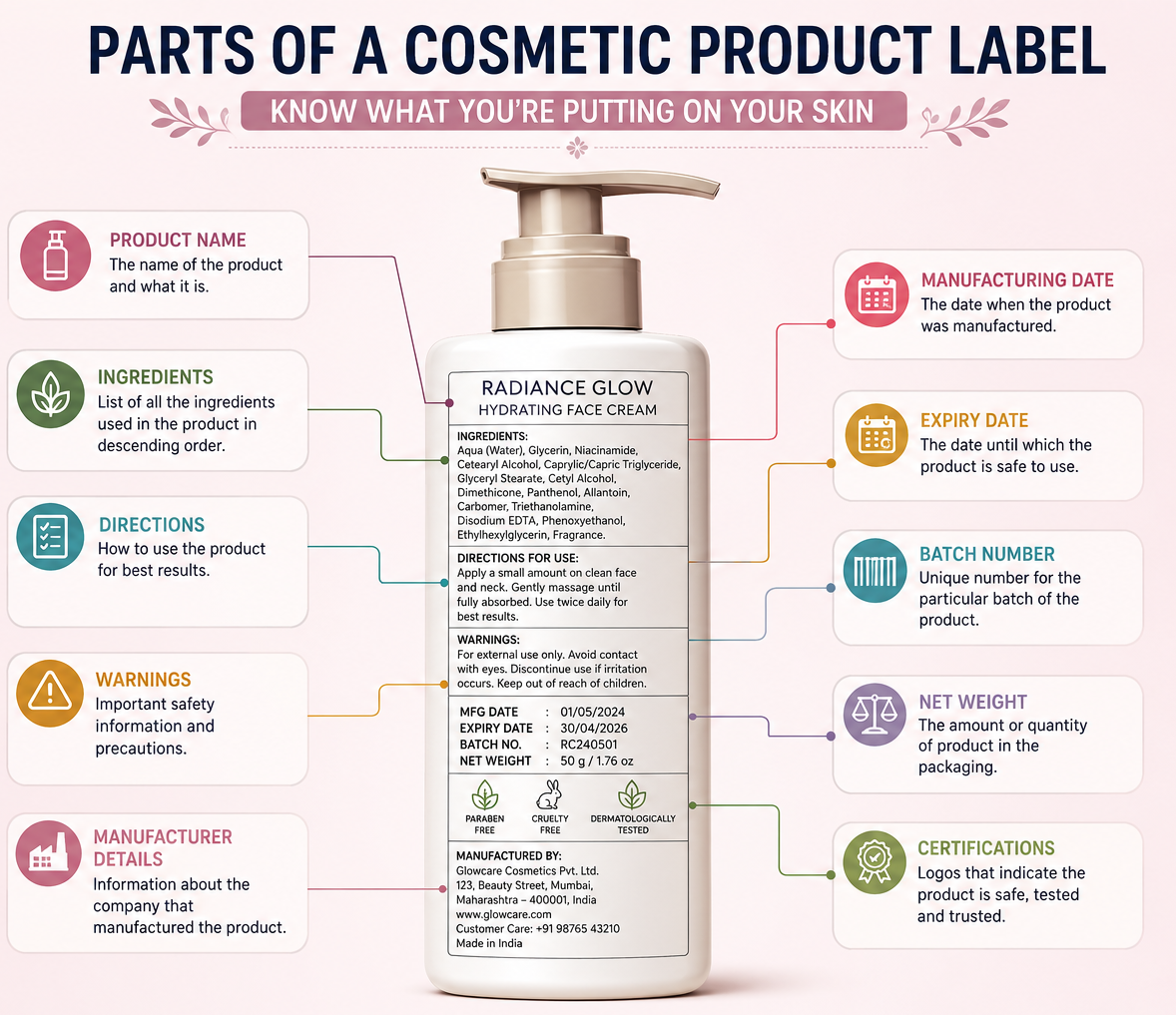
Step 1: Read the Product Name Carefully
The first thing people notice is usually the product name.
However, product names often focus on marketing rather than functionality.
For example:
- Brightening Face Cream
- Glow Booster Serum
- Instant Fairness Cream
- Miracle Repair Gel
These names sound impressive but don’t explain what the product actually contains.
Instead, look for descriptive terms like:
- Niacinamide Serum
- Vitamin C Serum
- Salicylic Acid Face Wash
- Ceramide Moisturizer
- Zinc Oxide Sunscreen
These names tell you the main active ingredient and make it easier to understand the product’s purpose.
Practical Tip: Always check whether the product name matches the ingredient list. A product claiming to be a “Vitamin C Serum” should list a Vitamin C ingredient near the top of the ingredient list.
Step 2: Understand What the Product Is Designed to Do
Most cosmetic labels clearly mention the product category or intended use.
Examples include:
- Cleanser
- Moisturizer
- Sunscreen
- Toner
- Serum
- Face Mask
- Lip Balm
- Shampoo
- Conditioner
The label may also mention specific skin concerns, such as:
- Acne-prone skin
- Dry skin
- Oily skin
- Sensitive skin
- Combination skin
- Pigmentation
- Anti-aging
- Dull skin
This helps narrow down whether the product is suitable for your skincare routine.
For instance, someone with oily skin may prefer a lightweight gel moisturizer, while someone with dry skin might need a richer cream.
Step 3: Learn How Ingredient Lists Work
The ingredient list is the most important part of any cosmetic label.
Ingredients are generally listed in descending order of concentration. This means the ingredient present in the highest amount appears first, while those in smaller amounts appear later.
For example:
Water → Glycerin → Niacinamide → Panthenol → Ceramides → Preservatives → Fragrance
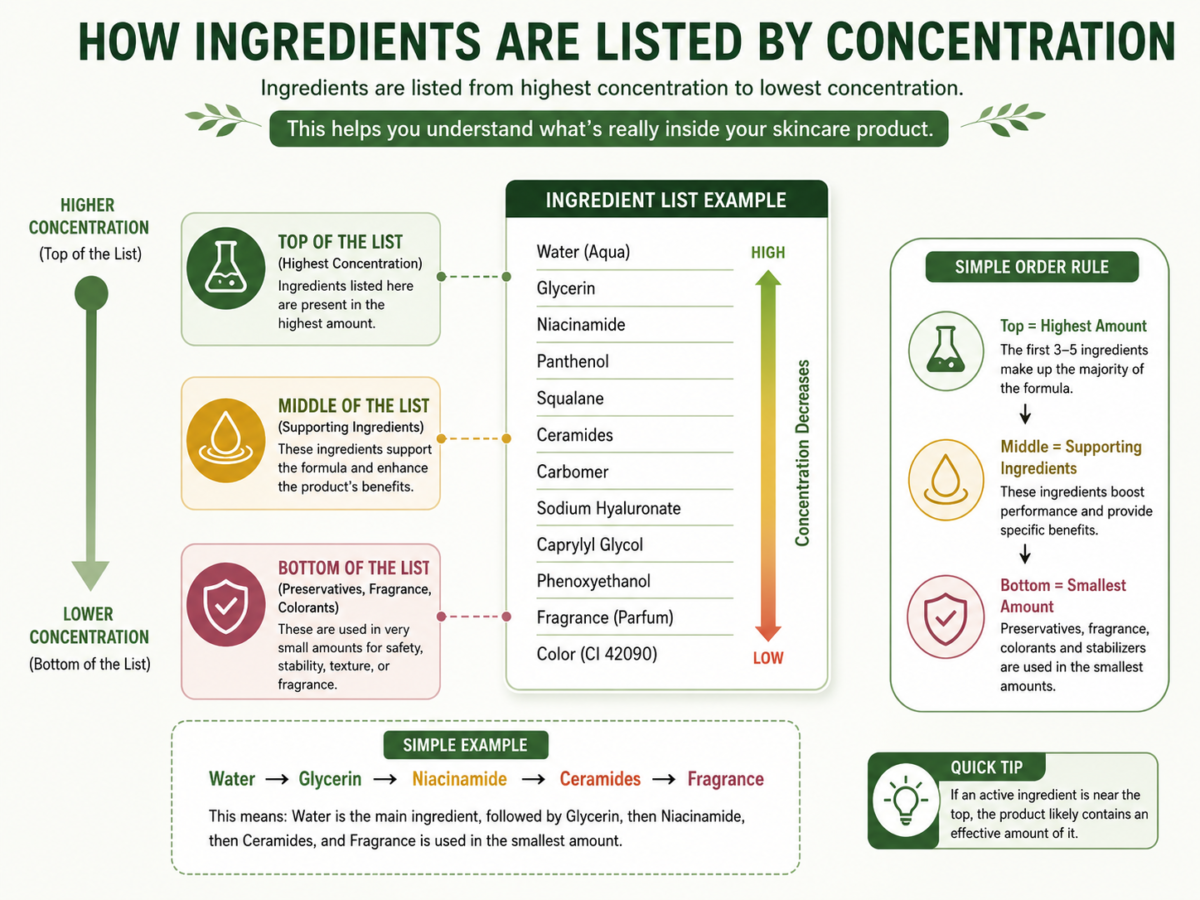
From this list, you can understand that:
- Water is the primary ingredient.
- Glycerin provides hydration.
- Niacinamide is present in a meaningful amount.
- Ceramides are included but in a smaller concentration.
This simple rule helps you judge whether a product truly contains enough of its advertised ingredients.
Practical Example
Imagine two moisturizers.
Moisturizer A
- Water
- Glycerin
- Ceramides
- Panthenol
Moisturizer B
- Water
- Mineral Oil
- Fragrance
- Ceramides
Although both advertise ceramides, Moisturizer A likely contains a higher amount because ceramides appear earlier in the ingredient list.
Read More: Which Hair Mask is The Best for Frizzy and Dry
Step 4: Identify Active Ingredients
Active ingredients are the components responsible for delivering the product’s main benefits.
Common skincare actives include:
| Ingredient | Main Benefit |
|---|---|
| Niacinamide | Controls oil, improves skin barrier |
| Vitamin C | Brightens skin and reduces dullness |
| Hyaluronic Acid | Deep hydration |
| Salicylic Acid | Treats acne and unclogs pores |
| Glycolic Acid | Gentle exfoliation |
| Lactic Acid | Smoothens skin texture |
| Ceramides | Strengthen skin barrier |
| Retinol | Reduces signs of aging |
| Zinc Oxide | Mineral sun protection |
| Titanium Dioxide | UV protection |
nowing these ingredients helps you choose products based on your skin concerns rather than marketing claims.
For example:
- Acne → Salicylic Acid
- Dry skin → Ceramides + Hyaluronic Acid
- Pigmentation → Vitamin C + Niacinamide
- Fine lines → Retinol
- Sensitive skin → Panthenol + Ceramides
Step 5: Understand Cosmetic Claims on the Front Label
The front of a cosmetic package often contains attractive claims designed to catch your attention. While many of these claims are useful, some are simply marketing terms and don’t always guarantee better performance.
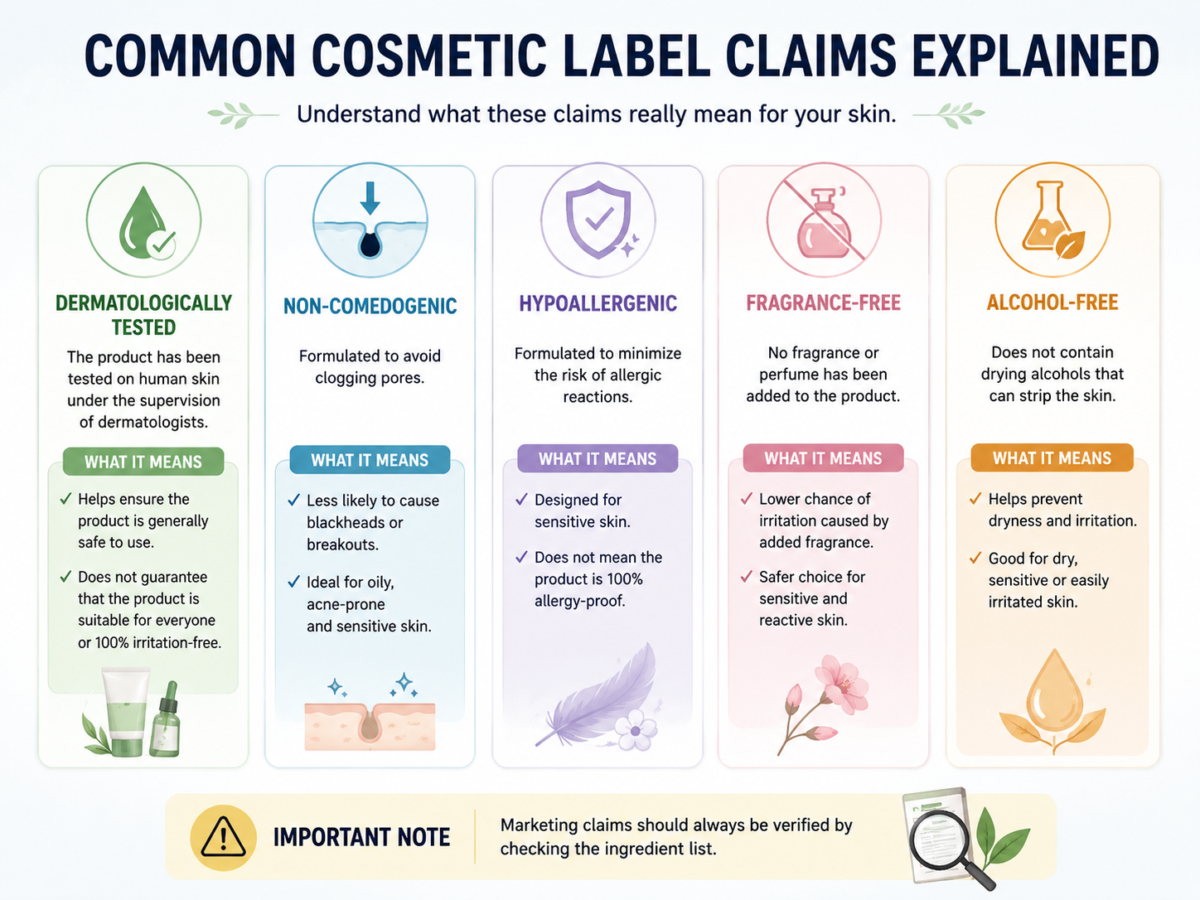
Here are some of the most common cosmetic claims and what they generally mean.
Dermatologically Tested
This means the product has been tested on human skin under the supervision of dermatologists.
However, it does not guarantee that the product is suitable for everyone or that it is allergy-free.
Tip: Even if a product is dermatologically tested, always perform a patch test if you have sensitive skin.
Hypoallergenic
A hypoallergenic product is formulated to reduce the chances of causing allergic reactions.
Keep in mind that “hypoallergenic” does not mean “allergy-proof.” Every person’s skin reacts differently.
Non-Comedogenic
This is one of the most useful claims for people with oily or acne-prone skin.
Non-comedogenic means the product is formulated to avoid clogging pores.
Examples include:
- Oil-free moisturizers
- Gel sunscreens
- Lightweight foundations
Fragrance-Free
Many people confuse Fragrance-Free with Unscented, but they are not the same.
Fragrance-Free
- No fragrance has been added.
Unscented
- The product may contain fragrance ingredients that mask the smell of other ingredients.
If you have sensitive skin, fragrance-free products are usually the safer choice.
Alcohol-Free
Not every alcohol is harmful.
There are two main types:
Drying Alcohols
- Alcohol Denat.
- Ethanol
- Isopropyl Alcohol
These may dry out sensitive skin.
Fatty Alcohols
- Cetyl Alcohol
- Cetearyl Alcohol
- Stearyl Alcohol
These actually help moisturize and soften the skin.
Always read the full ingredient list rather than avoiding every ingredient with the word “alcohol.”
Read More:Amazing Production Cosmetics Company
Step 6: Learn to Read the Ingredient List Like a Skincare Expert
Once you know how ingredients are arranged, the next step is understanding which ingredients benefit your skin.
Here are some beginner-friendly ingredients that are commonly found in skincare products.
Hydrating Ingredients
Look for:
- Glycerin
- Hyaluronic Acid
- Sodium Hyaluronate
- Panthenol
- Aloe Vera
These help attract and retain moisture, making them excellent for dry or dehydrated skin.
Skin Barrier Repair Ingredients
Healthy skin depends on a strong protective barrier.
Helpful ingredients include:
- Ceramides
- Cholesterol
- Fatty Acids
- Squalane
These help reduce dryness, irritation, and water loss.
Brightening Ingredients
If your goal is to reduce dullness or uneven skin tone, look for:
- Vitamin C
- Niacinamide
- Alpha Arbutin
- Kojic Acid
- Licorice Extract
These ingredients work gradually, so consistent use is important.
Acne-Fighting Ingredients
For acne-prone skin, common active ingredients include:
- Salicylic Acid
- Benzoyl Peroxide
- Sulfur
- Azelaic Acid
- Tea Tree Oil
Different skin types respond differently, so introducing one active ingredient at a time is often the best approach.
Anti-Aging Ingredients
To reduce the appearance of fine lines and improve skin texture, look for:
- Retinol
- Peptides
- Bakuchiol
- Coenzyme Q10
- Vitamin E
These ingredients often work best when paired with daily sunscreen.
Step 7: Identify Ingredients You May Want to Avoid
Not every ingredient is harmful, but some may not suit every skin type.
If You Have Sensitive Skin
Consider avoiding products with high amounts of:
- Artificial fragrance
- Essential oils in large quantities
- Alcohol Denat.
- Menthol
- Strong exfoliating acids if you’re new to skincare
If You Have Acne-Prone Skin
You may prefer products that are:
- Oil-free
- Non-comedogenic
- Lightweight
Some heavy oils and waxes can feel greasy on acne-prone skin, although they don’t affect everyone the same way.
If You Have Dry Skin
Very foaming cleansers containing harsh surfactants may leave your skin feeling tight.
Instead, choose products with moisturizing ingredients such as glycerin, ceramides, and panthenol.
Read More:Best Mamaearth Vitamin C Face Wash 2026
Step 8: Understand Cosmetic Symbols
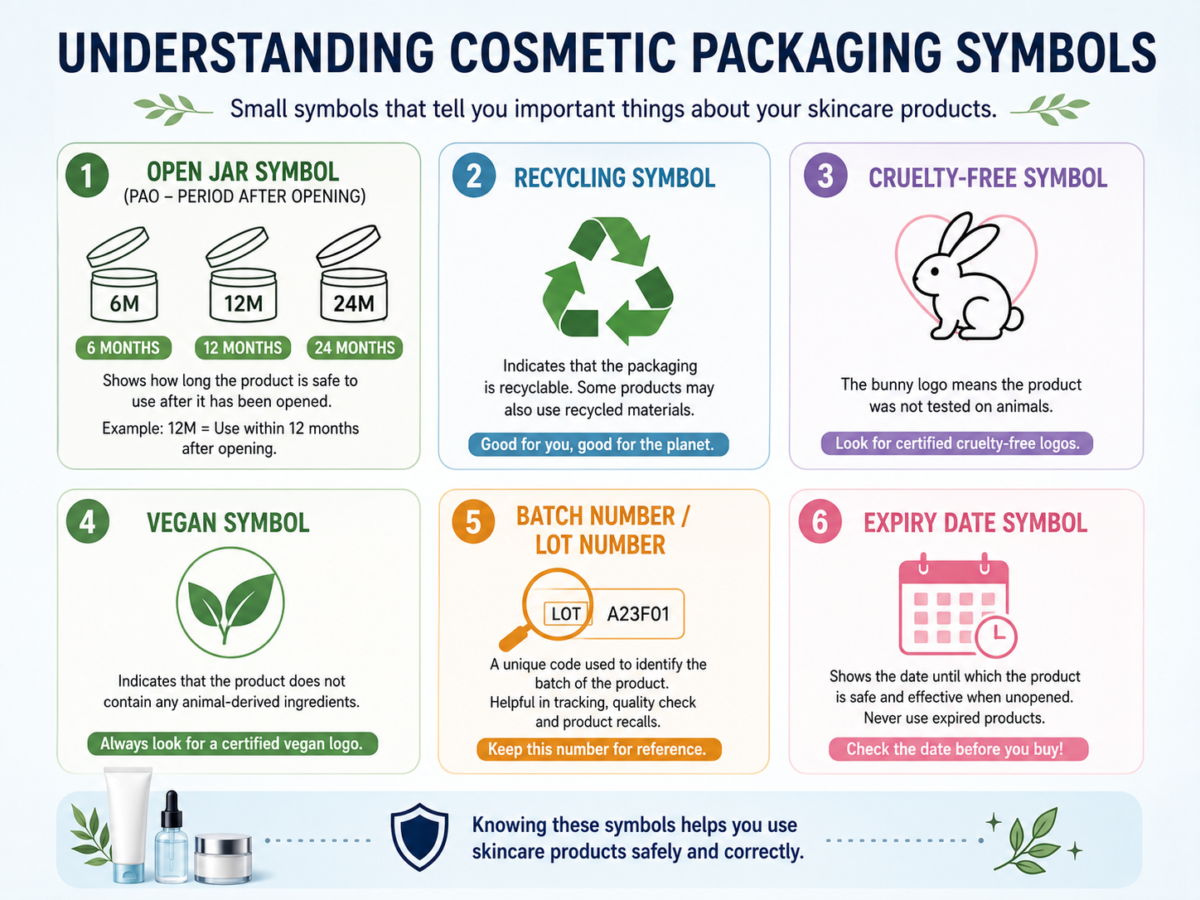
Many cosmetic packages include small symbols that provide important information.
Open Jar Symbol (PAO)
One of the most common symbols is an open jar with a number.
Examples:
- 6M
- 12M
- 24M
This stands for Period After Opening (PAO).
It tells you how long the product remains safe after opening.
For example:
- 6M = Use within 6 months after opening.
- 12M = Use within 12 months.
- 24M = Use within 24 months.
If your moisturizer has a 12M symbol and you opened it in January, you should aim to finish it before the following January.
Recycling Symbol
This symbol indicates that the packaging is recyclable.
Some brands also mention:
- Recycled plastic
- Refillable packaging
- Eco-friendly materials
These labels can help you make more sustainable choices.
Cruelty-Free Symbol
A bunny logo usually indicates that the product or its ingredients were not tested on animals.
However, it’s still helpful to check whether the claim is supported by a recognized certification.
Vegan Symbol
A vegan cosmetic product does not contain animal-derived ingredients.
Examples of ingredients not used in vegan products include:
- Beeswax
- Lanolin
- Carmine
- Collagen from animal sources
Step 9: Manufacturing Date vs Expiry Date
Many shoppers only check the expiry date, but the manufacturing date is equally important.
Manufacturing Date
This tells you when the product was made.
Example:
Manufactured: March 2026
Expiry Date
This indicates the last recommended date for using an unopened product.
Example:
Expires: March 2029
Always avoid buying products that are close to their expiry date, especially if you don’t plan to use them immediately.
Step 10: What Is a Batch Number?
Every cosmetic product has a unique batch or lot number.
Manufacturers use this number to:
- Track production
- Identify quality issues
- Recall defective batches if necessary
If a company announces a product recall, the batch number helps consumers determine whether their product is affected.
Step 11: How to Spot Misleading Cosmetic Labels
Not every claim printed on a cosmetic package tells the full story. Some labels use attractive words that sound scientific or impressive but don’t always provide meaningful information.
Learning to identify these marketing terms can help you make smarter purchasing decisions.
Here are a few examples.
“Natural”
Many people assume that a product labeled Natural is automatically safer or better.
However, in many countries, there is no single universal definition of the word “natural” for cosmetics.
Organic”
Organic products usually contain ingredients grown without certain synthetic pesticides or fertilizers.
However, not every product labeled “organic” is made entirely from organic ingredients.
“Chemical-Free”
This is one of the most misleading cosmetic claims.
Everything—including water—is a chemical.
So, no cosmetic product is truly “chemical-free.”
“Clinically Proven”
This phrase sounds convincing, but it doesn’t always explain:
- How many people were tested
- How long the study lasted
Step 12: How to Read Sunscreen Labels Correctly
Sunscreen is one of the most important skincare products, and understanding its label helps ensure you’re getting effective protection.
SPF Number
SPF stands for Sun Protection Factor.
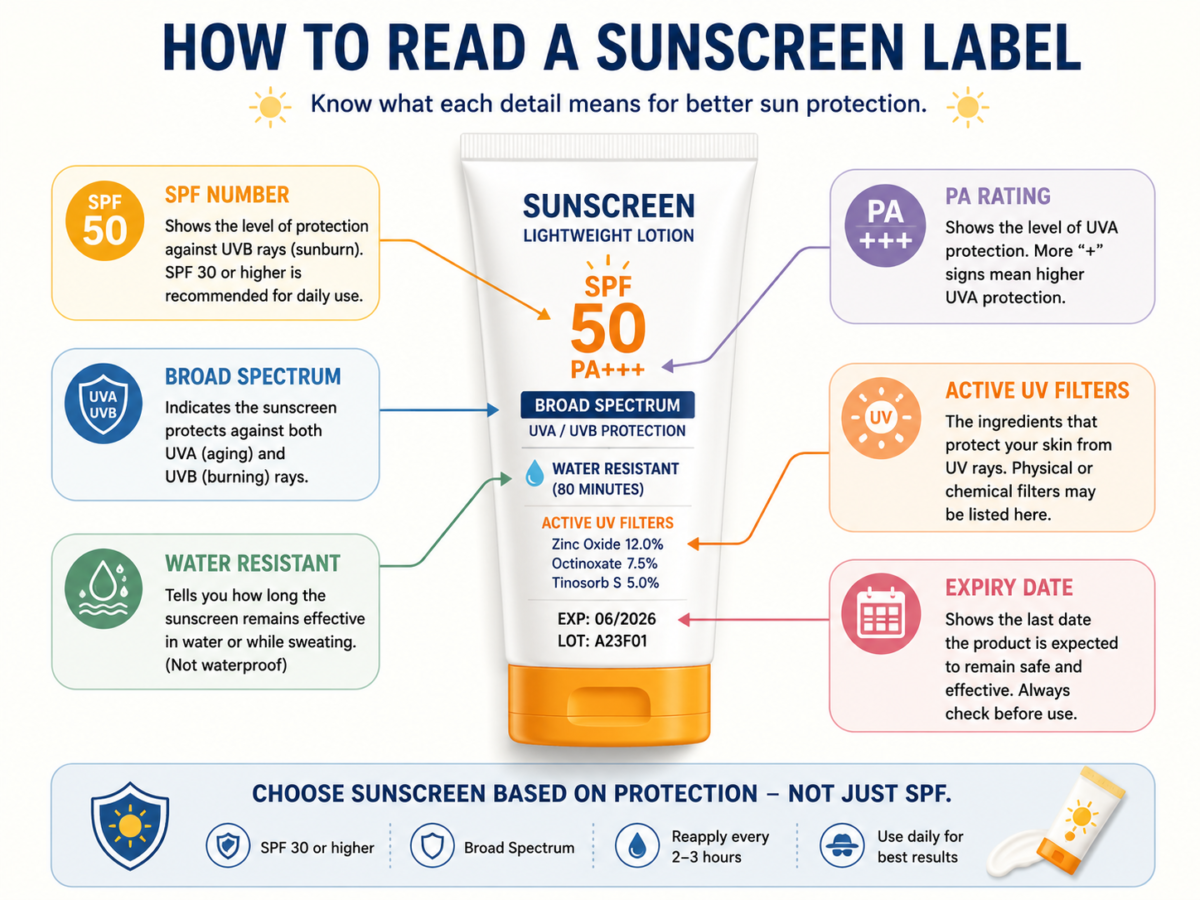
Common options include:
- SPF 30
- SPF 50
- SPF 50+
Higher SPF provides greater protection against UVB rays, but no sunscreen blocks 100% of UV rays.
For everyday use, SPF 30 or higher is generally recommended.
Step 13: Understanding Cosmetic Certifications
Some cosmetic products carry certifications from recognized organizations.
These certifications can provide additional confidence about certain product standards.
Examples include:
- Cruelty-Free Certification
- Vegan Certification
- Organic Certification
- Dermatologist Tested
- ISO Manufacturing Standards
- Good Manufacturing Practice (GMP)
Step 14: Check the Manufacturer Information
A trustworthy cosmetic product should clearly mention:
- Manufacturer’s name
- Company address
- Customer care details
- Website
- Country of origin
This information makes it easier to contact the company if you have questions or concerns.
Avoid products with unclear or missing manufacturer information.
Step 15: Read the Directions Before Using Any Product
Many skincare problems happen simply because products are used incorrectly.
Always read the usage instructions.
For example:
Vitamin C Serum
Directions may say:
- Apply in the morning.
- Follow with sunscreen.
Step 16: Always Read the Warnings
The warning section is often overlooked, but it’s one of the most important parts of the label.
Common warnings include:
- For external use only
- Avoid contact with eyes
- Keep out of reach of children
- Discontinue use if irritation occurs
- Store in a cool, dry place
Step 17: Patch Testing Is Essential
Even if a product has excellent reviews and high-quality ingredients, your skin may react differently.
A simple patch test can help identify irritation before applying the product to your entire face.
How to Patch Test
- Apply a small amount behind the ear or on the inner forearm.
- Leave it for 24–48 hours.
- Watch for redness, itching, swelling, or burning.
- If no reaction occurs, begin using the product as directed.
Common Mistakes People Make While Reading Cosmetic Labels
Even after checking the label, many shoppers still make mistakes that can lead to buying the wrong product. Avoiding these common errors will help you choose skincare products more confidently.
1. Buying Based Only on the Front Label
Words like “Glow,” “Natural,” “Instant Brightening,” or “Premium Formula” may catch your attention, but they don’t tell the complete story.
Always turn the product around and read the ingredient list, directions, and warnings before purchasing.
2. Ignoring the Ingredient List
Many people buy a product because it contains one popular ingredient, such as Vitamin C or Niacinamide, without checking what else is inside.
The ingredient list helps you understand whether the product also contains fragrance, drying alcohols, or other ingredients that may not suit your skin.
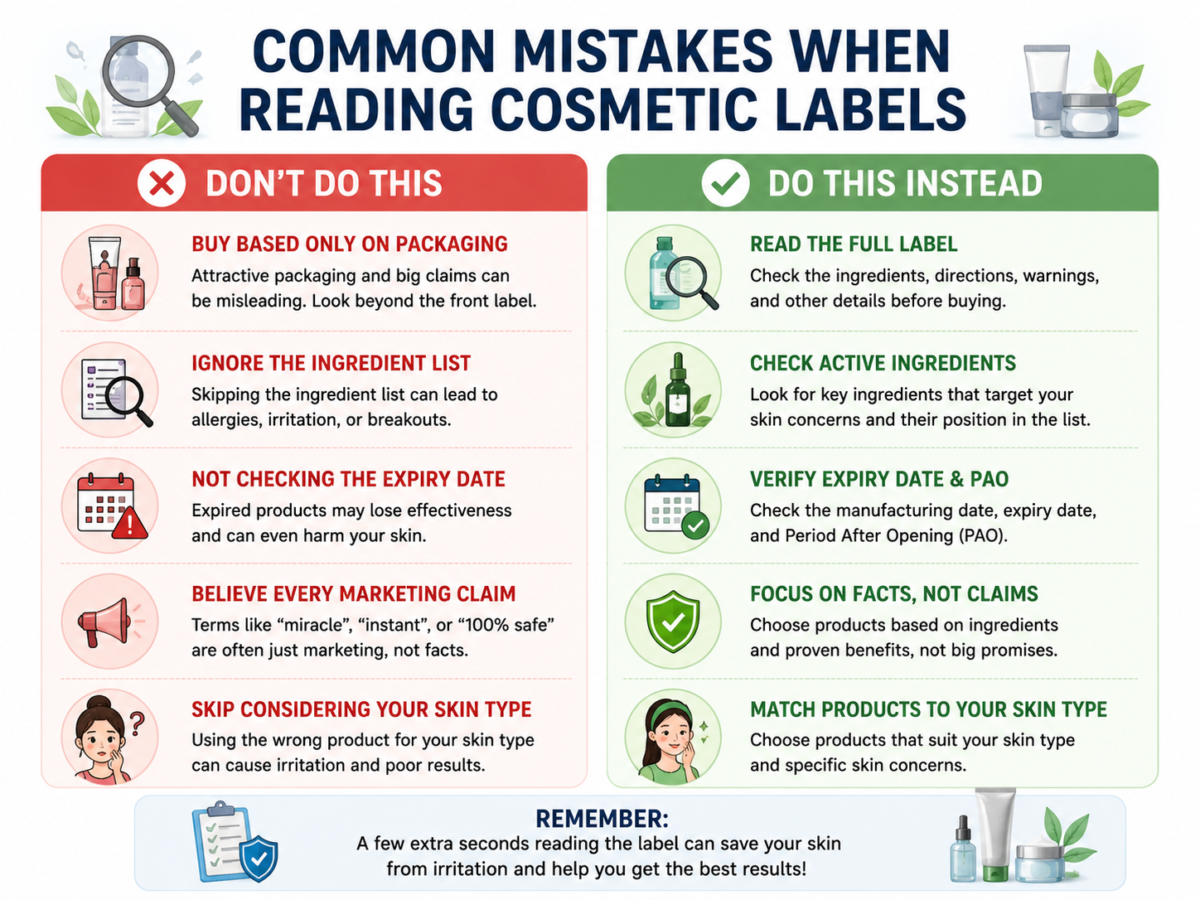
3. Not Checking the Expiry Date
Using expired cosmetics may reduce effectiveness and increase the risk of irritation or contamination.
Always check:
- Manufacturing Date
- Expiry Date
- Period After Opening (PAO)
4. Believing Every Marketing Claim
Claims like:
- Chemical-Free
- Miracle Formula
- Instant Results
- 100% Safe
should always be viewed with caution.
Instead, focus on ingredients, directions, and product quality.
5. Choosing Products Without Considering Your Skin Type
A moisturizer that works well for dry skin may feel heavy on oily skin.
Similarly, a strong acne treatment may irritate sensitive skin.
Always match the product to your individual skin needs rather than following trends.
Conclusion
Reading the labeling of cosmetic products is one of the easiest ways to become a smarter skincare shopper. A few extra minutes spent checking the ingredient list, expiry date, usage instructions, and safety information can help you avoid unsuitable products and choose ones that truly match your skin’s needs.
Remember that attractive packaging and bold marketing claims don’t always reflect product quality. The real value lies in understanding what’s inside the bottle, how to use it correctly, and whether it suits your skin type.
As you become familiar with common ingredients, cosmetic symbols, and label terminology, reading product labels will become second nature. This knowledge allows you to invest in skincare more confidently, avoid unnecessary irritation, and build a routine based on facts rather than advertising.
The next time you shop for a cleanser, serum, moisturizer, or sunscreen, take a moment to read the label carefully. Your skin will thank you for making informed choices.
Frequently Asked Questions (FAQs)
1. Why is it important to read cosmetic product labels?
Reading cosmetic labels helps you understand the ingredients, directions, warnings, expiry dates, and product claims so you can choose products that suit your skin type and concerns.
2. What does the ingredient order on a cosmetic label mean?
Ingredients are generally listed from the highest concentration to the lowest concentration. The first few ingredients make up most of the product’s formula.
3. What does “non-comedogenic” mean?
Non-comedogenic means the product is formulated to reduce the likelihood of clogging pores, making it a popular choice for oily and acne-prone skin.
4. Is “fragrance-free” the same as “unscented”?
No. Fragrance-free products do not contain added fragrance, while unscented products may include fragrance ingredients to neutralize odors.
5. What is the PAO symbol on cosmetic packaging?
The Period After Opening (PAO) symbol shows how long a product is recommended to be used after it has been opened, such as 6M, 12M, or 24M.
6. What should I check before buying a skincare product?
Check the ingredient list, skin type suitability, expiry date, directions, warnings, manufacturer details, and active ingredients before purchasing.
7. Can I use cosmetics after their expiry date?
It’s generally not recommended. Expired products may lose effectiveness and could increase the risk of skin irritation or contamination.
8. Are products labeled “natural” always better?
Not necessarily. The word “natural” doesn’t always guarantee better quality or suitability. Always read the ingredient list instead of relying only on front-label claims.
9. How can I know if a cosmetic product is genuine?
Purchase from trusted retailers, inspect the packaging for quality, verify the batch number if available, and make sure the manufacturer information is complete.
10. Should I patch test every new skincare product?
Yes. A patch test helps identify possible irritation or allergic reactions before applying the product to your entire face.