
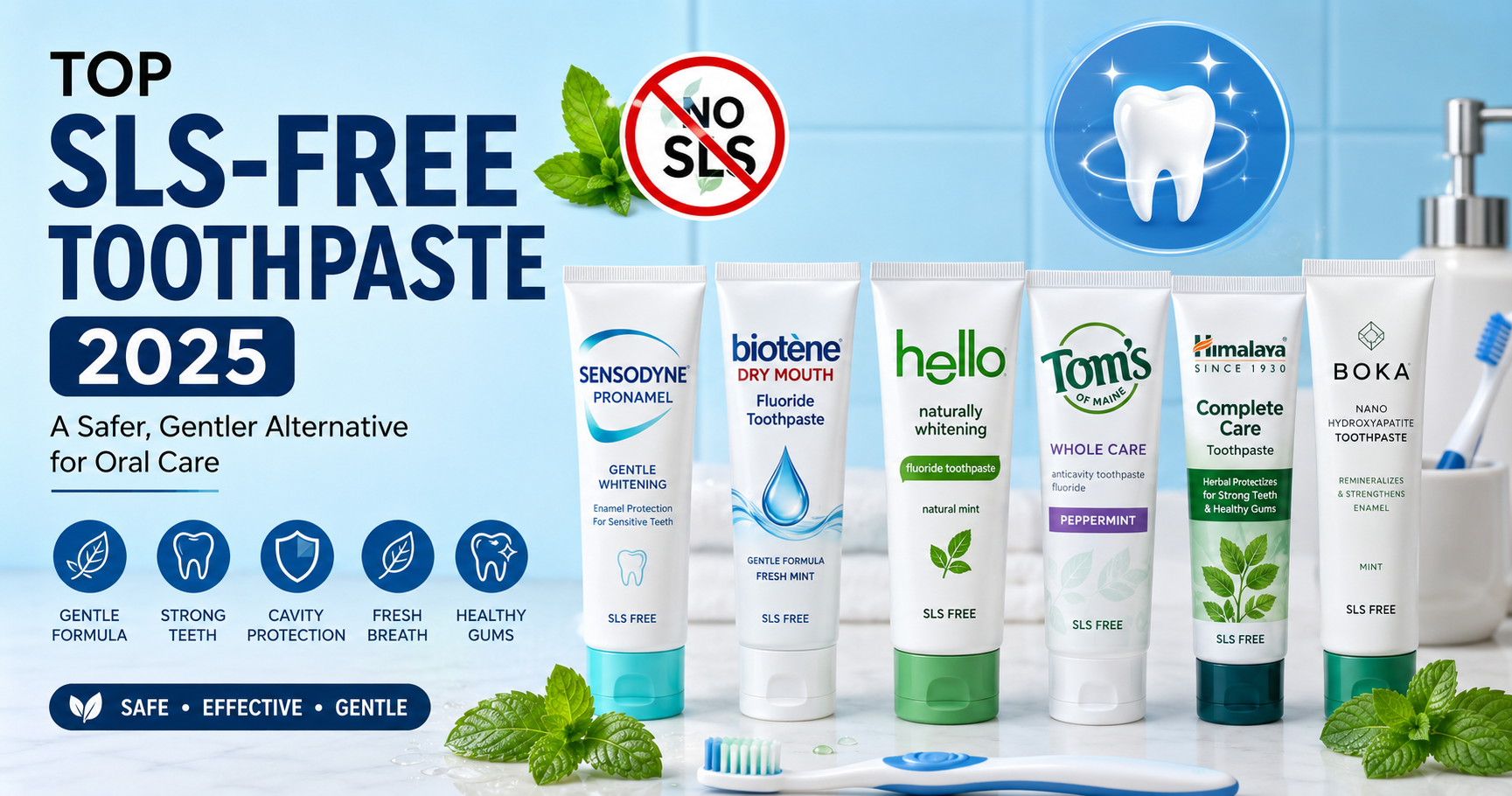
Top SLS-Free Toothpaste 2025: A Safer, Gentler Alternative for Oral Care
Top SLS free toothpaste 2025. What Is SLS in Toothpaste? In the contemporary oral care landscape, consumers are increasingly attentive to product ingredients and their impact on health. One such ingredient under scrutiny is Sodium Lauryl Sulfate (SLS).
SLS is a synthetic surfactant commonly used in toothpaste formulations to create foam and aid in cleaning the teeth and gums. While it is effective at removing debris and dispersing plaque, SLS has also been associated with certain adverse effects.
This has paved the way for the SLS-free toothpaste segment, which is rapidly gaining traction among health-conscious consumers who value both efficacy and safety. With SLS free toothpaste 2025
Read More: The Ultimate Cosmetic Manufacturing Flow Chart for Beginners: Step-by-Step
Why Do Manufacturers Use SLS in Toothpaste?
SLS is traditionally used because it: SLS free toothpaste
Creates Lather: Consumers equate foam with cleaning power.
Emulsifies Oils: It breaks down and disperses fats and food particles.
Enhances Spreadability: The paste distributes evenly in the mouth.
Despite these functional benefits, SLS has some drawbacks that have motivated brands to develop SLS-free alternatives.
Potential Risks of SLS in Oral Care
From a regulatory standpoint, SLS is considered safe within prescribed limits. However, long-term and sensitive users have reported side effects, including:
Mouth Irritation: SLS can strip the mucosal lining, causing burning or sensitivity.
Recurrent Canker Sores: Studies have linked SLS to higher incidence of aphthous ulcers.
Dry Mouth: SLS can disturb the natural saliva balance.
Altered Taste Perception: Some individuals report temporary taste alteration after brushing.
For people with sensitive gums, oral ulcers, or dry mouth syndrome, these risks are significant enough to justify a switch to SLS-free formulations.
What Is SLS-Free Toothpaste?
SLS-free toothpaste is formulated without Sodium Lauryl Sulfate. Instead, it uses alternative mild surfactants such as:
Cocamidopropyl Betaine (CAPB): Derived from coconut oil, it is gentler and less irritating.
Sodium Cocoyl Glutamate: A mild, biodegradable surfactant.
Decyl Glucoside: Plant-based foaming agent, commonly used in natural formulations.
These ingredients deliver cleaning action without the harsh side effects associated with SLS.
Read More: What Is Cosmetic Research And Development (R&D)? A Complete Guide
Benefits of Using SLS-Free Toothpaste
Here are key advantages that have fueled its rising popularity:
Reduced Irritation: Ideal for people prone to ulcers and sensitive gums.
Gentler Cleaning: Mild surfactants clean effectively without stripping the protective layer in the mouth.
Better Moisture Balance: Helps maintain saliva flow, reducing dry mouth symptoms.
Safer for Children: SLS-free formulations are recommended for kids who might swallow toothpaste inadvertently.
Compatible with Homeopathic Treatments: Many homeopathic users prefer SLS-free pastes, as SLS can interfere with certain remedies.
How to Identify SLS-Free Toothpaste
When evaluating a toothpaste, check the Ingredients List on the packaging. Look for any of these labels or indications:
“SLS-Free” printed on front panel
Ingredients like Cocamidopropyl Betaine or Sodium Cocoyl Glutamate instead of Sodium Lauryl Sulfate
Certifications such as Natural, Organic, or Ayurvedic, which often avoid SLS
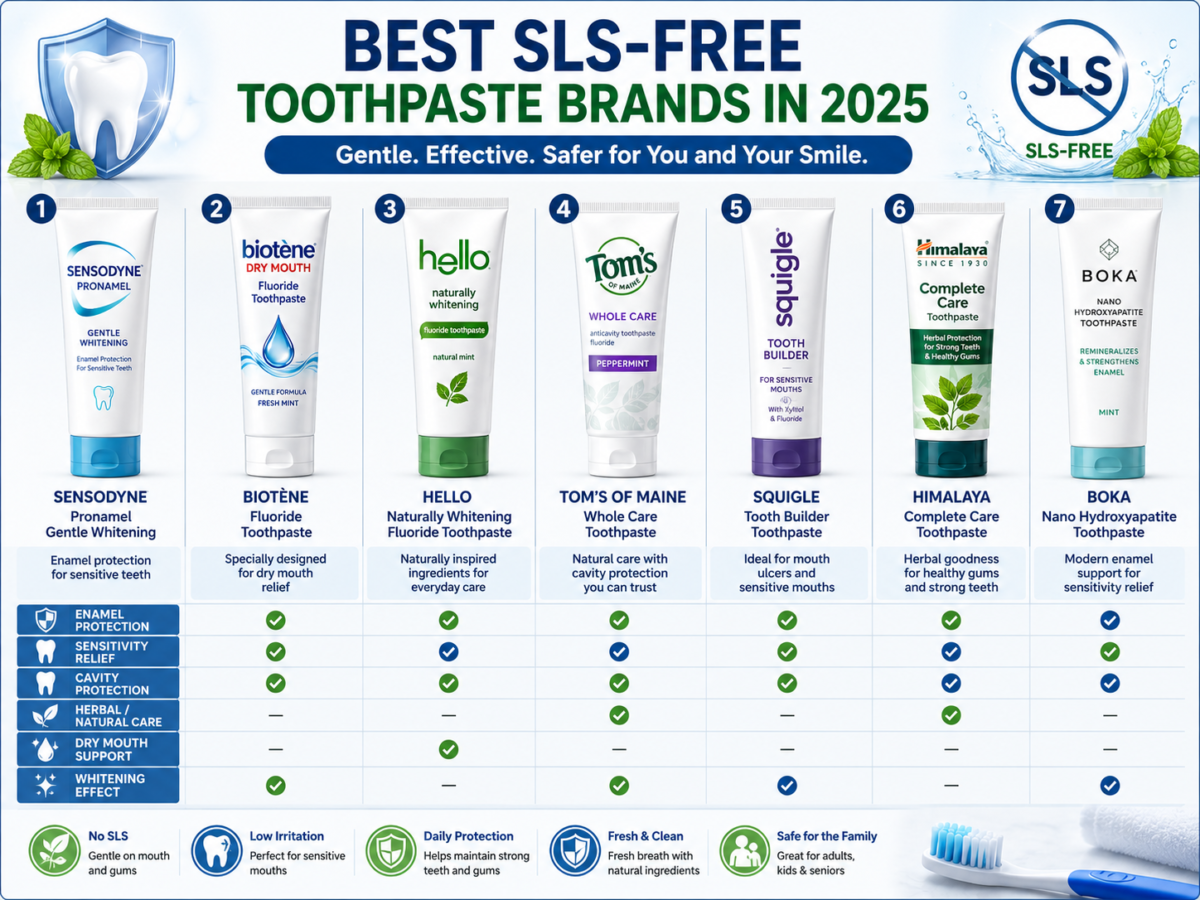
Examples of well-known SLS-free toothpaste brands:
Sensodyne SLS-Free
Tom’s of Maine
Himalaya Herbal Toothpaste
Biotene Dry Mouth Toothpaste
Is SLS-Free Toothpaste Effective in Cleaning Teeth?
A common misconception is that less foam means less cleaning power. In reality, the cleaning efficacy primarily depends on:
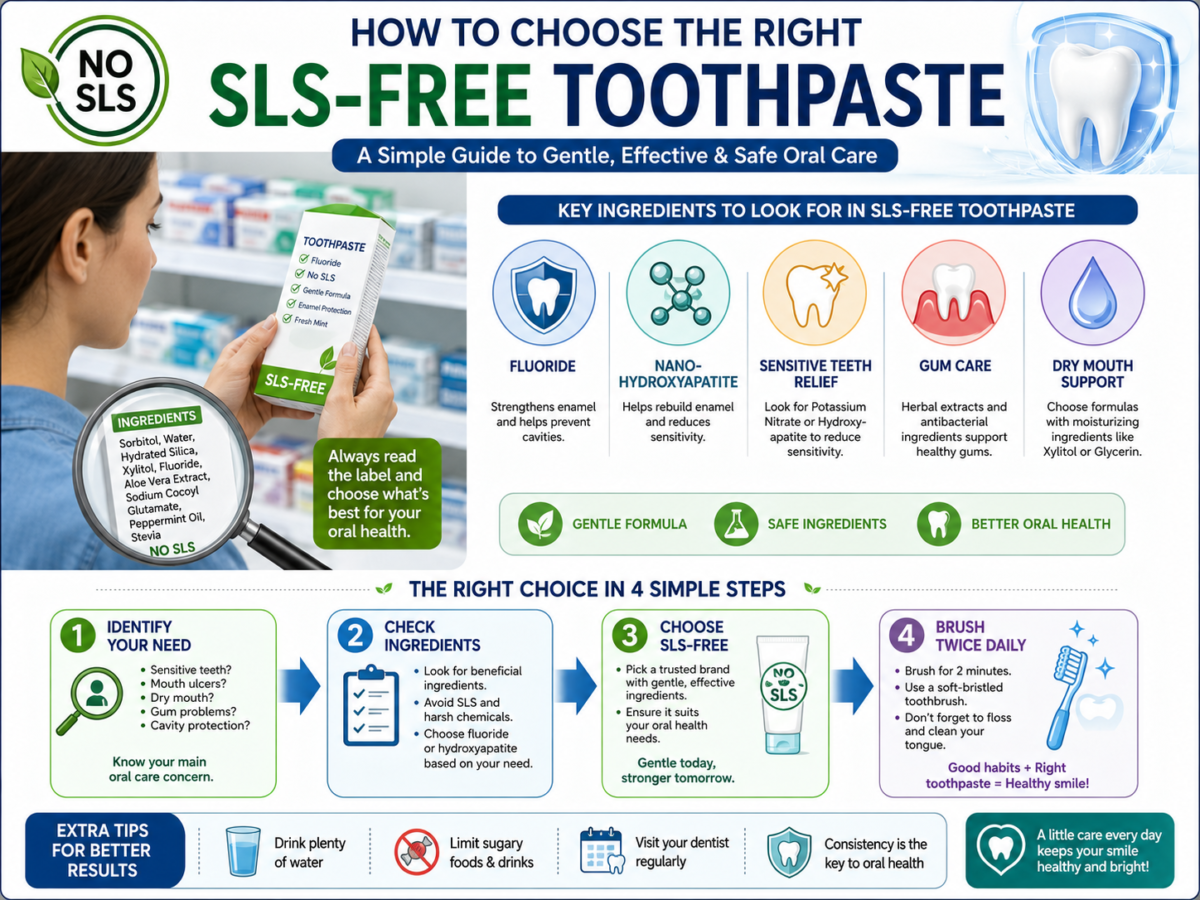
Abrasive agents (like silica) for plaque removal
Fluoride content to protect against cavities
Anti-bacterial essential oils or extracts
SLS simply assists in spreading and foaming but does not clean teeth itself. Therefore, SLS-free toothpaste is equally effective when formulated with proven cleaning and anti-cavity agents.
Considerations Before Switching
If you are contemplating transitioning to SLS-free toothpaste:
Assess your oral health: If you suffer from canker sores, burning sensations, or dry mouth, you are an ideal candidate.
Trial period: It may take a few days to get accustomed to less foam.
Consult your dentist: Especially if you have advanced periodontal disease or require specialized fluoride content.
Read More : What Is Cosmetic Research And Development (R&D)? A Complete Guide
Sustainability & SLS-Free Formulations
Modern consumers are inclined towards eco-friendly and cruelty-free products. Many SLS-free brands also:
Avoid artificial colors and flavors
Use recyclable packaging
Offer vegan and cruelty-free certifications
This aligns with broader sustainability goals and resonates with environmentally conscious users.
How to Market SLS-Free Toothpaste (For Manufacturers & Retailers)
For cosmetic and oral care brands, highlighting these USPs can position the product effectively:
“Ideal for sensitive mouths and daily use”
“Dermatologist and dentist recommended”
“SLS-Free, Paraben-Free, and Fluoride-Optimized”
“Crafted with natural ingredients”
Clear labeling and consumer education play a pivotal role in driving adoption.
How to Choose the Best SLS-Free Toothpaste
Not every SLS-free toothpaste is the same. While they all avoid Sodium Lauryl Sulfate (SLS), they may contain different active ingredients designed for specific oral health needs.
Before buying a toothpaste, think about your biggest concern. Are you trying to prevent cavities, reduce tooth sensitivity, improve gum health, or simply avoid harsh ingredients? Choosing a product that matches your needs will give you better results than selecting one based only on brand or packaging.
Here are the most important factors to consider.
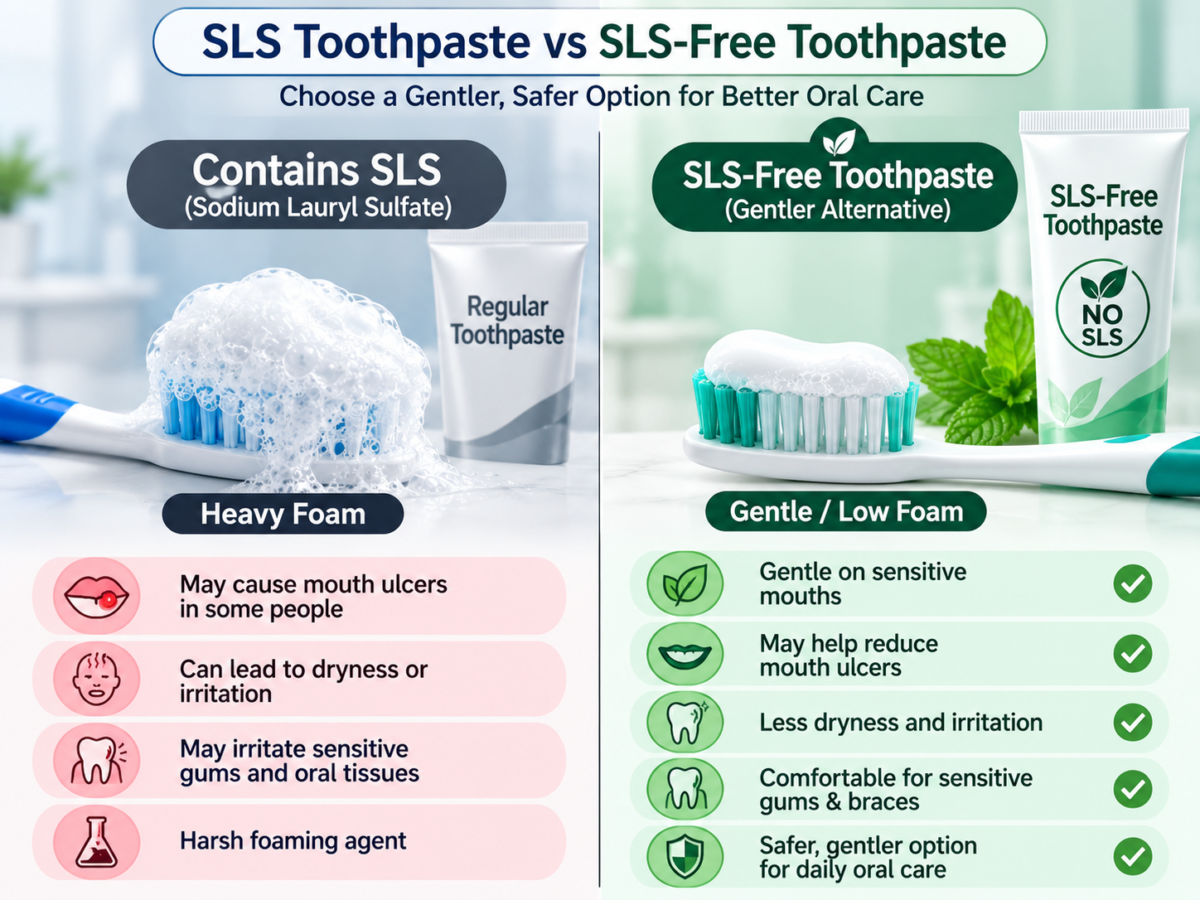
1. Check the Active Ingredients
The ingredients that actively protect your teeth are more important than the amount of foam a toothpaste produces.
Look for ingredients that match your oral health goals.
Fluoride
Fluoride is one of the most researched ingredients in dentistry. It helps strengthen enamel, reduce the risk of cavities, and repair early stages of tooth decay.
It is an excellent choice for most adults and children (when used in the recommended amount).
Nano-Hydroxyapatite
Nano-hydroxyapatite is becoming increasingly popular in modern toothpaste.
It works by helping rebuild weakened enamel and reducing tooth sensitivity. Some people choose it as an alternative to fluoride, although both ingredients can be effective when used correctly.
Xylitol
Xylitol is a natural sweetener that may help reduce the growth of cavity-causing bacteria.
It also provides a pleasant taste without adding sugar.
Potassium Nitrate
If you experience sharp pain when eating ice cream or drinking hot tea, potassium nitrate may help reduce tooth sensitivity over time.
2. Choose Based on Your Oral Health Needs
Instead of buying the most expensive toothpaste, choose one that matches your dental concerns.
For Sensitive Teeth
Look for formulas containing:
- Potassium nitrate
- Nano-hydroxyapatite
- Fluoride
For Gum Care
Choose toothpaste with ingredients that support healthy gums, such as:
- Herbal extracts
- Fluoride
- Mild cleansing agents
For Dry Mouth
Select products designed to retain moisture and avoid irritating ingredients.
For Everyday Protection
A simple fluoride-based SLS-free toothpaste is often enough for daily cavity prevention.
3. Avoid Buying Based Only on Whitening Claims
Many whitening toothpastes promise brighter teeth within days.
In reality, most whitening toothpaste removes only surface stains caused by coffee, tea, or smoking.
They cannot dramatically change your natural tooth color.
If a whitening toothpaste is very abrasive, using it too often may wear down enamel over time.
Choose gentle whitening formulas instead of highly abrasive products.
4. Read the Ingredient List
Marketing words like “Natural,” “Organic,” or “Herbal” do not always tell the full story.
Always read the ingredient list before purchasing.
Check for:
- Fluoride (if desired)
- SLS-free label
- Active ingredients
- Expiry date
- Trusted manufacturer
Ingredients Some People Prefer to Avoid
Although not everyone needs to avoid these ingredients, some people choose gentler formulas containing fewer additives.
These may include:
- Sodium Lauryl Sulfate (SLS)
- Artificial colors
- Excessively strong flavoring agents
- Harsh abrasives (in some whitening formulas)
If you have sensitive oral tissues, a simpler formula may feel more comfortable.
Common Myths About SLS-Free Toothpaste
Many misconceptions exist about SLS-free toothpaste. Let’s clear up some of the most common ones.
Myth 1: Less Foam Means Poor Cleaning
Fact: Foam does not clean your teeth.
Brushing technique, brushing time, and active ingredients are what remove plaque effectively.
Myth 2: SLS-Free Toothpaste Cannot Prevent Cavities
Fact: Many SLS-free toothpastes contain fluoride or other enamel-supporting ingredients that help protect against cavities just as effectively as regular toothpaste.
Myth 3: Natural Toothpaste Is Always Better
Fact: Natural ingredients can be beneficial, but they should still provide effective cavity protection.
Choose products with evidence-based active ingredients rather than relying only on marketing claims.
Myth 4: Everyone Should Stop Using SLS
Fact: Not necessarily.
Many people use SLS-containing toothpaste every day without experiencing any irritation.
Switching to SLS-free toothpaste is usually most beneficial for people with sensitive mouths, frequent mouth ulcers, or dryness.
Expert Tips for Better Oral Care
Using a good toothpaste is only one part of maintaining healthy teeth and gums. Daily habits play an even bigger role.
Brush Twice a Day
Brush your teeth every morning and before bedtime for about two minutes each time.
Use a Soft-Bristled Toothbrush
A soft toothbrush cleans effectively while reducing the risk of damaging your gums or enamel.
Replace your toothbrush every three to four months, or sooner if the bristles become worn.
Clean Between Your Teeth Daily
Brushing alone cannot remove all plaque from between teeth.
Use:
- Dental floss
- Interdental brushes
- Water flossers (if recommended)
Limit Sugary Foods and Drinks
Frequent consumption of sugary snacks and beverages feeds bacteria that produce acids, increasing the risk of tooth decay.
Try to:
- Drink more water.
- Rinse your mouth after sugary foods.
- Avoid frequent snacking throughout the day.
Stay Hydrated
Saliva naturally helps protect your teeth by washing away food particles and neutralizing acids.
Drinking enough water throughout the day supports a healthy oral environment, especially if you experience dry mouth.
Visit Your Dentist Regularly
Even with excellent brushing habits, regular dental check-ups are essential.
Professional cleanings and examinations can help detect problems early, making treatment easier and more effective.
Common Mistakes to Avoid
Many people unknowingly reduce the effectiveness of their oral care routine. Avoid these common mistakes:
- Brushing too hard, which can wear down enamel and irritate gums.
- Using a worn-out toothbrush with frayed bristles.
- Brushing for less than two minutes.
- Skipping flossing or cleaning between teeth.
- Choosing toothpaste based only on advertisements instead of your dental needs.
- Ignoring persistent symptoms like bleeding gums, mouth ulcers, or tooth sensitivity instead of consulting a dentist
Are There Any Side Effects of SLS-Free Toothpaste?
For most people, SLS-free toothpaste is safe to use every day. Since it does not contain Sodium Lauryl Sulfate, it is generally less likely to cause irritation for people with sensitive mouths.
However, keep these points in mind:
- Some formulas may have a milder taste or produce less foam, which can take a few days to get used to.
- Herbal toothpastes may contain plant extracts that can cause allergic reactions in some individuals.
- Fluoride-free toothpaste may not provide the same level of cavity protection for everyone. If you’re unsure, ask your dentist which type is best for you.
If you notice persistent irritation, swelling, or discomfort after using any toothpaste, stop using it and consult a dental professional.
Should You Switch to SLS-Free Toothpaste?
Switching to SLS-free toothpaste is a personal choice rather than a necessity for everyone.
You may benefit from making the switch if you:
- Experience frequent mouth ulcers
- Have sensitive gums or a burning sensation while brushing
- Suffer from dry mouth
- Wear braces or other orthodontic appliances
- Prefer gentle oral care products with less foam
If your current toothpaste works well and doesn’t cause irritation, there may be no need to change. The best toothpaste is the one that supports your oral health and encourages you to brush consistently.
Final Buying Checklist
Before purchasing an SLS-free toothpaste, ask yourself these questions:
✔ Is it clearly labeled SLS-Free?
✔ Does it contain fluoride or another proven enamel-supporting ingredient if cavity protection is your goal?
✔ Is it suitable for your specific concern (sensitivity, dry mouth, gum care, or whitening)?
✔ Is it made by a trusted manufacturer?
✔ Is the expiry date valid?
✔ Have you checked the ingredient list for anything you’re allergic or sensitive to?
Using this simple checklist can help you make a more informed choice.
Conclusion
SLS-free toothpaste has become a popular choice in 2025 because it offers a gentle yet effective way to care for your teeth and gums. While Sodium Lauryl Sulfate helps create foam, it isn’t responsible for cleaning your teeth. Proper brushing technique, good oral hygiene habits, and the right active ingredients are what truly make a difference.
If you have a sensitive mouth, frequent mouth ulcers, dry mouth, or simply prefer products with milder ingredients, an SLS-free toothpaste may improve your daily brushing experience.
Remember that no toothpaste can replace healthy oral habits. Brush twice a day, floss daily, limit sugary foods and drinks, and schedule regular dental check-ups to keep your smile healthy for years to come.
Choosing the right toothpaste doesn’t have to be complicated. By understanding your oral health needs and reading ingredient labels carefully, you can confidently select an SLS-free toothpaste that supports your long-term dental health.
Frequently Asked Questions (FAQs)
1. What is SLS in toothpaste?
SLS (Sodium Lauryl Sulfate) is a foaming agent used in many toothpastes. It helps spread the toothpaste while brushing but is not responsible for preventing cavities or cleaning teeth.
2. Is SLS-free toothpaste better?
It depends on your needs. SLS-free toothpaste is often a better option for people with sensitive mouths, dry mouth, or frequent mouth ulcers. For others, both SLS and SLS-free toothpaste can be effective.
3. Does SLS-free toothpaste clean teeth properly?
Yes. Cleaning effectiveness depends on your brushing technique, brushing time, and the toothpaste’s active ingredients—not the amount of foam it produces.
4. Can SLS-free toothpaste prevent cavities?
Yes. Many SLS-free toothpastes contain fluoride or nano-hydroxyapatite, which help strengthen enamel and reduce the risk of cavities.
5. Is SLS-free toothpaste safe for children?
Many SLS-free toothpastes are suitable for children, but always choose an age-appropriate product and follow the manufacturer’s instructions. Young children should use only a pea-sized amount of toothpaste unless otherwise advised by a dentist.
6. Can SLS-free toothpaste help with mouth ulcers?
Some people who frequently experience mouth ulcers find that switching to an SLS-free toothpaste reduces irritation and makes brushing more comfortable. Results can vary from person to person.
7. Is SLS-free toothpaste suitable for sensitive teeth?
Yes. Many SLS-free toothpastes are specially formulated for sensitive teeth and include ingredients like potassium nitrate or nano-hydroxyapatite to help reduce sensitivity.
8. Can I use SLS-free toothpaste every day?
Absolutely. Most SLS-free toothpastes are designed for daily use and provide effective oral care when used as part of a consistent brushing routine.