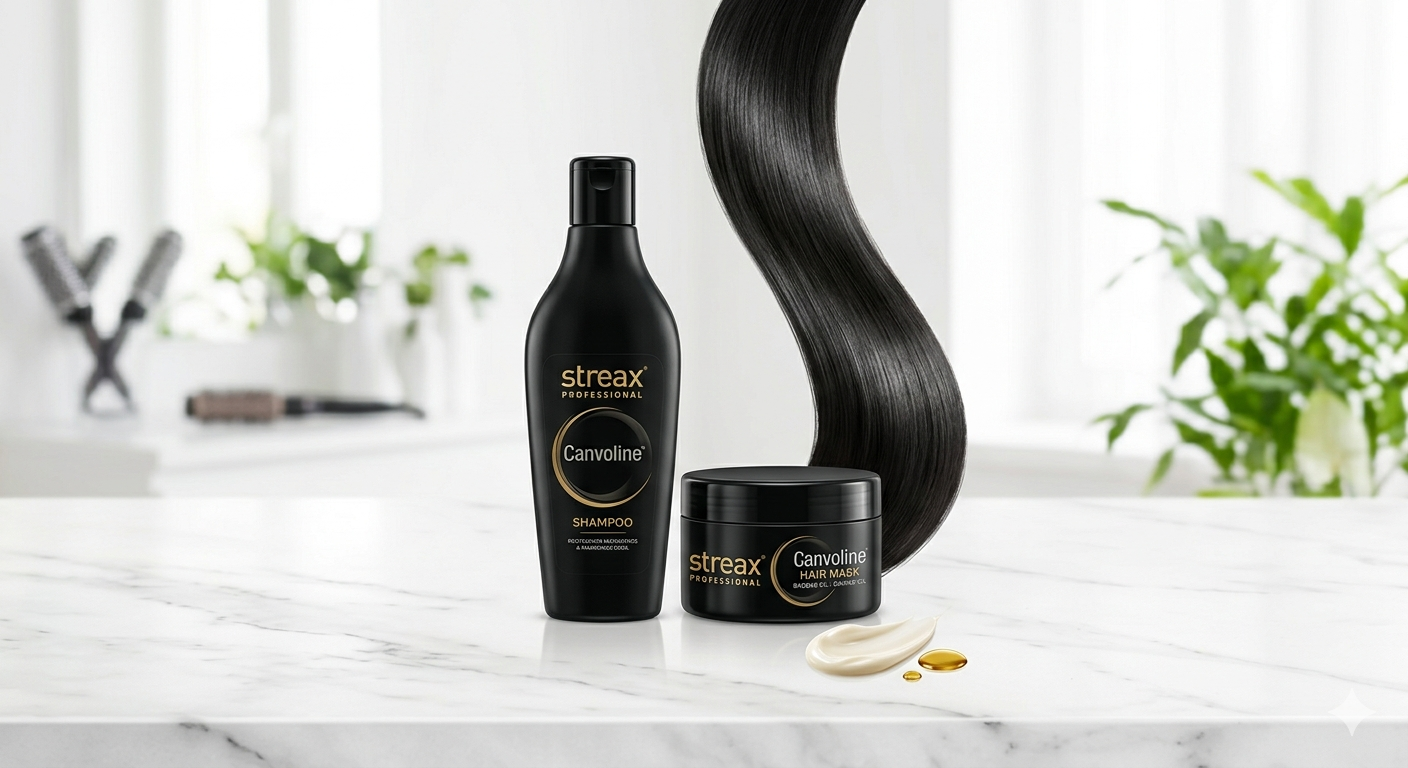
Healthy and manageable hair requires more than just regular washing, especially after treatments like straightening, smoothening, rebonding, or keratin therapy. While these treatments can transform the appearance of your hair, they also make it more vulnerable to dryness, frizz, and damage if proper care is not maintained.
This is where the Streax Professional Canvoline range comes in. Developed for post-treatment hair care, the Canvoline Shampoo and Hair Mask are designed to help maintain smoothness, improve manageability, and provide nourishment to hair that has undergone chemical processing.
Understanding the Needs of Chemically Treated Hair
Chemical treatments alter the structure of the hair to achieve a desired look. While the results can be impressive, treated hair often loses moisture and becomes more prone to breakage and frizz over time.
Using regular hair care products may not always provide the level of nourishment and protection that treated hair requires. Products specifically formulated for post-treatment care can help maintain the health and appearance of the hair while extending the life of salon treatments.
About Streax Professional Canvoline Range
The Streax Professional Canvoline range has been created to support the needs of chemically treated hair. It focuses on cleansing, conditioning, and restoring moisture without weighing the hair down.
Among the most popular products in the range are the Canvoline Shampoo and Canvoline Hair Mask, which work together to keep hair soft, smooth, and manageable.
Streax Professional Canvoline Shampoo Review
The shampoo is designed to cleanse the scalp and hair gently while helping maintain the smooth texture achieved through salon treatments.
Unlike harsh cleansers that can leave hair feeling dry, this shampoo aims to remove dirt and buildup while preserving the hair’s natural moisture balance.
Read More:10 Amazing Ayurvedic Skin Care Products for Naturally
Key Ingredients
The formula includes ingredients that support hair nourishment and protection.
Kera-Charge Technology helps strengthen the hair structure and improve overall hair texture.
Baobab Oil is known for its moisturizing properties and helps reduce dryness while adding softness and shine.
Ceramide Mimic Molecules support the hair’s protective layer and help reduce moisture loss.
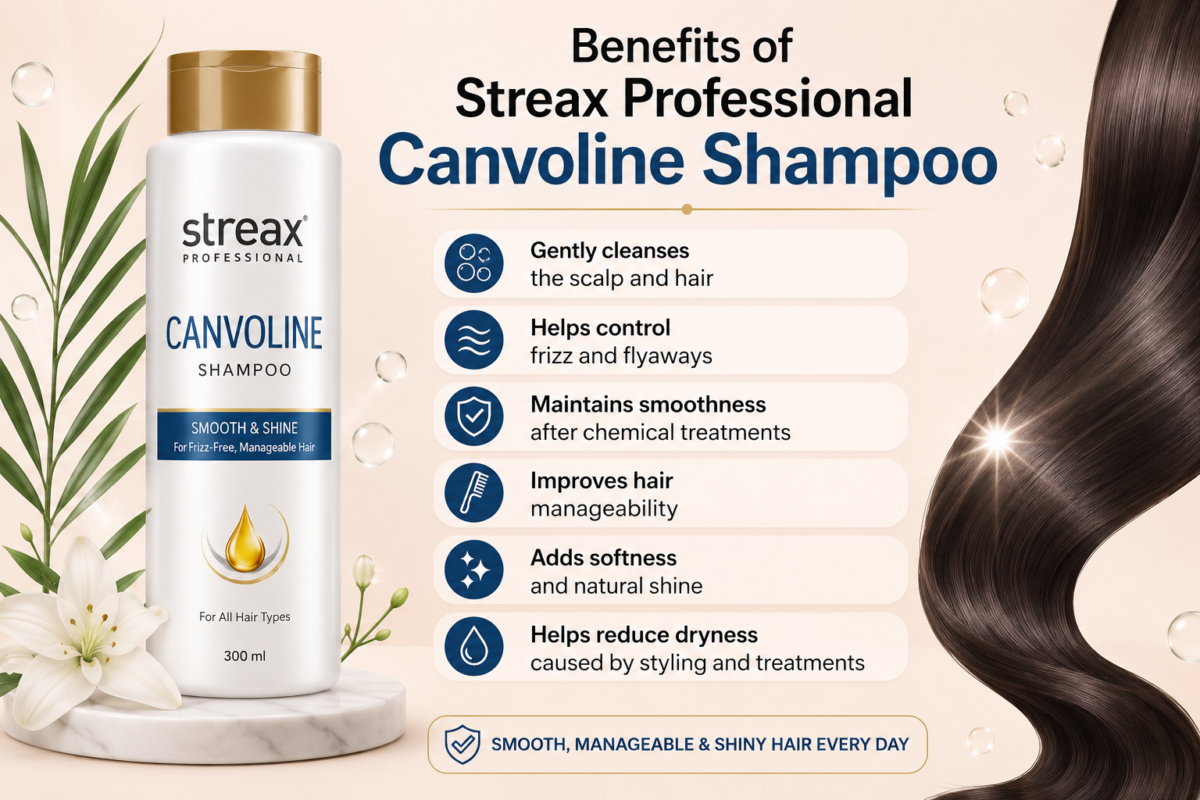
Benefits of Streax Professional Canvoline Shampoo
Regular use of the shampoo may offer several benefits:
Gently cleanses the scalp and hair
Helps control frizz and flyaways
Maintains smoothness after chemical treatments
Improves hair manageability
Adds softness and natural shine
Helps reduce dryness caused by styling and treatments
The shampoo creates a pleasant cleansing experience without making the hair feel stripped or rough after washing.
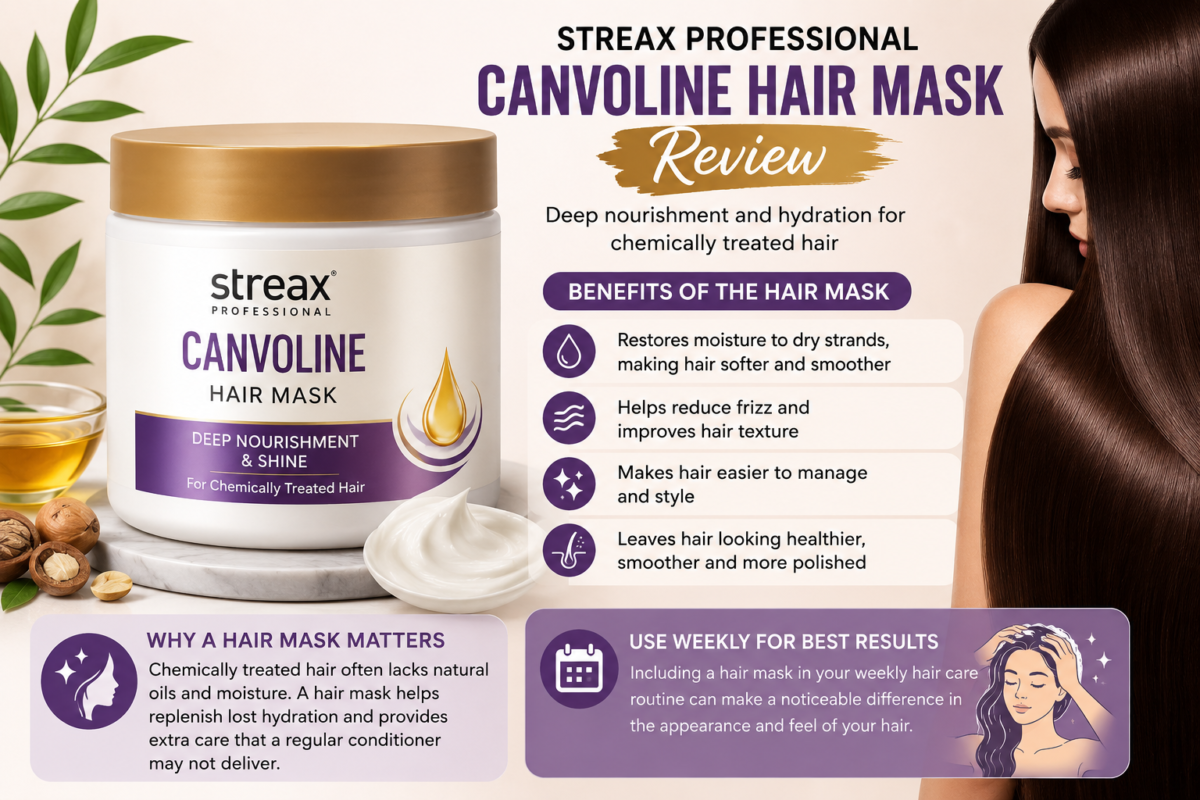
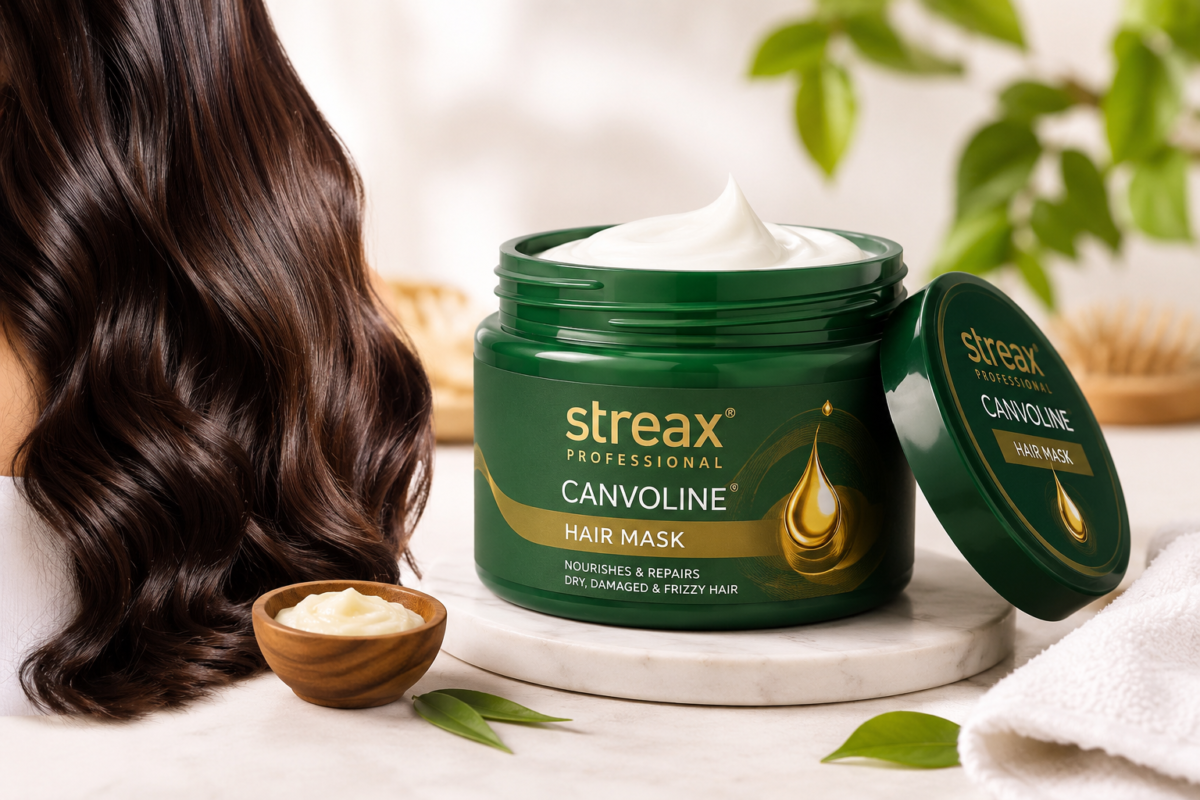
While shampoo cleanses the hair, deep conditioning is equally important for maintaining its health. The Canvoline Hair Mask is formulated to provide intensive nourishment and hydration to chemically treated hair.
Hair masks generally work deeper than regular conditioners and are designed to repair and strengthen the hair over time.
Benefits of the Hair Mask
The Canvoline Hair Mask offers several advantages for damaged and treated hair.
It helps restore moisture to dry strands, making the hair feel softer and smoother. The mask also assists in reducing frizz and improving overall hair texture.
With regular use, many users notice that their hair becomes easier to manage and style. The hair appears healthier, smoother, and more polished.
Why a Hair Mask Matters
Chemically treated hair often lacks the natural oils and moisture needed to stay healthy. A hair mask helps replenish this lost hydration and provides extra care that a regular conditioner may not deliver.
Including a hair mask in your weekly hair care routine can make a noticeable difference in the appearance and feel of your hair.
How to Use Streax Professional Canvoline Shampoo and Hair Mask
For best results, both products should be used together.
Start by thoroughly wetting your hair and applying the shampoo. Massage it gently into the scalp and hair before rinsing with water.
After shampooing, remove excess water and apply the hair mask from the mid-lengths to the ends of the hair. Leave it on for five to ten minutes before rinsing thoroughly.
Using the hair mask once or twice a week is generally sufficient for maintaining softness and nourishment.
Who Should Use the Canvoline Range?
The Streax Professional Canvoline range is particularly suitable for:
Chemically straightened hair
Rebonded hair
Smoothened hair
Keratin-treated hair
Dry and frizzy hair
Hair damaged by frequent heat styling
People with untreated hair can also use these products if they are looking for additional smoothness and hydration.
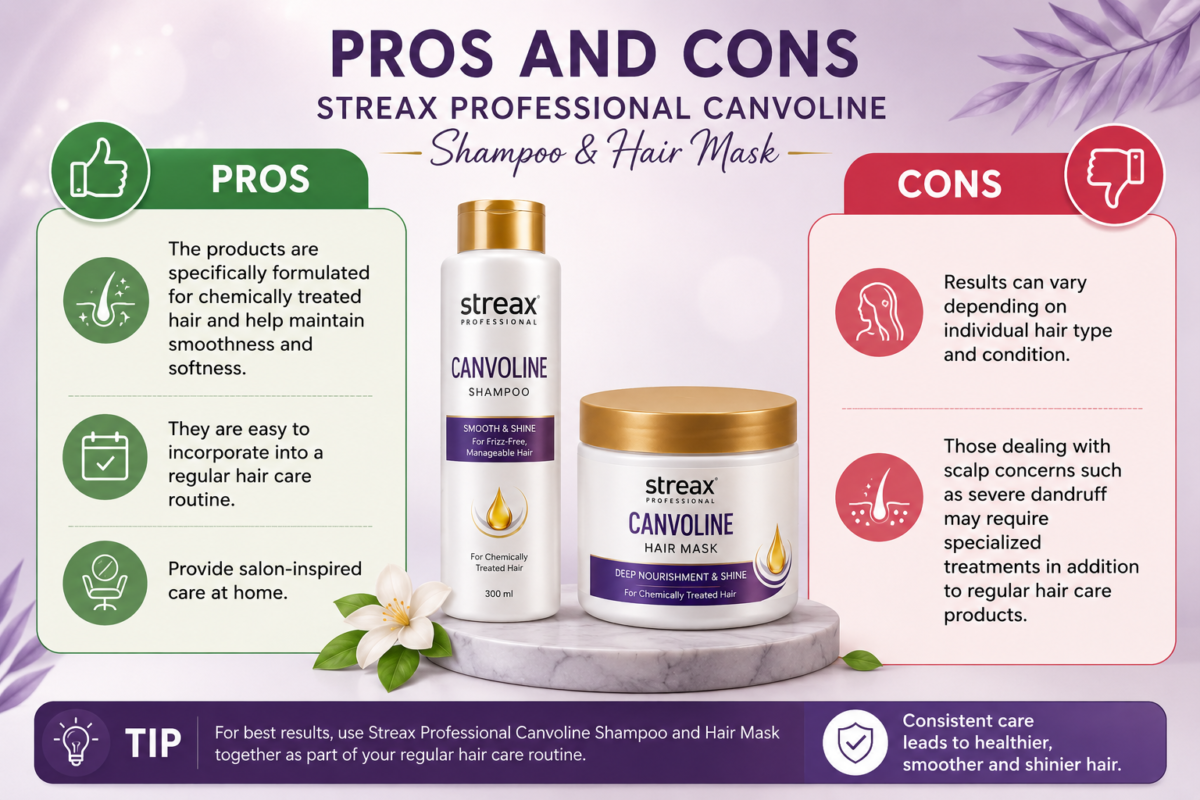
Pros and Cons
Pros
The products are specifically formulated for chemically treated hair and help maintain smoothness and softness. They are easy to incorporate into a regular hair care routine and provide salon-inspired care at home.
Cons
Results can vary depending on individual hair type and condition. Those dealing with scalp concerns such as severe dandruff may require specialized treatments in addition to regular hair care products.
Final Thoughts
Maintaining chemically treated hair requires consistent care and the right products. The Streax Professional Canvoline Shampoo and Hair Mask are designed to address the common concerns associated with treated hair, including dryness, frizz, and loss of smoothness.
The shampoo provides gentle cleansing while the hair mask delivers deep nourishment and hydration. Together, they help support healthier-looking, softer, and more manageable hair.
For individuals who have invested in salon treatments and want to maintain those results for longer, the Streax Professional Canvoline range can be a practical addition to their hair care routine.
Frequently Asked Questions (FAQs)
1. Is Streax Professional Canvoline Shampoo suitable for chemically treated hair?
Yes. Streax Professional Canvoline Shampoo is specially formulated for chemically treated hair, including straightened, rebonded, smoothened, and keratin-treated hair. It gently cleanses while helping maintain softness, smoothness, and shine.
2. Can I use Streax Professional Canvoline Shampoo every day?
Yes, if your hair needs frequent washing, you can use it regularly. However, for most people, washing 2–3 times a week is enough to keep chemically treated hair clean without causing dryness.
3. How often should I use the Streax Professional Canvoline Hair Mask?
For best results, use the Canvoline Hair Mask once or twice a week after shampooing. It provides deep hydration, reduces frizz, and helps maintain smooth, healthy-looking hair.
4. Does Streax Professional Canvoline help control frizz?
Yes. The shampoo and hair mask are designed to moisturize the hair, reduce frizz and flyaways, and improve overall manageability, especially for dry and chemically treated hair.
5. Can I use Streax Professional Canvoline products on untreated hair?
Yes. Although the range is developed for chemically treated hair, people with dry, frizzy, or damaged hair can also use these products to improve softness, hydration, and shine.
6. Does Streax Professional Canvoline Shampoo contain ingredients that strengthen hair?
Yes. The formula includes Kera-Charge Technology, Baobab Oil, and Ceramide Mimic Molecules, which help nourish the hair, improve moisture retention, and strengthen the hair structure.
7. Can Streax Professional Canvoline repair damaged hair?
The products help nourish, hydrate, and improve the appearance of damaged hair. While they cannot reverse severe hair damage permanently, regular use can make hair feel smoother, softer, and healthier.
8. Should I use a conditioner along with the Canvoline Hair Mask?
The Canvoline Hair Mask provides deep conditioning, so an additional conditioner is usually not necessary on the days you use the mask. On other wash days, you can use a lightweight conditioner if needed.
9. Is Streax Professional Canvoline suitable for color-treated hair?
Yes. The Canvoline range is generally suitable for color-treated and chemically processed hair, as it is formulated to provide gentle cleansing and hydration while helping maintain hair smoothness.
10. How long does it take to see results with Streax Professional Canvoline?
Many users notice softer and smoother hair after the first few uses. For the best results in reducing frizz and improving hair manageability, use the shampoo and hair mask consistently for 4–6 weeks as part of your
Manufacturing companies work hard to produce safe, reliable, and high-quality products. Whether the business manufactures pharmaceuticals, medical devices, cosmetics, food products, automotive parts, or electronics, maintaining consistent quality is one of the biggest challenges. Even a small production mistake can lead to customer complaints, product recalls, financial losses, or regulatory penalties.
This is where CAPA Management Software becomes an essential part of modern manufacturing.
Corrective and Preventive Action (CAPA) is more than fixing problems after they occur. It is a structured quality management process that helps manufacturers identify the root cause of issues, correct existing problems, and prevent similar issues from happening again.
Traditionally, many organizations managed CAPA using spreadsheets, emails, and paper records. While this method may work for small businesses, it becomes difficult to track actions, approvals, deadlines, and regulatory documentation as operations grow. Missing a single step can result in compliance risks and quality failures.
CAPA Management Software simplifies the entire process by bringing every activity into one centralized digital system. It allows quality teams to investigate problems, assign responsibilities, monitor progress, document evidence, and generate reports without losing important information.
In this comprehensive guide, you’ll learn what CAPA Management Software is, how it works, why manufacturers need it, its key features, benefits, implementation tips, and best practices for achieving continuous quality improvement.
CAPA Management Software is a digital quality management solution that helps manufacturers manage Corrective Actions and Preventive Actions through a standardized workflow.
Instead of keeping documents in different folders or spreadsheets, the software stores every CAPA record in one secure platform.
It helps organizations:
Identify quality problems
Investigate root causes
Assign corrective actions
Prevent recurring issues
Track completion status
Maintain regulatory documentation
Improve product quality
The software also provides complete visibility into ongoing CAPA activities, making audits much easier.
Understanding CAPA: Corrective Action vs Preventive Action
Many beginners confuse corrective action and preventive action. Although they are closely related, they serve different purposes.
Corrective Action
Corrective action focuses on solving an existing problem.
It answers questions like:
Why did the issue happen?
How can we fix it?
How can we make sure it doesn’t happen again?
Example
A cosmetic manufacturer receives multiple customer complaints that a face cream package is leaking.
After investigation, the quality team discovers that one packaging machine was applying insufficient sealing pressure.
Traditional CAPA Management vs Digital CAPA Software
Many companies still rely on paper files or spreadsheets for CAPA management. While this approach may seem simple initially, it often creates challenges as the organization grows.
Traditional Method
CAPA Management Software
Paper-based records
Digital centralized records
Manual approvals
Automated approval workflows
Difficult tracking
Real-time status tracking
Higher risk of missed deadlines
Automated reminders and notifications
Limited reporting
Instant dashboards and analytics
Time-consuming audits
Audit-ready documentation
Greater chance of human error
Standardized and controlled processes
As manufacturing operations become more complex, digital CAPA systems help improve consistency, accountability, and overall quality performance.
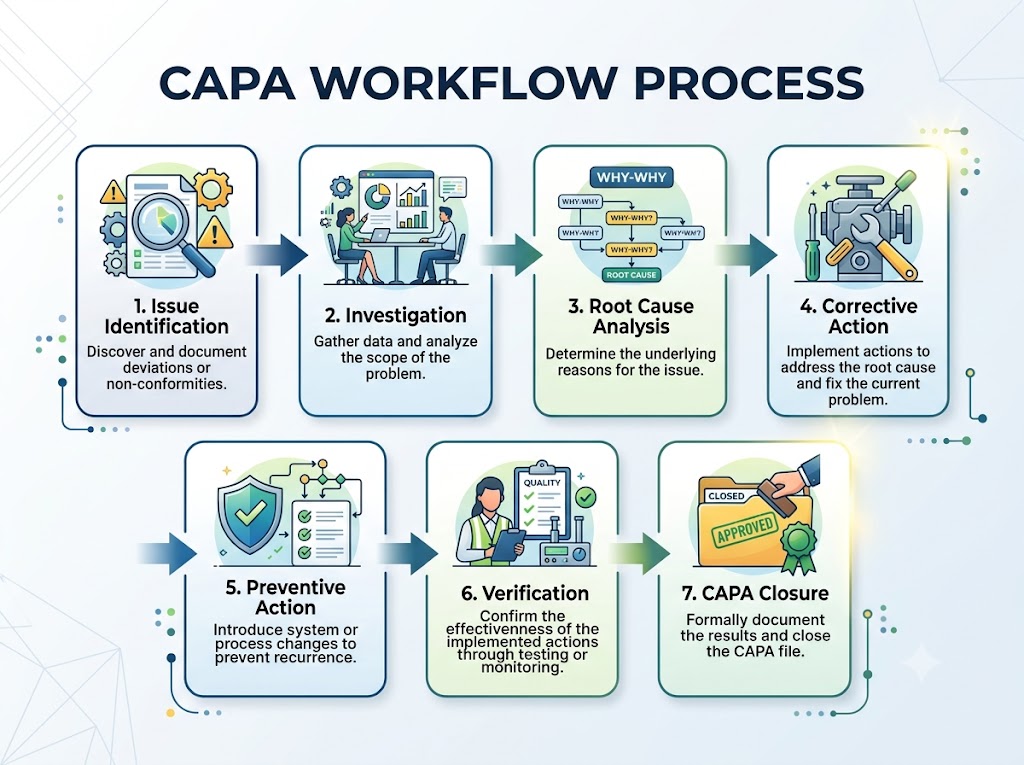
How the CAPA Process Works: Step-by-Step
A successful CAPA process follows a structured workflow that ensures every issue is investigated thoroughly and resolved effectively. While different organizations may customize the process, most CAPA Management Software follows these key steps.
1. Identify the Problem
The CAPA process begins when a quality issue is detected. The problem may be discovered during production, inspections, internal audits, customer feedback, supplier evaluations, or regulatory inspections.
Common triggers include:
Product defects
Customer complaints
Failed quality inspections
Equipment malfunctions
Process deviations
Supplier quality issues
Laboratory test failures
Internal or external audit findings
Example:
A cosmetics manufacturer notices that several batches of face lotion have an unusual texture during quality inspection. Instead of simply rejecting the affected batches, the quality team initiates a CAPA investigation to determine the underlying cause.
2. Record the Issue
Once the issue is identified, it is documented in the CAPA Management Software.
The software captures important information such as:
CAPA identification number
Date of issue
Product name
Batch or lot number
Department involved
Description of the problem
Person reporting the issue
Supporting documents or images
Digital documentation ensures that all information is stored securely and can be accessed whenever needed.
3. Assess the Risk
Not every quality issue carries the same level of risk. Some may have little impact, while others could affect customer safety or regulatory compliance.
The quality team evaluates factors such as:
Severity of the issue
Likelihood of recurrence
Impact on product quality
Risk to customers
Business impact
Regulatory consequences
The software can prioritize CAPAs based on risk, helping organizations focus first on the most critical problems.
Example:
A spelling mistake on a shipping carton may require correction but poses a low risk. In contrast, incorrect dosage information on a pharmaceutical label is a high-risk issue that demands immediate action.
Root Cause Analysis: Finding the Real Problem
One of the biggest advantages of CAPA is that it focuses on identifying the root cause rather than just fixing the visible problem.
Without root cause analysis, organizations may repeatedly face the same issues because only the symptoms are addressed.
Why Root Cause Analysis Matters
Imagine a manufacturing machine suddenly stops working.
Replacing a damaged part may restart production, but if the real cause was poor maintenance practices, the problem is likely to happen again.
Root cause analysis helps eliminate the source of the issue instead of repeatedly treating its effects.
Common Root Cause Analysis Methods
The 5 Whys Technique
The “5 Whys” method involves asking “Why?” repeatedly until the underlying cause is identified.
Example:
Problem: Cosmetic bottles are leaking.
Why? The caps are not sealing properly.
Why? The capping machine applies insufficient torque.
Why? The torque settings changed unexpectedly.
Why? The machine was not calibrated after maintenance.
Why? The maintenance checklist did not include calibration verification.
Root Cause: An incomplete maintenance procedure.
The corrective action should address the maintenance process rather than simply tightening bottle caps.
Fishbone Diagram (Cause-and-Effect Diagram)
This method categorizes possible causes into areas such as:
People
Machines
Materials
Methods
Environment
Measurement
It helps teams explore every possible contributing factor before reaching conclusions.
Pareto Analysis identifies which problems occur most frequently.
It follows the 80/20 principle, suggesting that a small number of causes often account for most quality issues.
By focusing on these major causes, manufacturers can achieve significant improvements.
Creating Corrective Actions
Once the root cause is confirmed, the organization develops corrective actions to eliminate the existing problem.
Corrective actions may include:
Updating manufacturing procedures
Repairing equipment
Changing suppliers
Improving employee training
Revising quality standards
Modifying production processes
Updating software settings
Introducing additional inspections
Each action is assigned to a responsible employee with a defined completion date.
CAPA Management Software automatically tracks progress and sends reminders until every action is completed.
Developing Preventive Actions
Preventive actions are designed to stop similar issues from happening in the future.
Examples include:
Preventive maintenance schedules
Enhanced employee training
Process standardization
Supplier qualification improvements
Updated inspection plans
Automated quality monitoring
Better document control
Risk-based quality reviews
Preventive actions contribute to long-term operational excellence and reduce future quality incidents.
Verification of Effectiveness
Completing corrective actions is not the final step.
Organizations must verify whether the actions actually solved the problem.
Verification may include:
Reviewing production data
Conducting follow-up inspections
Monitoring customer complaints
Performing internal audits
Comparing defect rates before and after implementation
Example:
A food manufacturer changes its packaging process after recurring seal failures.
Over the next three months, quality reports show that seal defects have dropped from 3% to 0.1%.
This confirms that the corrective action was effective.
CAPA Closure
After successful verification, the CAPA can be formally closed.
The software records:
Investigation summary
Root cause
Corrective actions completed
Preventive actions implemented
Verification results
Final approvals
Closure date
These records remain available for future audits and quality reviews.
Key Features of CAPA Management Software
Modern CAPA software offers much more than simple issue tracking. It serves as a central platform for managing quality improvement across the organization.
Centralized CAPA Database
All CAPA records are stored in one secure location, making it easy to search, review, and retrieve information during audits.
Automated Workflow
Instead of relying on emails or manual follow-ups, the software automatically routes tasks to the appropriate employees.
Benefits include:
Faster approvals
Clear responsibilities
Reduced delays
Consistent processes
Task Management
Each CAPA can be divided into smaller tasks with:
Assigned owners
Due dates
Progress tracking
Completion status
Managers always know who is responsible for each activity.
Document Management
CAPA software securely stores important files such as:
Investigation reports
Photographs
SOPs
Test results
Audit reports
Training records
Supporting evidence
This eliminates the need to search through paper files during inspections.
Notifications and Reminders
Automated alerts help ensure that deadlines are not missed.
Users receive notifications for:
New CAPA assignments
Upcoming due dates
Pending approvals
Overdue tasks
CAPA closure requests
These reminders improve accountability and keep projects moving efficiently.
Dashboards and Reporting
Managers can monitor quality performance through real-time dashboards that display:
Open CAPAs
Closed CAPAs
Overdue actions
Department-wise trends
Root cause patterns
Recurring issues
Completion rates
These insights help leadership make informed decisions and identify opportunities for continuous improvement.
Benefits of CAPA Management Software for the Manufacturing Industry
Implementing CAPA Management Software is more than replacing paper records with digital files. It transforms how manufacturers identify, investigate, and prevent quality issues. A well-designed CAPA system helps organizations improve efficiency, strengthen compliance, and build a culture of continuous improvement.
Below are the major benefits manufacturers can expect.
1. Improves Product Quality
One of the biggest advantages of CAPA Management Software is its ability to improve product quality over time.
Instead of repeatedly fixing the same issues, the software helps teams identify recurring problems and eliminate their root causes. As a result, defects decrease, processes become more consistent, and customers receive better-quality products.
Example:
An electronics manufacturer notices repeated soldering defects on a circuit board. After investigating the root cause, the company discovers that temperature settings on one machine are incorrect. Once the settings are corrected and operators receive additional training, the defect rate drops significantly.
2. Reduces Recurring Problems
Many manufacturing issues return because only the visible symptoms are addressed.
CAPA software encourages structured investigations that focus on the actual cause of the problem. This reduces repeat incidents and saves valuable production time.
Instead of solving the same issue every month, organizations can implement permanent solutions that improve long-term performance.
3. Strengthens Regulatory Compliance
Manufacturers operating in regulated industries must maintain detailed records of investigations, corrective actions, approvals, and verification activities.
CAPA Management Software automatically documents every stage of the process, making it easier to demonstrate compliance during inspections and audits.
Well-maintained records also reduce the stress associated with regulatory reviews.
4. Speeds Up Issue Resolution
When quality issues are managed through emails or spreadsheets, important tasks can easily be delayed or overlooked.
CAPA software improves response times by:
Automatically assigning tasks
Sending deadline reminders
Tracking progress in real time
Escalating overdue actions
Keeping all stakeholders informed
This structured workflow helps teams resolve problems much faster.
5. Improves Team Collaboration
Quality issues often involve multiple departments, including production, quality assurance, engineering, maintenance, purchasing, and management.
CAPA software allows every department to work within the same platform.
Everyone can:
View investigation progress
Upload supporting documents
Provide comments
Approve actions
Monitor deadlines
This improves communication and reduces misunderstandings.
6. Enhances Decision-Making with Data
Modern CAPA systems generate valuable reports and dashboards that help managers identify patterns.
For example, reports may show:
The most common customer complaints
Departments with frequent non-conformities
Equipment causing repeated failures
Supplier-related quality issues
Average CAPA completion time
These insights support better planning and continuous improvement initiatives.
7. Reduces Costs
Poor quality can be expensive.
Costs associated with recurring defects may include:
Product recalls
Rework
Scrap
Customer compensation
Production downtime
Warranty claims
Regulatory penalties
By preventing recurring issues, CAPA software helps organizations reduce these unnecessary expenses and improve profitability.
Regulatory Compliance and CAPA Management
Many manufacturing industries must comply with strict quality regulations. CAPA is a key requirement in several international quality standards because it demonstrates an organization’s commitment to identifying, correcting, and preventing quality problems.
A digital CAPA system makes compliance easier by providing standardized workflows, secure documentation, and complete audit trails.
Common Standards That Require CAPA
ISO 9001 – Quality Management Systems
ISO 13485 – Medical Device Quality Management
Good Manufacturing Practices (GMP) for pharmaceuticals, cosmetics, and food
FDA 21 CFR Part 820 – Quality System Regulation for medical devices
FDA 21 CFR Part 11 – Electronic records and electronic signatures
HACCP – Food safety management
IATF 16949 – Automotive Quality Management Systems
Although the specific requirements vary, all of these standards emphasize proper documentation, investigation of non-conformities, implementation of corrective actions, and verification that those actions are effective.
How CAPA Software Supports Regulatory Audits
Regulatory inspections often require organizations to present evidence showing how quality issues were managed.
Without a centralized system, gathering this information can take days.
With CAPA Management Software, auditors can quickly review:
CAPA records
Investigation reports
Root cause analysis
Assigned responsibilities
Approval history
Supporting documents
Action completion dates
Verification records
Audit trails
Having complete and organized records creates confidence during inspections and reduces the time spent preparing for audits.
Integrating CAPA Software with Quality Management Systems (QMS)
CAPA does not work in isolation. It becomes even more effective when connected with other quality processes.
Many organizations integrate CAPA Management Software with their broader Quality Management System (QMS), allowing information to flow seamlessly between different quality functions.
Common integrations include:
Document Control
Standard Operating Procedures (SOPs), work instructions, and quality manuals can be updated automatically after a CAPA is completed.
Non-Conformance Management
When a non-conforming product is detected, a CAPA can be created directly from the non-conformance record.
Complaint Management
Customer complaints can trigger CAPA investigations whenever recurring issues are identified.
Audit Management
Internal and external audit findings can automatically generate CAPA records, ensuring that observations are addressed systematically.
Supplier Quality Management
Supplier-related defects can be linked to CAPA investigations, helping organizations improve supplier performance over time.
Training Management
If an investigation identifies inadequate employee training as the root cause, the system can assign mandatory training before closing the CAPA.
Best Practices for Implementing CAPA Management Software
A successful CAPA program depends not only on the software but also on how it is implemented and used. Following these best practices can help organizations achieve better results.
Gain Management Support
Leadership should actively support CAPA initiatives by providing resources, encouraging participation, and reviewing quality performance regularly.
When management prioritizes quality, employees are more likely to follow CAPA procedures consistently.
Standardize CAPA Workflows
Every department should follow the same investigation and approval process.
Standardized workflows help maintain consistency and reduce confusion across the organization.
Train Employees Thoroughly
Employees should understand:
When to initiate a CAPA
How to document issues
How to perform root cause analysis
How to complete assigned tasks
Why CAPA is important
Regular refresher training helps maintain compliance and improves the quality of investigations.
Encourage Accurate Documentation
CAPA records should be:
Clear
Complete
Objective
Timely
Evidence-based
Avoid vague descriptions. Good documentation makes investigations easier and supports regulatory compliance.
Monitor Performance Metrics
Organizations should regularly review Key Performance Indicators (KPIs), such as:
Number of open CAPAs
Average closure time
Overdue CAPAs
Recurrence rate of issues
Root cause trends
Department-wise performance
Corrective action effectiveness
Tracking these metrics helps identify opportunities for continuous improvement.
Common Challenges During CAPA Implementation
Even with the right software, organizations may face implementation challenges. Recognizing these issues early can improve adoption and long-term success.
Employee Resistance
Some employees may hesitate to adopt a new digital system.
Solution: Provide practical training, explain the benefits, and involve users during implementation.
Incomplete Investigations
Teams sometimes rush investigations and identify only surface-level causes.
Solution: Use structured root cause analysis methods such as the 5 Whys or Fishbone Diagram before approving corrective actions.
Poor Documentation
Missing information can delay audits and reduce the effectiveness of CAPA.
Solution: Use standardized templates, mandatory fields, and review workflows within the software.
Missed Deadlines
Manual follow-ups often result in overdue actions.
Solution: Enable automated reminders, escalation rules, and dashboard monitoring to keep CAPAs on track.
Future Trends in CAPA Management Software
As manufacturing becomes more digital, CAPA Management Software continues to evolve with new technologies that make quality management faster, smarter, and more proactive.
Artificial Intelligence (AI)
AI-powered CAPA systems can analyze large volumes of quality data to identify patterns that humans might overlook.
For example, AI can:
Detect recurring defect trends
Recommend possible root causes
Predict high-risk production areas
Suggest corrective actions based on historical data
This helps quality teams investigate issues more efficiently and make better-informed decisions.
Predictive Analytics
Traditional CAPA focuses on solving existing problems. Predictive analytics goes a step further by identifying potential risks before they lead to defects.
By analyzing production data, equipment performance, and inspection results, predictive tools can alert manufacturers to possible quality issues early. This allows preventive actions to be taken before products are affected.
Cloud-Based CAPA Solutions
Cloud technology is becoming the preferred choice for many manufacturers because it offers flexibility and accessibility.
Benefits include:
Access from multiple locations
Automatic software updates
Secure data backups
Easier collaboration across teams
Reduced IT infrastructure costs
Faster deployment
Cloud-based CAPA systems are especially valuable for organizations with multiple manufacturing sites or remote quality teams.
Mobile Accessibility
Many modern CAPA platforms include mobile applications that allow employees to:
Report quality issues instantly
Upload photos from the production floor
Approve CAPAs remotely
Track assigned tasks
Receive real-time notifications
This reduces delays and improves responsiveness.
Advanced Dashboards and Business Intelligence
Interactive dashboards help management monitor quality performance in real time.
Organizations can quickly identify:
Recurring quality trends
High-risk departments
Delayed CAPAs
Supplier performance
Customer complaint patterns
Improvement opportunities
These insights support continuous improvement and strategic planning.
Choosing the Right CAPA Management Software
Selecting the right solution depends on your organization’s size, industry, and regulatory requirements.
When evaluating software, consider the following factors:
Ease of Use
A simple and intuitive interface encourages employee adoption and reduces training time.
Workflow Customization
The software should allow organizations to configure workflows that match their internal quality processes and approval structures.
Regulatory Support
Choose a solution that supports the regulations and quality standards relevant to your industry.
Integration Capabilities
The software should integrate easily with:
ERP systems
Quality Management Systems (QMS)
Document management platforms
Audit management tools
Supplier management systems
Reporting and Analytics
Look for software that provides customizable dashboards and detailed reports to support continuous improvement.
Security
Quality records often contain sensitive business information. Ensure the software provides:
User access controls
Data encryption
Audit trails
Secure backups
Vendor Support
Reliable customer support, training resources, and regular software updates are important for long-term success.
Real-World Example
Imagine a company that manufactures cosmetic creams and lotions.
The quality team begins receiving an increasing number of customer complaints about damaged product containers. Instead of replacing the affected products one by one, the company opens a CAPA investigation.
Using the CAPA Management Software, the team:
Records each complaint in the system.
Reviews production and packaging data.
Performs a root cause analysis.
Discovers that one packaging machine applies inconsistent sealing pressure.
Repairs and recalibrates the equipment.
Updates the preventive maintenance schedule.
Retrains packaging operators.
Monitors production for the next three months.
The results are clear:
Packaging defects decrease significantly.
Customer complaints are reduced.
Product waste declines.
Audit records remain complete and organized.
Overall customer satisfaction improves.
This example shows how CAPA software helps solve the underlying cause of a problem instead of repeatedly addressing its symptoms.
Conclusion
Quality is one of the most important factors in manufacturing success. Whether a company produces pharmaceuticals, cosmetics, food products, medical devices, automotive parts, or electronics, maintaining consistent quality requires a structured approach to identifying and resolving issues.
CAPA Management Software provides that structure by helping organizations document problems, investigate root causes, implement corrective and preventive actions, verify effectiveness, and maintain complete regulatory records.
Beyond supporting compliance, CAPA software promotes continuous improvement by reducing recurring defects, improving collaboration, enhancing decision-making, and strengthening customer confidence.
As manufacturing technologies continue to advance, modern CAPA solutions powered by artificial intelligence, predictive analytics, cloud computing, and real-time reporting will play an even greater role in helping organizations achieve operational excellence.
Investing in the right CAPA Management Software is not simply about meeting regulatory requirements—it is about building a culture of quality, accountability, and continuous improvement that supports long-term business success.
Frequently Asked Questions (FAQs)
1. What does CAPA stand for?
CAPA stands for Corrective and Preventive Action. It is a structured process used to identify quality issues, determine their root causes, implement corrective actions, and prevent similar problems from recurring.
2. Why is CAPA important in manufacturing?
CAPA helps manufacturers improve product quality, reduce recurring defects, maintain regulatory compliance, and strengthen customer satisfaction through systematic problem-solving.
3. Which industries commonly use CAPA Management Software?
CAPA software is widely used in pharmaceutical, medical device, cosmetic, food and beverage, automotive, electronics, aerospace, and chemical manufacturing industries.
4. What is the difference between corrective action and preventive action?
Corrective action resolves an existing problem by eliminating its root cause, while preventive action focuses on identifying and addressing potential risks before they result in quality issues.
5. Can small manufacturers benefit from CAPA software?
Yes. Even small manufacturers can improve quality management, organize documentation, reduce manual work, and prepare for future growth by using CAPA software.
6. How does CAPA software support regulatory compliance?
It maintains complete digital records of investigations, approvals, corrective actions, preventive actions, verification activities, and audit trails, making inspections and audits more efficient.
7. What features should I look for in CAPA Management Software?
Important features include workflow automation, root cause analysis tools, document management, dashboards, reporting, task tracking, audit trails, notifications, and integration with other quality systems.
8. Can CAPA software integrate with ERP and QMS platforms?
Yes. Most modern CAPA solutions integrate with Enterprise Resource Planning (ERP) systems, Quality Management Systems (QMS), document control, complaint management, audit management, and supplier quality platforms.
9. How long does it take to implement CAPA Management Software?
Implementation time depends on the size of the organization, workflow complexity, system integrations, and employee training. Small implementations may take a few weeks, while larger enterprise projects can take several months.
10. What is the biggest benefit of CAPA Management Software?
The greatest benefit is its ability to eliminate recurring quality issues through structured investigations and continuous improvement, leading to better products, stronger compliance, and higher customer satisfaction.
Hairfall has become one of the most common concerns among people of all age. Factors such as stress, pollution, unhealthy eating habits, hormonal imbalances, and excessive use of chemical-based hair products can weaken hair roots and lead to significant hair loss. As a result, consumers are increasingly turning toward natural and safe hair care solutions that not only reduce hair fall but also promote healthy hair growth.
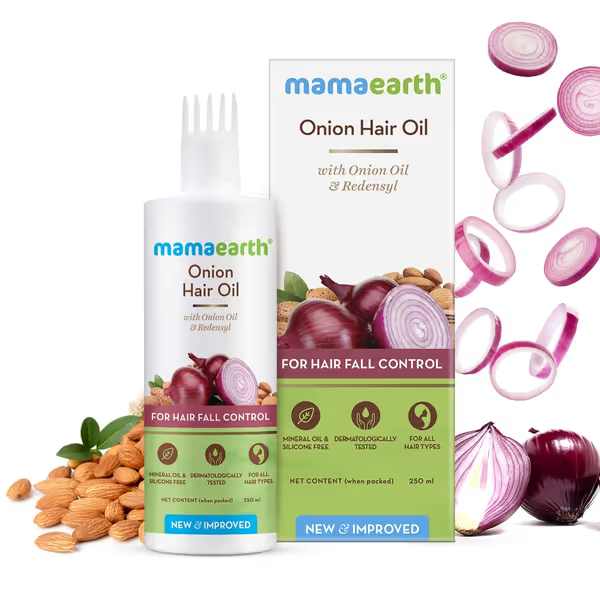
Among the many products available in the market, Mamaearth Onion Hair Oil with Onion Oil & Redensyl has emerged as a popular choice for individuals seeking stronger, healthier, and shinier hair. Powered by the goodness of natural ingredients and backed by modern hair care science, this hair oil is designed to nourish the scalp, strengthen hair follicles, and encourage hair regrowth.
In this article, we will explore the features, benefits, ingredients, and usage of Mamaearth Onion Hair Oil and understand why it has become a trusted product for hair care enthusiasts.
What is Mamaearth Onion Hair Oil?
Mamaearth Onion Hair Oil is a natural hair care formulation specially developed to reduce hair fall and support healthy hair growth. The product combines the traditional benefits of onion oil with the scientifically advanced ingredient Redensyl, creating a powerful solution for weakened and thinning hair.
The oil has a lightweight and non-sticky texture, making it comfortable for regular use. Unlike many conventional hair oils, it does not leave a greasy residue and is suitable for all hair types. It is also safe for chemically treated and colored hair.
What makes this product stand out is Mamaearth’s commitment to a toxin-free formula. The oil is free from harmful ingredients such as silicones, parabens, mineral oil, and artificial dyes, ensuring a safer and healthier hair care experience.
Before understanding how this oil works, it is important to know the common causes of hair fall.
1. Stress and Lifestyle Factors
Modern lifestyles often involve high stress levels, inadequate sleep, and poor dietary habits. These factors can weaken hair roots and disrupt the natural hair growth cycle.
2. Nutritional Deficiencies
A lack of essential vitamins, minerals, and proteins can result in brittle and weak hair that breaks easily.
3. Pollution and Environmental Damage
Dust, dirt, UV rays, and pollution can damage the scalp and hair follicles, leading to excessive hair shedding.
4. Excessive Use of Chemicals
Frequent coloring, straightening, heat styling, and chemical treatments can strip hair of its natural strength and moisture.
5. Hormonal Changes
Hormonal fluctuations caused by age, pregnancy, or medical conditions can contribute to hair thinning and hair loss.
Mamaearth Onion Hair Oil is formulated to address many of these concerns by nourishing the scalp and strengthening hair from the roots.
One of the primary benefits of this hair oil is its ability to reduce hair fall. The combination of Onion Oil and Redensyl works to strengthen hair follicles and improve scalp health, helping minimize hair breakage and shedding.
2. Promotes Hair Growth
Regular use of the oil supports healthier and stronger hair growth. The active ingredients stimulate the scalp and help create a favorable environment for new hair development.3. Strengthens Hair from the Roots
Weak roots are one of the leading causes of hair fall. This oil nourishes the scalp and roots with essential nutrients, making hair stronger and more resilient.
4. Improves Hair Shine and Texture
The blend of nourishing oils deeply conditions the hair, making it softer, smoother, and naturally shinier.
5. Supports a Healthy Scalp
A healthy scalp is essential for healthy hair. The ingredients help maintain scalp nourishment, reduce dryness, and improve overall scalp condition.
6. Suitable for All Hair Types
Whether you have straight, curly, wavy, dry, oily, or chemically treated hair, this oil can be incorporated into your regular hair care routine.
Powerful Ingredients and Their Benefits
Onion Oil
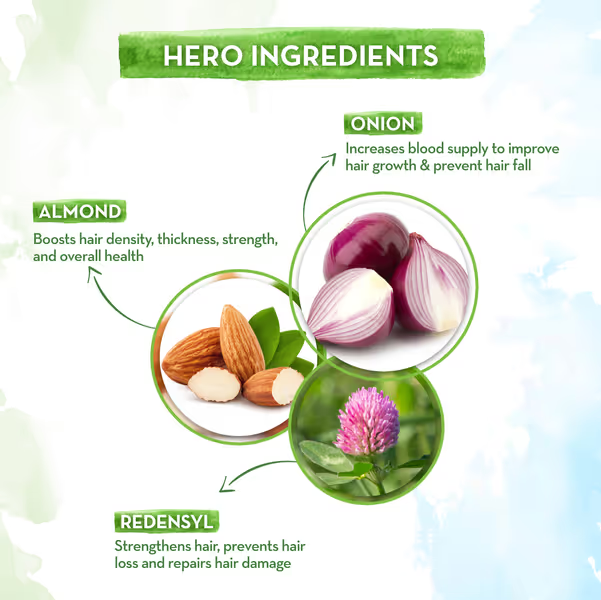
Onion Oil is the star ingredient of this formulation. Rich in sulfur, antioxidants, and essential nutrients, onion oil helps improve blood circulation to the scalp and nourishes hair follicles.
Benefits:
Supports healthy hair growth
Strengthens hair roots
Reduces hair fall
Improves scalp health
Enhances hair thickness
Redensyl
Redensyl is considered one of the most innovative ingredients in modern hair care. It is often referred to as a breakthrough ingredient for hair growth support.
Benefits:
Stimulates hair follicles
Encourages new hair growth
Improves hair density
Enhances hair thickness
Supports stronger and healthier hair
By combining Redensyl with Onion Oil, Mamaearth has created a formula designed to target hair fall at its root cause.
Almond Oil
Almond Oil is rich in Vitamin E, magnesium, phospholipids, and healthy fatty acids.
Benefits:
Nourishes the scalp
Reduces hair breakage
Improves hair texture
Strengthens damaged hair
Adds softness and shine
Castor Oil
Castor Oil is widely known for its nourishing and moisturizing properties.
Benefits:
Deeply conditions the scalp
Supports healthy hair growth
Improves blood circulation
Locks in moisture
Strengthens hair strands
Its thick nutrient profile makes it an important component in hair strengthening formulations.
Bhringraj Oil
Bhringraj has been used in Ayurvedic hair care for centuries.
Benefits:
Promotes healthy hair growth
Helps reduce hair fall
Improves scalp circulation
Conditions hair naturally
Supports stronger roots
Bhringraj is often considered one of the most effective herbs for maintaining healthy hair.
Amla Oil
Amla, also known as Indian Gooseberry, is packed with antioxidants and Vitamin C.
Benefits:
Strengthens hair follicles
Supports scalp health
Helps prevent premature greying
Improves hair texture
Promotes overall hair wellness
Amla is a traditional ingredient that continues to be highly valued in modern hair care products.
How to Use Mamaearth Onion Hair Oil
Using the oil correctly can maximize its benefits.
Step 1: Apply the Oil
Take a sufficient amount of oil and apply it directly to your scalp using your fingertips.
Step 2: Massage Gently
Massage the scalp in circular motions for 5–10 minutes. This helps improve blood circulation and ensures better absorption of the nutrients.
Step 3: Leave It On
Allow the oil to remain on your scalp for a few hours or overnight for deeper nourishment.
Step 4: Wash Thoroughly
Use a mild shampoo to wash off the oil and cleanse the scalp.
Step 5: Repeat Regularly
For best results, use the oil 2–3 times a week as part of your regular hair care routine.
Who Can Use This Hair Oil?
Mamaearth Onion Hair Oil is suitable for:
Men and women experiencing hair fall
Individuals with weak or thinning hair
People looking to improve hair growth
Users with colored or chemically treated hair
Those seeking a natural and toxin-free hair care solution
Its gentle formula makes it suitable for regular use without causing excessive dryness or damage.
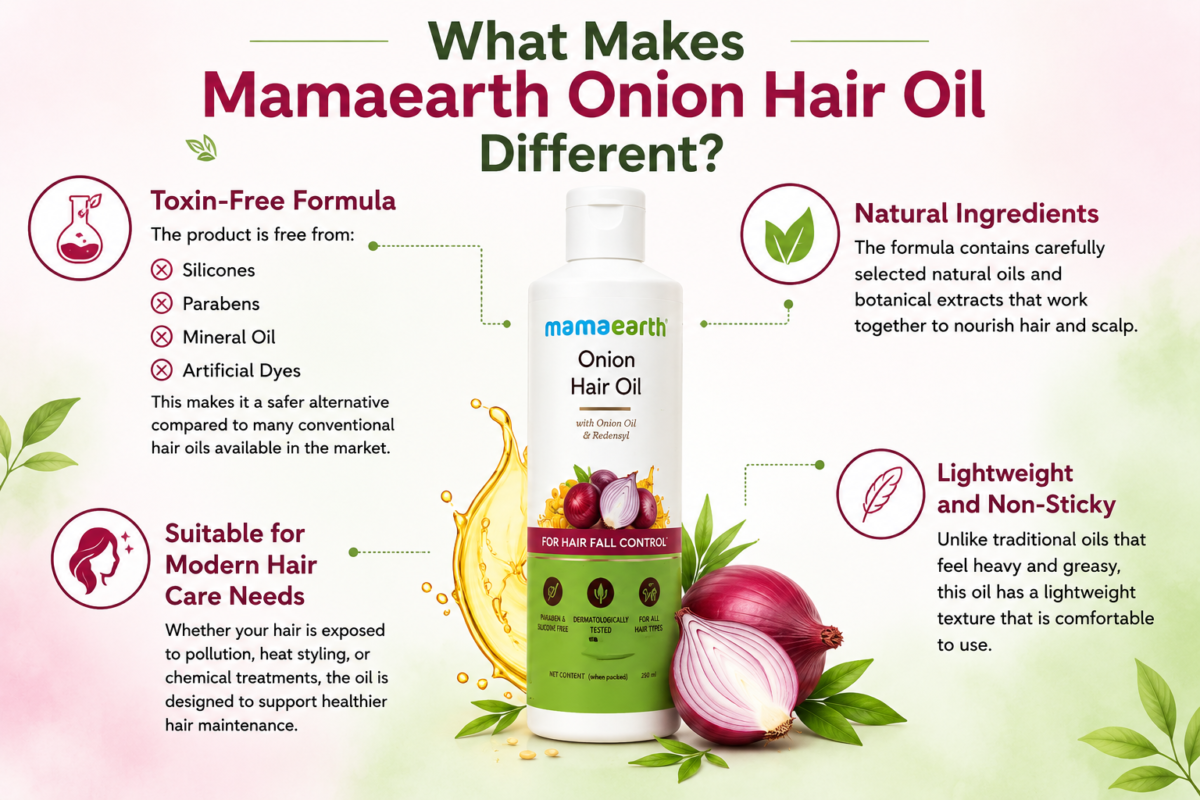
What Makes Mamaearth Onion Hair Oil Different?
Toxin-Free Formula
The product is free from:
Silicones
Parabens
Mineral Oil
Artificial Dyes
This makes it a safer alternative compared to many conventional hair oils available in the market.
Natural Ingredients
The formula contains carefully selected natural oils and botanical extracts that work together to nourish hair and scalp.
Lightweight and Non-Sticky
Unlike traditional oils that feel heavy and greasy, this oil has a lightweight texture that is comfortable to use.
Suitable for Modern Hair Care Needs
Whether your hair is exposed to pollution, heat styling, or chemical treatments, the oil is designed to support healthier hair maintenance.
Tips for Better Hair Growth
While using Mamaearth Onion Hair Oil, consider the following practices:
Eat a protein-rich diet.
Stay hydrated.
Manage stress through exercise or meditation.
Avoid excessive heat styling.
Use gentle hair care products.
Get adequate sleep.
Maintain a healthy scalp hygiene routine.
Hair growth results are often enhanced when good hair care habits are combined with effective products.
Final Verdict
Mamaearth Onion Hair Oil with Onion Oil & Redensyl is a thoughtfully formulated hair care product that combines the benefits of traditional natural ingredients with modern scientific innovation. Its blend of Onion Oil, Redensyl, Almond Oil, Castor Oil, Bhringraj Oil, and Amla Oil helps nourish the scalp, strengthen hair roots, reduce hair fall, and support healthy hair growth.
The toxin-free formulation, lightweight texture, and suitability for all hair types make it an attractive choice for individuals seeking a natural approach to hair care. While consistent use is important for visible results, the product offers a comprehensive solution for people looking to improve the overall health, strength, and appearance of their hair.
If you are searching for a natural hair oil that supports stronger, healthier, and shinier hair while addressing hair fall concerns, Mamaearth Onion Hair Oil can be a valuable addition to your hair care routine.
Frequently Asked Questions (FAQs)
1. Does Mamaearth Onion Hair Oil really help reduce hair fall?
Yes, Mamaearth Onion Hair Oil is formulated with Onion Oil and Redensyl, which help strengthen hair roots, nourish the scalp, and reduce hair breakage. Regular use, along with a healthy hair care routine, may help reduce hair fall over time.
2. Can Mamaearth Onion Hair Oil promote new hair growth?
The oil contains Redensyl, an ingredient known for supporting healthy hair follicles. While results vary from person to person, consistent use may encourage healthier and stronger hair growth.
3. How often should I use Mamaearth Onion Hair Oil?
For best results, apply the oil 2–3 times a week. Massage it gently into your scalp, leave it on for a few hours or overnight, and wash it off with a mild shampoo.
4. Is Mamaearth Onion Hair Oil suitable for all hair types?
Yes. The oil is suitable for straight, wavy, curly, oily, dry, and normal hair. It is also safe for chemically treated and color-treated hair.
5. Can men and women both use Mamaearth Onion Hair Oil?
Yes, Mamaearth Onion Hair Oil is designed for both men and women who want to reduce hair fall, strengthen their hair, and improve overall scalp health.
6. Is Mamaearth Onion Hair Oil free from harmful chemicals?
Yes. The formula is free from silicones, parabens, mineral oil, sulfates, and artificial dyes, making it a safer option for regular hair care.
7. How long does it take to see results?
Hair growth varies from person to person. Most users notice improvements in hair texture and reduced hair fall after using the oil consistently for 8–12 weeks, along with a balanced diet and healthy lifestyle.
8. Can I leave Mamaearth Onion Hair Oil overnight?
Yes. Leaving the oil on overnight allows the nourishing ingredients to penetrate deeply into the scalp and hair roots. If you prefer, you can also leave it on for 2–3 hours before washing.
9. Does Mamaearth Onion Hair Oil have a strong onion smell?
No. Although it contains Onion Oil, the product is blended with other natural ingredients to provide a mild and pleasant fragrance that is not overpowering.
10. Is Mamaearth Onion Hair Oil worth buying?
If you’re looking for a lightweight, toxin-free hair oil that helps nourish the scalp, strengthen hair roots, and support healthy hair growth, Mamaearth Onion Hair Oil is a good option. However, results depend on consistent use and the underlying cause of your hair fall.
Healthy, glowing skin starts with proper cleansing. Throughout the day, our skin is exposed to dust, pollution, excess oil, makeup residue, and environmental stressors that can make it look dull and tired. A good face wash is the foundation of every skincare routine because it helps remove impurities while preparing the skin for further care.
Among the many skincare products available today, Mamaearth Vitamin C Face Wash has become a popular choice for individuals seeking naturally glowing and healthy-looking skin. Enriched with the goodness of Vitamin C, Turmeric, and Aloe Vera, this face wash is designed to cleanse, nourish, and revitalize the skin without stripping away its natural moisture.
Why Cleansing Is the Most Important Step in Skincare
No matter how advanced your skincare routine may be, everything begins with cleansing. During the day, dirt, sweat, oil, and pollutants accumulate on the skin’s surface. If not removed properly, these impurities can clog pores, lead to breakouts, and make the skin appear lifeless.
A quality face wash does more than simply clean the skin. It helps maintain balance, supports skin health, and enhances the effectiveness of other skincare products.
Mamaearth Vitamin C Face Wash is formulated to provide deep cleansing while also delivering essential nutrients that help improve skin texture and appearance
What Is Mamaearth Vitamin C Face Wash?
Mamaearth Vitamin C Face Wash is a gentle daily cleanser infused with natural ingredients known for their skin-brightening and rejuvenating properties. It combines Vitamin C, Turmeric, and Aloe Vera to create a formula that effectively removes dirt and excess oil while promoting a healthy glow.
Suitable for all skin types, this face wash is designed to help maintain hydration, improve skin radiance, and protect against environmental damage.
Whether you have oily, dry, combination, or normal skin, this cleanser can be incorporated into your daily skincare regimen to achieve fresher and healthier-looking skin.
Key Ingredients and Their Benefits
1. Vitamin C The Brightening Powerhouse
Vitamin C is one of the most celebrated ingredients in modern skincare. Known for its antioxidant properties, it helps protect the skin from free radical damage caused by pollution and UV exposure.
Benefits of Vitamin C
Promotes Natural Radiance
Vitamin C helps brighten dull skin and restore its natural glow. Regular use can make the complexion appear fresher and more vibrant.
Supports Collagen Production
Collagen is essential for maintaining skin firmness and elasticity. Vitamin C encourages collagen synthesis, helping skin look smoother and healthier.
Helps Repair Skin Damage
Environmental stressors can weaken the skin over time. Vitamin C assists in skin renewal and supports the recovery process.
Improves Overall Skin Tone
Consistent use may contribute to a more even-looking complexion by reducing the appearance of dullness and uneven texture.
2. Turmeric Nature’s Golden Skincare Ingredient
Turmeric has been used in traditional beauty rituals for centuries. Its natural anti-inflammatory and antioxidant properties make it an excellent ingredient for maintaining healthy skin.
Benefits of Turmeric
Enhances Natural Glow
Turmeric helps revive tired-looking skin and supports a brighter complexion.
Protects the Skin
Its natural protective properties help defend the skin against external aggressors.
Soothes the Skin
Turmeric can help calm the skin and promote a balanced appearance.
Supports Youthful Looking Skin
Its antioxidant content helps reduce the effects of environmental stress that can contribute to premature aging.
By combining Turmeric with Vitamin C, Mamaearth creates a powerful formula that promotes naturally radiant skin
3. Aloe Vera The Hydration Hero
Aloe Vera is widely recognized for its soothing and moisturizing properties. It helps maintain the skin’s moisture balance while providing comfort and nourishment.
Benefits of Aloe Vera
Deep Hydration
Aloe Vera helps replenish moisture and prevents the skin from feeling dry after cleansing.
Skin Soothing Properties
It provides a calming effect that makes the skin feel refreshed and comfortable.
Supports Skin Recovery
The nourishing compounds found in Aloe Vera assist in maintaining healthy-looking skin.
Improves Skin Freshness
Its cooling nature leaves the skin feeling revitalized and energized.
Top Benefits of Mamaearth Vitamin C Face Wash
1. Deep Cleansing Action
The face wash effectively removes dirt, excess oil, and impurities accumulated throughout the day. This helps keep the skin clean and refreshed.
2. Enhances Skin Brightness
The combination of Vitamin C and Turmeric works together to improve the skin’s natural radiance, making it look brighter and healthier.
3. Maintains Moisture Balance
Unlike harsh cleansers that leave the skin feeling tight and dry, this face wash helps retain moisture thanks to Aloe Vera.
4. Suitable for Daily Use
Its gentle formulation makes it ideal for everyday cleansing without causing discomfort.
5. Helps Control Excess Oil
For individuals with oily skin, the face wash helps remove excess sebum while maintaining skin balance.
6. Protects Against Environmental Stress
The antioxidant-rich ingredients help defend the skin from the harmful effects of pollution and free radicals.
7. Leaves Skin Feeling Fresh
After every wash, the skin feels clean, soft, and revitalized.
Who Can Use Mamaearth Vitamin C Face Wash?
One of the biggest advantages of this cleanser is its versatility.
It is suitable for:
Men and women
Teenagers and adults
Oily skin
Dry skin
Combination skin
Normal skin
Dull and tired looking skin
Individuals seeking a brighter complexion
Because of its balanced formulation, it can easily become part of almost any skincare routine.
How to Use Mamaearth Vitamin C Face Wash
For best results, follow these simple steps:
Step 1: Wet Your Face
Splash your face with lukewarm water to prepare the skin for cleansing.
Step 2: Apply the Face Wash
Take a small amount of the product onto your palm.
Step 3: Massage Gently
Massage onto the face using circular motions for 30–60 seconds, focusing on areas prone to oil and dirt buildup.
Step 4: Rinse Thoroughly
Wash off with clean water until all product residue is removed.
Step 5: Pat Dry
Use a soft towel to gently pat your skin dry.
Step 6: Follow With Moisturizer
Apply a moisturizer and sunscreen during the day to complete your skincare routine.
For optimal results, use twice daily once in the morning and once before bedtime.
What Makes Mamaearth Vitamin C Face Wash Different?
Dermatologically Tested
The product has been dermatologically tested to ensure it is suitable for regular use.
Free From Harmful Chemicals
The formula is free from parabens, mineral oil, and harmful toxins, making it a safer option for skincare-conscious consumers.
Powered by Natural Ingredients
The combination of Vitamin C, Turmeric, and Aloe Vera delivers multiple skincare benefits in a single product.
Gentle Yet Effective
It cleanses thoroughly without making the skin feel excessively dry or irritated.
Designed for Modern Skincare Needs
With increasing exposure to pollution and environmental stress, a cleanser that both cleans and protects has become essential. Mamaearth Vitamin C Face Wash addresses these concerns with its carefully selected ingredients.
Tips for Better Results
To maximize the benefits of Mamaearth Vitamin C Face Wash:
Use it consistently every day.
Stay hydrated by drinking plenty of water.
Follow with a Vitamin C serum if desired.
Apply sunscreen every morning.
Maintain a balanced diet rich in fruits and vegetables.
Avoid touching your face frequently throughout the day.
Healthy skin is often the result of a combination of proper skincare and healthy lifestyle habits.
Final Thoughts
A good skincare routine begins with effective cleansing, and Mamaearth Vitamin C Face Wash offers much more than just basic cleaning. With the powerful combination of Vitamin C, Turmeric, and Aloe Vera, it helps remove impurities, maintain hydration, and support a naturally radiant complexion.
Whether you’re dealing with dullness, excess oil, or simply looking to maintain healthy skin, this face wash can be a valuable addition to your daily routine. Its gentle formulation, skin-friendly ingredients, and brightening properties make it an excellent choice for anyone seeking clean, fresh, and glowing skin.
Hair fall has become one of the most common concerns among people in India today. With increasing exposure to pollution, rising stress levels, irregular eating habits, and fast-paced lifestyles, maintaining healthy hair has become more challenging than ever. Over time, these factors can weaken hair roots and disturb the natural balance of the scalp, leading to excessive hair shedding.
While losing some hair daily is completely normal, noticeable or continuous hair fall often pushes people to search for effective solutions. One of the most common steps people take is switching to a shampoo specifically designed for hair fall control.
However, it is important to understand that not all shampoos work the same way. Choosing the right product depends on your scalp condition, hair type, and the underlying reason for hair fall.
Why Choosing the Right Shampoo Matters
A good hair fall shampoo does more than just clean your hair. It plays a key role in maintaining scalp health, which directly affects the strength and growth of your hair.
An ideal shampoo should:
Cleanse the scalp gently without stripping natural oils
Help control dandruff and fungal infections
Reduce scalp irritation and itching
Support stronger hair roots
Maintain proper scalp pH balance
When the scalp is healthy, hair follicles function better, which may help reduce hair fall over time.
Unlike regular cosmetic shampoos, medical or dermatology-based shampoos are formulated with active ingredients that target specific scalp conditions. These shampoos are often recommended when hair fall is linked to issues such as dandruff, fungal infections, or scalp inflammation.
These formulations do not directly regrow hair overnight, but they help create a healthier scalp environment, which is essential for reducing hair fall and supporting better hair quality.
Top Hair Fall Shampoos Commonly Used in India
Below are some widely used dermatology-focused shampoos that are often included in hair care routines for managing hair fall.
1. Ketoconazole-Based Anti Hair Fall Shampoo
Shampoos containing ketoconazole are commonly used for treating dandruff and fungal infections of the scalp. When dandruff becomes severe, it can irritate the scalp and weaken hair roots, leading to increased hair fall.
By controlling fungal growth and reducing inflammation, this type of shampoo helps restore scalp health. As a result, hair fall caused by dandruff may gradually decrease.
2. Zinc-Based Anti Dandruff Hair Fall Shampoo
Shampoos with ingredients like zinc pyrithione and climbazole are often used when hair fall is linked to dandruff issues.
These ingredients work by reducing fungal activity on the scalp and controlling flaking. A dandruff-free scalp provides a better environment for hair follicles, which can help reduce irritation and hair shedding.
3. Caffeine-Enriched Hair Strengthening Shampoo
Caffeine-based shampoos are becoming increasingly popular in hair care routines. These formulations often include additional nutrients such as biotin and amino acids.
Caffeine is believed to support scalp circulation and stimulate hair follicles, while biotin helps improve hair strength. Together, these ingredients may help reduce hair breakage and support healthier-looking hair.
4. Biotin and Peptide-Based Hair Fall Shampoo
Shampoos enriched with biotin and peptide complexes are designed to strengthen weak and thinning hair.
These ingredients help improve the structure of hair strands, making them less prone to breakage. Regular use may result in smoother, stronger, and more manageable hair over time.
5. pH-Balanced Shampoo for Sensitive Scalp
Maintaining the natural pH level of the scalp is essential for overall hair health. A disrupted pH balance can lead to dryness, irritation, and dandruff.
pH-balanced shampoos are gentle and suitable for people with sensitive scalps. They help maintain scalp moisture while reducing irritation, making them a good option for regular use.
6. Advanced Caffeine Shampoo for Hair Thinning
Some caffeine-based shampoos are specifically designed for individuals experiencing early signs of hair thinning.
These formulations aim to energize hair roots and improve scalp vitality. While results may vary, such shampoos are often included in preventive hair care routines.
7. Vitamin-Enriched Strengthening Shampoo
Shampoos containing vitamins and essential nutrients are often used to support weak and fragile hair.
These formulations help nourish the scalp and strengthen hair strands from root to tip. They are commonly used alongside other treatments for improving hair texture and resilience.
8. Aminexil-Based Hair Fall Control Shampoo
Aminexil is an ingredient commonly used in hair care products designed to support hair root strength.
It helps improve the flexibility of hair roots and may reduce hair fall caused by root weakness. Combined with vitamin complexes, it can contribute to overall scalp health.
9. Herbal and Biotin Blend Shampoo
Some shampoos combine herbal extracts with biotin to provide both nourishment and strengthening benefits.
Herbal ingredients help soothe the scalp, while biotin supports hair structure. This combination is often preferred by people looking for a balance between natural and dermatological care.
10. Herbal-Dermatology Hybrid Shampoo
These shampoos blend traditional herbal ingredients with scientifically proven compounds.
They are often used by individuals experiencing mild hair thinning or hair breakage. Such formulations aim to nourish the scalp while strengthening hair roots.
If you notice any of the following signs, it is better to consult a dermatologist:
Sudden or excessive hair loss
Visible thinning or bald patches
Severe dandruff or itching
Hair fall lasting more than 2–3 months
A professional can help identify the exact cause and recommend the right treatment plan.
Tips to Improve Hair Health Along with Shampoo
Using the right shampoo is just one part of hair care. For better results, combine it with healthy habits:
Eat a balanced diet rich in protein and vitamins
Stay hydrated
Reduce stress through exercise or meditation
Avoid excessive heat styling
Oil your hair regularly (if suitable for your scalp)
Use mild, sulfate-free products when possible
Final Thoughts
Hair fall is a common issue, but it can be managed effectively with the right approach. Choosing a suitable shampoo based on your scalp condition can help improve scalp health and reduce hair breakage.
However, long-term hair health depends on a combination of proper nutrition, a healthy lifestyle, and, when needed, medical guidance.
Disclaimer
This article is for informational purposes only. The shampoos and ingredients mentioned are commonly discussed in hair care and dermatology practices. This content does not promote or endorse any specific product. If you are experiencing persistent or severe hair fall, it is recommended to consult a qualified dermatologist for proper diagnosis and treatment.
Frequently Asked Questions (FAQs)
1. Which shampoo is best for hair fall in India?
The best hair fall shampoo depends on your hair type and the underlying cause of hair fall. Dermatology-based shampoos with ingredients like ketoconazole, biotin, caffeine, zinc pyrithione, or peptides can help improve scalp health and reduce hair breakage.
2. Can a hair fall shampoo stop hair loss completely?
No. Hair fall shampoos cannot completely stop hair loss caused by genetics, hormonal changes, or medical conditions. However, they can strengthen hair, improve scalp health, and reduce hair breakage.
3. How often should I use a hair fall shampoo?
Most hair fall shampoos can be used 2–3 times a week. Medicated shampoos should always be used according to the instructions on the label or as advised by a dermatologist.
4. How long does it take to see results from a hair fall shampoo?
Visible improvements usually take 6–12 weeks of consistent use. Hair growth is a gradual process, so patience and regular use are essential.
5. Which ingredients should I look for in a hair fall shampoo?
Look for ingredients such as ketoconazole, biotin, caffeine, zinc pyrithione, peptides, aminexil, amino acids, and natural oils. These ingredients help maintain a healthy scalp and strengthen hair strands.
6. Can dandruff cause hair fall?
Yes. Severe dandruff can irritate the scalp, weaken hair roots, and increase hair shedding. Treating dandruff with a suitable anti-dandruff shampoo may help reduce hair fall associated with scalp irritation.
7. Is a sulfate-free shampoo better for hair fall?
Sulfate-free shampoos are generally gentler on the scalp and hair. They help retain natural moisture and may be a better option for people with dry, damaged, or sensitive hair.
8. Should I oil my hair before using a hair fall shampoo?
Hair oiling can help moisturize the scalp and reduce dryness for some people. However, it should be done based on your hair type and scalp condition. Always wash off excess oil with a gentle shampoo.
9. When should I consult a dermatologist for hair fall?
You should see a dermatologist if you experience sudden hair loss, bald patches, excessive shedding lasting more than 2–3 months, severe dandruff, scalp itching, or hair fall that continues despite using suitable hair care products.
10. Can diet and lifestyle affect hair fall?
Yes. A balanced diet rich in protein, iron, zinc, vitamin D, and biotin, along with proper sleep, hydration, stress management, and regular exercise, plays an important role in maintaining healthy hair and reducing hair fall.
The cosmetic industry focuses heavily on product safety, hygiene, and quality control. Whether it is shampoo, face wash, lotion, serum, or cream, every product must be manufactured in a clean and contamination-free environment. Even a small amount of contamination in manufacturing equipment can affect product quality, stability, and consumer safety.
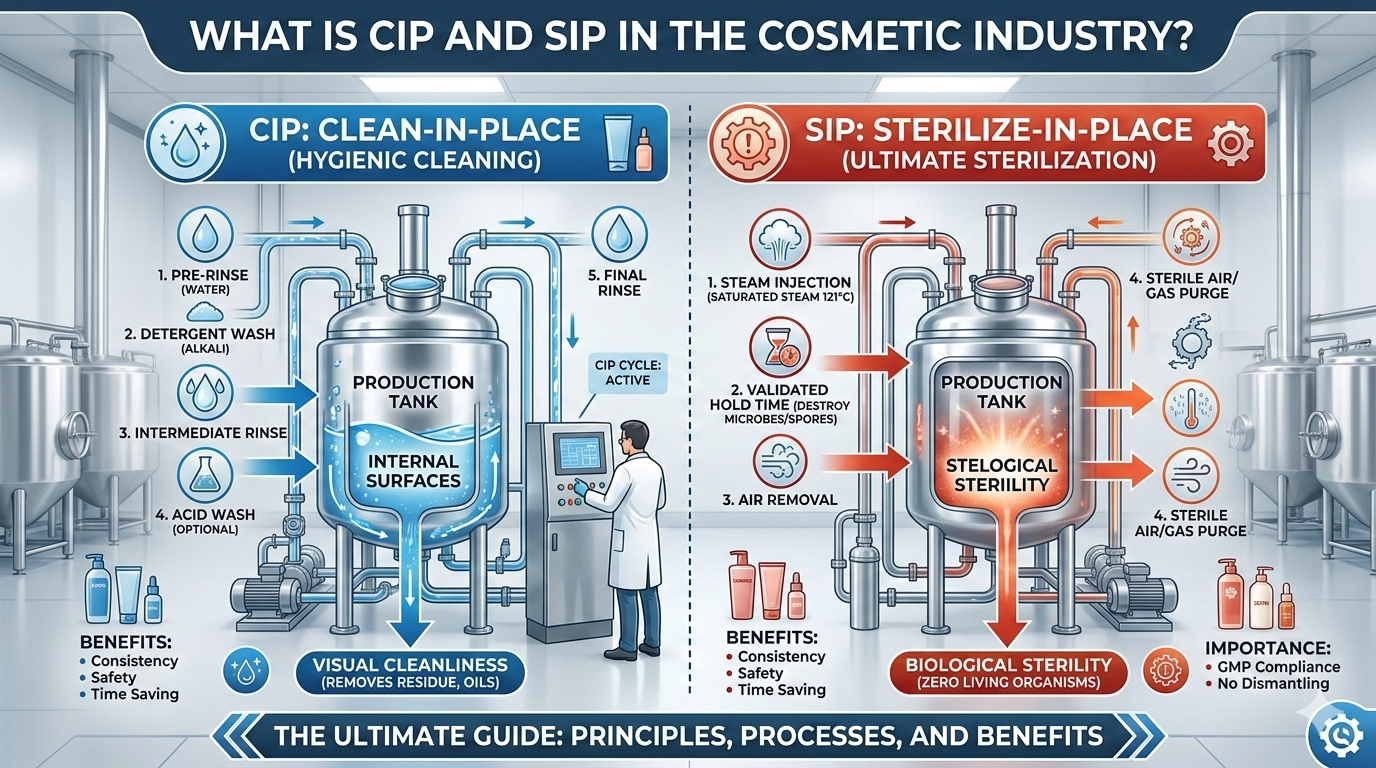
To maintain strict hygiene standards, cosmetic manufacturing companies use two important cleaning technologies called CIP (Clean-in-Place) and SIP (Sterilize-in-Place).
These systems allow manufacturers to clean and sterilize equipment without dismantling machines, saving time and ensuring consistent sanitation.
In this detailed guide, we will understand:
What is CIP in the cosmetic industry
What is SIP in the cosmetic industry
How these systems work
Uses of CIP and SIP
Benefits in cosmetic manufacturing
Difference between CIP and SIP
Why these systems are important for GMP compliance
Let’s understand everything step-by-step.
What is CIP (Clean-in-Place)?
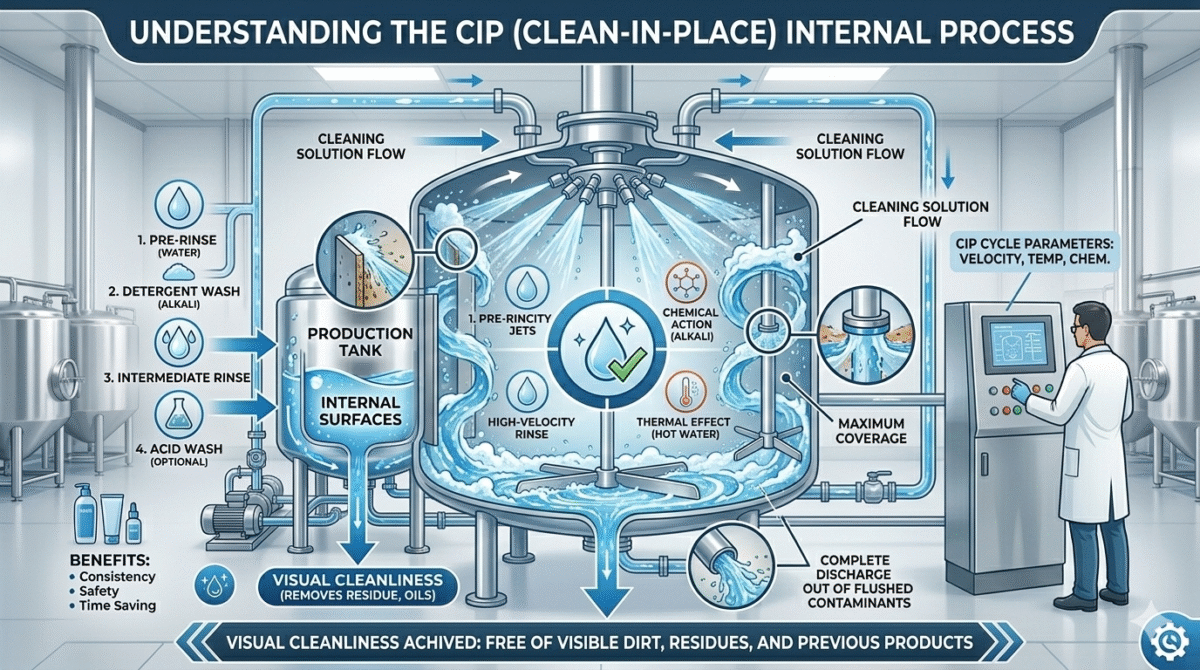
CIP (Clean-in-Place) is an automated cleaning process used in the cosmetic industry to clean manufacturing equipment without disassembling it.
Gemini Generated Image boenxdboenxdboen (1)
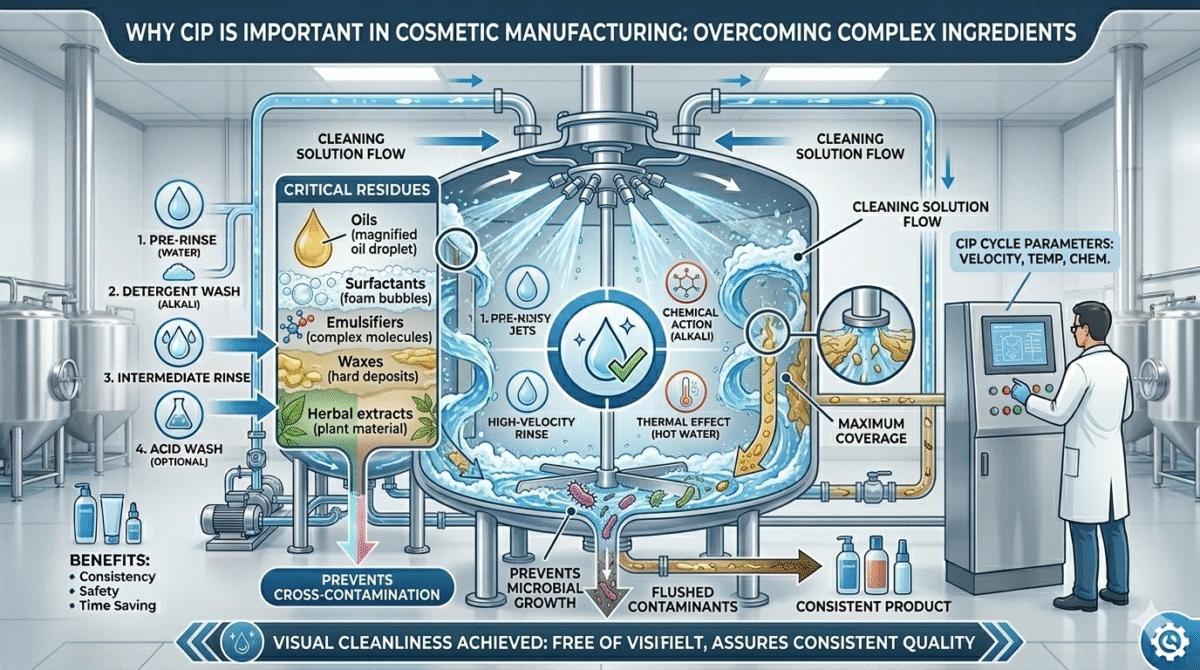
In this system, cleaning solutions like alkaline cleaners, detergents, and hot water are circulated through pipelines, tanks, mixers, and filling machines to remove product residues, oils, waxes, and other contaminants.
The main goal of CIP is to remove visible dirt and chemical residues from equipment surfaces.
Simple Definition
CIP is a method of cleaning internal surfaces of equipment, pipelines, and vessels without taking them apart.
These ingredients can stick to the surfaces of mixers, storage tanks, and pipelines.
If equipment is not cleaned properly, it can cause:
Cross contamination
Microbial growth
Product spoilage
Quality issues
CIP ensures thorough cleaning and consistent hygiene during production.
How CIP System Works
A typical CIP process follows several cleaning steps.
1. Pre-Rinse
The equipment is first rinsed with warm water to remove loose product residues.
This helps eliminate:
Bulk cosmetic material
Leftover shampoo or cream
Surface oils
2. Detergent Cleaning
A cleaning solution (alkaline or acidic) is circulated through the system.
This step removes:
Oil residues
Emulsified creams
Surfactants
Sticky cosmetic ingredients
3. Intermediate Rinse
After detergent cleaning, the system is rinsed again with water to remove chemical residues.
4. Sanitization (Optional)
Some CIP systems include a sanitization step using:
Hot water
Sanitizing chemicals
5. Final Rinse
The final rinse ensures that no cleaning chemicals remain in the equipment.
After this, the system becomes ready for the next production batch.
Equipment Cleaned Using CIP
CIP systems are widely used to clean the following equipment in cosmetic manufacturing plants:
Mixing tanks
Storage vessels
Pipelines
Transfer pumps
Homogenizers
Filling machines
Reactors
These machines are often connected through closed piping systems, making CIP extremely effective.
What is SIP (Sterilize-in-Place)?
SIP (Sterilize-in-Place) is a sterilization process used to kill microorganisms such as bacteria, yeast, and fungi inside equipment without dismantling it.
Unlike CIP, which focuses on cleaning, SIP focuses on sterilization.
SIP usually uses high-temperature steam or hot water to destroy microorganisms.
Simple Definition
SIP is a process of sterilizing equipment using steam or heat without taking the equipment apart.
Why SIP is Important in Cosmetic Manufacturing
Some cosmetic products are highly sensitive to microbial contamination.
For example:
Face serums
Natural skincare products
Organic cosmetics
Herbal formulations
Water-based creams and lotions
These products can easily support microbial growth if manufacturing equipment is not sterile.
SIP ensures that equipment is free from harmful microorganisms before production starts.
How SIP System Works
The SIP process usually follows these steps:
1. Pre-Cleaning
Before sterilization, equipment is cleaned using a CIP process.
Sterilization works properly only when equipment is already clean.
2. Steam Injection
High-temperature steam (typically 121°C) is passed through pipelines and equipment.
Steam penetrates every internal surface.
3. Sterilization Hold Time
The equipment is maintained at high temperature for 15 to 30 minutes to kill microorganisms.
4. Cooling Phase
After sterilization, the equipment is cooled down gradually before production begins.
Equipment Sterilized Using SIP
SIP is commonly used for sterilizing:
Gemini Generated Image 4mnpss4mnpss4mnp
Storage tanks
Pipelines
Cosmetic reactors
Filling systems
Water purification systems
Serum manufacturing equipment
Uses of CIP in Cosmetic Industry
CIP systems are used for many applications in cosmetic manufacturing.
1. Cleaning Mixing Tanks
Mixing tanks used for shampoos, creams, and lotions must be cleaned after every batch.
CIP ensures no ingredient residues remain.
2. Cleaning Pipelines
Pipelines transfer cosmetic products between tanks.
CIP removes residues stuck inside pipes.
3. Cleaning Filling Machines
Filling machines used for bottles and tubes must remain hygienic to prevent contamination.
4. Removing Oil and Wax Residues
Many cosmetic formulations contain oils and waxes that stick to equipment surfaces.
CIP helps dissolve and remove them efficiently.
Uses of SIP in Cosmetic Industry
SIP is mainly used when high levels of sterility are required.
1. Manufacturing Sensitive Products
Products like serums and organic skincare require sterile equipment.
2. Microbial Control
SIP eliminates harmful microorganisms that can spoil cosmetic products.
3. GMP Compliance
Sterilization helps manufacturers follow Good Manufacturing Practices (GMP).
4. Sterilizing Water Systems
Purified water systems used in cosmetic production are often sterilized using SIP.
Benefits of CIP and SIP in Cosmetic Manufacturing
Using CIP and SIP systems provides many advantages.
1. Improved Hygiene
These systems ensure equipment is properly cleaned and sterilized.
This reduces contamination risk.
2. Time Saving
Equipment does not need to be dismantled for cleaning.
This saves significant production time.
3. Consistent Cleaning
Automated systems provide repeatable and reliable cleaning results.
4. Reduced Labor Cost
Manual cleaning requires more workers.
CIP systems reduce manpower requirements.
5. Better Product Quality
Clean equipment ensures cosmetic products maintain their quality and stability.
6. Compliance with Regulations
Cosmetic companies must follow:
GMP guidelines
Quality standards
Safety regulations
CIP and SIP help meet these requirements.
7. Increased Production Efficiency
Since cleaning is faster, machines become available sooner for the next batch.
CIP cleans the equipment, while SIP sterilizes it.
Both processes are often used together for maximum hygiene.
CIP and SIP in GMP Cosmetic Manufacturing
Modern cosmetic factories follow GMP (Good Manufacturing Practices) to ensure product safety.
CIP and SIP systems are important parts of GMP because they help:
Maintain hygienic manufacturing environments
Prevent cross contamination
Ensure equipment sanitation
Improve product safety
Regulatory authorities often inspect cleaning procedures during audits.
Proper documentation of CIP and SIP processes is also required.
Challenges of CIP and SIP Systems
Although these systems are very useful, they also have some challenges.
1. High Initial Cost
Installing automated CIP and SIP systems requires investment.
Gemini Generated Image v9u1j2v9u1j2v9u1
2. Proper Validation Required
Cleaning processes must be validated to ensure effectiveness.
3. Skilled Operators Needed
Operators must understand cleaning cycles, chemicals, and temperature control.
Future of CIP and SIP in Cosmetic Industry
With increasing focus on product safety and automation, CIP and SIP systems are becoming more advanced.
Future developments include:
Smart automated cleaning systems
Digital monitoring of cleaning cycles
Reduced water and chemical consumption
AI-based cleaning validation
These innovations will make cosmetic manufacturing more efficient and safer.
Conclusion
CIP (Clean-in-Place) and SIP (Sterilize-in-Place) are essential technologies used in the cosmetic industry to maintain high standards of cleanliness and sterility during manufacturing.
CIP systems help remove product residues, oils, and contaminants from equipment, while SIP systems eliminate microorganisms through high-temperature steam sterilization.
Together, these systems ensure that cosmetic products are manufactured in a safe, hygienic, and contamination-free environment.
As the cosmetic industry continues to grow, the use of advanced CIP and SIP systems will play an increasingly important role in maintaining product quality, meeting regulatory standards, and improving production efficiency.
Frequently Asked Questions (FAQs)
1. What is CIP in the cosmetic industry?
CIP (Clean-in-Place) is an automated cleaning system used to clean the internal surfaces of manufacturing equipment, tanks, pipelines, and filling machines without dismantling them. It removes product residues, oils, waxes, and other contaminants, helping maintain hygiene and product quality.
2. What is SIP in the cosmetic industry?
SIP (Sterilize-in-Place) is a sterilization process that uses high-temperature steam or hot water to eliminate bacteria, fungi, yeast, and other microorganisms from manufacturing equipment without taking it apart. It ensures equipment is sterile before production begins.
3. What is the difference between CIP and SIP?
The main difference is their purpose. CIP is used to clean equipment by removing dirt, product residues, and oils, while SIP is used to sterilize equipment by killing harmful microorganisms. In most cosmetic manufacturing plants, CIP is performed before SIP.
4. Why are CIP and SIP important in cosmetic manufacturing?
CIP and SIP help maintain a clean and contamination-free production environment. They improve product quality, prevent cross-contamination, reduce microbial risks, ensure GMP compliance, and increase manufacturing efficiency.
5. Which cosmetic products require SIP sterilization?
SIP is commonly used when manufacturing products that are highly sensitive to microbial contamination, such as face serums, water-based creams, lotions, herbal cosmetics, organic skincare products, and purified water systems.
6. What equipment can be cleaned using a CIP system?
A CIP system is commonly used to clean mixing tanks, storage vessels, pipelines, transfer pumps, homogenizers, reactors, and filling machines without disassembling the equipment.
7. How often should CIP and SIP processes be performed?
The frequency depends on the manufacturing schedule and the type of cosmetic product. Generally, CIP is carried out after every production batch, while SIP is performed before producing products that require sterile manufacturing conditions.
8. Do CIP and SIP help manufacturers comply with GMP regulations?
Yes. CIP and SIP are essential components of Good Manufacturing Practices (GMP). They help maintain equipment cleanliness, prevent contamination, support product safety, and provide proper documentation for regulatory inspections and quality audits.
9. What are the advantages of automated CIP and SIP systems?
Automated CIP and SIP systems save time, reduce manual labor, improve cleaning consistency, lower the risk of contamination, minimize production downtime, reduce water and chemical waste, and improve overall manufacturing efficiency.
10. Can CIP replace SIP in cosmetic manufacturing?
No. CIP and SIP serve different purposes. CIP removes product residues and cleans equipment, while SIP sterilizes the equipment by destroying microorganisms. For maximum hygiene and product safety, both systems are often used together.
Healthy, thick, and strong hair is something everyone wants. However, due to pollution, stress, poor diet, heat styling tools, and chemical treatments, hair problems like hair fall, thinning, dryness, and slow growth have become very common in India.
Many people try shampoos and hair oils, but sometimes they are not enough. This is where hair growth serums come into play. Hair serums are lightweight formulations designed to nourish the scalp, strengthen hair roots, reduce hair fall, and improve hair thickness.
Modern hair growth serums contain powerful ingredients such as Redensyl, Procapil, Baicapil, caffeine, and biotin, which help stimulate hair follicles and improve scalp health. These ingredients support the natural hair growth cycle and may help reduce hair thinning over time.
In this guide, we will explore the best hair growth serums in India that help improve hair thickness and reduce hair fall.
Why Use Hair Serum?
Hair serums are becoming very popular in modern haircare routines. Unlike heavy oils, serums are lightweight and quickly absorbed into the scalp.
Benefits of Hair Growth Serums
• Helps reduce hair fall • Strengthens hair roots • Improves hair thickness and density • Nourishes scalp and hair follicles • Controls frizz and dryness • Improves overall hair texture
Many advanced hair serums contain ingredients like Redensyl and Anagain, which work by stimulating dormant hair follicles and improving hair density.
Here are some of the most popular and effective hair growth serums available in India.
1. Minimalist Hair Growth Actives 18% Hair Serum
Minimalist is one of the fastest-growing skincare and haircare brands in India. Their hair growth serum contains a powerful blend of active ingredients designed to improve hair density and reduce hair fall.
Best Ingredients
• Redensyl • Procapil • Anagain • Capixyl
Benefits
• Promotes hair growth • Strengthens hair follicles • Improves hair density • Lightweight and non-sticky formula
This serum is ideal for people experiencing hair thinning and early-stage hair fall.
2. WishCare Hair Serum Concentrate
WishCare hair growth serum is one of the most popular affordable serums in India. It contains a combination of plant-based actives that support hair growth and scalp health.
When choosing a hair growth serum, it is important to look for scientifically backed ingredients.
1. Redensyl
Redensyl is a modern hair growth ingredient that helps stimulate hair follicle stem cells and promote hair growth.
2. Procapil
Procapil strengthens hair roots and helps reduce hair loss caused by weak follicles.
3. Anagain
Anagain is derived from pea sprout extract and supports hair regrowth by stimulating the hair growth phase.
4. Caffeine
Caffeine improves blood circulation in the scalp and supports healthy hair follicles.
5. Biotin
Biotin strengthens hair strands and helps prevent hair breakage.
Many advanced serums combine these ingredients to improve hair density and support natural hair growth.
How to Use Hair Growth Serum Properly
Using hair serum correctly is important to achieve the best results.
Step-by-Step Guide
Wash your hair with a mild shampoo.
Take a few drops of hair serum.
Apply it directly to the scalp.
Massage gently with your fingertips.
Leave it overnight or as recommended.
Tips for Best Results
• Use consistently for at least 8-12 weeks • Maintain a healthy diet • Avoid excessive heat styling • Massage scalp regularly
Hair growth is a slow process, so patience and consistency are important.
Who Should Use Hair Growth Serums?
Hair growth serums are suitable for people experiencing:
• Hair fall • Hair thinning • Weak hair roots • Slow hair growth • Frizzy or damaged hair
Both men and women can use hair serums as part of their haircare routine.
Natural Ways to Improve Hair Growth
Apart from using serums, some natural habits can also improve hair growth.
1. Eat a Healthy Diet
Include foods rich in:
• Protein • Iron • Biotin • Zinc
2. Oil Massage
Regular oil massage improves blood circulation in the scalp.
3. Reduce Stress
Stress is one of the major causes of hair fall.
4. Stay Hydrated
Drinking enough water helps maintain healthy hair and scalp.
Are Hair Growth Serums Safe?
Most hair serums available in India are safe for regular use, especially those made with natural ingredients and dermatologically tested formulas.
However, it is always recommended to:
• Do a patch test before use • Follow instructions on the product label • Consult a dermatologist if hair loss is severe
Final Thoughts
Hair fall and thinning hair are common problems today due to pollution, stress, and lifestyle changes. Fortunately, modern haircare solutions like hair growth serums can help improve hair health and support stronger, thicker hair.
Serums containing ingredients like Redensyl, caffeine, biotin, and peptides help nourish the scalp, strengthen hair roots, and promote natural hair growth. With regular use and a healthy haircare routine, you can achieve healthier, thicker, and more manageable hair.
If you are looking for the best serum for hair growth and thickness in India, the options mentioned above are among the most effective and widely used products available today.
Frequently Asked Questions (FAQs)
1. Which is the best hair growth serum in India?
Some of the best hair growth serums in India include Minimalist Hair Growth Actives 18% Hair Serum, WishCare Hair Growth Serum Concentrate, Bare Anatomy Advanced Hair Growth Serum, Mamaearth Onion Hair Serum, and WOW Skin Science Red Onion Black Seed Hair Serum. The right choice depends on your hair type and specific hair concerns.
2. Do hair growth serums really work?
Hair growth serums can help reduce hair fall, strengthen hair follicles, and improve hair density when used consistently. Serums containing ingredients like Redensyl, Procapil, Baicapil, Anagain, Caffeine, and Biotin are scientifically formulated to support healthy hair growth.
3. How long does it take to see results from a hair growth serum?
Most people may notice improvements in hair fall and hair texture within 8 to 12 weeks of regular use. Visible hair growth may take 3 to 6 months, depending on the cause of hair loss and individual hair growth cycles.
4. Can both men and women use hair growth serums?
Yes. Most hair growth serums are suitable for both men and women. They are designed to strengthen hair roots, improve scalp health, and promote healthier, thicker hair regardless of gender.
5. Which ingredients should I look for in a hair growth serum?
Look for serums that contain clinically studied ingredients such as Redensyl, Procapil, Baicapil, Anagain, Capixyl, Caffeine, Biotin, and Peptides. These ingredients help nourish the scalp and support natural hair growth.
6. How often should I apply a hair growth serum?
Most hair growth serums are recommended for daily use, preferably once every night on a clean, dry scalp. Always follow the usage instructions provided by the manufacturer for the best results.
7. Can I use hair growth serum on oily hair?
Yes. Most modern hair growth serums have a lightweight, non-greasy formula that absorbs quickly into the scalp, making them suitable for oily, dry, normal, and combination hair types.
8. Are hair growth serums safe for daily use?
Yes, dermatologically tested hair growth serums are generally safe for regular use. However, it’s a good idea to perform a patch test before the first application and discontinue use if you experience irritation or an allergic reaction.
9. Can I use hair oil and hair growth serum together?
Yes. Hair oil and hair growth serum can be used together as part of your hair care routine. Apply hair oil before washing your hair for deep nourishment, and use the hair growth serum on a clean, dry scalp after washing to support healthy hair growth.
10. What lifestyle habits can improve hair growth naturally?
Along with using a quality hair growth serum, maintain a protein-rich diet, stay hydrated, manage stress, get enough sleep, massage your scalp regularly, and avoid excessive heat styling and harsh chemical treatments. These healthy habits can support stronger and healthier hair growth.
Indian summers are intense. From rising temperatures to harsh UV exposure, your skin faces multiple challenges — tanning, pigmentation, dehydration, premature aging, and sunburn. Whether you’re commuting daily, traveling, or simply stepping out for errands, sunscreen is your skin’s first line of defense.
If you’ve ever felt confused about which sunscreen to choose, this detailed WordPress-ready guide will help you find the best sunscreen in India based on your skin type and lifestyle.
Let’s explore the top 10 sunscreens available in India that can keep your skin safe, fresh, and glowing throughout summer.
Why Sunscreen Is Essential in Indian Summers
India experiences high UV index levels, especially between 10 AM and 4 PM. Prolonged exposure to sunlight without protection may lead to:
Sunburn and redness
Pigmentation and dark spots
Uneven skin tone
Premature wrinkles
Loss of skin elasticity
Long-term skin damage
Using a broad-spectrum sunscreen with SPF 30 or higher helps protect your skin from both UVA (aging rays) and UVB (burning rays).
Choosing the right sunscreen is just as important as applying it daily. Here are the key factors you should keep in mind before making a purchase:
1. Choose the Right SPF
SPF (Sun Protection Factor) determines how well a sunscreen protects your skin from UVB rays.
SPF 30: Suitable for daily indoor and light outdoor use.
SPF 50: Ideal for everyday outdoor activities and Indian summers.
SPF 60 or Higher: Best for prolonged sun exposure, beach trips, or outdoor sports.
2. Look for Broad-Spectrum Protection
Always choose a sunscreen labeled Broad Spectrum, as it protects against both:
UVA Rays: Cause premature aging, wrinkles, and pigmentation.
UVB Rays: Cause sunburn and skin damage.
3. Select According to Your Skin Type
Different skin types need different sunscreen formulas.
Oily Skin: Gel-based, oil-free, or matte-finish sunscreen.
Dry Skin: Cream-based or hydrating sunscreen with ingredients like Hyaluronic Acid or Ceramides.
Sensitive Skin: Fragrance-free, alcohol-free, and dermatologist-tested formulas.
Combination Skin: Lightweight lotion or gel-cream sunscreen.
4. Check the Ingredients
Look for skin-friendly ingredients that provide additional skincare benefits, such as:
Niacinamide – Helps brighten skin and reduce pigmentation.
Vitamin C – Protects against free radicals and boosts radiance.
Hyaluronic Acid – Keeps skin hydrated.
Zinc Oxide & Titanium Dioxide – Ideal mineral filters for sensitive skin.
Avoid products that contain ingredients known to irritate your skin.
5. Water and Sweat Resistance
If you exercise, swim, or spend time outdoors, choose a water-resistant sunscreen that offers protection for 40 or 80 minutes. Remember to reapply after swimming or excessive sweating.
6. White Cast and Finish
Choose a sunscreen that blends easily into your skin without leaving a white cast.
Matte Finish: Best for oily and combination skin.
Dewy Finish: Great for dry or dull skin.
7. Non-Comedogenic Formula
If you have acne-prone skin, look for a non-comedogenic sunscreen. These formulas are designed not to clog pores and can help reduce the risk of breakouts.
8. PA Rating Matters
The PA rating indicates protection against UVA rays.
PA+ – Basic protection
PA++ – Moderate protection
PA+++ – High protection
PA++++ – Very high protection (recommended for Indian weather)
9. Check the Expiry Date
Always buy a sunscreen with a good shelf life. Using an expired sunscreen can reduce its effectiveness and may not provide adequate UV protection.
10. Read Reviews and Dermatologist Recommendations
Before purchasing, check genuine customer reviews and dermatologist recommendations. This helps you choose a sunscreen that performs well for your skin type and provides reliable sun protection.
When and How to Apply Sunscreen
When to Apply
Apply sunscreen at least 20–30 minutes before stepping outside.
How Much to Use
Face & neck: Two finger lengths (about half teaspoon)
Full body: 3–4 teaspoons
Reapplication Rule
Reapply every 2 hours, especially after sweating or swimming.
Correct Skincare Order (CTM + Sunscreen)
Follow this order daily:
Cleanser
Toner
Serum
Moisturizer
Sunscreen
Always apply sunscreen as the last step before makeup.
1. Which is the best sunscreen in India for daily use?
The best sunscreen depends on your skin type. For oily skin, gel-based sunscreens like Lakmé Sun Expert Ultra Matte SPF 50 work well, while Minimalist SPF 60 is a great choice for sensitive skin. If you have dry skin, Plum Bright Years SPF 45 provides both hydration and sun protection.
2. Is SPF 30 enough for Indian summers?
Yes, SPF 30 is suitable for everyday indoor and light outdoor activities. However, if you spend long hours outside, travel frequently, or have prolonged sun exposure, SPF 50 or higher is recommended for better protection.
3. How often should I reapply sunscreen?
Reapply sunscreen every 2 hours when outdoors. If you sweat heavily, swim, or wipe your face with a towel, reapply immediately for continuous UV protection.
4. Can I skip sunscreen if I stay indoors?
No. UVA rays can pass through windows, and blue light from digital screens may also contribute to skin damage over time. Applying sunscreen every morning is recommended even when you’re indoors.
5. Which sunscreen is best for oily and acne-prone skin?
People with oily or acne-prone skin should choose oil-free, lightweight, non-comedogenic, and gel-based sunscreens. These formulas help control excess oil without clogging pores.
6. Does sunscreen prevent tanning?
Yes. Sunscreen significantly reduces tanning by protecting your skin from harmful UVA and UVB rays. However, no sunscreen blocks 100% of UV rays, so wearing protective clothing and seeking shade also helps.
7. Can I apply sunscreen without using a moisturizer?
Yes. Many modern sunscreens contain hydrating ingredients and can replace a moisturizer if you have oily or combination skin. People with dry skin should apply a moisturizer first, followed by sunscreen.
8. What is the correct order to apply sunscreen in a skincare routine?
Follow this skincare order:
Cleanser
Toner
Serum
Moisturizer
Sunscreen
Makeup (optional)
Sunscreen should always be the last step of your skincare routine before makeup.
9. Can men use the same sunscreen as women?
Absolutely. Sunscreens are not gender-specific. Men and women can use the same sunscreen as long as it suits their skin type, SPF needs, and lifestyle.
10. Which sunscreen is best for sensitive skin?
People with sensitive skin should choose a fragrance-free, alcohol-free, dermatologist-tested sunscreen with broad-spectrum SPF 50 or higher. Mineral sunscreens containing Zinc Oxide or Titanium Dioxide are also excellent options for sensitive skin.
Final Thoughts
Sunscreen is not just a summer essential — it’s a daily skincare necessity in India’s climate. Choosing the right formula based on your skin type ensures comfort and long-term skin health.
Whether you prefer gel, cream, serum, or powder format, there’s a sunscreen designed to suit your needs. Make SPF a habit, not an afterthought.
India’s oral care industry has transformed rapidly over the past few years. Earlier, most people focused only on cavity prevention. Today, consumers look for complete oral wellness — protection against plaque, gum problems, enamel erosion, bad breath, tooth sensitivity, and even dry mouth.
Modern toothpastes are now formulated with advanced ingredients such as fluoride complexes, potassium nitrate, herbal extracts, remineralizing agents, and antibacterial compounds. Whether you prefer a herbal formula or a clinically tested sensitive-care toothpaste, the Indian market offers options for every need.
1. Clove Ultimate – Complete Oral Protection
Best For: All-round daily protection for families
Clove Ultimate is designed as a full-spectrum oral care toothpaste. It focuses on cavity protection, enamel strengthening, gum support, and long-lasting freshness — all in one formulation.
Key Benefits:
Helps prevent tooth decay
Strengthens enamel with protective minerals
Supports healthy gums
Fights plaque buildup
Maintains fresh breath for hours
This toothpaste is suitable for everyday use and works well for families who want one product that addresses multiple oral concerns simultaneously.
Colgate Total Advanced Health continues to be one of the most widely used toothpastes in India. It offers protection against cavities, plaque, tartar, bad breath, and gum issues.
Why It’s Popular:
Long-standing brand trust
Clinically tested formulations
Strong antibacterial action
Easy availability across India
Colgate remains a preferred choice for households seeking reliable and comprehensive daily oral care.
Best For: Weak enamel and early-stage enamel damage
Tooth enamel can weaken due to acidic foods, soft drinks, and improper brushing. Clove Revive is enriched with a remineralizing formula that helps restore lost minerals and reinforce enamel structure.
Key Advantages:
Rebuilds enamel strength
Protects against acid erosion
Reduces risk of future cavities
Supports long-term tooth durability
If your teeth feel weak or sensitive due to enamel wear, this toothpaste may help restore resilience over time.
4. Dabur Red Paste
Best For: Herbal and Ayurvedic oral care
Dabur Red Paste is widely known for its Ayurvedic formulation. It contains herbal ingredients like clove, mint, and other traditional extracts known for antibacterial and gum-strengthening properties.
Why It Stands Out:
Herbal composition
Strong flavor and freshness
Focus on gum health
Suitable for those preferring Ayurvedic products
This toothpaste blends traditional Indian oral care knowledge with modern hygiene needs.
Tooth sensitivity can cause sharp pain while consuming hot, cold, or sweet foods. Clove Sensitive uses potassium nitrate, a well-known ingredient for reducing nerve sensitivity.
Key Benefits:
Soothes nerve endings
Forms protective barrier over exposed dentin
Provides lasting relief
Safe for daily use
Consistent usage helps reduce discomfort and allows you to enjoy your favorite foods without pain.
6. Himalaya Wellness Company Complete Care Toothpaste
Best For: Natural oral care enthusiasts
Himalaya Complete Care Toothpaste uses herbal ingredients like neem and pomegranate, known for their antibacterial and gum-protective properties.
Why People Choose It:
Herbal formulation
Fluoride-free variants available
Focus on gum strengthening
Gentle daily cleansing
It is ideal for individuals who prefer plant-based oral care options.
7. Clove Hydrate – Relief for Dry Mouth
Best For: Dry mouth (xerostomia)
Dry mouth can occur due to medication, stress, dehydration, or certain health conditions. Clove Hydrate is powered by Optaflow® technology, designed to stimulate saliva production and maintain moisture.
Major Benefits:
Helps stimulate saliva flow
Keeps mouth hydrated
Reduces dryness discomfort
Maintains freshness for hours
Hydration is essential for oral health because saliva naturally protects against bacteria and decay.
8. Pepsodent Germicheck
Best For: Strong germ protection
Pepsodent Germicheck is known for its antibacterial formula developed with dental expertise. It provides reliable germ defense for daily family use.
Why It’s Trusted:
Effective plaque control
Long-lasting freshness
Affordable pricing
Suitable for everyday use
It is commonly chosen by families who prioritize antibacterial protection.
Children require age-appropriate fluoride levels and mild flavors. Clove Kidz is formulated to protect young teeth while making brushing enjoyable.
Features:
Safe fluoride concentration
Kid-friendly taste
Gentle cleaning action
Encourages good brushing habits
Regular brushing from an early age helps prevent cavities and supports lifelong oral hygiene.
10. Sensodyne Repair & Protect
Best For: Advanced sensitivity and enamel repair
Sensodyne Repair & Protect contains NovaMin® technology that helps repair vulnerable areas of sensitive teeth.
Key Benefits:
Clinically proven sensitivity relief
Builds protective mineral layer
Suitable for long-term use
Recommended by dentists for sensitive teeth
It is a strong option for people experiencing persistent sensitivity.
How to Choose the Right Toothpaste in 2026
With so many options available, selecting the right toothpaste depends on your specific oral concerns. Here’s a simple guide:
For Cavities:
Choose fluoride-based toothpaste with strong antibacterial protection.
For Sensitivity:
Look for potassium nitrate or NovaMin-based formulas.
For Gum Health:
Herbal or antibacterial toothpaste can help reduce gum inflammation.
For Enamel Repair:
Use remineralizing formulas designed to restore lost minerals.
For Dry Mouth:
Select toothpaste that supports saliva stimulation and hydration.
For Kids:
Always use age-appropriate fluoride toothpaste designed specifically for children.
Importance of Complete Oral Care
Toothpaste is only one part of oral hygiene. For best results:
Brush twice daily for at least 2 minutes.
Use a soft-bristled toothbrush.
Floss regularly.
Replace your toothbrush every 3 months.
Visit a dentist every 6 months for a check-up.
Good oral hygiene not only prevents cavities but also reduces the risk of gum disease, bad breath, and other dental complications.
Final Thoughts
The Indian oral care market in 2026 offers a wide variety of solutions tailored to individual needs. Established brands like Colgate, Sensodyne, Pepsodent, Dabur, and Himalaya continue to dominate due to consumer trust and clinical backing. At the same time, newer concern-specific formulations such as Clove Ultimate, Clove Revive, Clove Hydrate, and Clove Sensitive are reshaping how people approach oral wellness.
Instead of choosing a toothpaste randomly, identify your primary concern — whether it is sensitivity, enamel weakness, gum care, or dry mouth — and select a product that directly addresses that issue.
A healthy smile begins with the right toothpaste and consistent daily care.
Healthy, soft, and shiny hair is something everyone desires, but daily exposure to pollution, UV rays, heat styling, chemical treatments, hard water, and an unhealthy lifestyle can leave hair dry, rough, and damaged. Over time, these factors strip away your hair’s natural moisture, making it more prone to frizz, breakage, split ends, and dullness.
While a good shampoo and conditioner are essential, they often aren’t enough to repair deeply damaged hair. This is where a hair mask can make a real difference. Hair masks are intensive treatments formulated with nourishing ingredients like keratin, argan oil, coconut oil, shea butter, and proteins that penetrate deep into the hair shaft to restore moisture, strengthen weak strands, and improve overall hair health.
With so many products available in the market, finding the right one can be confusing. To make your search easier, we’ve carefully selected the 10 best hair masks for dry and damaged hair in 2026 based on their ingredients, effectiveness, customer reviews, value for money, and suitability for different hair types.
Whether your hair is chemically treated, color-damaged, heat-damaged, naturally dry, or frizzy, this guide will help you choose a hair mask that fits your needs. You’ll also learn how to use a hair mask correctly, which ingredients to look for, and expert tips to achieve smoother, healthier, and shinier hair.
That’s where hair masks come in.
A good hair mask works like a deep conditioning treatment. It penetrates deeper into the hair shaft, repairs damage, restores moisture, and improves texture. In this detailed guide, I will share the best hair masks for dry damaged hair, their benefits, uses, and how to choose the right one for your hair type.
This article is written in simple, professional English with a human touch so you can easily understand and apply the information.
Why Dry and Damaged Hair Happens
Before choosing a hair mask, it’s important to understand the cause of dryness and damage:
Chemical treatments (coloring, rebonding, keratin)
Sun exposure and pollution
Hard water
Over-washing with harsh shampoos
Lack of proper nutrition
When hair loses its natural moisture and protein, it becomes weak and brittle. Hair masks help restore this balance.
Top 10 Best Hair Masks for Dry Damaged Hair
Here are some of the most effective and trusted hair masks available today:
1. L’Oréal Paris Total Repair 5 Hair Mask Why It’s Good
This mask is specially designed for damaged hair and signs of damage hair. It contains ceramide and protein that help repair five signs of damage – dryness, roughness, dullness, split ends, and breakage.
9.Garnier Fructis Banana Hair Food Mask Why It’s Good
Contains banana extract known for deep nourishment.
Benefits
3-in-1 use (mask, conditioner, leave-in)
Makes hair soft
Lightweight formula
Affordable
Best For
Dry and frizzy hair.
10. Wella Professionals Invigo Nutri-Enrich Mask Why It’s Good
Enriched with goji berry extract and vitamins.
Benefits
Restores vitality
Deeply nourishes
Improves elasticity
Premium professional care
Best For
Severely damaged and lifeless hair.
How to Use a Hair Mask Properly
Using a hair mask correctly makes a big difference.
Step-by-Step Guide:
Wash your hair with a mild shampoo.
Remove excess water using a towel.
Apply the mask evenly from mid to length to ends.
Leave it on for 5–15 minutes (as directed).
Rinse thoroughly with lukewarm water.
How Often to Use?
Very dry hair: 2 times a week
Mildly damaged hair: 1 time a week
Normal hair: Once every 10–15 days
Key Ingredients to Look For
When choosing a hair mask, check these ingredients:
Argan Oil – Deep hydration
Keratin – Strengthens hair structure
Coconut Oil – Moisture and shine
Shea Butter – Repairs dryness
Ceramides – Reduce breakage
Protein – Restores damaged strands
Avoid masks with too much alcohol if your hair is very dry.
Professional Tips for Better Results
Since you are involved in the cosmetics and haircare field, these professional tips will help you get better outcomes:
Use a warm towel wrap after applying the mask to improve penetration.
Combine protein mask and moisture mask alternatively if hair is extremely damaged.
Avoid applying mask directly on scalp unless mentioned.
Always follow with cool water rinse for shine.
Homemade Hair Mask Option (Natural Alternative)
If someone prefers natural treatment:
Coconut Oil + Honey Mask
2 tbsp coconut oil
1 tbsp honey
Leave for 30 minutes
It deeply nourishes and reduces dryness naturally.
Final Thoughts
Dry and damaged hair needs patience and proper care. A good hair mask is not a luxury so on .it is a very necessity in today’s environment. Whether you choose an affordable option like Garnier or a professional salon mask like Wella, consistency is the key.
Healthy hair does not happen overnight. With the right mask, proper nutrition, and minimal heat styling, your hair can regain its softness, shine, and strength.