
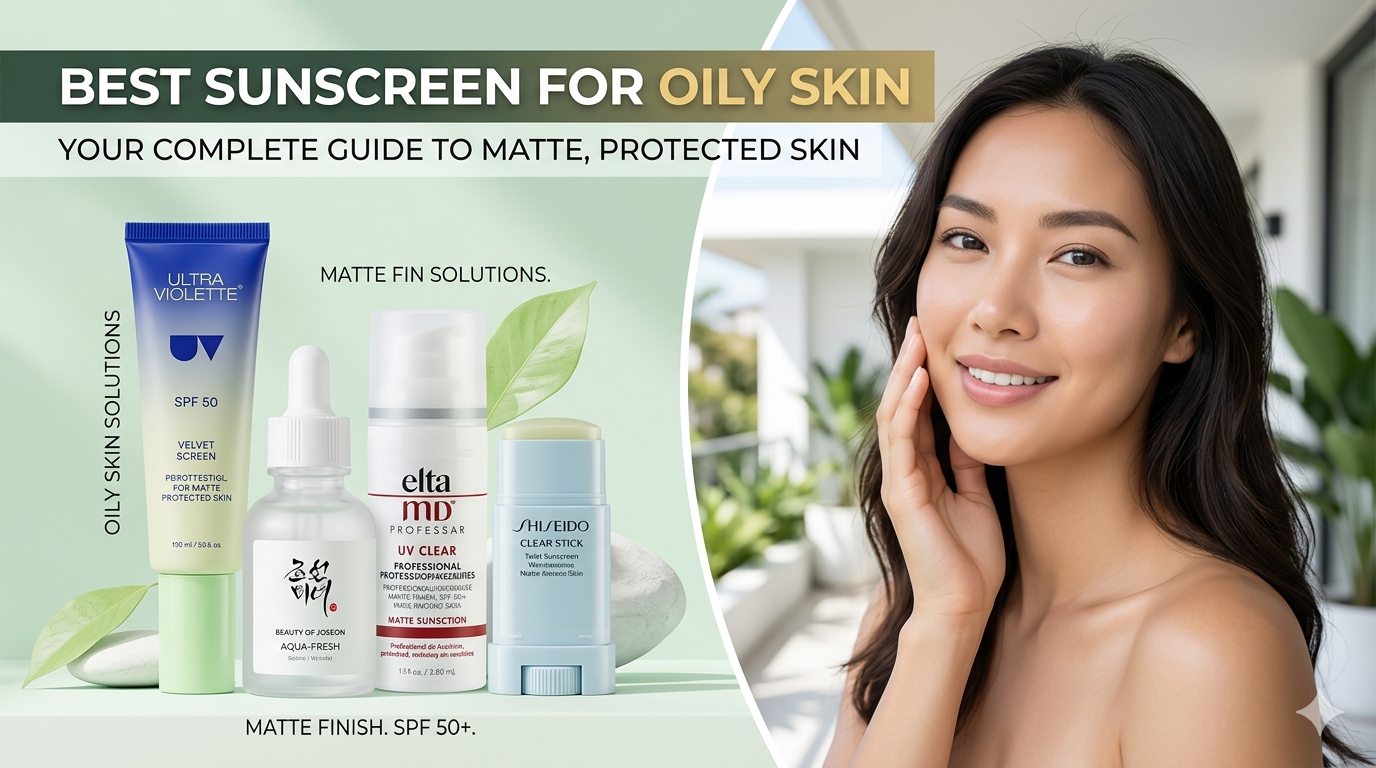
If you have oily skin, finding the right sunscreen can feel like a challenge. Many sunscreens leave behind a greasy layer, clog pores, and make your face look shiny within hours. However, skipping sunscreen is never an option because daily sun protection is essential for preventing premature aging, pigmentation, and skin damage.
The good news is that modern sunscreen formulas are designed specifically for oily and acne-prone skin. Lightweight, non-comedogenic, and oil-free sunscreens can provide excellent sun protection without making your skin feel heavy or greasy.
In this guide, we’ll explore how to choose the best sunscreen for oily skin and review some of the most effective options available today.
Why Oily Skin Still Needs Sunscreen
Many people with oily skin avoid sunscreen because they worry it will make their skin even greasier. In reality, sun exposure can worsen several skin concerns, including:
- Excess oil production
- Hyperpigmentation and dark spots
- Premature aging
- Acne marks and post-inflammatory pigmentation
- Sunburn and skin damage
A well-formulated sunscreen protects your skin while helping maintain a balanced and healthy complexion.
Read More : Understanding Skin Types: A Complete Guide to Healthy and Glowing Skin
What to Look for in a Sunscreen for Oily Skin
1. Oil-Free Formula
Choose sunscreens labeled “oil-free” to avoid unnecessary shine and heaviness.
2. Non-Comedogenic
Non-comedogenic products are designed not to clog pores, reducing the risk of breakouts.
3. Lightweight Texture
Gel, fluid, serum, and water-based formulas tend to work best for oily skin.
4. Broad-Spectrum Protection
Ensure your sunscreen protects against both UVA and UVB rays with SPF 30 or higher.
5. Matte Finish
A matte or soft-focus finish helps control excess shine throughout the day.
Top Sunscreens for Oily Skin
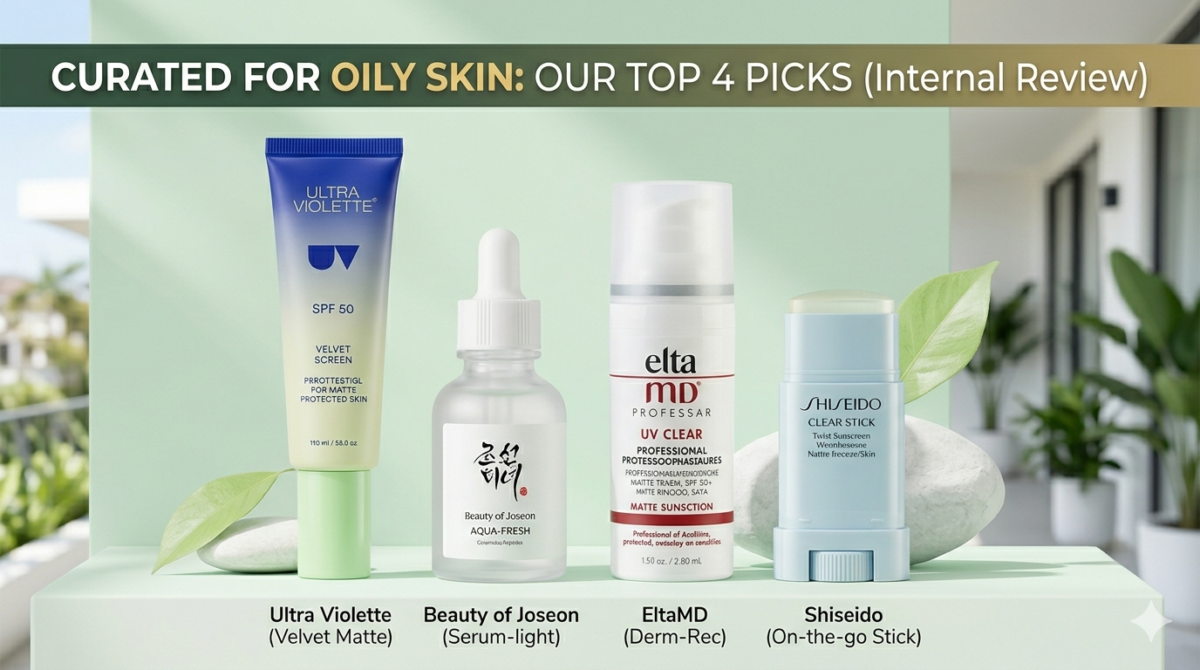
1. Ultra Violette Velvet Screen SPF 50
This mineral sunscreen delivers high protection while providing a smooth, velvety matte finish. Despite its creamy texture, it blends effortlessly and leaves skin looking soft rather than greasy.
Best For: Oily and combination skin
SPF: 50
Key Ingredients: Zinc Oxide, Kakadu Plum, Gluconolactone
2. Beauty of Joseon Relief Sun Aqua-Fresh SPF 50+ PA++++
A lightweight Korean sunscreen that feels more like a hydrating serum than a traditional sunscreen. It absorbs quickly and leaves no greasy residue.
Best For: Oily and dehydrated skin
SPF: 50+
Key Ingredients: Ceramides, Peptides, Beta-Glucan
3. Eucerin Sun Clear Skin SPF 50
Specially formulated for acne-prone and oily skin, this sunscreen provides a matte finish while helping control excess oil.
Best For: Acne-prone skin
SPF: 50
Key Ingredients: Vitamin E, Dimethicone
Read More : Best Anti Hair Fall Shampoo for Men: A Complete Guide to Stronger and Healthier Hair
4. EltaMD UV Clear SPF 46
One of the most dermatologist-recommended sunscreens for oily and sensitive skin. It contains niacinamide to help soothe irritation and improve skin texture.
Best For: Acne-prone and sensitive skin
SPF: 46
Key Ingredients: Niacinamide, Hyaluronic Acid
5. Shiseido Clear Sunscreen Stick SPF 50+
This transparent sunscreen stick is ideal for quick touch-ups throughout the day. It applies smoothly and leaves a matte finish.
Best For: On-the-go reapplication
SPF: 50+
Key Ingredients: Licorice Root Extract
Mineral vs Chemical Sunscreen for Oily Skin
Mineral Sunscreens
Mineral sunscreens use ingredients like Zinc Oxide and Titanium Dioxide to create a protective barrier on the skin.
Pros:
- Often more suitable for sensitive skin
- Can help absorb excess oil
- Less likely to cause irritation
Cons:
- May leave a white cast
- Some formulas feel thicker
Chemical Sunscreens
Chemical sunscreens absorb UV rays and convert them into heat.
Pros:
- Lightweight texture
- Easier to blend
- Usually invisible on the skin
Cons:
- May irritate very sensitive skin
- Some formulas can feel greasy
For many people with oily skin, lightweight mineral or hybrid formulas provide the best balance between protection and shine control.
Read More: Which Hair Mask is The Best for Frizzy and Dry
Can You Skip Moisturizer If You Use Sunscreen?
Whether you can skip moisturizer depends on your skin type and the sunscreen you use. Sunscreen and moisturizer have different purposes. A moisturizer helps keep your skin hydrated, strengthens the skin barrier, and prevents dryness, while sunscreen protects your skin from harmful UV rays. Even if your sunscreen contains moisturizing ingredients, it may not provide enough hydration for everyone.
If you have oily or combination skin, you may be able to skip moisturizer if you’re using a hydrating sunscreen with ingredients like hyaluronic acid, glycerin, or ceramides. These formulas often provide enough moisture for daytime use without making your skin feel greasy.
However, if you have dry, sensitive, or dehydrated skin, it’s best to apply a lightweight moisturizer before sunscreen. This helps lock in moisture, reduces flakiness, and creates a smoother base for sunscreen application.
The best approach is to choose products based on your skin’s needs. In the morning, cleanse your face, apply a moisturizer if needed, and then finish with a broad-spectrum sunscreen of at least SPF 30. This simple routine keeps your skin hydrated while ensuring proper protection against sun damage.
How to Prevent Sunscreen From Making Your Face Oily
Follow these simple tips:
- Choose oil-free and non-comedogenic formulas.
- Apply a lightweight moisturizer underneath.
- Use blotting papers during the day.
- Opt for matte-finish sunscreens.
- Reapply using sunscreen powder or sunscreen sticks.
- Avoid layering heavy skincare products under SPF.
Read More : Streax Professional Canvoline Shampoo & Hair Mask
Can Sunscreen Cause Breakouts?
Yes, sunscreen can sometimes cause breakouts, but it isn’t always the sunscreen itself that’s to blame. In many cases, acne develops because the formula isn’t suitable for your skin type or because the product is applied or removed incorrectly. Choosing the right sunscreen is essential, especially if you have oily, acne-prone, or sensitive skin.
One of the most common reasons sunscreen may trigger breakouts is the use of heavy or greasy formulas that can clog pores. Thick creams containing pore-clogging ingredients may trap excess oil, sweat, and dirt on the skin, leading to pimples, blackheads, and whiteheads. This is why people with acne-prone skin should look for products labeled non-comedogenic, oil-free, and lightweight. Gel-based or fluid sunscreens are often a better choice because they absorb quickly and feel less greasy.
Another factor is not removing sunscreen properly at the end of the day. Sunscreen is designed to stay on the skin for hours, so simply rinsing your face with water may not remove it completely. Leftover sunscreen mixed with oil, pollution, and makeup can clog pores and increase the risk of breakouts. Cleansing your face thoroughly every evening with a gentle cleanser—or double cleansing if you wear makeup or water-resistant sunscreen—helps keep your skin clean and healthy.
Final Thoughts
Finding the best sunscreen for oily skin doesn’t have to be difficult. The key is selecting a lightweight, non-comedogenic, and broad-spectrum formula that protects your skin without adding excess shine.
Whether you prefer a mineral sunscreen for a matte finish or a lightweight chemical formula that feels invisible on the skin, daily sun protection is one of the most important steps in maintaining healthy, clear, and youthful-looking skin.
Invest in the right sunscreen today, and your skin will thank you for years to come
Yeh SEO-friendly FAQs hain jo aap Rank Math FAQ Block me add kar sakte hain.
FAQs
1. Which sunscreen is best for oily skin?
A lightweight, oil-free, non-comedogenic sunscreen with SPF 30 or higher is the best choice for oily skin. Gel-based and matte-finish formulas help control excess oil without clogging pores.
2. Is SPF 30 enough for oily skin?
Yes, SPF 30 provides excellent daily protection by blocking about 97% of UVB rays. If you spend long hours outdoors, SPF 50 offers additional protection.
3. Can oily skin skip moisturizer before sunscreen?
If your sunscreen contains hydrating ingredients and your skin feels comfortable, you may skip moisturizer. However, people with dehydrated oily skin should still use a lightweight moisturizer.
4. Does sunscreen make oily skin more greasy?
Not if you choose the right formula. Matte-finish, gel-based, and oil-free sunscreens are designed to reduce shine and keep your skin feeling fresh.
5. Can sunscreen cause acne on oily skin?
A heavy or pore-clogging sunscreen can contribute to breakouts. Choose a non-comedogenic sunscreen and cleanse your face properly at the end of the day.
6. How often should I reapply sunscreen?
Reapply sunscreen every two hours when you’re outdoors. If you’re sweating heavily or swimming, reapply immediately after drying your skin.
7. Should I use sunscreen even if I stay indoors?
Yes. UVA rays can pass through windows and contribute to skin aging and pigmentation, so daily sunscreen use is recommended even indoors.
8. Can I wear makeup over sunscreen?
Yes. Allow your sunscreen to absorb for 10–15 minutes before applying makeup. You can also use SPF powder or sunscreen spray for easy touch-ups.
9. What ingredients should oily skin look for in a sunscreen?
Look for ingredients such as niacinamide, hyaluronic acid, silica, zinc oxide, or lightweight UV filters that provide sun protection without making your skin oily.
10. Is sunscreen necessary during cloudy or rainy days?
Yes. Up to 80% of UV rays can penetrate clouds, so wearing sunscreen every day helps protect your skin from sun damage, tanning, and premature aging.
11. How much sunscreen should I apply to my face?
Use the two-finger rule (about half a teaspoon) to ensure your face and neck receive adequate sun protection.
12. What is the best sunscreen finish for oily skin?
A matte or dry-touch finish is ideal for oily skin because it controls excess shine and provides a smooth, non-greasy look throughout the day.