

Sunscreen is one of the most effective skincare products for maintaining healthy, youthful-looking skin. It protects your skin from harmful ultraviolet (UV) rays that can cause sunburn, premature aging, pigmentation, and long-term skin damage. However, many people don’t apply sunscreen correctly, which can significantly reduce its effectiveness.
If you want your sunscreen to provide the protection promised on the label, proper application is essential. In this guide, you’ll learn the best way to apply sunscreen on your face, when to use it, and how to avoid common mistakes.
Why Sunscreen Is Essential for Your Skin
Whether it’s sunny, cloudy, or even raining, UV rays can still reach your skin. Daily exposure to these rays can lead to:
- Fine lines and wrinkles
- Dark spots and pigmentation
- Uneven skin tone
- Loss of skin elasticity
- Sunburn
- Increased risk of skin cancer
Using sunscreen every day helps create a protective barrier between your skin and harmful environmental damage.
Read More:Best Sunscreen for Oily Skin: Your Complete Guide to Matte, Protected Skin
Step-by-Step: Best Way to Apply Sunscreen on Face
1. Start with a Clean Face
Before applying sunscreen, wash your face with a gentle cleanser to remove dirt, excess oil, and impurities. Clean skin allows sunscreen to spread evenly and adhere properly.
2. Complete Your Morning Skincare Routine
Sunscreen should be the final step in your morning skincare routine.
Apply products in this order:
- Cleanser
- Toner (optional)
- Serum
- Moisturizer
- Sunscreen
If you wear makeup, apply sunscreen before foundation or other cosmetic products.

3. Use the Right Amount
Applying too little sunscreen is one of the biggest mistakes people make.
For your face and neck, use approximately:
- Two finger lengths of sunscreen
- About half a teaspoon
This amount helps ensure you receive the SPF protection indicated on the packaging.
4. Apply Evenly Across Your Face
Place small dots of sunscreen on:
- Forehead
- Cheeks
- Nose
- Chin
- Neck
Gently spread and blend the product using your fingertips.
Make sure you don’t miss:
- Hairline
- Ears
- Jawline
- Neck
- Area around the nose
Even coverage is key to effective protection.
Read More: How to Read the Labeling of Cosmetic Products: A Beginner’s Complete Guide (2026)
5. Allow Time Before Sun Exposure
Apply sunscreen at least 15 to 20 minutes before going outdoors.
This gives the product enough time to form a protective layer on your skin and start working effectively.
How Often Should You Reapply Sunscreen?
Sunscreen does not last all day. Reapplication is necessary for continuous protection.
Reapply:
- Every 2 hours when outdoors
- After swimming
- After excessive sweating
- After towel drying
Even water-resistant sunscreens require reapplication to maintain protection.
Read More: Best Mamaearth Vitamin C Face Wash 2026
Choosing the Right Sunscreen for Your Skin Type
For Oily Skin
Look for:
- Lightweight formulas
- Gel-based sunscreens
- Oil-free products
- Non-comedogenic options
For Dry Skin
Choose:
- Moisturizing sunscreens
- Cream-based formulas
- Products with hydrating ingredien
For Sensitive Skin
Select:
- Mineral sunscreens
- Fragrance-free formulas
- Dermatologist-tested products
For Combination Skin
Use a lightweight sunscreen that hydrates without feeling greasy.
Read More: Best Sunscreen for Oily Skin: Your Complete Guide to Matte, Protected Skin
What SPF Is Best for Daily Use?
Choosing the right Sun Protection Factor (SPF) is one of the most important steps in protecting your skin from harmful ultraviolet (UV) rays. Many people assume that a higher SPF always means complete protection, but understanding what SPF actually does can help you make the best choice for your daily skincare routine.
SPF 30: Ideal for Everyday Use
Dermatologists generally recommend SPF 30 for daily use. It blocks approximately 97% of UVB rays, which are responsible for causing sunburn and contributing to skin damage. If you spend most of your day indoors, work in an office, attend school, or only have short periods of sun exposure while commuting, SPF 30 provides excellent protection when applied correctly.
SPF 30 is lightweight, comfortable to wear every day, and suitable for most skin types. However, remember that no sunscreen can block 100% of UV rays, so proper application and regular reapplication remain essential.
SPF 50: Better for Longer Outdoor Exposure
If you spend extended periods outdoors, participate in sports, travel frequently, or work under direct sunlight, SPF 50 is often a better choice. SPF 50 blocks about 98% of UVB rays, offering slightly higher protection than SPF 30.
Although the percentage difference seems small, SPF 50 can provide extra protection for people who are more likely to experience prolonged sun exposure. It is also a good option for individuals with fair skin, sensitive skin, pigmentation, melasma, or a history of frequent sunburn.
Choose a Broad-Spectrum Sunscreen
The SPF number only measures protection against UVB rays, but your sunscreen should also protect against UVA rays. UVA rays penetrate deeper into the skin and are a major cause of premature aging, wrinkles, dark spots, loss of skin elasticity, and uneven skin tone. They are present throughout the year and can even pass through clouds and window glass.
For complete protection, always choose a broad-spectrum sunscreen, which shields your skin from both UVA and UVB rays. This helps reduce the risk of sunburn, pigmentation, and long-term skin damage.
Does Higher SPF Mean You Can Skip Reapplication?
No. A common misconception is that a higher SPF lasts all day. Whether you use SPF 30 or SPF 50, sunscreen should be reapplied every two hours when you are outdoors. You should also reapply after swimming, excessive sweating, or towel drying, even if the sunscreen is labeled as water-resistant.
Which SPF Should You Choose?
For most people, SPF 30 is perfect for everyday activities, while SPF 50 is recommended for prolonged outdoor exposure or intense sunlight. The most important factor is not choosing the highest SPF but applying enough sunscreen, covering all exposed areas evenly, and reapplying it regularly. A broad-spectrum sunscreen used consistently every day is one of the simplest and most effective ways to maintain healthy, youthful-looking skin and protect it from the harmful effects of UV radiation.
Read More: Is It Better to Use Perfume or Deodorant? Guide (2026)
Common Sun Protection Mistakes to Avoid
Applying Too Little Product
Using less than the recommended amount reduces protection significantly.
Skipping Reapplication
A single morning application is often not enough, especially if you’re outdoors.
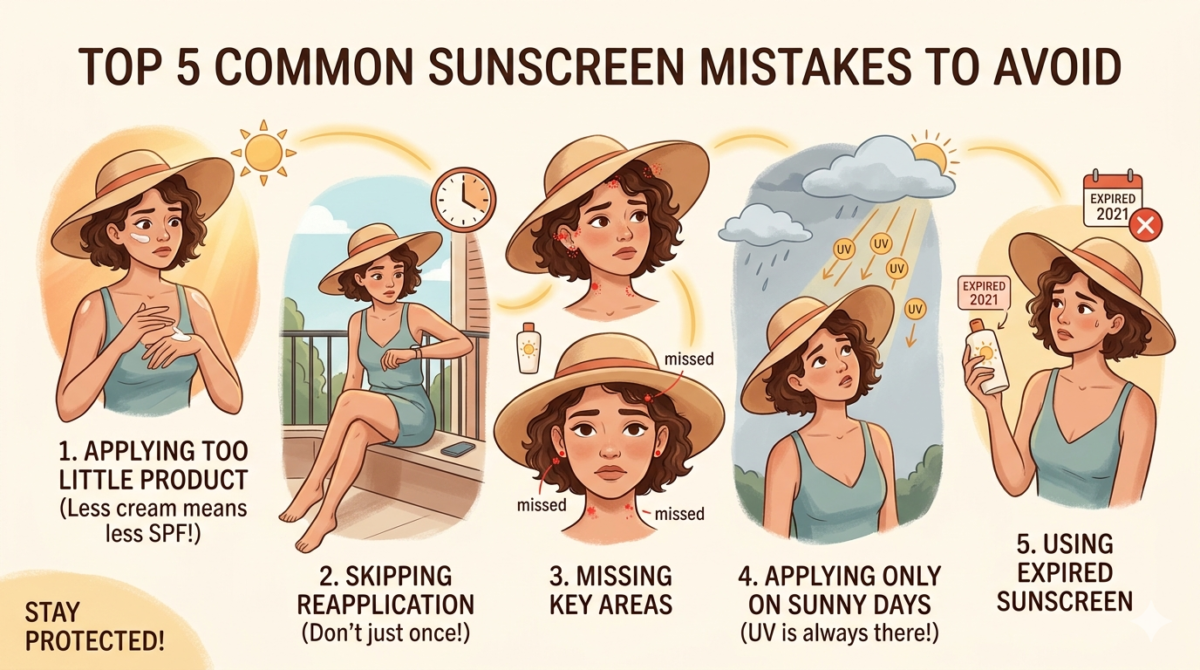
Missing Key Areas
Don’t forget your ears, neck, and hairline.
Applying SPF Only on Sunny Days
UV rays can penetrate clouds and glass windows.
Using Expired UV Prottection
Expired products may not provide reliable protection.
Read More: Which Hair Mask is The Best for Frizzy and Dry
Can You Wear Makeup Over Daily Sun Protection
Yes, you can absolutely wear makeup over your daily sun protection. In fact, dermatologists recommend applying sunscreen as the final step of your morning skincare routine and before applying foundation, concealer, or any other makeup products. This ensures your skin receives full protection from harmful UVA and UVB rays throughout the day.
After applying sunscreen, allow it to absorb into your skin for 15 to 20 minutes before starting your makeup routine. This waiting time helps the sunscreen form an even protective layer and prevents it from mixing with your makeup, resulting in a smoother finish. Rushing this step may reduce the effectiveness of your sunscreen and cause makeup to look patchy or uneven.
One common concern is how to reapply sunscreen without ruining makeup. Since sunscreen should be reapplied every two hours during prolonged sun exposure, there are several makeup-friendly options available. Sunscreen sticks are convenient for quick touch-ups and can be gently glided over the skin without smudging foundation. Powder sunscreens are another excellent choice, especially for oily and combination skin, as they help control shine while adding an extra layer of sun protection. Facial sunscreen sprays offer a fast and lightweight way to refresh your protection during the day without disturbing your makeup.
Although makeup products with SPF provide some additional protection, they should not replace a dedicated broad-spectrum sunscreen. Most people do not apply enough foundation or tinted moisturizer to achieve the SPF level mentioned on the packaging. Therefore, always use a separate sunscreen first and consider SPF makeup as an extra benefit rather than your primary source of sun protection.
By following these simple steps, you can enjoy flawless makeup while keeping your skin protected, healthy, and shielded from premature aging, pigmentation, and sun damage every day.
Additional Tips for Better Sun Protection
- Wear sunglasses when outdoors.
- Use a wide-brimmed hat for extra protection.
- Seek shade during peak sunlight hours.
- Apply sun protection every day, regardless of the weather.
- Store sun protection in a cool, dry place.
Final Thoughts
Learning the best way to apply sunblock on your face is an important step toward healthier skin. Proper application, using the correct amount, and regular reapplication can significantly improve your protection against harmful UV rays.
Sun Protection should be a non-negotiable part of your daily skincare routine. With consistent use, it can help prevent premature aging, maintain an even skin tone, and keep your skin looking healthy for years to come.
FAQs
1. What is the best way to apply sunblock on your face?
Start with a clean face, complete your morning skincare routine, then apply sunblock as the final step before makeup. Use about two finger lengths (or half a teaspoon) for your face and neck, and spread it evenly over all exposed areas.
2. How much sun protection should I use on my face?
For proper SPF protection, use approximately two finger lengths or half a teaspoon of SPF Protection for your face and neck. Using less may reduce the level of protection.
3. Should I apply SPF before or after moisturizer?
Sunblock should generally be applied after moisturizer and before makeup. If you’re using a mineral sun lotion, follow the instructions on the product label, as some formulas may vary.
4. How long before going outside should I apply SPF?
Apply sun protection 15–20 minutes before sun exposure so it has enough time to form a protective layer on your skin.
5. How often should I reapply sunblock?
Reapply SPF product every 2 hours when you’re outdoors. You should also reapply after swimming, sweating heavily, or towel drying, even if the sunblock is water-resistant.
6. Can I wear makeup over SPF product ?
Yes. Let the sun protection absorb completely before applying foundation or other makeup products. For touch-ups, use SPF product sticks, powders, or facial daily sun protection sprays.
7. Which SPF is best for daily use?
For everyday wear, SPF 30 is suitable for most people. If you spend long hours outdoors or have prolonged sun exposure, SPF 50 offers additional protection.
8. Is sunblock necessary on cloudy or rainy days?
Yes. Harmful UV rays can pass through clouds and even glass windows, so wearing sun protection every day is important regardless of the weather.
9. What type of sunblock is best for oily skin?
People with oily skin should choose a lightweight, oil-free, gel-based, and non-comedogenic sunblock to prevent excess shine and clogged pores.
10. What are the most common sunblock mistakes to avoid?
Common mistakes include applying too little SPF product, skipping reapplication, missing areas like the ears and neck, using expired daily sun protection, and only wearing sun protection on sunny days.