
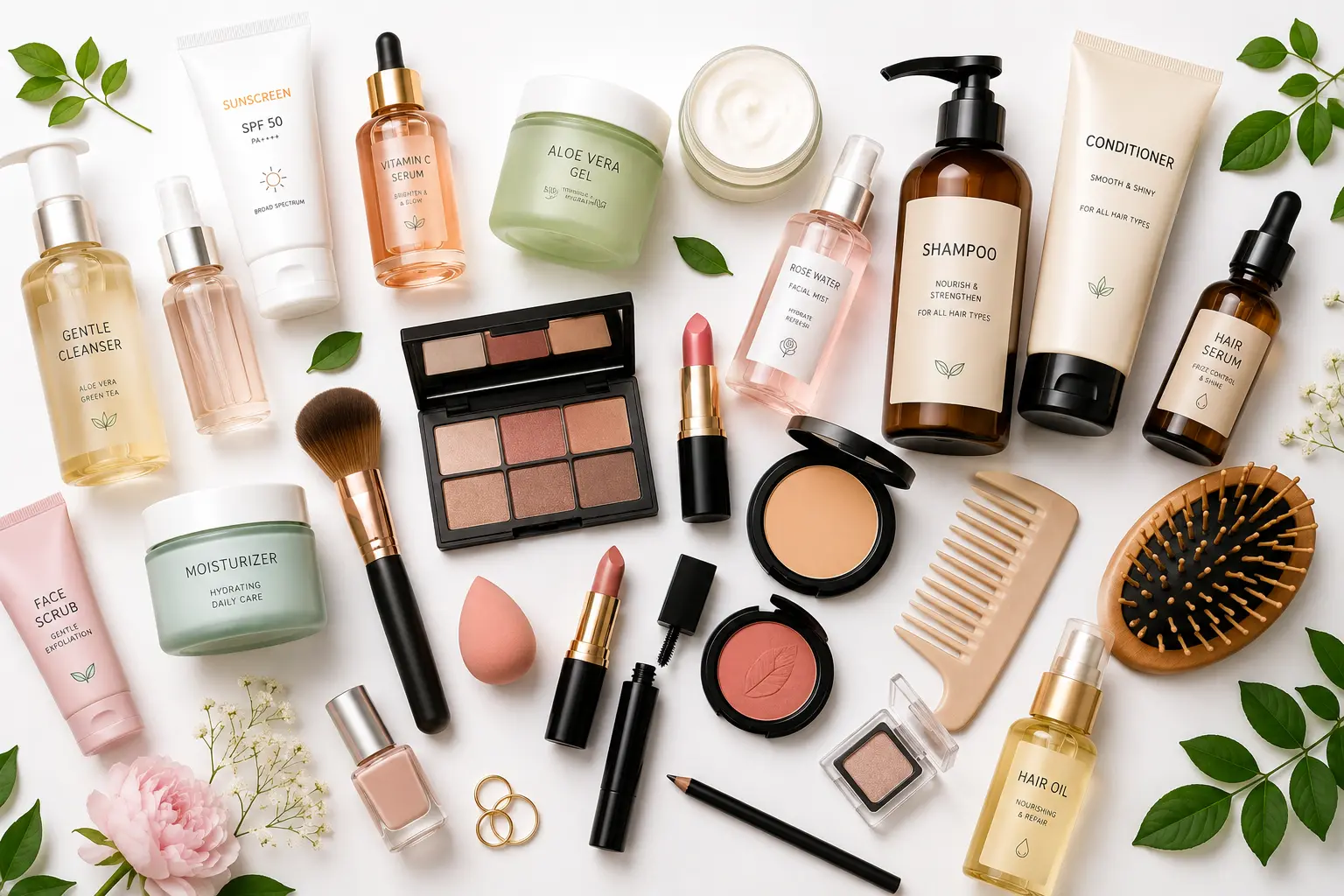
The cosmetic industry is one of the fastest-growing industries in the world. Every day, millions of people use products like face wash, moisturizer, shampoo, sunscreen, lipstick, perfume, and toothpaste. These products help people look good, feel confident, and take care of their skin, hair, and personal hygiene.
But have you ever wondered what the cosmetic industry actually is?
If you’re new to skincare or beauty, the cosmetic industry can seem confusing. There are thousands of brands, hundreds of product categories, and new trends appearing every year. Understanding how this industry works can help you make smarter buying decisions and choose products that are suitable for your skin and hair.
In this beginner-friendly guide, you’ll learn everything about the cosmetic industry in simple English. Whether you’re a skincare beginner, beauty enthusiast, student, or someone planning to start a beauty business, this guide will help you understand the basics.
What Is the Cosmetic Industry?
The cosmetic industry is the business sector that develops, manufactures, markets, and sells products designed to improve appearance, maintain personal hygiene, and care for the skin, hair, nails, lips, and body.
Cosmetic products are mainly used to:
- Clean the skin and hair
- Protect the skin from damage
- Improve appearance
- Enhance beauty naturally
- Maintain personal hygiene
- Boost self-confidence
Unlike medicines, cosmetic products are generally intended to clean, beautify, moisturize, perfume, or protect the body without treating or curing diseases.
For example:
- A face wash cleans your skin.
- A moisturizer keeps your skin hydrated.
- Sunscreen protects against harmful UV rays.
- Lipstick enhances your appearance.
- Shampoo cleans your hair.
- Perfume provides fragrance.
Today, the cosmetic industry includes much more than makeup. It also covers skincare, haircare, oral care, fragrances, personal care, men’s grooming, baby care, and even beauty devices.
Read More:Streax Professional Canvoline Shampoo & Hair Mask
Why Is the Cosmetic Industry Growing So Fast?
The cosmetic industry has experienced rapid growth over the past decade because people are becoming more aware of skincare, self-care, and personal grooming.
Several factors are driving this growth:
1.Growing Awareness of Skincare
People now understand that healthy skin needs daily care instead of only treating problems after they appear.
Simple routines such as:
- Cleansing
- Moisturizing
- Applying sunscreen
have become part of everyday life.
2. Social Media Influence
Beauty influencers, skincare experts, YouTube creators, and Instagram content have made skincare education more accessible than ever.
People can now easily learn:
- How to build a skincare routine
- Which ingredients work best
- Product reviews
- Before-and-after experiences
This has increased consumer interest in cosmetic products.
3. Better Product Innovation
Modern cosmetic products include advanced ingredients that target specific concerns such as:
- Dry skin
- Acne
- Pigmentation
- Wrinkles
- Sensitive skin
- Hair fall
Companies continue investing in research to create safer and more effective products.
4. Increasing Disposable Income
As incomes rise, many people are willing to spend more on personal care and beauty products instead of considering them luxury items.
5. Online Shopping
Buying cosmetics has become easier than ever.
Customers can compare products, read reviews, check ingredients, and order from home within minutes.
Main Categories of the Cosmetic Industry
The cosmetic industry is divided into several major categories.
Understanding these categories helps beginners choose products more easily.
1. Skincare Products
Skincare is one of the largest parts of the cosmetic industry.
Its goal is to keep skin healthy, clean, hydrated, and protected.
Popular skincare products include:
- Face wash
- Moisturizer
- Sunscreen
- Toner
- Serum
- Face masks
- Eye cream
- Lip balm
- Exfoliator
People choose skincare products based on concerns like:
- Oily skin
- Dry skin
- Combination skin
- Acne
- Dark spots
- Fine lines
- Sensitive skin
Beginner Tip
A simple skincare routine with cleanser, moisturizer, and sunscreen is enough for most beginners.
Avoid buying too many products at once.
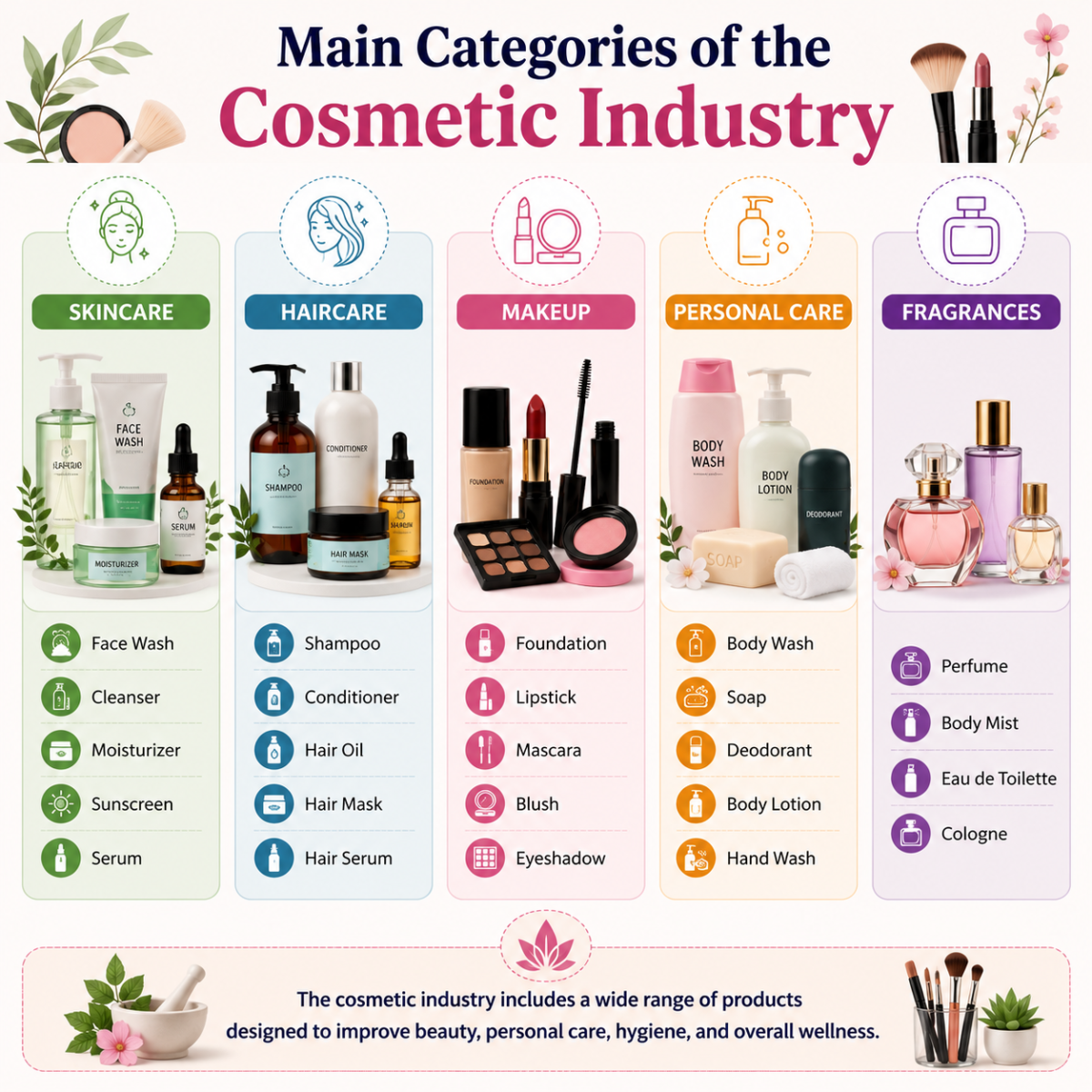
2. Haircare Products
Haircare focuses on maintaining healthy hair and scalp.
Common products include:
- Shampoo
- Conditioner
- Hair oil
- Hair serum
- Hair mask
- Hair cream
- Dry shampoo
- Scalp treatment
Haircare products are designed for concerns such as:
- Hair fall
- Dandruff
- Dry hair
- Frizzy hair
- Damaged hair
- Oily scalp
Healthy hair begins with a healthy scalp, so scalp care is becoming increasingly important.
3. Makeup Products
Makeup products enhance facial features and create different beauty looks.
Popular makeup products include:
- Foundation
- Concealer
- Primer
- Compact powder
- Lipstick
- Lip gloss
- Mascara
- Eyeliner
- Kajal
- Eyeshadow
- Blush
- Highlighter
Modern makeup also includes skincare benefits, such as moisturizing ingredients and SPF protection.
Read More:Best Long Lasting Lipstick Brands in India (2026)
4. Personal Care Products
Personal care products help maintain cleanliness and freshness throughout the day.
Examples include:
- Soap
- Body wash
- Hand wash
- Deodorant
- Antiperspirant
- Body lotion
- Talcum powder
- Intimate hygiene products
These products are used daily by people of all age groups.
How Are Cosmetic Products Made?
Many people think cosmetic products are simply mixed together in a factory. In reality, creating a safe and effective cosmetic product is a detailed process that involves scientists, quality experts, manufacturers, and designers.
Let’s understand the journey of a cosmetic product from idea to store shelf.
Step 1: Market Research
Every successful cosmetic product starts with research.
Companies study:
- Customer needs
- Current beauty trends
- Common skin concerns
- Competitor products
- Market demand
For example, if more people are searching for products to reduce acne marks, companies may develop a serum containing ingredients like niacinamide or vitamin C.
Research also helps brands understand what consumers expect, such as:
- Fragrance-free formulas
- Vegan products
- Lightweight moisturizers
- Sunscreens without a white cast
- Products suitable for sensitive skin
Step 2: Formula Development
Once the idea is finalized, cosmetic chemists begin creating the product formula.
They carefully choose ingredients that are:
- Safe
- Stable
- Effective
- Compatible with one another
For example, when making a moisturizer, chemists may combine:
- Water
- Humectants to attract moisture
- Emollients to soften the skin
- Preservatives to prevent bacterial growth
- Antioxidants to protect the formula
The right balance of ingredients is essential to ensure the product works well and remains stable over time.
Step 3: Laboratory Testing
Before manufacturing begins, the formula undergoes several laboratory tests.
These tests help check:
- Product stability
- Texture
- pH balance
- Safety
- Shelf life
- Packaging compatibility
For example, a sunscreen must remain effective even after being stored in warm weather for several months.
Step 4: Manufacturing
Once testing is complete, production starts in manufacturing facilities that follow strict hygiene and quality standards.
Large mixing machines prepare the product in controlled batches.
During manufacturing, companies monitor:
- Ingredient quality
- Temperature
- Mixing time
- Product consistency
- Hygiene standards
This helps ensure that every bottle or tube meets the same quality standards.
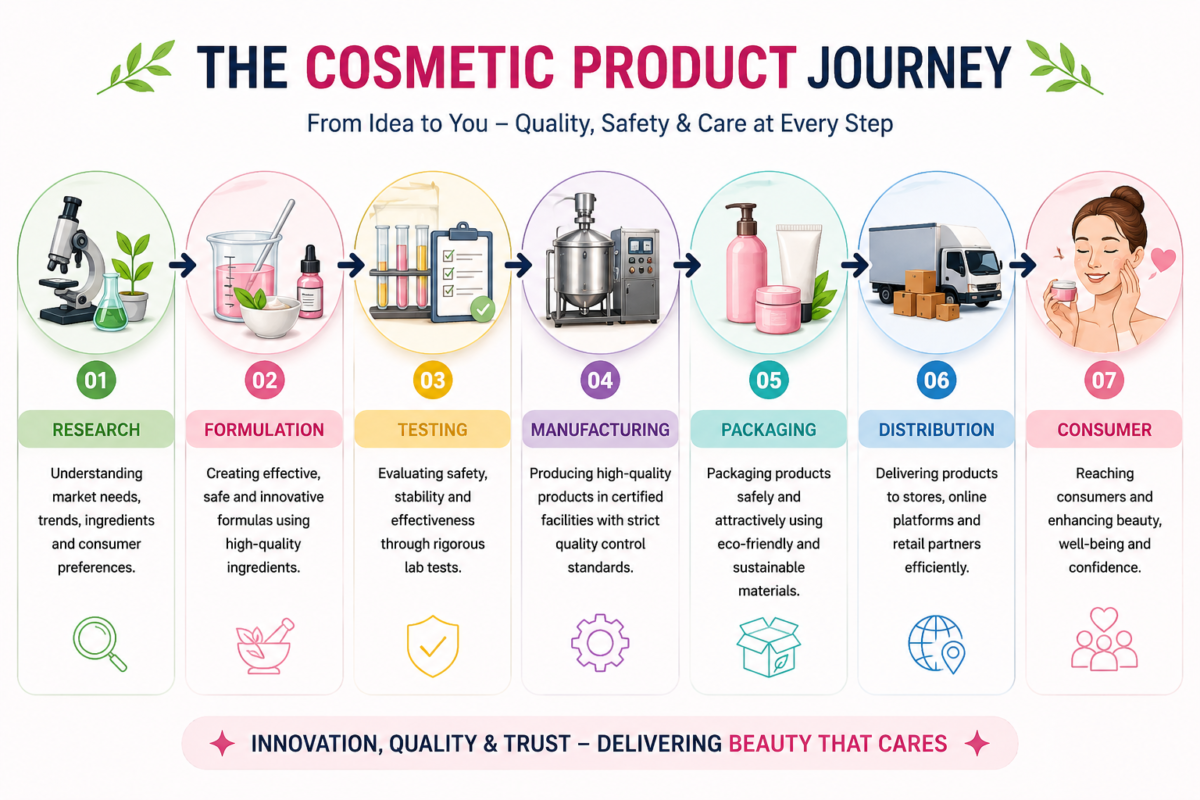
Step 5: Packaging
Packaging is more than just making a product look attractive.
Good packaging protects the formula from:
- Air
- Moisture
- Sunlight
- Contamination
For example:
- Vitamin C serums are often packed in dark-colored bottles because sunlight can reduce their effectiveness.
- Airless pumps help protect sensitive ingredients from oxidation.
Modern brands also focus on eco-friendly and recyclable packaging.
Step 6: Quality Control
Before products leave the factory, they undergo final quality checks.
Experts inspect:
- Appearance
- Fragrance
- Texture
- Weight
- Packaging
- Label accuracy
Only products that pass these checks are approved for sale.
Read More : Best Sunscreen for Oily Skin: Your Complete Guide to Matte, Protected Skin
Step 7: Distribution
After production, products are shipped to:
- Retail stores
- Pharmacies
- Beauty shops
- Online marketplaces
- Brand websites
Consumers can then purchase them through physical stores or online platforms.
Common Ingredients Used in Cosmetics
Every cosmetic product contains a combination of ingredients, each serving a specific purpose.
Understanding these ingredients helps beginners choose products more confidently.
1. Humectants
Humectants attract water to the skin and help keep it hydrated.
Common examples include:
- Glycerin
- Hyaluronic Acid
- Aloe Vera
- Panthenol
Best for:
- Dry skin
- Dehydrated skin
- Combination skin
2. Emollients
Emollients soften the skin and help reduce roughness.
Examples:
- Shea Butter
- Squalane
- Coconut Oil
- Jojoba Oil
- Cocoa Butter
These ingredients improve the skin barrier and reduce moisture loss.
3. Occlusives
Occlusives form a protective layer on the skin to lock in moisture.
Common examples:
- Petroleum Jelly
- Beeswax
- Lanolin
- Dimethicone
They are especially helpful for very dry or cracked skin.
5. Preservatives
Preservatives help prevent the growth of bacteria, mold, and yeast in cosmetic products.
Without preservatives, many water-based products could spoil quickly.
Common preservatives include:
- Phenoxyethanol
- Sodium Benzoate
- Potassium Sorbate
When used within approved limits, these ingredients help keep products safe throughout their shelf life.
6. Fragrances
Fragrances give products a pleasant scent.
They can be:
- Natural
- Synthetic
- Essential oil-based
If you have sensitive skin, choosing fragrance-free products may help reduce the risk of irritation.
How to Choose Safe Cosmetic Products
Choosing cosmetics can feel overwhelming because thousands of products are available.
These practical tips can help beginners make better decisions.
1. Know Your Skin Type
Identify whether your skin is:
- Oily
- Dry
- Combination
- Normal
- Sensitive
A product that works well for oily skin may not be suitable for dry or sensitive skin.
2. Read the Ingredient List
Instead of buying products based only on social media trends, take a few minutes to read the ingredient label.
Look for ingredients that match your skincare goals.
For example:
- Ceramides for a weakened skin barrier
- Salicylic Acid for acne-prone skin
- Hyaluronic Acid for dehydration
- Niacinamide for uneven skin tone
3. Perform a Patch Test
Before using a new product on your entire face, apply a small amount behind your ear or on your inner arm.
Wait 24 hours to check for irritation or allergic reactions.
This simple step can help prevent unnecessary skin problems.
4. Avoid Buying Only Because of Trends
A product that becomes viral online is not automatically the best choice for everyone.
Always choose products based on your:
- Skin type
- Skin concerns
- Personal needs
5. Keep Your Routine SimpleBeginners often buy too many products at once.
A basic routine is usually enough:
- Gentle cleanser
- Moisturizer
- Sunscreen (morning)
- One treatment product if needed
Adding too many active ingredients together can sometimes irritate the skin.
Latest Trends in the Cosmetic Industry (2026)
The cosmetic industry is constantly evolving as consumer preferences, technology, and scientific research continue to change. Today’s buyers are more informed than ever and expect products that are not only effective but also safe, sustainable, and suitable for their unique skin needs.
Here are some of the biggest trends shaping the cosmetic industry.
1. Personalized Skincare
Consumers are moving away from the “one product for everyone” approach.
Many brands now recommend products based on:
- Skin type
- Skin concerns
- Age
- Climate
- Lifestyle
For example, two people with oily skin may still need different routines if one has acne and the other has dehydration.
Personalized skincare helps consumers choose products that better match their individual needs.
2. Clean Beauty
Clean beauty continues to gain popularity.
People increasingly prefer products that are:
- Gentle on the skin
- Transparent about ingredients
- Free from unnecessary additives
- Suitable for sensitive skin
Instead of focusing only on marketing claims, consumers are learning to read ingredient lists and choose products backed by science.
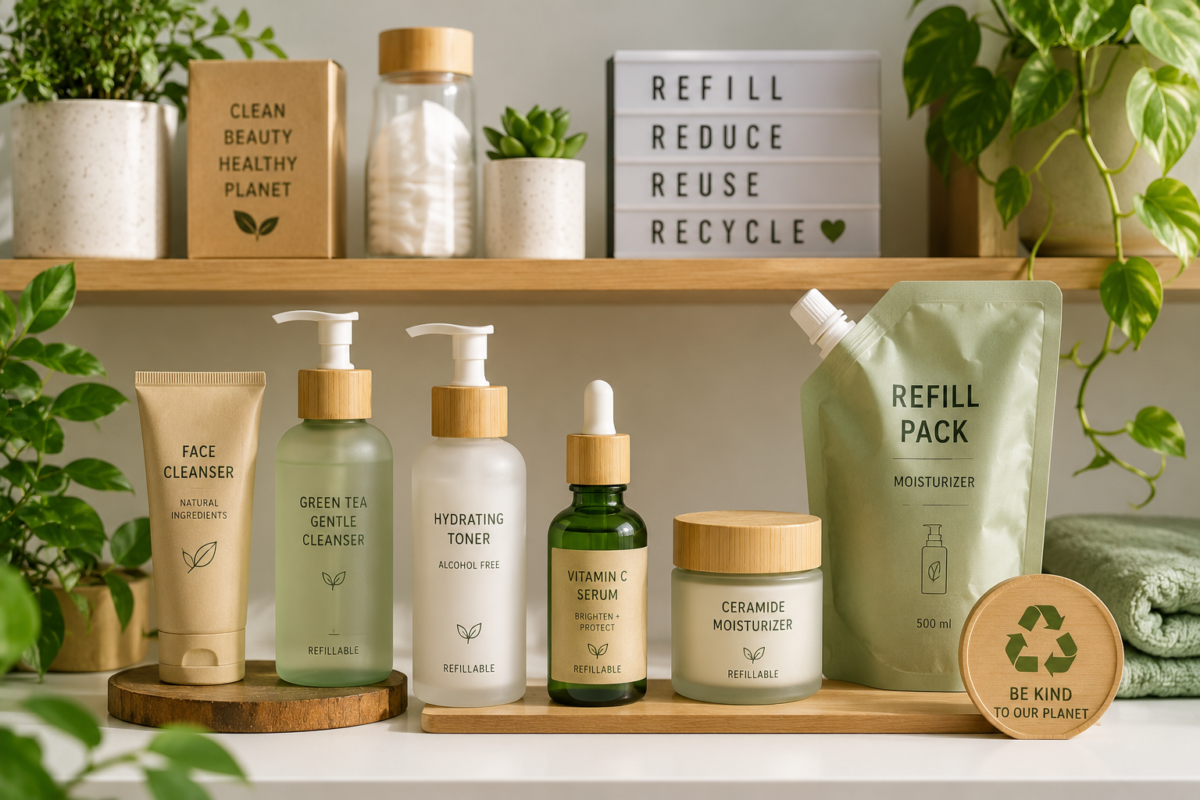
3. Sustainable Beauty
Environmental awareness has become an important factor in purchasing decisions.
Many cosmetic companies now focus on:
- Recyclable packaging
- Refillable containers
- Reduced plastic usage
- Eco-friendly manufacturing
- Responsible ingredient sourcing
Sustainable beauty helps reduce environmental impact while encouraging responsible production practices.
4. Multi-Functional Products
Busy lifestyles have increased demand for products that perform multiple functions.
Popular examples include:
- Moisturizers with SPF
- Foundations containing skincare ingredients
- Lip balms with sun protection
- Tinted sunscreens
- BB and CC creams
These products simplify daily routines without requiring numerous separate steps.
5. Science-Based Skincare
Consumers now look beyond attractive packaging and celebrity endorsements.
Ingredients such as:
- Niacinamide
- Ceramides
- Peptides
- Vitamin C
- Hyaluronic Acid
have become popular because they are supported by scientific research and widely recommended for specific skincare goals.
6. Men’s Grooming Products
The men’s grooming market has expanded significantly.
Today’s products include:
- Face washes
- Moisturizers
- Beard oils
- Hair styling products
- Sunscreens
- Anti-aging creams
More men are adopting regular skincare routines, making this one of the industry’s fastest-growing segments.
7. Beauty Technology
Technology is changing how people shop for cosmetics.
Many brands now offer:
- Virtual makeup try-ons
- AI-powered skincare recommendations
- Online skin analysis tools
- Personalized product suggestions
- Digital consultations
These innovations help consumers make more informed purchasing decisions.
Challenges Facing the Cosmetic Industry
Although the cosmetic industry continues to grow, it also faces several important challenges.
Understanding these challenges helps consumers make smarter choices and encourages brands to improve their products and practices.
1. Counterfeit Products
Fake cosmetic products remain a major concern.
Counterfeit products may contain:
- Unsafe ingredients
- Incorrect formulations
- Poor-quality packaging
- Harmful contaminants
Buying from authorized retailers and trusted websites helps reduce this risk.
2. Consumer Misinformation
Social media has made beauty information more accessible, but not all advice is accurate.
Common myths include:
- Natural ingredients are always safer.
- Expensive products always work better.
- More products mean better results.
- Skincare should deliver overnight changes.
Reliable information from dermatologists, scientific studies, and trusted educational sources is more valuable than viral trends.
3. Ingredient Transparency
Modern consumers want to know exactly what they are applying to their skin.
Brands are increasingly expected to:
- Clearly list ingredients
- Explain product benefits
- Avoid misleading claims
- Provide accurate usage instructions
Transparency helps build trust between companies and consumers.
4. Environmental Concerns
The cosmetic industry generates significant packaging waste each year.
Companies are working to reduce their environmental impact by:
- Using recyclable materials
- Offering refill options
- Reducing unnecessary packaging
- Improving manufacturing efficiency
Consumers can also contribute by recycling cosmetic containers whenever possible.
5. Intense Market Competition
Thousands of new beauty brands enter the market every year.
This creates strong competition and makes it challenging for companies to:
- Build customer trust
- Maintain product quality
- Offer innovative solutions
- Differentiate themselves from competitors
Brands that focus on quality, safety, and customer education are more likely to achieve long-term success.
Conclusion
The cosmetic industry is much more than makeup and beauty products. It is a global industry that combines science, innovation, manufacturing, marketing, and consumer education to create products that support skincare, haircare, hygiene, and personal grooming.
From gentle face cleansers and moisturizers to advanced serums and sunscreens, cosmetic products have become an important part of daily life. As the industry continues to grow, consumers have access to better ingredients, smarter formulations, and more personalized solutions than ever before.
However, choosing the right products is just as important as having many options. Instead of following every viral trend, focus on understanding your skin type, reading ingredient lists, and building a simple, consistent skincare routine. Healthy skin comes from regular care, patience, and informed choices—not from using the most expensive products.
Whether you’re a skincare beginner, a beauty enthusiast, or someone planning to start a career or business in cosmetics, learning how the cosmetic industry works will help you make smarter decisions. The future of the industry looks bright, with continued advancements in technology, sustainable practices, and science-backed skincare that benefit both consumers and the environment.
Remember, beautiful skin isn’t about perfection—it’s about keeping your skin healthy, protected, and cared for every day.
Frequently Asked Questions (FAQs)
1. What is the cosmetic industry in simple words?
The cosmetic industry is the business of making and selling products that help clean, protect, and improve the appearance of the skin, hair, nails, and body. It includes skincare, makeup, haircare, personal care, fragrances, men’s grooming products, and beauty tools.
2. What is the difference between cosmetics and skincare?
Cosmetics are products that mainly enhance your appearance, such as lipstick, foundation, mascara, and blush. Skincare products, including cleansers, moisturizers, serums, and sunscreens, are designed to maintain and improve the health of your skin.
3. What are the main categories of the cosmetic industry?
The cosmetic industry includes several major categories, such as skincare, haircare, makeup, personal care, fragrances, men’s grooming products, and beauty tools and accessories.
4. Are cosmetic products safe to use every day?
Yes, most cosmetic products are safe for daily use when purchased from trusted brands and used according to the instructions. It is always a good idea to perform a patch test before trying a new product, especially if you have sensitive skin.
5. How do I choose the right cosmetic products for my skin?
Start by identifying your skin type, whether it is oily, dry, combination, normal, or sensitive. Then choose products based on your skin concerns, such as acne, pigmentation, dryness, or signs of aging. Reading the ingredient list can also help you make better choices.
6. Is natural skincare better than synthetic skincare?
Not necessarily. Both natural and synthetic ingredients can be safe and effective when properly formulated and tested. The overall quality of the product and how well it suits your skin are more important than whether it is labeled as natural or synthetic.