The Ultimate Guide: When to Apply Sunscreen During Makeup

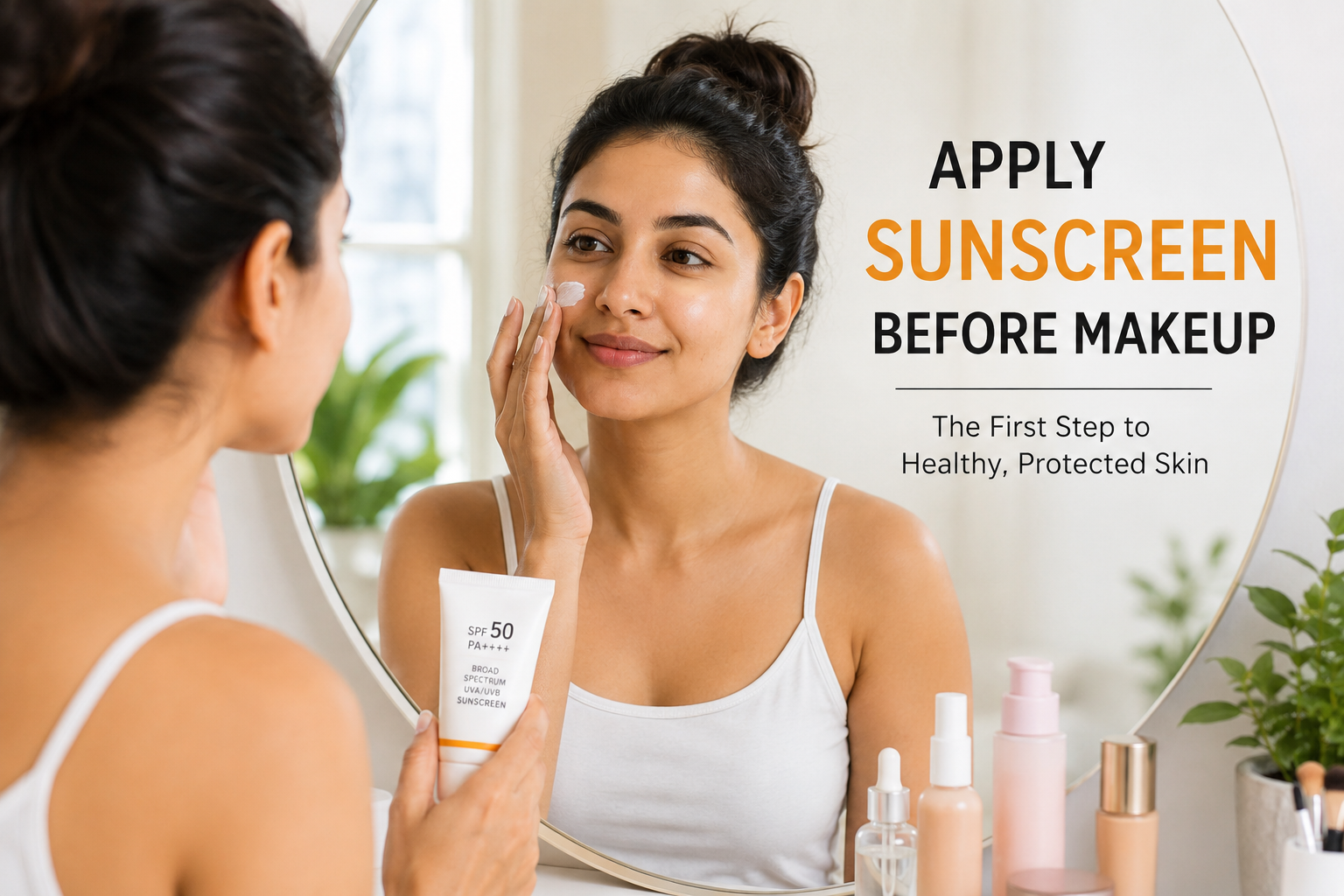
Woman applying sunscreen on her face before makeup as part of a daily skincare routine.

Have you ever stood in front of the mirror wondering, “Should I apply sunscreen before makeup or after foundation?” If yes, you’re not alone. It is one of the most common skincare questions among beginners.

Many people spend time choosing the perfect foundation, concealer, and primer but often get confused about where sunscreen fits into their routine. Some apply it after makeup, while others rely only on the SPF in their foundation. Unfortunately, both mistakes can leave your skin less protected from harmful UV rays.

Sunscreen is much more than a skincare product—it is your skin’s daily defense against sun damage. Whether you’re stepping outside for a few minutes, driving to work, or sitting near a window, your skin is exposed to ultraviolet (UV) rays that can cause tanning, pigmentation, wrinkles, and premature aging over time.

In this beginner-friendly guide, you’ll learn:

  • The correct time to apply sunscreen during your makeup routine
  • Whether sunscreen goes before or after makeup
  • The perfect skincare and makeup order
  • How to get the best sun protection without ruining your makeup
  • Common sunscreen mistakes you should avoid

Why Sunscreen Is the Most Important Step in Your Skincare Routine

Many people believe sunscreen is only necessary during summer vacations or beach trips. In reality, your skin is exposed to UV rays every single day—even when the weather is cloudy.

Sun damage doesn’t happen overnight. It builds up slowly over months and years, eventually leading to visible skin concerns.

Daily sun exposure can cause:

  • Sunburn
  • Tanning
  • Dark spots
  • Pigmentation
  • Uneven skin tone
  • Fine lines
  • Premature wrinkles
  • Loss of skin elasticity

Even if you have naturally healthy skin, skipping sunscreen regularly can make these problems appear much earlier than expected.

Benefits of Applying Sunscreen Every Day

A good broad-spectrum sunscreen offers several long-term benefits:

  • Protects against harmful UVA and UVB rays
  • Reduces the risk of sunburn
  • Helps prevent premature aging
  • Minimizes pigmentation and acne marks
  • Maintains an even skin tone
  • Supports healthier-looking skin over time

Should You Apply Sunscreen Before or After Makeup?

The answer is simple:

Always apply sunscreen before makeup.

Sunscreen is part of your skincare routine—not your makeup routine.

For sunscreen to provide the SPF protection mentioned on the label, it needs to be applied directly onto your skin after moisturizer and before any makeup products.

Correct Order

  • Cleanser
  • Toner (Optional)
  • Serum
  • Moisturizer
  • Sunscreen
  • Primer
  • Foundation
  • Concealer
  • Powder
  • Setting Spray

Following this order allows sunscreen to create an even protective layer before makeup is applied.

Why Sunscreen Should Never Be Applied After Makeup

Applying sunscreen over foundation or concealer may seem convenient, but it often leads to uneven protection and can ruin your makeup.

If sunscreen is applied after makeup, it may:

  • Smudge foundation
  • Lift concealer
  • Create patchy coverage
  • Reduce SPF effectiveness
  • Leave some areas of the face unprotected

That’s why dermatologists recommend applying sunscreen on clean, moisturized skin and allowing it to absorb before starting makeup.

Read More: Best Face Wash for Glowing Skin: A Complete Guide for Healthy and Radiant Skin

The Perfect Sunscreen and Makeup Routine: Step-by-Step
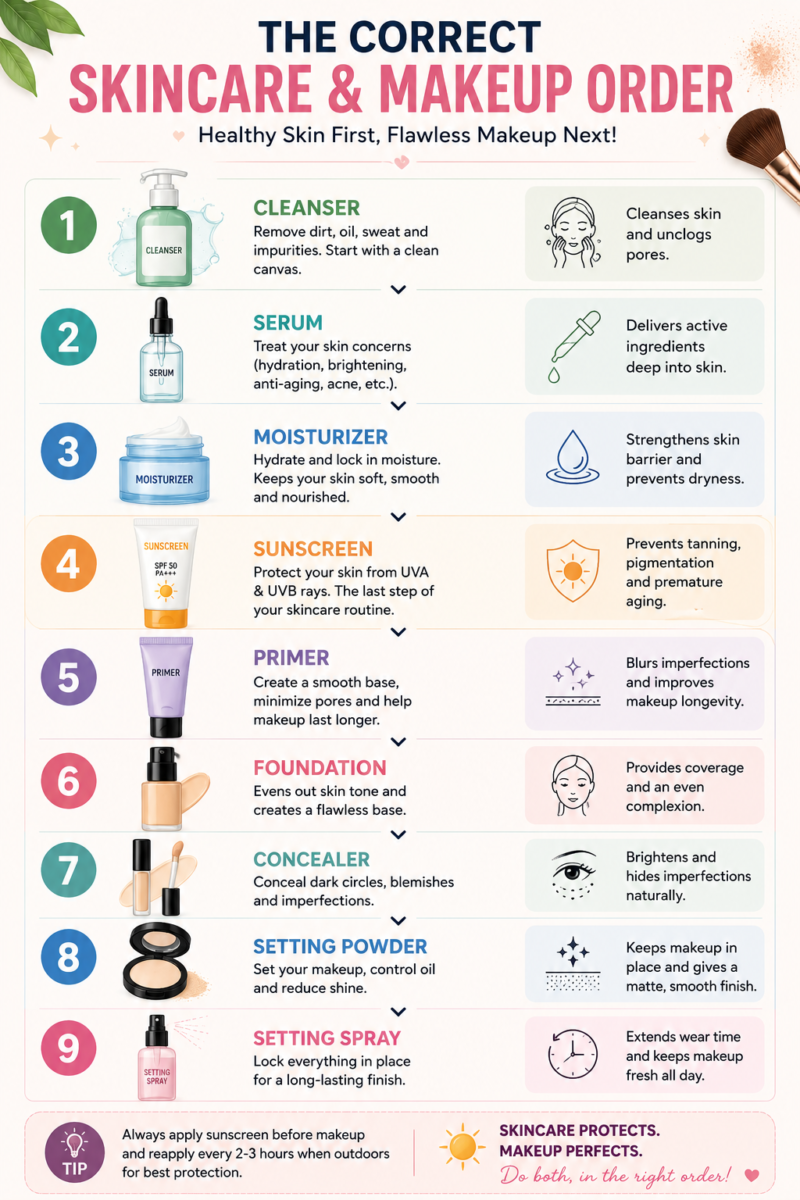
A proper routine helps your sunscreen work effectively while giving you a smooth makeup finish.

Step 1: Cleanse Your Face

Start with a gentle face cleanser to remove excess oil, dirt, sweat, and impurities.

Clean skin helps skincare products absorb more effectively and creates a fresh base for makeup.

Pat your face dry with a soft towel instead of rubbing your skin.

Step 2: Apply Your Serum

After cleansing, apply any treatment serum that suits your skin concern.

For example:

  • Vitamin C Serum for brightening and antioxidant protection
  • Niacinamide Serum for oily or acne-prone skin
  • Hyaluronic Acid Serum for deep hydration

Allow the serum to absorb for about one minute before moving to the next step.

Step 3: Moisturize Your Skin

Many people with oily skin skip moisturizer, but this is a common mistake.

A lightweight moisturizer helps:

  • Keep the skin hydrated
  • Strengthen the skin barrier
  • Prevent dryness
  • Create a smoother base for sunscreen and makeup

Choose a moisturizer based on your skin type and let it absorb for a minute or two.

Step 4: Apply Sunscreen Generously

Now comes the most important step.

Choose a sunscreen that offers:

  • SPF 30 or SPF 50
  • Broad-spectrum protection
  • PA+++ or PA++++ rating
  • A lightweight, non-greasy formula suitable for daily use

How Much Sunscreen Should You Use?

A common mistake is applying too little sunscreen.

For your face and neck, use approximately two fingers’ length of sunscreen or about ¼ teaspoon.

Apply it evenly across:

  • Forehead
  • Cheeks
  • Nose
  • Chin
  • Neck
  • Ears
  • Hairline

Instead of rubbing aggressively, gently spread the product until it forms an even layer.

Step 5: Wait Before Applying Makeup

This is one step many people overlook.

After applying sunscreen, wait 5–10 minutes before applying primer or foundation.

This waiting time allows the sunscreen to settle properly and form an even protective film on your skin.

Skipping this step may cause:

  • Makeup pilling
  • Uneven foundation
  • Patchiness
  • Reduced sun protection

Use this short break to style your hair, choose your outfit, or prepare the rest of your makeup products.

Step 6: Apply Primer

Once the sunscreen has settled, apply a thin layer of primer.

A good primer helps:

  • Blur pores
  • Control excess oil
  • Improve makeup longevity
  • Create a smoother finish

Only a small amount is needed.

Step 7: Complete Your Makeup

Now continue with your regular makeup routine.

Apply products in this order:

  • Foundation
  • Concealer
  • Cream products
  • Setting powder
  • Blush
  • Bronzer
  • Highlighter
  • Eye makeup
  • Lip products
  • Setting spray

Because your sunscreen was applied correctly underneath, your makeup will sit better while your skin remains protected from UV damage throughout the day.

Read More:Best Ayurvedic Skin Care Products in India

When to Apply Sunscreen in Your Skincare Routine

One of the biggest skincare mistakes beginners make is applying products in the wrong order. Even if you buy an expensive sunscreen with SPF 50, it won’t provide full protection if it’s not applied correctly.

The good news is that the right skincare order is simple to follow.

The Correct Skincare Order

Follow this routine every morning:

  1. Cleanser
  2. Toner (Optional)
  3. Serum
  4. Eye Cream (Optional)
  5. Moisturizer
  6. Sunscreen
  7. Primer
  8. Makeup

A simple way to remember it is:

Skincare → Sunscreen → Makeup

Sunscreen should always be the last step of your skincare routine and the first step before makeup.

This allows it to form an even protective layer over your skin before cosmetic products are applied.

How Long Should You Wait After Applying Sunscreen?

Applying sunscreen is only half the job.

You also need to give it enough time to settle before moving on to makeup.

Experts generally recommend waiting 5–10 minutes before applying primer or foundation.

This waiting time helps:

  • Form an even SPF layer
  • Reduce product pilling
  • Prevent streaky foundation
  • Improve makeup longevity

If you’re in a hurry, even waiting five minutes is much better than applying foundation immediately.

What Happens If You Apply Makeup Too Soon?

Many people rush through their morning routine and apply foundation immediately after sunscreen.

This can cause several problems.

Common issues include:

  • Makeup rolling off the skin
  • Patchy foundation
  • Uneven sunscreen coverage
  • Reduced SPF protection
  • Cakey makeup finish

Giving sunscreen a few minutes to absorb makes a noticeable difference in both skin protection and makeup application.

Sunscreen or Primer First? (And Other Common Questions)

Still confused about the correct order? Don’t worry—these are some of the most common questions people ask when combining sunscreen with makeup.
Can You Apply Makeup After Sunscreen?

Yes, you can—and you should. Once your sunscreen has fully absorbed into your skin, it’s perfectly safe to apply your makeup. Waiting about 10–15 minutes allows the sunscreen to form an even protective layer before you start with primer, foundation, or concealer.

When applied correctly, your makeup won’t affect your sunscreen’s performance, and you’ll enjoy both sun protection and a smooth makeup finish.

Sunscreen or Foundation First?

Always apply sunscreen before foundation. Sunscreen is an essential skincare product, while foundation is a makeup product. Applying sunscreen first ensures that your skin receives proper UV protection before any cosmetic products are layered on top.

Even if your foundation contains SPF, it shouldn’t replace a dedicated sunscreen, as most people don’t apply enough foundation to achieve the advertised level of protection.

Can You Apply Sunscreen After Foundation?

For your first application of the day, it’s not recommended. Sunscreen works best when it is applied directly to clean, moisturized skin. Applying it over foundation can disturb your makeup, create uneven coverage, and reduce the effectiveness of your SPF.

If you need extra protection later in the day, there are makeup-friendly options such as sunscreen sprays, sticks, or powder sunscreens that make reapplication much easier.

Should Sunscreen Be Applied Before or After Foundation?

Sunscreen should always be applied before foundation. It should be the final step in your skincare routine and the first step before makeup. This allows it to create a protective barrier on your skin, helping shield it from harmful UVA and UVB rays.

After allowing the sunscreen to absorb completely, you can continue with primer, foundation, and the rest of your makeup routine without compromising your sun protection.

Read More: Top 10 Natural Colours for Lipstick (Naturally Derived Pigments Guide)

Sunscreen or Primer First?

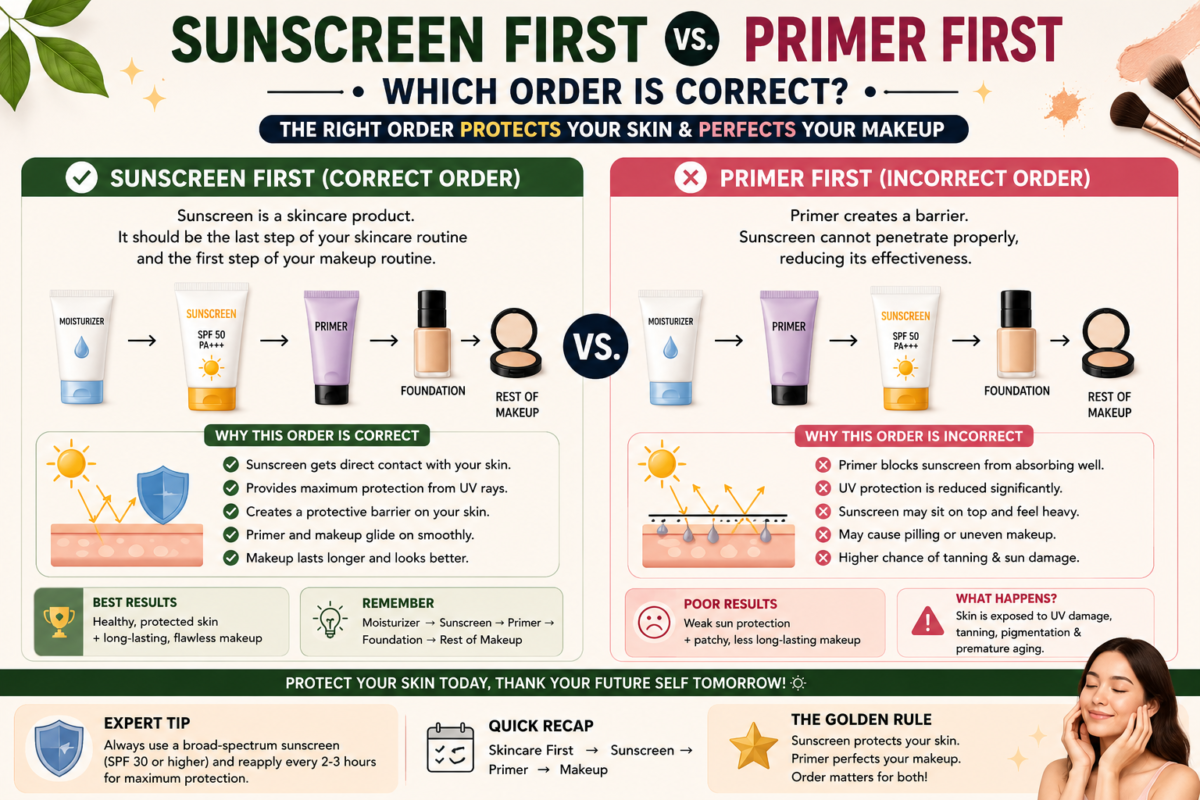
If you’re unsure whether to apply sunscreen or primer first, the answer is simple: always apply sunscreen before primer. Sunscreen is the final step in your skincare routine, while primer is the first step of your makeup routine. Applying sunscreen directly onto moisturized skin allows it to form an even protective barrier against harmful UVA and UVB rays. After waiting 5–10 minutes for the sunscreen to absorb completely, you can apply primer to create a smooth base for your foundation. Applying primer before sunscreen can reduce SPF effectiveness because sunscreen needs direct contact with your skin to provide maximum protection. For healthy skin and long-lasting makeup, follow this order: Moisturizer → Sunscreen → Primer → Foundation → Makeup.

How to Reapply Sunscreen Over Makeup
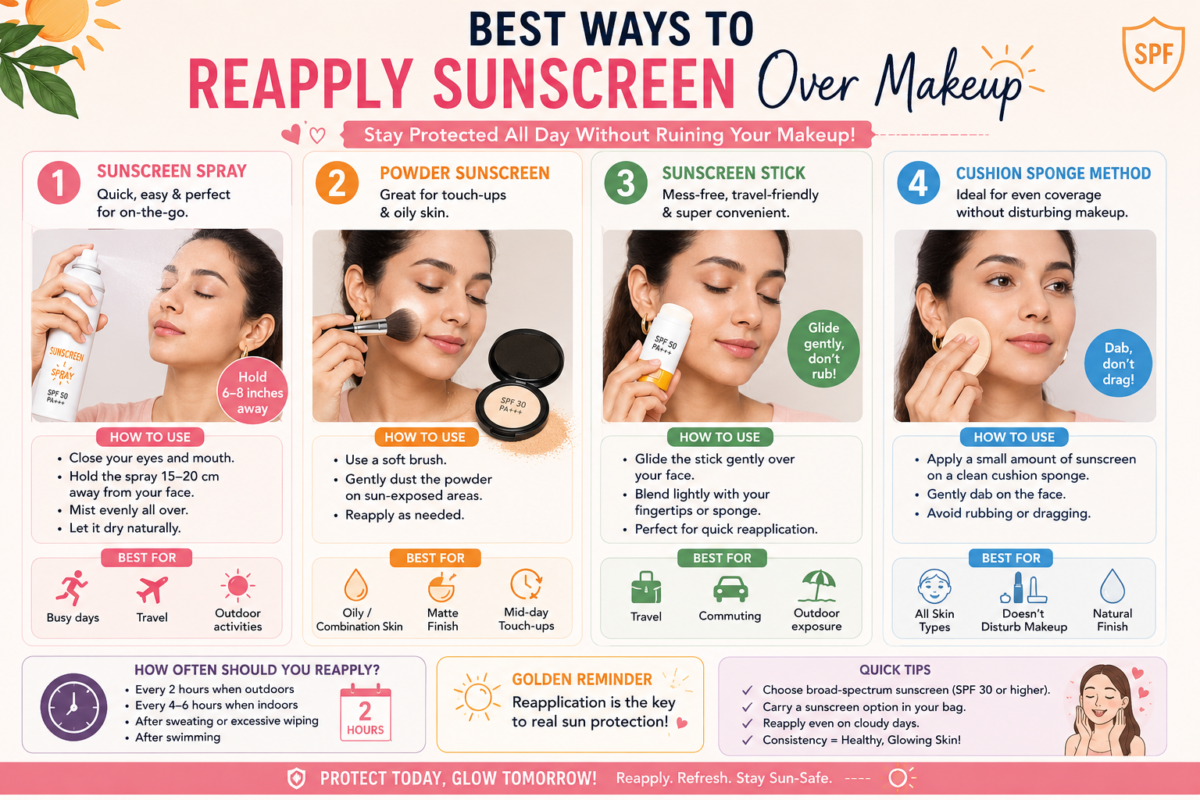
Applying sunscreen in the morning is an excellent habit, but it isn’t enough to protect your skin all day. If you’re spending time outdoors, sweating, or exposed to direct sunlight, sunscreen should be reapplied every 2 hours to maintain effective protection.

The challenge is that many people avoid reapplying sunscreen because they don’t want to ruin their makeup. Fortunately, there are several easy ways to refresh your sun protection without starting your makeup routine all over again.

Why Is Reapplying Sunscreen Important?

No sunscreen lasts all day. Over time, sweat, oil, touching your face, and sun exposure gradually reduce its effectiveness.

Reapplying sunscreen helps:

  • Maintain SPF protection
  • Prevent sunburn
  • Reduce tanning and pigmentation
  • Protect against premature aging
  • Keep your skin healthy throughout the day

Even if you’re wearing long-lasting makeup, your sunscreen still needs to be refreshed.

Read More: Monsoon Skincare Guide: How to Maintain Healthy Skin During the Rainy Season

Best Ways to Reapply Sunscreen Over Makeup

1. Use a Sunscreen Spray

A sunscreen spray is one of the easiest ways to reapply SPF without disturbing your makeup.

Hold the bottle about 15–20 cm (6–8 inches) away from your face and spray an even layer over your makeup. Let it dry naturally instead of rubbing it into your skin.

This option works well for office workers, travelers, and anyone looking for a quick touch-up during the day.

2. Apply a Powder Sunscreen

Powder sunscreens are a great choice if you have oily or combination skin.

Using a soft makeup brush, gently dust the powder over your face, paying extra attention to areas that receive the most sunlight, such as the forehead, nose, and cheeks.

In addition to SPF protection, powder sunscreen also helps absorb excess oil and keeps your makeup looking fresh.

3. Use a Sunscreen Stick

Sunscreen sticks are compact, mess-free, and travel-friendly.

Instead of rubbing the stick back and forth aggressively, gently glide it over your face and lightly blend the product with a clean makeup sponge or your fingertips.

This method is ideal for quick touch-ups while travelling or commuting.

4. Reapply with a Cushion Sponge

If you’re using a lightweight fluid sunscreen, apply a small amount onto a clean makeup sponge and gently dab it onto your skin.

Avoid dragging or rubbing the sponge across your face, as this can disturb your foundation.

Dabbing provides more even coverage while helping your makeup stay intact.

Common Sunscreen and Makeup Mistakes to Avoid

Even high-quality sunscreen won’t work properly if it’s used incorrectly. Here are some of the most common mistakes people make.

1. Skipping Sunscreen Because Your Foundation Contains SPF

This is one of the biggest skincare myths.

Although many foundations and BB creams contain SPF, they don’t provide enough protection on their own because most people apply only a thin layer.

Always apply a dedicated sunscreen before your makeup.

2. Applying Too Little Sunscreen

Using only a small drop significantly reduces the SPF protection.

For your face and neck, apply about two fingers’ length of sunscreen or approximately ¼ teaspoon.

3. Applying Makeup Immediately After Sunscreen

Many people don’t allow sunscreen enough time to settle.

Applying foundation too quickly can:

  • Cause pilling
  • Create patchy makeup
  • Reduce sunscreen effectiveness

Wait 5–10 minutes before applying primer or foundation.
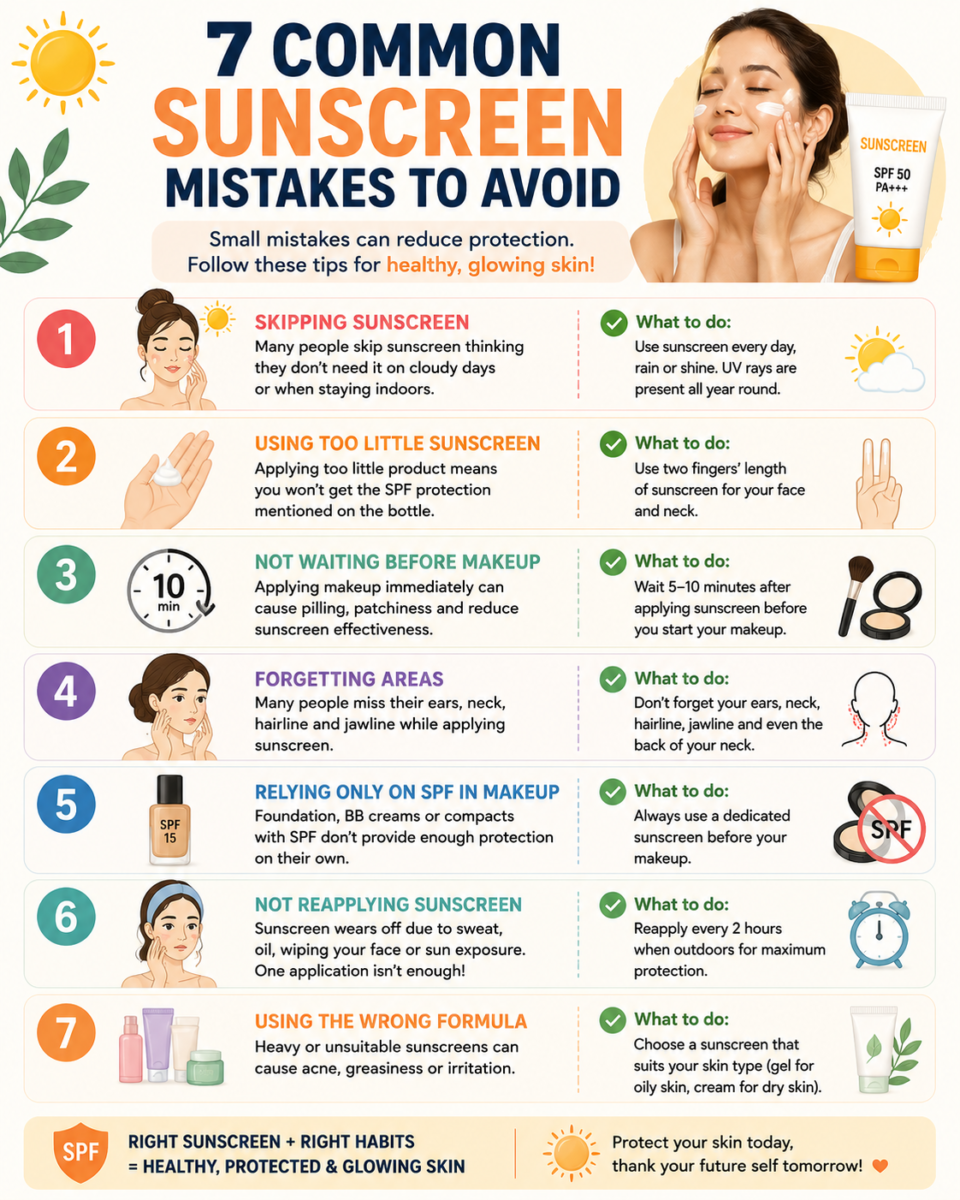
4. Forgetting the Neck and Ears

Your face isn’t the only area exposed to sunlight.

Don’t forget to apply sunscreen on your:

  • Neck
  • Ears
  • Hairline
  • Jawline
  • Back of the neck (if exposed)

These areas are often overlooked but are equally vulnerable to sun damage.

5. Mixing Sunscreen with Foundation

Some people mix sunscreen directly into their foundation to save time.

This is not recommended because it dilutes the sunscreen formula and prevents it from forming an even protective layer.

Instead, apply sunscreen first, allow it to absorb, and then apply foundation separately.

6. Choosing the Wrong Sunscreen Formula

A heavy or greasy sunscreen may cause makeup to slide off during the day.

For the best results:

  • Oily skin: Choose a gel-based or matte sunscreen.
  • Dry skin: Use a moisturizing cream sunscreen.
  • Sensitive skin: Look for fragrance-free, non-comedogenic formulas.

Using a sunscreen suited to your skin type helps improve both comfort and makeup wear.

7. Forgetting to Reapply

Applying sunscreen only once in the morning isn’t enough if you’re outdoors for several hours.

Carry a sunscreen spray, stick, or powder in your bag so you can easily reapply throughout the day.

Setting Spray or Sunscreen First?

This is another question many makeup lovers ask.

The correct order is:

Moisturizer → Sunscreen → Wait 5–10 Minutes → Primer → Foundation → Makeup → Setting Spray

Setting spray should always be the last step of your makeup routine. Its purpose is to lock your makeup in place and improve its wear time.

Sunscreen, on the other hand, needs to be applied directly to your skin before makeup so it can create an effective protective barrier.

If you’re using a setting spray that contains SPF, remember that it should only be used for touch-ups during the day. It should never replace your regular sunscreen applied in the morning.

Final Thoughts

Using sunscreen correctly is one of the simplest yet most effective ways to protect your skin. Whether you wear makeup every day or prefer a minimal skincare routine, sunscreen should never be skipped.

The key to getting maximum SPF protection is following the correct order. Always apply sunscreen after your moisturizer and before your primer or foundation. Give it a few minutes to absorb, then continue with your makeup as usual. This simple habit helps protect your skin from UV damage while ensuring your makeup looks smooth and lasts longer.

Remember that sunscreen isn’t just for sunny days or beach vacations. Harmful UV rays are present throughout the year, even on cloudy days and indoors near windows. That’s why daily sunscreen application—and reapplication when needed—is essential for maintaining healthy, youthful-looking skin.

By following the tips in this guide, you can confidently build a skincare and makeup routine that offers both excellent sun protection and a flawless finish. Consistency is the secret to healthier skin, so make sunscreen a non-negotiable part of your daily routine.

Frequently Asked Questions (FAQs)

1. Should I apply sunscreen before or after makeup?

Always apply sunscreen before makeup. It should be the last step of your skincare routine and the first step before primer, foundation, or any other makeup products. This allows the sunscreen to create an even protective barrier on your skin.


2. Should sunscreen be applied before or after primer?

Sunscreen should always be applied before primer. After applying sunscreen, wait 5–10 minutes for it to absorb completely before using primer.


3. Can I wear foundation over sunscreen?

Yes. Once your sunscreen has absorbed properly, you can apply foundation, concealer, and the rest of your makeup without affecting your sun protection.


4. Can I skip sunscreen if my foundation has SPF?

No. SPF in foundation or BB cream is not enough to provide full sun protection because most people don’t apply enough makeup to achieve the advertised SPF level. Always use a dedicated sunscreen first.


5. How much sunscreen should I apply to my face?

Dermatologists recommend using approximately two fingers’ length of sunscreen or about ¼ teaspoon for your face and neck to achieve the SPF protection listed on the product.


6. How long should I wait after applying sunscreen before makeup?

Wait around 5–10 minutes before applying primer or foundation. This allows the sunscreen to form an even protective layer and helps prevent makeup from becoming patchy.


7. How often should I reapply sunscreen?

If you’re outdoors, reapply sunscreen every 2 hours. If you’re mostly indoors, reapplication every 4–6 hours is usually sufficient, especially if you’re near windows or exposed to sunlight.


8. Can I reapply sunscreen without removing my makeup?

Yes. You can reapply sunscreen over makeup using SPF setting sprays, sunscreen sticks, or powder sunscreens. These options help maintain protection without disturbing your makeup.


9. Does sunscreen make makeup look greasy?

Not always. Choosing a lightweight, non-greasy sunscreen designed for your skin type helps create a smooth base for makeup. Gel-based sunscreens work well for oily skin, while hydrating formulas are ideal for dry skin.


10. Is sunscreen necessary on cloudy or rainy days?

Yes. Up to 80% of UV rays can penetrate clouds, so sunscreen should be applied every day, regardless of the weather. Daily use helps protect your skin from tanning, pigmentation, and premature aging.
What Is ISO?

What Is ISO? A Complete Guide to the International Organization for Standardization

What Does ISO Stand For?

ISO stands for the International Organization for Standardization. Interestingly, ISO is not an acronym. It comes from the Greek word “isos”, meaning equal. The idea is that standardized systems create equality and fairness across international borders.

What Is ISO?

ISO is an independent, non-governmental international organization that develops and publishes standards. These standards ensure quality, safety, efficiency, and interoperability of products, services, and systems.

Quick Facts:

  • Founded: 1947

  • Headquarters: Geneva, Switzerland

  • Members: 170+ national standards bodies

  • Standards Published: Over 25,000 (as of 2025)

Why Are ISO Standards Important?

ISO standards touch almost every aspect of daily life — from food safety to healthcare technology, and from IT security to environmental protection. They:

  • Promote Global Trade: Common standards help businesses enter international markets.

  • Ensure Quality and Safety: ISO-certified products are generally more reliable and safer.

  • Drive Innovation: Clear guidelines encourage R&D and innovation.

  • Build Consumer Trust: Certification signals credibility and compliance.

Popular ISO Standards

Here are a few well-known ISO standards you’ve likely encountered:

ISO StandardFocus AreaDescription
ISO 9001Quality ManagementHelps businesses ensure consistent quality in products and services.
ISO 27001Information SecuritySets out the requirements for an information security management system (ISMS).
ISO 14001Environmental ManagementGuides companies to minimize environmental impact.
ISO 45001Occupational Health and SafetyFocuses on improving employee safety and reducing workplace risks.
ISO 22000Food Safety ManagementEnsures food products are safe throughout the supply chain.

How Are ISO Standards Created?

Creating a new ISO standard follows a strict process:

  1. Proposal Stage – A need for a standard is identified.

  2. Preparatory Stage – A working group drafts the standard.

  3. Committee Stage – Draft is reviewed and revised.

  4. Enquiry Stage – Sent to all ISO members for comments.

  5. Approval Stage – Voted on by ISO member countries.

  6. Publication Stage – If approved, the standard is officially published.

This process ensures the standards are robust, consensus-driven, and relevant.

ISO Certification: What It Means

Companies can apply for ISO certification to demonstrate that they comply with ISO standards. Certification is performed by external bodies (not ISO itself). Being ISO certified can:

  • Enhance brand reputation

  • Improve operational efficiency

  • Boost customer confidence

  • Open doors to global business opportunities

ISO vs. Other Standards Organizations

ISO works alongside other bodies like:

  • IEC (International Electrotechnical Commission)

  • ITU (International Telecommunication Union)

  • ASTM International (American Society for Testing and Materials)

While they all focus on standardization, ISO has the broadest international scope.

What is Good Manufacturing Practices

GMP

GMP (Good Manufacturing Practices)

Good Manufacturing Practices is a system designed to ensure that products are consistently produced and controlled according to quality standards. It’s especially critical in industries like cosmetics, pharmaceuticals, food, and medical devices, where product quality and safety are essential.

What is GMP (Good Manufacturing Practices)

Good Manufacturing Practices (GMP) are a set of regulations, guidelines, and procedures that manufacturers must follow to ensure their products are safe, high-quality, and free from contamination or errors. GMP is enforced by national regulatory agencies like the FDA (USA), EMA (Europe), and others worldwide.

Why is GMP Important in Manufacturing?

GMP ensures:

Safety: Protects consumers from harmful products.

Quality: Ensures consistency in product performance and reliability.

Compliance: Prevents legal issues and penalties.

Trust: Builds confidence among consumers, retailers, and regulators.

Key Principles of GMP

Hygiene & Cleanliness

Facilities and equipment must be clean and hygienic to avoid contamination.

2. Controlled Environment

Manufacturing must take place in controlled conditions — proper lighting, ventilation, and temperature control.

3. Trained Personnel

Employees must be trained in hygiene, safety, and proper manufacturing practices.

https://cosmeticgyaan.com/


4. Standard Operating Procedures (SOPs)

Written instructions for all processes to maintain consistency.

5. Documentation & Record-Keeping

Every batch must be documented to trace back if an issue arises.

https://cosmeticgyaan.com/

6. Quality Control (QC)

Finished products must be tested to meet quality specifications.

7. Validation & Qualification

Processes and equipment must be tested to ensure they work reliably.

8. Product Recall System

Manufacturers must have a plan in place

to recall products if needed.

GMP in the Cosmetics Industry

In cosmetics, GMP ensures:

Use of safe ingredients.

Proper labelling and packaging.

Prevention of cross-contamination.

Longer product shelf life.

Compliance with international market requirements (like ISO 22716 for cosmetics).

Benefits of Implementing GMP

Reduces production errors and waste.

Minimizes product recalls.

Enhances brand reputation.

Opens access to global markets.

Meets legal and regulatory requirements.


What Is the Cosmetic Industry? The Ultimate Beginner’s (Guide 2026)

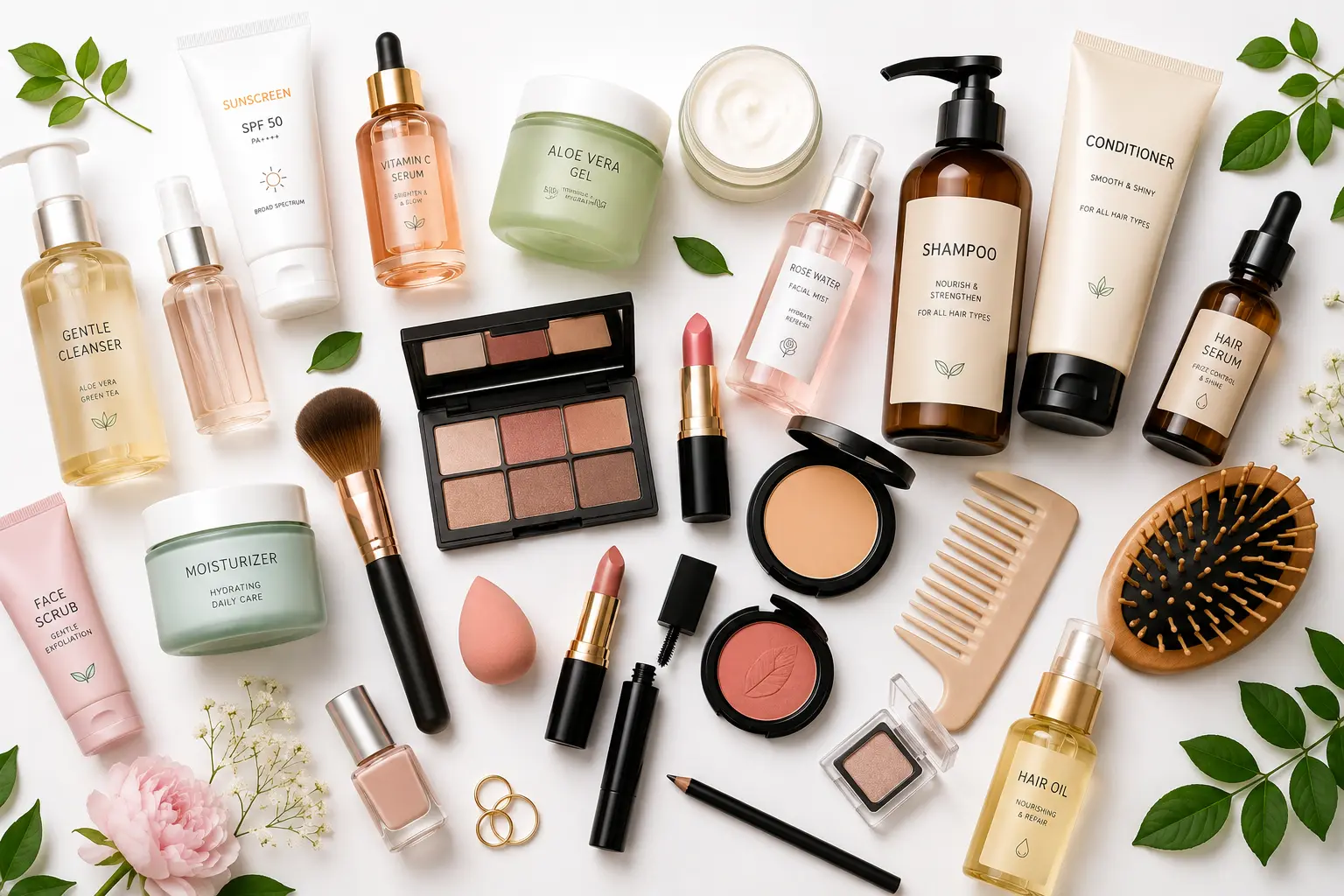
Flat lay of skincare, makeup, and haircare products representing the cosmetic industry on a clean white background.

The cosmetic industry is one of the fastest-growing industries in the world. Every day, millions of people use products like face wash, moisturizer, shampoo, sunscreen, lipstick, perfume, and toothpaste. These products help people look good, feel confident, and take care of their skin, hair, and personal hygiene.

But have you ever wondered what the cosmetic industry actually is?

If you’re new to skincare or beauty, the cosmetic industry can seem confusing. There are thousands of brands, hundreds of product categories, and new trends appearing every year. Understanding how this industry works can help you make smarter buying decisions and choose products that are suitable for your skin and hair.

In this beginner-friendly guide, you’ll learn everything about the cosmetic industry in simple English. Whether you’re a skincare beginner, beauty enthusiast, student, or someone planning to start a beauty business, this guide will help you understand the basics.

What Is the Cosmetic Industry?

The cosmetic industry is the business sector that develops, manufactures, markets, and sells products designed to improve appearance, maintain personal hygiene, and care for the skin, hair, nails, lips, and body.

Cosmetic products are mainly used to:

  • Clean the skin and hair
  • Protect the skin from damage
  • Improve appearance
  • Enhance beauty naturally
  • Maintain personal hygiene
  • Boost self-confidence

Unlike medicines, cosmetic products are generally intended to clean, beautify, moisturize, perfume, or protect the body without treating or curing diseases.

For example:

  • A face wash cleans your skin.
  • A moisturizer keeps your skin hydrated.
  • Sunscreen protects against harmful UV rays.
  • Lipstick enhances your appearance.
  • Shampoo cleans your hair.
  • Perfume provides fragrance.

Today, the cosmetic industry includes much more than makeup. It also covers skincare, haircare, oral care, fragrances, personal care, men’s grooming, baby care, and even beauty devices.

Read More:Streax Professional Canvoline Shampoo & Hair Mask

Why Is the Cosmetic Industry Growing So Fast?

The cosmetic industry has experienced rapid growth over the past decade because people are becoming more aware of skincare, self-care, and personal grooming.

Several factors are driving this growth:

1.Growing Awareness of Skincare

People now understand that healthy skin needs daily care instead of only treating problems after they appear.

Simple routines such as:

  • Cleansing
  • Moisturizing
  • Applying sunscreen

have become part of everyday life.

2. Social Media Influence

Beauty influencers, skincare experts, YouTube creators, and Instagram content have made skincare education more accessible than ever.

People can now easily learn:

  • How to build a skincare routine
  • Which ingredients work best
  • Product reviews
  • Before-and-after experiences

This has increased consumer interest in cosmetic products.

3. Better Product Innovation

Modern cosmetic products include advanced ingredients that target specific concerns such as:

  • Dry skin
  • Acne
  • Pigmentation
  • Wrinkles
  • Sensitive skin
  • Hair fall

Companies continue investing in research to create safer and more effective products.

4. Increasing Disposable Income

As incomes rise, many people are willing to spend more on personal care and beauty products instead of considering them luxury items.

5. Online Shopping

Buying cosmetics has become easier than ever.

Customers can compare products, read reviews, check ingredients, and order from home within minutes.

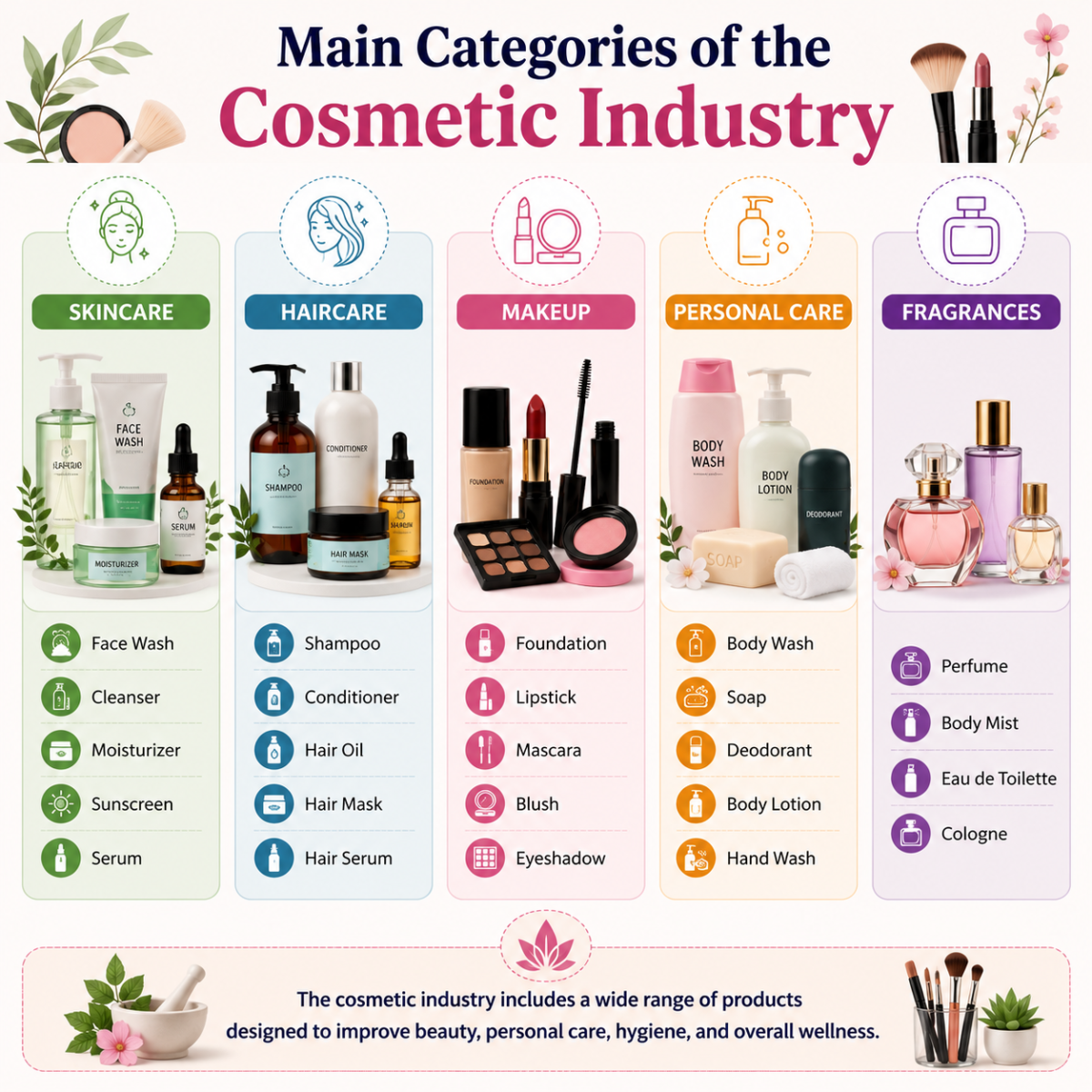
Main Categories of the Cosmetic Industry

The cosmetic industry is divided into several major categories.

Understanding these categories helps beginners choose products more easily.

1. Skincare Products

Skincare is one of the largest parts of the cosmetic industry.

Its goal is to keep skin healthy, clean, hydrated, and protected.

Popular skincare products include:

  • Face wash
  • Moisturizer
  • Sunscreen
  • Toner
  • Serum
  • Face masks
  • Eye cream
  • Lip balm
  • Exfoliator

People choose skincare products based on concerns like:

  • Oily skin
  • Dry skin
  • Combination skin
  • Acne
  • Dark spots
  • Fine lines
  • Sensitive skin

Beginner Tip

A simple skincare routine with cleanser, moisturizer, and sunscreen is enough for most beginners.

Avoid buying too many products at once.

2. Haircare Products

Haircare focuses on maintaining healthy hair and scalp.

Common products include:

  • Shampoo
  • Conditioner
  • Hair oil
  • Hair serum
  • Hair mask
  • Hair cream
  • Dry shampoo
  • Scalp treatment

Haircare products are designed for concerns such as:

  • Hair fall
  • Dandruff
  • Dry hair
  • Frizzy hair
  • Damaged hair
  • Oily scalp

Healthy hair begins with a healthy scalp, so scalp care is becoming increasingly important.

3. Makeup Products

Makeup products enhance facial features and create different beauty looks.

Popular makeup products include:

  • Foundation
  • Concealer
  • Primer
  • Compact powder
  • Lipstick
  • Lip gloss
  • Mascara
  • Eyeliner
  • Kajal
  • Eyeshadow
  • Blush
  • Highlighter

Modern makeup also includes skincare benefits, such as moisturizing ingredients and SPF protection.

Read More:Best Long Lasting Lipstick Brands in India (2026)

4. Personal Care Products

Personal care products help maintain cleanliness and freshness throughout the day.

Examples include:

  • Soap
  • Body wash
  • Hand wash
  • Deodorant
  • Antiperspirant
  • Body lotion
  • Talcum powder
  • Intimate hygiene products

These products are used daily by people of all age groups.

How Are Cosmetic Products Made?

Many people think cosmetic products are simply mixed together in a factory. In reality, creating a safe and effective cosmetic product is a detailed process that involves scientists, quality experts, manufacturers, and designers.

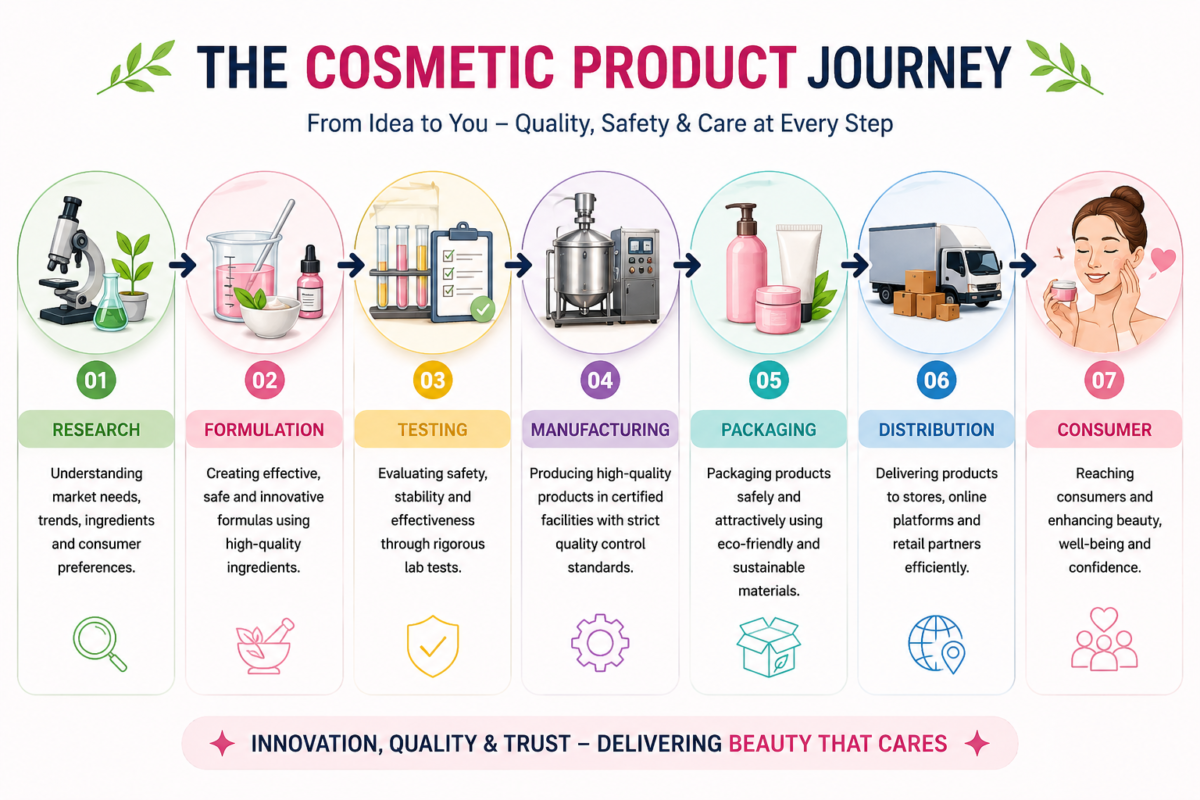
Let’s understand the journey of a cosmetic product from idea to store shelf.

Step 1: Market Research

Every successful cosmetic product starts with research.

Companies study:

  • Customer needs
  • Current beauty trends
  • Common skin concerns
  • Competitor products
  • Market demand

For example, if more people are searching for products to reduce acne marks, companies may develop a serum containing ingredients like niacinamide or vitamin C.

Research also helps brands understand what consumers expect, such as:

  • Fragrance-free formulas
  • Vegan products
  • Lightweight moisturizers
  • Sunscreens without a white cast
  • Products suitable for sensitive skin

Step 2: Formula Development

Once the idea is finalized, cosmetic chemists begin creating the product formula.

They carefully choose ingredients that are:

  • Safe
  • Stable
  • Effective
  • Compatible with one another

For example, when making a moisturizer, chemists may combine:

  • Water
  • Humectants to attract moisture
  • Emollients to soften the skin
  • Preservatives to prevent bacterial growth
  • Antioxidants to protect the formula

The right balance of ingredients is essential to ensure the product works well and remains stable over time.

Step 3: Laboratory Testing

Before manufacturing begins, the formula undergoes several laboratory tests.

These tests help check:

  • Product stability
  • Texture
  • pH balance
  • Safety
  • Shelf life
  • Packaging compatibility

For example, a sunscreen must remain effective even after being stored in warm weather for several months.

Step 4: Manufacturing

Once testing is complete, production starts in manufacturing facilities that follow strict hygiene and quality standards.

Large mixing machines prepare the product in controlled batches.

During manufacturing, companies monitor:

  • Ingredient quality
  • Temperature
  • Mixing time
  • Product consistency
  • Hygiene standards

This helps ensure that every bottle or tube meets the same quality standards.

Step 5: Packaging

Packaging is more than just making a product look attractive.

Good packaging protects the formula from:

  • Air
  • Moisture
  • Sunlight
  • Contamination

For example:

  • Vitamin C serums are often packed in dark-colored bottles because sunlight can reduce their effectiveness.
  • Airless pumps help protect sensitive ingredients from oxidation.

Modern brands also focus on eco-friendly and recyclable packaging.

Step 6: Quality Control

Before products leave the factory, they undergo final quality checks.

Experts inspect:

  • Appearance
  • Fragrance
  • Texture
  • Weight
  • Packaging
  • Label accuracy

Only products that pass these checks are approved for sale.

Read More : Best Sunscreen for Oily Skin: Your Complete Guide to Matte, Protected Skin

Step 7: Distribution

After production, products are shipped to:

  • Retail stores
  • Pharmacies
  • Beauty shops
  • Online marketplaces
  • Brand websites

Consumers can then purchase them through physical stores or online platforms.

Common Ingredients Used in Cosmetics

Every cosmetic product contains a combination of ingredients, each serving a specific purpose.

Understanding these ingredients helps beginners choose products more confidently.

1. Humectants

Humectants attract water to the skin and help keep it hydrated.

Common examples include:

  • Glycerin
  • Hyaluronic Acid
  • Aloe Vera
  • Panthenol

Best for:

  • Dry skin
  • Dehydrated skin
  • Combination skin

2. Emollients

Emollients soften the skin and help reduce roughness.

Examples:

  • Shea Butter
  • Squalane
  • Coconut Oil
  • Jojoba Oil
  • Cocoa Butter

These ingredients improve the skin barrier and reduce moisture loss.

3. Occlusives

Occlusives form a protective layer on the skin to lock in moisture.

Common examples:

  • Petroleum Jelly
  • Beeswax
  • Lanolin
  • Dimethicone

They are especially helpful for very dry or cracked skin.

5. Preservatives

Preservatives help prevent the growth of bacteria, mold, and yeast in cosmetic products.

Without preservatives, many water-based products could spoil quickly.

Common preservatives include:

  • Phenoxyethanol
  • Sodium Benzoate
  • Potassium Sorbate

When used within approved limits, these ingredients help keep products safe throughout their shelf life.

6. Fragrances

Fragrances give products a pleasant scent.

They can be:

  • Natural
  • Synthetic
  • Essential oil-based

If you have sensitive skin, choosing fragrance-free products may help reduce the risk of irritation.

How to Choose Safe Cosmetic Products

Choosing cosmetics can feel overwhelming because thousands of products are available.

These practical tips can help beginners make better decisions.

1. Know Your Skin Type

Identify whether your skin is:

  • Oily
  • Dry
  • Combination
  • Normal
  • Sensitive

A product that works well for oily skin may not be suitable for dry or sensitive skin.

2. Read the Ingredient List

Instead of buying products based only on social media trends, take a few minutes to read the ingredient label.

Look for ingredients that match your skincare goals.

For example:

  • Ceramides for a weakened skin barrier
  • Salicylic Acid for acne-prone skin
  • Hyaluronic Acid for dehydration
  • Niacinamide for uneven skin tone

3. Perform a Patch Test

Before using a new product on your entire face, apply a small amount behind your ear or on your inner arm.

Wait 24 hours to check for irritation or allergic reactions.

This simple step can help prevent unnecessary skin problems.

4. Avoid Buying Only Because of Trends

A product that becomes viral online is not automatically the best choice for everyone.

Always choose products based on your:

  • Skin type
  • Skin concerns
  • Personal needs

5. Keep Your Routine SimpleBeginners often buy too many products at once.

A basic routine is usually enough:

  • Gentle cleanser
  • Moisturizer
  • Sunscreen (morning)
  • One treatment product if needed

Adding too many active ingredients together can sometimes irritate the skin.

Latest Trends in the Cosmetic Industry (2026)

The cosmetic industry is constantly evolving as consumer preferences, technology, and scientific research continue to change. Today’s buyers are more informed than ever and expect products that are not only effective but also safe, sustainable, and suitable for their unique skin needs.

Here are some of the biggest trends shaping the cosmetic industry.

1. Personalized Skincare

Consumers are moving away from the “one product for everyone” approach.

Many brands now recommend products based on:

  • Skin type
  • Skin concerns
  • Age
  • Climate
  • Lifestyle

For example, two people with oily skin may still need different routines if one has acne and the other has dehydration.

Personalized skincare helps consumers choose products that better match their individual needs.

2. Clean Beauty

Clean beauty continues to gain popularity.

People increasingly prefer products that are:

  • Gentle on the skin
  • Transparent about ingredients
  • Free from unnecessary additives
  • Suitable for sensitive skin

Instead of focusing only on marketing claims, consumers are learning to read ingredient lists and choose products backed by science.

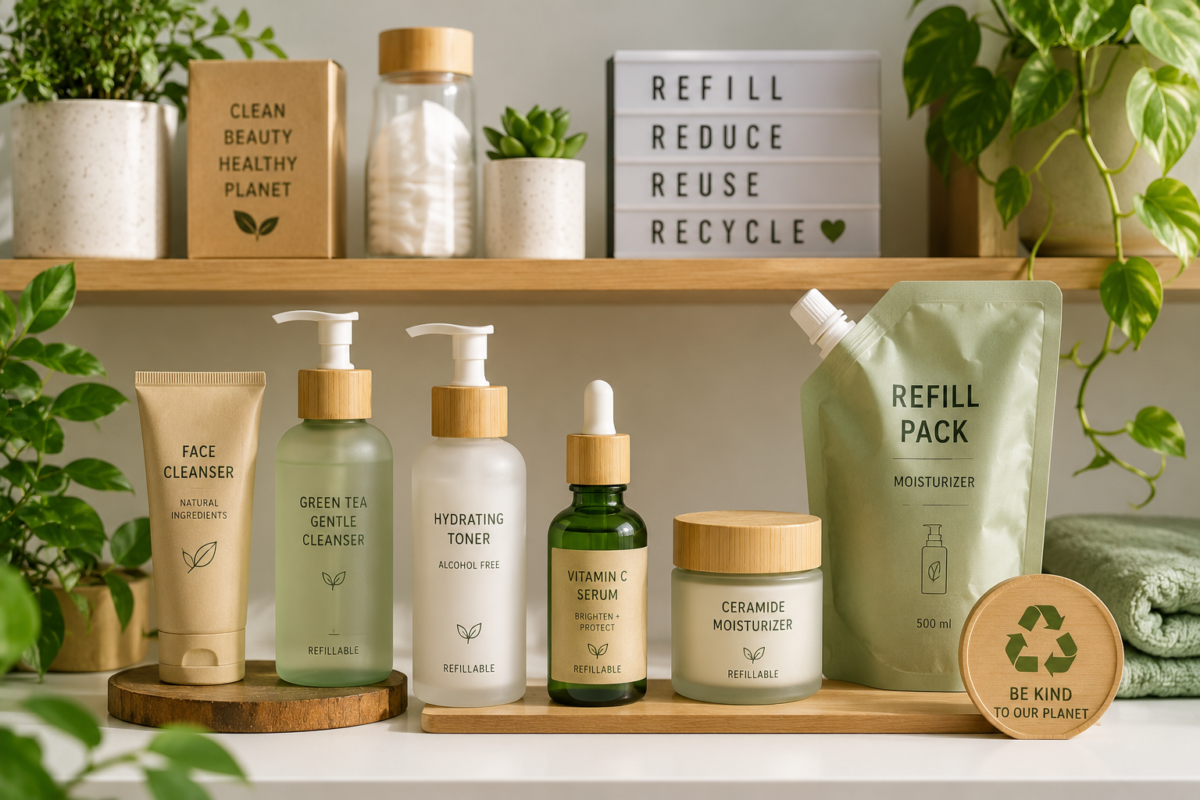
3. Sustainable Beauty

Environmental awareness has become an important factor in purchasing decisions.

Many cosmetic companies now focus on:

  • Recyclable packaging
  • Refillable containers
  • Reduced plastic usage
  • Eco-friendly manufacturing
  • Responsible ingredient sourcing

Sustainable beauty helps reduce environmental impact while encouraging responsible production practices.

4. Multi-Functional Products

Busy lifestyles have increased demand for products that perform multiple functions.

Popular examples include:

  • Moisturizers with SPF
  • Foundations containing skincare ingredients
  • Lip balms with sun protection
  • Tinted sunscreens
  • BB and CC creams

These products simplify daily routines without requiring numerous separate steps.

5. Science-Based Skincare

Consumers now look beyond attractive packaging and celebrity endorsements.

Ingredients such as:

  • Niacinamide
  • Ceramides
  • Peptides
  • Vitamin C
  • Hyaluronic Acid

have become popular because they are supported by scientific research and widely recommended for specific skincare goals.

6. Men’s Grooming Products

The men’s grooming market has expanded significantly.

Today’s products include:

  • Face washes
  • Moisturizers
  • Beard oils
  • Hair styling products
  • Sunscreens
  • Anti-aging creams

More men are adopting regular skincare routines, making this one of the industry’s fastest-growing segments.

7. Beauty Technology

Technology is changing how people shop for cosmetics.

Many brands now offer:

  • Virtual makeup try-ons
  • AI-powered skincare recommendations
  • Online skin analysis tools
  • Personalized product suggestions
  • Digital consultations

These innovations help consumers make more informed purchasing decisions.

Challenges Facing the Cosmetic Industry

Although the cosmetic industry continues to grow, it also faces several important challenges.

Understanding these challenges helps consumers make smarter choices and encourages brands to improve their products and practices.

1. Counterfeit Products

Fake cosmetic products remain a major concern.

Counterfeit products may contain:

  • Unsafe ingredients
  • Incorrect formulations
  • Poor-quality packaging
  • Harmful contaminants

Buying from authorized retailers and trusted websites helps reduce this risk.

2. Consumer Misinformation

Social media has made beauty information more accessible, but not all advice is accurate.

Common myths include:

  • Natural ingredients are always safer.
  • Expensive products always work better.
  • More products mean better results.
  • Skincare should deliver overnight changes.

Reliable information from dermatologists, scientific studies, and trusted educational sources is more valuable than viral trends.

3. Ingredient Transparency

Modern consumers want to know exactly what they are applying to their skin.

Brands are increasingly expected to:

  • Clearly list ingredients
  • Explain product benefits
  • Avoid misleading claims
  • Provide accurate usage instructions

Transparency helps build trust between companies and consumers.

4. Environmental Concerns

The cosmetic industry generates significant packaging waste each year.

Companies are working to reduce their environmental impact by:

  • Using recyclable materials
  • Offering refill options
  • Reducing unnecessary packaging
  • Improving manufacturing efficiency

Consumers can also contribute by recycling cosmetic containers whenever possible.

5. Intense Market Competition

Thousands of new beauty brands enter the market every year.

This creates strong competition and makes it challenging for companies to:

  • Build customer trust
  • Maintain product quality
  • Offer innovative solutions
  • Differentiate themselves from competitors

Brands that focus on quality, safety, and customer education are more likely to achieve long-term success.

Conclusion

The cosmetic industry is much more than makeup and beauty products. It is a global industry that combines science, innovation, manufacturing, marketing, and consumer education to create products that support skincare, haircare, hygiene, and personal grooming.

From gentle face cleansers and moisturizers to advanced serums and sunscreens, cosmetic products have become an important part of daily life. As the industry continues to grow, consumers have access to better ingredients, smarter formulations, and more personalized solutions than ever before.

However, choosing the right products is just as important as having many options. Instead of following every viral trend, focus on understanding your skin type, reading ingredient lists, and building a simple, consistent skincare routine. Healthy skin comes from regular care, patience, and informed choices—not from using the most expensive products.

Whether you’re a skincare beginner, a beauty enthusiast, or someone planning to start a career or business in cosmetics, learning how the cosmetic industry works will help you make smarter decisions. The future of the industry looks bright, with continued advancements in technology, sustainable practices, and science-backed skincare that benefit both consumers and the environment.

Remember, beautiful skin isn’t about perfection—it’s about keeping your skin healthy, protected, and cared for every day.

Frequently Asked Questions (FAQs)

1. What is the cosmetic industry in simple words?

The cosmetic industry is the business of making and selling products that help clean, protect, and improve the appearance of the skin, hair, nails, and body. It includes skincare, makeup, haircare, personal care, fragrances, men’s grooming products, and beauty tools.

2. What is the difference between cosmetics and skincare?

Cosmetics are products that mainly enhance your appearance, such as lipstick, foundation, mascara, and blush. Skincare products, including cleansers, moisturizers, serums, and sunscreens, are designed to maintain and improve the health of your skin.

3. What are the main categories of the cosmetic industry?

The cosmetic industry includes several major categories, such as skincare, haircare, makeup, personal care, fragrances, men’s grooming products, and beauty tools and accessories.

4. Are cosmetic products safe to use every day?

Yes, most cosmetic products are safe for daily use when purchased from trusted brands and used according to the instructions. It is always a good idea to perform a patch test before trying a new product, especially if you have sensitive skin.

5. How do I choose the right cosmetic products for my skin?

Start by identifying your skin type, whether it is oily, dry, combination, normal, or sensitive. Then choose products based on your skin concerns, such as acne, pigmentation, dryness, or signs of aging. Reading the ingredient list can also help you make better choices.

6. Is natural skincare better than synthetic skincare?

Not necessarily. Both natural and synthetic ingredients can be safe and effective when properly formulated and tested. The overall quality of the product and how well it suits your skin are more important than whether it is labeled as natural or synthetic.

Understanding CAPA in the Cosmetics Industry

In the cosmetics industry, CAPA stands for Corrective and Preventive Action. It's a quality management system used to identify, investigate, and resolve issues related to product quality, safety, and compliance. CAPA ensures that problems are not just fixed, but also prevented from recurring by addressing their root causes.

Corrective and Preventive Action (CAPA) is a critical component of quality management systems (QMS) used across various industries, including cosmetics, to ensure product safety, quality, and regulatory compliance. In the cosmetics industry, CAPA refers to a systematic approach to identifying, investigating, and resolving quality issues while preventing their recurrence or occurrence. It involves two key elements: Corrective Action, which addresses existing problems, and Preventive Action, which proactively mitigates potential issues. CAPA ensures that cosmetic products meet consumer expectations, adhere to regulatory standards, and maintain brand reputation.
In the cosmetics industry, where consumer safety, product efficacy, and regulatory compliance are paramount, CAPA plays a vital role in addressing issues like contamination, incorrect labeling, defective packaging, or non-compliance with standards such as Good Manufacturing Practices (GMP) or regulations set by bodies like the FDA, EU Cosmetics Regulation, or ISO 22716. By implementing CAPA, cosmetic manufacturers can enhance product quality, reduce risks, and foster a culture of continuous improvement

CAPA in the Cosmetics Industry: A Comprehensive Guide to Quality Management

The cosmetics industry thrives on delivering safe, effective, and high-quality products to consumers. However, issues like product contamination, mislabeling, or packaging defects can jeopardize consumer trust and regulatory compliance. This is where Corrective and Preventive Action (CAPA) comes into play. CAPA is a cornerstone of quality management systems (QMS) that helps cosmetic manufacturers identify, resolve, and prevent quality issues. In this blog, we’ll explore what CAPA is, its importance in the cosmetics industry, the CAPA process, and best practices for implementation, all tailored to ensure compliance and consumer satisfaction.

What is CAPA?

CAPA stands for Corrective and Preventive Action, a structured methodology used to address quality issues and prevent their recurrence or occurrence. In the cosmetics industry, CAPA is integral to maintaining product safety, efficacy, and compliance with regulations like the FDA’s 21 CFR Part 820, ISO 22716 (Cosmetics GMP), and the EU Cosmetics Regulation (EC No 1223/2009).
Corrective Action: Focuses on identifying the root cause of an existing issue (e.g., a batch of contaminated lipstick) and implementing measures to eliminate it, ensuring the problem does not recur.
Preventive Action: Proactively identifies potential risks (e.g., a packaging machine prone to errors) and implements measures to prevent issues before they arise.
CAPA is not just about fixing problems; it’s about building a robust quality system that ensures consistent product quality and regulatory adherence.

Why is CAPA Important in the Cosmetics Industry?
The cosmetics industry faces unique challenges, from ensuring ingredient safety to meeting stringent regulatory requirements. CAPA is critical for several reasons:
Consumer Safety: Cosmetics are applied directly to the skin, eyes, or hair, making safety a top priority. CAPA helps address issues like microbial contamination or harmful ingredients, protecting consumers from adverse effects.
Regulatory Compliance: Regulatory bodies like the FDA and EU require cosmetic manufacturers to have systems in place to address non-conformities. Failure to implement CAPA can result in warning letters, product recalls, or fines.
Brand Reputation: A single quality issue, such as mislabeled products or allergic reactions, can damage a brand’s reputation. CAPA ensures issues are resolved swiftly and prevented in the future.
Cost Efficiency: By addressing root causes and preventing recurrence, CAPA reduces costs associated with recalls, rework, and customer complaints.
Continuous Improvement: CAPA fosters a culture of quality, encouraging manufacturers to analyze trends, improve processes, and enhance product reliability.

The CAPA Process in the Cosmetics Industry
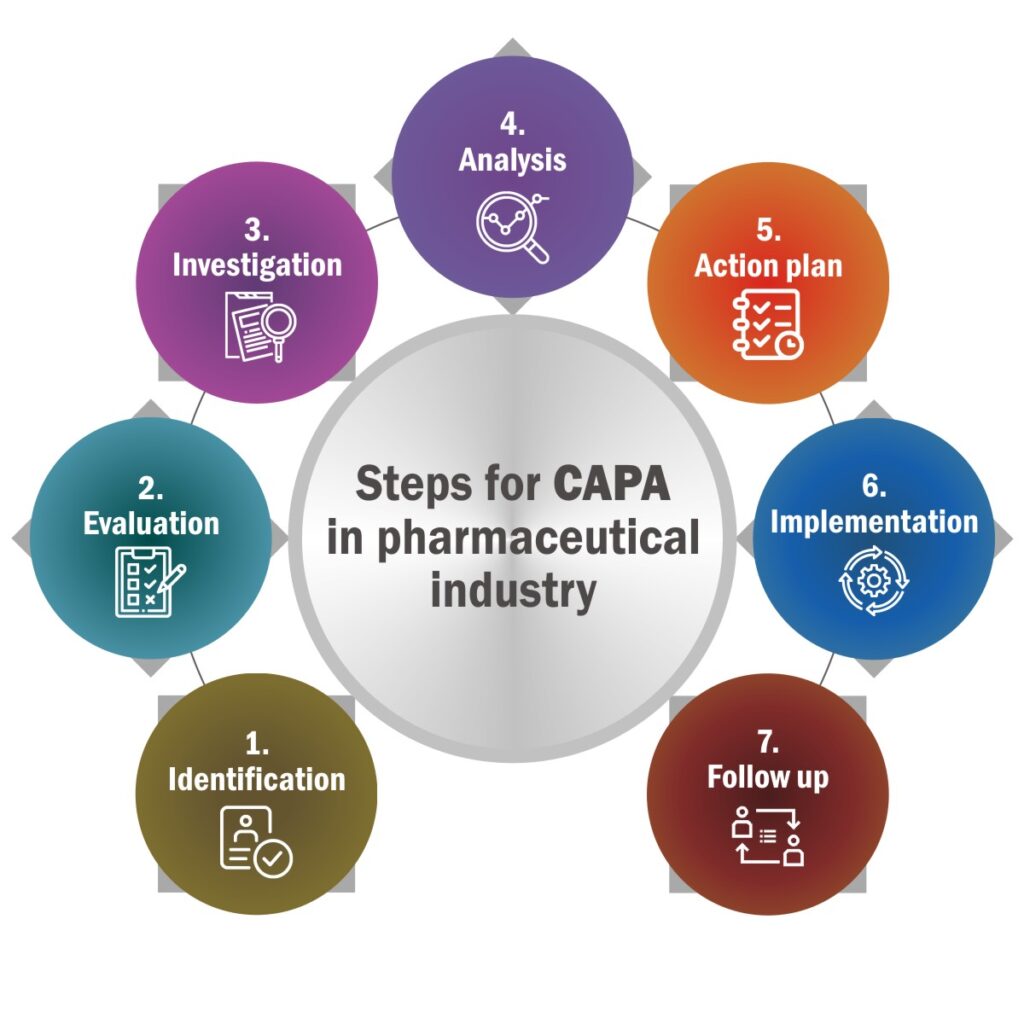
The CAPA process is a systematic, step-by-step approach to managing quality issues. Below are the key steps tailored to the cosmetics industry:

1. Identify the Issue
The first step is to detect and document any quality issue or non-conformity. Issues in cosmetics can arise from various sources, such as:
Customer complaints (e.g., skin irritation from a moisturizer).
Internal audits revealing deviations from GMP standards.
Production issues, like inconsistent batch mixing or defective packaging.
Regulatory inspections identifying non-compliance.
Example: A customer reports that a batch of foundation causes skin redness. The issue is documented with details like batch number, date, and customer feedback.

2. Contain the Problem
Immediate action is taken to limit the impact of the issue. This may involve:
Quarantining affected products.
Halting production or distribution.
Notifying retailers or consumers.
Example: The manufacturer quarantines all foundation batches from the same production line and pauses distribution until the issue is investigated.

3. Perform/SD-3 Conduct Root Cause Analysis
Root cause analysis (RCA) identifies the underlying cause of the issue. Common tools include:
5 Whys: Asking “why” repeatedly to drill down to the root cause.
Fishbone Diagram: Categorizing causes (e.g., materials, processes, equipment).
Pareto Analysis: Prioritizing the most significant causes.
Example: RCA reveals that the foundation’s redness was caused by an unlisted allergen in a new ingredient batch.

4. Develop Corrective Actions
Corrective actions address the root cause to eliminate the issue. These actions should be:
Specific: Clearly defined (e.g., update ingredient sourcing protocols).
Measurable: Trackable via metrics or audits.
Achievable: Feasible within resources and timelines.
Relevant: Directly tied to the root cause.
Time-bound: Completed within a set deadline.
Example: The manufacturer revises supplier quality checks to ensure allergen-free ingredients.

5. Implement Corrective Actions
Execute the corrective actions, ensuring proper communication and training for staff. Track progress to avoid delays.
Example: The supplier quality team is trained on new allergen detection protocols, and checks are implemented immediately.

6. Develop Preventive Actions
Preventive actions address potential risks to avoid similar issues elsewhere. This may include:
Process improvements (e.g., automated quality checks).
Staff training on new procedures.
Equipment upgrades to prevent errors.
Example: The manufacturer installs allergen detection sensors on all production lines.

7. Verify Effectiveness
Confirm that corrective and preventive actions have resolved the issue and prevented recurrence. This involves:
Follow-up audits.
Testing (e.g., product safety tests).
Monitoring customer feedback.
Example: Post-implementation testing shows no further allergen complaints, and audits confirm compliance.

8. Document and Close the CAPA
Thorough documentation is essential for compliance and future reference. Include:
Issue description and evidence.
Root cause findings.
Action plans and outcomes.
Effectiveness verification results.
Example: The CAPA report is archived in the QMS, and the case is closed after QA approval.

https://cosmeticgyaan.com/what-is-gmp-good-manufacturing-practices/

Best Practices for CAPA in Cosmetics
To ensure an effective CAPA system in the cosmetics industry, follow these best practices:
Use CAPA Software: Tools like MasterControl or Qualio streamline documentation, workflows, and trend analysis, ensuring compliance with ISO 22716 and FDA regulations.Train Employees: Regular training on CAPA processes fosters a quality-driven culture. Employees should know how to report issues and contribute to solutions.
Integrate with QMS: CAPA should align with other QMS processes, such as complaint handling and risk management, for a holistic approach.
Conduct Regular Audits: Proactive audits help identify potential issues before they escalate, reducing the need for corrective actions.
Leverage Data: Analyze trends from customer feedback, production data, and audits to inform preventive actions.
Engage Cross-Functional Teams: Involve quality assurance, production, and regulatory teams to ensure comprehensive problem-solving.

Real-World Example: CAPA in Action
A cosmetic company discovers that a batch of mascara causes eye irritation due to improper mixing of preservatives. Here’s how CAPA is applied:
Identification: Customer complaints trigger an investigation.
Containment: The affected batch is recalled, and production is paused.
Root Cause Analysis: The 5 Whys reveals a calibration error in the mixing equipment.
Corrective Action: The equipment is recalibrated, and operators are retrained.
Preventive Action: Automated calibration checks are added to all mixing machines.
Verification: Post-implementation testing confirms no further irritation complaints.
Documentation: The CAPA report is filed, detailing all steps and outcomes.
This process resolves the issue, prevents recurrence, and ensures compliance with GMP standards.

Challenges and Solutions
Implementing CAPA in the cosmetics industry can be challenging. Common issues include:
Resource Constraints: Small manufacturers may lack resources for robust CAPA systems. Solution: Use cost-effective CAPA software to automate processes.

Complex Investigations: Identifying root causes can be time-consuming. Solution: Train staff on RCA tools like Fishbone Diagrams and 5 Whys.
Documentation Burden: Extensive record-keeping can overwhelm teams. Solution: Adopt electronic QMS platforms for efficient documentation.

Conclusion

CAPA is a vital tool for ensuring quality, safety, and compliance in the cosmetics industry. By systematically addressing existing issues and preventing future ones, CAPA helps manufacturers deliver safe, effective products while meeting regulatory requirements. A well-executed CAPA process enhances operational efficiency, reduces costs, and builds consumer trust. By following the steps outlined—identification, containment, root cause analysis, corrective and preventive actions, verification, and documentation—cosmetic companies can create a culture of continuous improvement.
To optimize CAPA, invest in training, leverage technology, and integrate it with your QMS. Whether you’re addressing a contamination issue or preventing packaging errors, CAPA empowers you to maintain high standards and stay competitive in the fast-paced cosmetics market.

SOP in Cosmetics Industry: Complete Guide for Beginners (2026)

In the cosmetics world, SOP stands for Standard Operating Procedure — a set of written instructions that ensures every product is made safely, consistently, and in compliance with regulations. Without SOPs, there would be chaos in manufacturing, leading to poor quality products, customer complaints, and even legal trouble.


In this blog, we’ll explore:

What SOP means in the cosmetic industry

Why it’s so important

How it works step-by-step

Examples of SOPs in action

Benefits for manufacturers, consumers, and regulators

https://cosmeticgyaan.com/%f0%9f%a7%b4-what-is-5s-in-the-cosmetics-industry/

What is SOP in Cosmetics Industry?

An SOP (Standard Operating Procedure) is a documented set of step-by-step instructions followed by manufacturing staff, quality control teams, and other departments to carry out processes in a uniform way.

For example:

SOP for making shampoo will define exact ingredient quantities, mixing times, temperatures, and safety checks.

SOP for filling lotion bottles will include machine settings, batch numbers, packaging quality checks, and hygiene requirements.

It’s not just a “guide” — it’s a mandatory operational bible in every GMP-compliant (Good Manufacturing Practice) cosmetic facility.

Why SOP is Important in the Cosmetics Industry.

1. Product Consistency

Customers expect the same fragrance, texture, and performance every time they buy a product. SOP ensures every batch is identical.

2. Compliance with Laws

Regulatory bodies like FDA (US), BIS (India), and EU Cosmetic Regulation require documented processes. SOPs help companies prove compliance during audits.

3. Safety for Consumers

Cosmetics are applied directly to the skin and hair. A slight mistake in formulation could cause irritation or allergies. SOPs minimize human error.

4. Efficient Training

New employees can be trained faster by following written SOPs instead of learning everything verbally.

5. Traceability

If a problem occurs, SOPs make it easier to trace the root cause — whether in raw materials, process steps, or packaging.

https://cosmeticgyaan.com/top-cosmetic-products-skincare-haircare-beauty-essentials-what-is-capa-in-the-cosmetics-industry/

Key Components of an SOP in the Cosmetic Industry

A well-written cosmetic industry SOP should include:

1. Title & Purpose – e.g., “SOP for Face Cream Manufacturing”

2. Scope – Defines which product lines or departments it applies to.

3. Responsibilities – Who will follow and monitor the SOP (manufacturing chemist, QC officer, etc.)

4. Materials & Equipment Needed – Ingredients, mixers, tanks, fillers, testing kits.

5. Procedure Steps – Step-by-step actions in simple language.

6. Safety Precautions – Handling chemicals, PPE (Personal Protective Equipment) guidelines.

7. Documentation & Records – Batch records, cleaning logs, QC test results.

8. Revision History – When and why changes were made to the SOP.

Types of SOPs in Cosmetic Manufacturing

SOP Type Purpose

Manufacturing SOP Covers step-by-step production, mixing, heating, cooling, and filling.
Quality Control SOP Describes testing methods for pH, viscosity, fragrance, and microbial safety.
Cleaning SOP Ensures hygiene of tanks, mixers, pipelines, and filling machines.
Safety SOP Guidelines for handling flammable or hazardous raw materials.
Packaging SOP Instructions for labeling, batch coding, sealing, and final inspection.
Storage SOP Describes how finished goods and raw materials should be stored to maintain quality.

Example: SOP for Shampoo Manufacturing (Simplified)

1. Preparation – Verify all raw materials are approved by QC.

2. Weighing – Measure ingredients as per formula sheet.

3. Mixing – Add water to the main tank, heat to 60°C, dissolve surfactants, add conditioning agents, then cool.

4. pH Adjustment – Check pH and adjust to 5.5–6.0.

5. Fragrance & Color – Add perfume and dye at below 40°C to prevent evaporation or fading.

6. Filtration – Remove lumps or particles.

7. Filling & Packing – Fill into bottles, label, and batch code.

8. Final QC – Approve batch for market release.

Benefits of SOP in Cosmetic Industry

Reduces Errors – Clear instructions reduce guesswork.
✅ Improves Productivity – Saves time by eliminating confusion.
Ensures Global Standards – Makes products export-ready.
Boosts Brand Trust – Consistent quality leads to customer loyalty.
✅ Facilitates Audits – Regulatory inspections become smoother.

Challenges in Maintaining SOPs

Regular Updates Needed – Formulas, equipment, or laws change over time.

Employee Compliance – SOPs are useless if staff do not follow them strictly.

Documentation Overload – Large facilities have hundreds of SOPs; keeping them organized is a task.

Best Practices for Writing an Effective Cosmetic SOP

1. Use Simple Language – Avoid technical jargon unless necessary.

2. Include Photos or Flowcharts – Visuals improve understanding.

3. Test Before Approving – Run trial batches to ensure SOP works.

4. Train Employees Regularly – Refreshers ensure adherence.

5. Audit SOPs Annually – Keep them up-to-date with current regulations.

Conclusion

In the cosmetics industry, SOPs are more than just paperwork — they’re the foundation of product quality, safety, and brand reputation. Without them, even the most innovative beauty product can fail in the market.

If you’re planning to start a cosmetic manufacturing unit or work in one, mastering SOP creation and implementation is your ticket to success

Remember: A beautiful product starts with a beautifully written SOP.