Best Serum for Pigmentation: Uses, Benefits, and Comprehensive Guide (2025)
Best serum for Pigmentation concerns, such as dark spots, melasma, and uneven skin tone, are a significant dermatological challenge across the globe. In traditional skincare regimens and modern formulations alike, serums have emerged as a core component for targeted treatment. This blog provides a detailed corporate analysis of pigmentation serums, their uses, benefits, and why they are an indispensable tool in contemporary skincare protocols.
Table of Contents Best serum for pigmentation 2025
1. What is Pigmentation?
2. Why Do Pigmentation Issues Occur?
3. What Makes Serums Ideal for Pigmentation?
4. Best Ingredients to Look For
5. Recommended Serums for Pigmentation
6. Step-by-Step Application Protocol
7. Benefits of Using Pigmentation Serums
8. Precautions and Regulatory Considerations
9. Conclusion
1. What is Pigmentation?
Best serum for pigmentation, In dermatological parlance, pigmentation refers to the coloring of the skin. The skin’s natural color is determined by melanin, a complex polymer derived from the amino acid tyrosine. Overproduction or irregular distribution of melanin can lead to:
Hyperpigmentation (dark patches)
Melasma
Lentigines (age spots)
Post-inflammatory hyperpigmentation (PIH)
This phenomenon not only affects aesthetic confidence but also signifies underlying cellular activity that requires consistent, targeted management.
2. Why Do Pigmentation Issues Occur?
Pigmentation irregularities are multifactorial in origin. The predominant causative factors include:
✅ Excessive UV Exposure: Sunlight stimulates melanocytes, leading to melanin overproduction.
✅ Hormonal Fluctuations: Common in pregnancy (chloasma) or with contraceptive usage.
✅ Post-Inflammatory Responses: Acne, eczema, or injuries can trigger dark spots.
✅ Aging: Cellular turnover declines, resulting in persistent discoloration.
Traditionally, natural remedies like turmeric and licorice were used in India, but evidence-based cosmeceuticals have now set new industry benchmarks.
3. What Makes Serums Ideal for Pigmentation?
Serums are lightweight, highly concentrated formulations engineered to penetrate deeper skin layers. They typically feature micro-molecular delivery systems, ensuring maximum bioavailability of active compounds.
Core Advantages:
Fast absorption
High potency actives
Low risk of comedogenicity
Compatibility with other skincare protocols
4. Best Ingredients to Look For
When evaluating serums for pigmentation, consider formulations validated through dermatological research. Key actives include:
Vitamin C (Ascorbic Acid): A potent antioxidant inhibiting tyrosinase activity.
Niacinamide (Vitamin B3): Reduces melanin transfer to keratinocytes.
Alpha Arbutin: A biosynthetic derivative of hydroquinone, providing brightening without irritation.
Kojic Acid: Naturally derived from fungi, it interrupts melanin production.
Licorice Extract: Contains glabridin, which reduces hyperpigmentation.
Tranexamic Acid: Used for melasma management.
Retinol: Accelerates cellular turnover to fade dark spots.
Azelaic Acid: Effective for post-inflammatory hyperpigmentation.
5. Recommended Serums for Pigmentation
Here is a curated list of globally acclaimed pigmentation serums. These products integrate traditional knowledge with modern clinical standards:
✅ SkinCeuticals C E Ferulic Serum:
A clinical-grade Vitamin C serum renowned for reducing discoloration and oxidative stress.
✅ The Ordinary Alpha Arbutin 2% + HA:
An affordable yet effective serum combining alpha arbutin with hyaluronic acid for hydration and brightening.
✅ La Roche-Posay Mela-D Pigment Control Serum:
Formulated with glycolic acid, kojic acid, and micro-exfoliators.
✅ Murad Rapid Age Spot and Pigment Lightening Serum:
Contains hydroquinone (2%) for regulated skin lightening.
✅ Minimalist 10% Niacinamide Serum (India):
A homegrown solution combining niacinamide and zinc to target melanin production and improve skin barrier function.
6. Step-by-Step Application Protocol
A structured regimen maximizes the efficacy of serums:
1. Cleanse: Use a gentle, pH-balanced cleanser.
2. Tone: (Optional) Apply alcohol-free toner to prep skin.
3. Dispense: 2–3 drops of serum onto the palm.
4. Apply: Gently press serum onto face and neck.
5. Wait: Allow 60–90 seconds for absorption.
6. Moisturize: Seal in actives with a nourishing moisturizer.
7. Sun Protection: Apply broad-spectrum SPF 30+ sunscreen during the day without fail.
7. Benefits of Using Pigmentation Serums
In alignment with the cosmetic industry’s commitment to transformative skincare, pigmentation serums offer:
🌿 Targeted Action: Direct intervention at the melanogenesis pathway.
🌿 Visible Results: Reduction in dark spots within 4–8 weeks (clinical studies show up to 70% improvement).
🌿 Skin Barrier Support: Enhanced hydration and resilience.
🌿 Regulatory Safety: Most formulations comply with international safety standards, ensuring minimal irritation.
🌿 Compatibility: Can be integrated into existing skincare protocols seamlessly.
8. Precautions and Regulatory Considerations
While serums are generally safe, certain corporate compliance protocols and precautions are recommended:
🔹 Patch Test: Always conduct a 24-hour patch test to mitigate adverse reactions.
🔹 Sun Protection: Ingredients like retinol and glycolic acid increase photosensitivity. Sunscreen is non-negotiable.
🔹 Consultation: Pregnant or lactating individuals should consult a dermatologist before initiating actives.
🔹 Avoid Mixing: Avoid combining strong acids and retinoids unless specifically guided.
9. Conclusion
Pigmentation serums epitomize the synergy between traditional principles and cutting-edge dermatological science. They offer targeted, result-driven solutions to pigmentation concerns that were once challenging to manage with conventional creams alone.
For professionals and consumers alike, incorporating a high-quality serum with clinically validated actives can elevate skin health to its optimum potential. Always remember—consistency, correct usage protocols, and an informed selection of products are critical success factors in achieving an even-toned, luminous complexion.
प्राकृतिक सौंदर्य की तलाश में आज के समय में लोग रासायनिक उत्पादों से हटकर आयुर्वेदिक सौंदर्य प्रसाधनों की ओर रुख कर रहे हैं। ये प्रसाधन न केवल त्वचा और बालों को सुंदर बनाते हैं, बल्कि उन्हें भीतर से स्वस्थ भी करते हैं।
आइए विस्तार से समझते हैं कि आयुर्वेदिक सौंदर्य प्रसाधन क्या होते हैं, उनके कौन-कौन से मुख्य घटक होते हैं, और ये हमें किस प्रकार लाभ प्रदान करते हैं।
🌱 आयुर्वेदिक सौंदर्य प्रसाधन क्या होते हैं?
आयुर्वेदिक सौंदर्य प्रसाधन वे उत्पाद होते हैं जो प्राकृतिक जड़ी-बूटियों, पौधों, खनिजों और तेलों से बनाए जाते हैं। ये उत्पाद शरीर पर बिना किसी हानिकारक प्रभाव के सौंदर्य प्रदान करते हैं।
इनका निर्माण आयुर्वेद शास्त्र के सिद्धांतों के अनुसार किया जाता है, जिसमें शरीर, मन और आत्मा के संतुलन पर बल दिया जाता है।
🌼 प्रमुख प्राकृतिक घटक
आयुर्वेदिक प्रसाधनों में उपयोग होने वाले प्रमुख तत्व निम्नलिखित हैं:
नीम – त्वचा से कील-मुंहासे दूर करता है
हल्दी – त्वचा को निखारने में सहायक
एलोवेरा – त्वचा को ठंडक और नमी प्रदान करता है
चंदन – दाग-धब्बों को कम करता है और त्वचा को ठंडक देता है
ब्रह्मी और भृंगराज – बालों को मजबूत और घना बनाते हैं
🌟 आयुर्वेदिक सौंदर्य प्रसाधनों के लाभ
1. त्वचा के लिए सुरक्षित
ये उत्पाद किसी भी प्रकार के रासायनिक तत्वों से मुक्त होते हैं, जैसे कि पैराबेन्स, सल्फेट आदि। इससे यह संवेदनशील त्वचा के लिए भी पूरी तरह सुरक्षित होते हैं।
2. प्राकृतिक पोषण
इनमें मौजूद जड़ी-बूटियाँ त्वचा और बालों को गहराई से पोषण देती हैं, जिससे आपकी त्वचा अंदर से स्वस्थ और बाहर से चमकदार बनती है।
3. दीर्घकालिक लाभ
आयुर्वेदिक प्रसाधन तात्कालिक सौंदर्य से अधिक स्थायी और प्राकृतिक सुंदरता प्रदान करते हैं।
4. सभी त्वचा प्रकारों के लिए उपयुक्त
चाहे आपकी त्वचा शुष्क हो, तैलीय हो या संवेदनशील, आयुर्वेदिक उत्पाद हर प्रकार की त्वचा के लिए लाभकारी होते हैं।
5. मानसिक शांति और सुकून
इन प्रसाधनों में प्रयुक्त प्राकृतिक सुगंध और जड़ी-बूटियाँ तनाव को कम करने, और त्वचा पर शांति और सुकून देने में सहायक होती हैं।
🧴 लोकप्रिय आयुर्वेदिक सौंदर्य प्रसाधन
नीम और तुलसी युक्त फेसवॉश
एलोवेरा जैल
उबटन (प्राकृतिक स्क्रब)
भृंगराज तेल
हल्दी और चंदन फेस पैक
हर्बल साबुन और बॉडी लोशन
🔚 निष्कर्ष
आयुर्वेदिक सौंदर्य प्रसाधन न केवल आपकी त्वचा को सुंदर बनाते हैं, बल्कि उसे भीतर से स्वस्थ रखने में भी सहायता करते हैं। यदि आप रसायनों से बचकर सौंदर्य की ओर बढ़ना चाहते हैं, तो आयुर्वेदिक उत्पादों का उपयोग आपके लिए सबसे उपयुक्त विकल्प है।
👉 अब समय है प्राकृतिक सुंदरता को अपनाने का – आयुर्वेदिक प्रसाधनों के साथ।
केमिकल युक्त उत्पादों की अधिकता और अस्वस्थ जीवनशैली से बालों की समस्याएँ दिन-ब-दिन बढ़ रही हैं। ऐसे समय में हिबिस्कस हेयर ऑयल यानी गुड़हल का तेल बालों की देखभाल में वरदान साबित हो रहा है। यह सदियों से हमारी परंपरा में उपयोग होता आया है और आज भी अपनी प्राकृतिक खूबियों के लिए प्रसिद्ध है।
हिबिस्कस हेयर ऑयल क्या है?
हिबिस्कस का तेल ताजे हिबिस्कस फूलों और पत्तियों को नारियल तेल या तिल के तेल में मिलाकर तैयार किया जाता है। इसमें बालों की ग्रोथ को बढ़ाने और डैमेज को रिपेयर करने वाले प्राकृतिक तत्व होते हैं।
हिबिस्कस हेयर ऑयल के प्रमुख लाभ
1. बालों की जड़ों को मज़बूती प्रदान करना
हिबिस्कस में विटामिन C और अमीनो एसिड प्रचुर मात्रा में होते हैं। ये बालों की जड़ों को पोषण देकर टूटने और झड़ने से बचाते हैं।
यह बालों में नमी बनाए रखता है और रूखे-सूखे बालों को मुलायम व चमकदार बनाता है।
—
कैसे करें उपयोग?
1. तेल को हल्का गुनगुना कर लें।
2. उंगलियों की मदद से बालों की जड़ों में धीरे-धीरे मालिश करें।
3. 2–3 घंटे या पूरी रात के लिए तेल लगाकर छोड़ दें।
4. माइल्ड शैम्पू से धो लें।
5. सप्ताह में 2 बार इसका उपयोग सर्वोत्तम परिणाम देता है।
क्यों चुनें हिबिस्कस हेयर ऑयल?
> कॉर्पोरेट दृष्टिकोण से देखें तो आजकल लोग केमिकल-फ्री और इको-फ्रेंडली प्रोडक्ट्स की ओर बढ़ रहे हैं। हिबिस्कस हेयर ऑयल प्राकृतिक, लागत प्रभावी और स्वास्थ्यवर्धक विकल्प है, जो बाजार में प्रतिस्पर्धात्मक बढ़त भी दिला सकता है।
—
निष्कर्ष
हिबिस्कस हेयर ऑयल आपके बालों के लिए सम्पूर्ण पोषण का स्रोत है। यदि आप बालों की समस्याओं से जूझ रहे हैं या प्राकृतिक हेयर केयर को अपनाना चाहते हैं, तो यह तेल अवश्य आज़माएं।
आज ही इसे अपनी हेयर केयर रूटीन में शामिल करें और बालों की सेहत में सकारात्मक परिवर्तन महसूस करें।
Body scrub -Explore our in-depth 2025 guide on body scrubs. Understand their uses, skin benefits, application techniques, and expert recommendations to achieve radiant, healthy skin.
Table of Contents Body scrub
1. Introduction
2. What Is a Body Scrub?
3. Key Ingredients in Body Scrubs
4. Primary Uses of Body Scrubs
5. Top Benefits of Using a Body Scrub
6. How to Use a Body Scrub Correctly
7. Precautions and Best Practices
8. Conclusion
9. FAQs
Introduction
In the dynamic landscape of modern skincare, body scrubs have emerged as a cornerstone product, seamlessly combining traditional exfoliation techniques with contemporary formulations. This comprehensive guide will elucidate the core utilities, strategic benefits, and standardized usage protocols of body scrubs to ensure optimized skin rejuvenation.
What Is a Body Scrub?
A body scrub is a topical exfoliating product designed to eliminate dead skin cells, cleanse pores, and improve overall skin texture. Historically, scrubs have leveraged natural abrasives—such as sugar, salt, or ground nutshells—suspended in oils or emulsions to deliver mechanical exfoliation. In the present corporate skincare paradigm, innovative scrubs also incorporate chemical exfoliants and botanical extracts to achieve synergistic results.
In the ever-evolving skincare ecosystem, body scrubs represent an amalgamation of ancestral practices and modern innovation. When incorporated responsibly into your regimen, they offer unparalleled benefits—enhancing not only skin health but also your holistic sense of well-being. Uphold consistency and exercise due diligence to actualize the complete spectrum of advantages.
—
FAQs
Q1: Can I use a body scrub daily?
A: No, overuse can strip natural oils. Limit to 1–2 times weekly.
Q2: Should I scrub before or after shaving?
A: Before shaving is preferable to prevent ingrown hairs.
Q3: Are homemade scrubs safe?
A: Generally yes, but always patch-test and ensure hygiene.
Garmiyon Ke Liye Best Body Lotion 2025 Thandak, Hydration Aur Protection Ka Combo
Jab baat garmiyon ki hoti hai, to sabse pehle dimaag mein aata hai heat, sweat aur skin problems. Humari skin summers mein oily bhi ho sakti hai ya fir itni dry ho jati hai ki chip-chipahat aur itching hone lagti hai. Bahar ki garmi aur andar ka AC, dono milke skin ka balance bigaad dete hain. Isliye ek lightweight, non-greasy aur hydrating body lotion hona zaroori hai jo skin ko moisturize kare bina chipchipaapan ke.Toh chaliye aaj baat karte hain 2025 ke best body lotions ki jo specially Indian summers ke liye perfect hain.
Garmi Mein Body Lotion Kyun Zaroori Hai?
Kayi log sochte hain ki lotion sirf sardi ke liye hota hai. Lekin garmi mein bhi lotion lagana utna hi zaroori hai. Kyun?
Zyada mat lagayein: Garmi mein halka sa layer kaafi hota hai.
Focus karein elbows, knees aur ankles par: In jagah par dryness zyada hoti hai.
Fragrance-free lotion use karein agar aapki skin sensitive hai.
DIY Natural Lotion Alternatives for Summer
Agar aap ghar par kuch natural try karna chahte hain, to yeh DIY body lotions bhi best hain:
Aloe Vera Gel + Rose Water
Cucumber Juice + Coconut Oil (thoda sa)
Milk Cream + Honey (week mein 2 baar)
Yeh sab chemical-free aur cooling hote hain.
Final Verdict – Kaunsa Lotion Hai Sabse Best?
Agar aap budget-friendly aur effective option chahte hain to Nivea Aloe Hydration ya Vaseline Aloe Soothe best hai.
Agar aap thoda premium aur exotic feel chahte hain, to Plum Hawaiian Rumba ya The Body Shop Moringa Body Milk choose karein.
Sensitive skin walon ke liye Cetaphil ya Biotique ideal hain.
Conclusion
Garmiyon mein body lotion sirf ek luxury nahi, zarurat hai. Yeh aapki skin ko sun se, AC se aur pollution se bachata hai. 2025 ke ye top lotions latest skincare trends par based hain – light formula, cooling effect aur long-lasting hydration.
Toh ab lotion lagana sirf sardi tak seemit nahi hai – is garmi, apni skin ko bhi ek thandak bhara treat dijiye.
benefits of cream cheese Cream cheese is not just a creamy, rich spread for your bagels—it’s a versatile dairy product that offers a surprising number of health and culinary benefits. Whether you enjoy it as a spread, a dip, or as an ingredient in cheesecake, cream cheese has earned a spot in kitchens around the world. But beyond its delicious flavor and texture, cream cheese also brings a variety of nutritional and functional advantages that make it more than just a guilty pleasure.
“The Wonderful Power of Cream Cheese: A Tasty Boost to Your Wellness”
“You’re Missing Out on These Incredible Benefits of Cream Cheese!”
Avoid Skipping Cream Cheese—Here’s What You’re Losing!”
“Delicious Reasons Why Cream Cheese Is Good for Your Health”.
benefits of https://en.wikipedia.orgCream cheese is not just a creamy, rich spread for your bagels—it’s a versatile dairy product that offers a surprising number of health and culinary benefits. Whether you enjoy it as a spread, a dip, or as an ingredient in cheesecake, cream cheese has earned a spot in kitchens around the world. But beyond its delicious flavor and texture, cream cheese also brings a variety of nutritional and functional advantages that make it more than just a guilty pleasure.
In this blog, we’ll explore the top benefits of cream cheese, its nutritional profile, uses in everyday cooking, and how it can be a part of a balanced diet.
What is Cream Cheese?, benefits of cream cheese
Cream cheese is a soft, mild-tasting fresh cheese made from milk and cream. It has a high fat content, giving it a rich texture. Unlike aged cheeses like cheddar or parmesan, cream cheese is meant to be consumed fresh, and it typically has a shelf life of a few weeks.
Originating in the United States in the late 1800s, cream cheese has grown in popularity worldwide, especially in Western cuisines.
1. Rich Source of Healthy Fats, benefits of cream cheese
Cream cheese is high in fat—especially saturated fat—which gives it its smooth texture and indulgent taste. While saturated fats were once considered unhealthy, newer research suggests that moderate intake of dairy fats may not be as harmful as previously thought. In fact, these fats:
Provide long-lasting energy
Support cell structure
Aid in nutrient absorption (like vitamins A, D, E, and K)
Including moderate amounts of healthy fats from sources like cream cheese can help keep you full and satisfied, reducing the temptation to overeat.
https://fdc.nal.usda.gov
2. Contains Essential Nutrients, benefits of cream cheese
Cream cheese may be indulgent, but it also contains several essential nutrients that benefit your health, such as:
Vitamin A: Crucial for eye health, skin, and immunity
Vitamin B2 (Riboflavin): Helps in energy production and cellular function
Calcium: Supports strong bones and teeth
Phosphorus: Important for bone health and kidney function
A 1-ounce (28-gram) serving of cream cheese contains roughly:
90 calories
9 grams of fat
2 grams of protein
10% of the Daily Value (DV) for Vitamin A.
3. Supports Gut Health (with Probiotic Varieties)
Some varieties of cream cheese are made with live active cultures (probiotics), which are beneficial bacteria that promote gut health. Probiotics help maintain a healthy balance of good bacteria in your intestines, which can:
Improve digestion
Reduce symptoms of irritable bowel syndrome (IBS)
Enhance immune response
When choosing cream cheese for probiotic benefits, look for labels that say “contains live cultures” or “probiotic.”
For those following a low-carb or keto diet, cream cheese is a smart option. With just 1–2 grams of carbs per serving, it can easily fit into a low-carb meal plan. You can use it in:
One of cream cheese’s biggest advantages is its culinary flexibility. It can be used in both sweet and savory recipes, including:
Cheesecakes
Bagel spreads
Pasta sauces
Stuffed chicken
Frostings and dips
Its rich and creamy texture helps to create a smooth, satisfying mouthfeel in both hot and cold dishes.
6. A Good Source of Energy
Thanks to its fat content, cream cheese provides a quick source of energy, making it a suitable addition to breakfast or post-workout snacks. It’s particularly beneficial for people with higher calorie needs, such as athletes, growing children, or those recovering from illness.
7. Can Be Part of a Weight Gain Diet
For individuals trying to gain healthy weight, cream cheese is a good food to include. It’s calorie-dense and easy to add to different dishes, helping you increase your total daily intake without having to eat large volumes of food.
Cream cheese is naturally gluten-free, making it a safe option for those with gluten intolerance or celiac disease. Additionally, it’s generally considered vegetarian, as it doesn’t contain animal rennet (although it’s always good to check labels).
How to Use Cream Cheese in Your Diet
Here are some creative and healthy ways to enjoy cream cheese:
On Whole Grain Bread or Bagels: Add sliced cucumber or smoked salmon for added nutrition
As a Dip Base: Mix with herbs, garlic, or salsa
In Smoothies: Add a spoon for richness
In Baking: Use as a substitute for butter or oil in some recipes
Stuffed Veggies: Like bell peppers or mushrooms
Creamy Pasta Sauces: A lighter alternative to heavy cream
Precautions and Considerations
While cream cheese has many benefits, it’s important to consume it in moderation, especially if:
You are on a low-fat diet
You have high cholesterol or heart issues (choose reduced-fat varieties)
You’re lactose intolerant (opt for lactose-free cream cheese)
Always read labels to avoid added sugars, preservatives, or artificial ingredients, especially in flavored or low-fat versions.
Homemade Cream Cheese: A Healthier Option
You can also make cream cheese at home using just milk, cream, lemon juice, and a bit of salt. Homemade versions are often fresher, free from preservatives, and more customizable in terms of fat content and flavor.
Cream cheese is more than just a delicious spread—it’s a nutrient-rich, versatile, and energy-boosting food that can be part of a healthy diet when used wisely. From supporting gut health to serving as a keto-friendly ingredient, cream cheese has plenty to offer beyond flavor.
So go ahead, enjoy that bagel with cream cheese, whip up a batch of cheesecake, or add a dollop to your pasta—just remember, like all good things in life, moderation is key.
“हिबिस्कस शैंपू के उपयोग और लाभ जानें। बालों का झड़ना, डैंड्रफ, और स्कैल्प समस्याओं का प्राकृतिक समाधान। घर पर हिबिस्कस शैंपू बनाने की आसान विधि।”
हिबिस्कस, जिसे हिंदी में गुड़हल के नाम से जाना जाता है, एक ऐसा प्राकृतिक उपाय है जो न केवल आपके बगीचे को सुंदर बनाता है, बल्कि आपके बालों को भी स्वस्थ और चमकदार बनाता है। हिबिस्कस शैंपू, जो गुड़हल के फूलों और पत्तियों के अर्क से तैयार किया जाता है, आजकल बालों की देखभाल के लिए एक लोकप्रिय और प्रभावी विकल्प बन चुका है। इस ब्लॉग में हम हिबिस्कस शैंपू के उपयोग, लाभ, और इसे अपनी हेयर केयर रूटीन में शामिल करने के तरीकों के बारे में विस्तार से जानेंगे।
हिबिस्कस शैंपू क्या है?
हिबिस्कस शैंपू एक प्राकृतिक हेयर केयर प्रोडक्ट है, जिसमें गुड़हल के फूलों और पत्तियों का अर्क मुख्य घटक के रूप में उपयोग किया जाता है। गुड़हल में विटामिन सी, एंटी-ऑक्सीडेंट्स, आयरन, और एमिनो एसिड्स जैसे पोषक तत्व प्रचुर मात्रा में पाए जाते हैं, जो बालों और स्कैल्प को पोषण प्रदान करते हैं। यह शैंपू रासायनिक उत्पादों का एक सुरक्षित विकल्प है, जो बालों की प्राकृतिक चमक और मजबूती को बढ़ाता है।
हिबिस्कस शैंपू के उपयोग
हिबिस्कस शैंपू का उपयोग विभिन्न तरीकों से किया जा सकता है, जो इसे बहुमुखी बनाता है:बालों की गहरी सफाई: यह शैंपू स्कैल्प से गंदगी, अतिरिक्त तेल, और प्रदूषण को हटाता है, जिससे बाल साफ और ताजा रहते हैं।डैंड्रफ का उपचार: गुड़हल के एंटी-बैक्टीरियल और एंटी-फंगल गुण डैंड्रफ और स्कैल्प की खुजली को कम करने में मदद करते हैं।प्राकृतिक कंडीशनिंग: हिबिस्कस शैंपू बालों को मुलायम और रेशमी बनाता है, जिससे अलग कंडीशनर की जरूरत कम हो जाती है।बालों के विकास को बढ़ावा: नियमित उपयोग से यह बालों की जड़ों को मजबूत करता है और बालों का झड़ना कम करता है।हेयर मास्क के साथ उपयोग: हिबिस्कस शैंपू के बाद गुड़हल आधारित हेयर मास्क का उपयोग करने से बालों को अतिरिक्त पोषण मिलता है।
हिबिस्कस शैंपू के नियमित उपयोग से कई लाभ मिलते हैं, जो इसे हर हेयर केयर रूटीन का हिस्सा बनाते हैं:बालों का विकास और मजबूती: गुड़हल में मौजूद विटामिन सी और एमिनो एसिड्स बालों की जड़ों को पोषण देते हैं, जिससे बाल घने, मजबूत, और लंबे होते हैं।डैंड्रफ और स्कैल्प समस्याओं का समाधान: इसके एंटी-माइक्रोबियल गुण स्कैल्प को स्वस्थ रखते हैं और डैंड्रफ को प्रभावी रूप से कम करते हैं।प्राकृतिक चमक और मुलायम बाल: हिबिस्कस शैंपू बालों को प्राकृतिक चमक देता है और फ्रिजीनेस को नियंत्रित करता है।बालों का झड़ना कम करता है: यह बालों की जड़ों को मजबूत करता है, जिससे बालों का टूटना और झड़ना कम होता है।रासायनिक-मुक्त और सुरक्षित: प्राकृतिक सामग्री से बना यह शैंपू सभी प्रकार के बालों के लिए सुरक्षित है और स्कैल्प को नुकसान नहीं पहुंचाता।रक्त संचार में सुधार: स्कैल्प की मालिश के दौरान हिबिस्कस शैंपू रक्त संचार को बढ़ाता है, जिससे बालों को अधिक पोषण मिलता है।
हिबिस्कस शैंपू का उपयोग कैसे करें?
हिबिस्कस शैंपू का सही उपयोग इसके लाभों को अधिकतम करता है। यहाँ चरण-दर-चरण प्रक्रिया दी गई है:बालों को गीला करें: गुनगुने पानी से बालों और स्कैल्प को अच्छी तरह गीला करें।शैंपू लगाएं: उचित मात्रा में हिबिस्कस शैंपू लें और स्कैल्प पर हल्के हाथों से मालिश करें।2-3 मिनट मालिश करें: शैंपू को स्कैल्प और बालों में अच्छी तरह फैलाएं ताकि गंदगी और तेल हट जाए।पानी से धोएं: साफ पानी से शैंपू को पूरी तरह धो लें।कंडीशनर का उपयोग (वैकल्पिक): हिबिस्कस या एलोवेरा आधारित कंडीशनर का उपयोग करें ताकि बाल मुलायम रहें।नियमितता: सप्ताह में 2-3 बार उपयोग करें, अत्यधिक उपयोग से स्कैल्प सूख सकता है।
घर पर हिबिस्कस शैंपू कैसे बनाएं?
अगर आप रासायनिक उत्पादों से बचना चाहते हैं, तो घर पर हिबिस्कस शैंपू बनाना आसान है:सामग्री:10-12 ताजा गुड़हल के फूल और पत्तियां1 कप पानी100 मिली कैस्टाइल साबुन (प्राकृतिक शैंपू बेस)5-6 बूंद नारियल तेल या बादाम तेलनिर्माण प्रक्रिया:गुड़हल के फूलों और पत्तियों को पानी में उबालकर गाढ़ा अर्क तैयार करें।अर्क को ठंडा होने दें और इसे कैस्टाइल साबुन में मिलाएं।इसमें नारियल तेल या बादाम तेल डालें और अच्छी तरह मिलाएं।मिश्रण को एक बोतल में स्टोर करें और उपयोग करें।उपयोग:इस घरेलू शैंपू को 1-2 सप्ताह के भीतर उपयोग करें, क्योंकि इसमें प्रिजर्वेटिव्स नहीं होते।
हिबिस्कस शैंपू के साइड इफेक्ट्स और सावधानियांहिबिस्कस शैंपू आमतौर पर सुरक्षित है, लेकिन निम्नलिखित सावधानियां बरतें:
एलर्जी टेस्ट: पहली बार उपयोग करने से पहले, शैंपू को त्वचा के छोटे हिस्से पर आजमाएं।अधिक उपयोग से बचें: रोजाना उपयोग से स्कैल्प सूख सकता है।गुणवत्ता जांच: सल्फेट और पैराबेन-मुक्त हिबिस्कस शैंपू चुनें।
हिबिस्कस शैंपू कहां से खरीदें?
हिबिस्कस शैंपू ऑनलाइन और ऑफलाइन स्टोर्स पर आसानी से उपलब्ध है। कुछ विश्वसनीय ब्रांड्स:Khadi Natural Hibiscus & Aloe Vera ShampooBiotique Bio Hibiscus ShampooHimalaya Herbals Anti-Dandruff Shampoo (हिबिस्कस युक्त)खरीदते समय टिप्स:सामग्री सूची जांचें और प्राकृतिक उत्पाद चुनें।ग्राहक समीक्षाएं पढ़ें।अमेज़न, फ्लिपकार्ट, या स्थानीय हर्बल स्टोर्स से खरीदें।
गुड़हल के फूलों से घर पर बनाएं पोषक तेल – बालों के लिए सम्पूर्ण आयुर्वेदिक समाधान
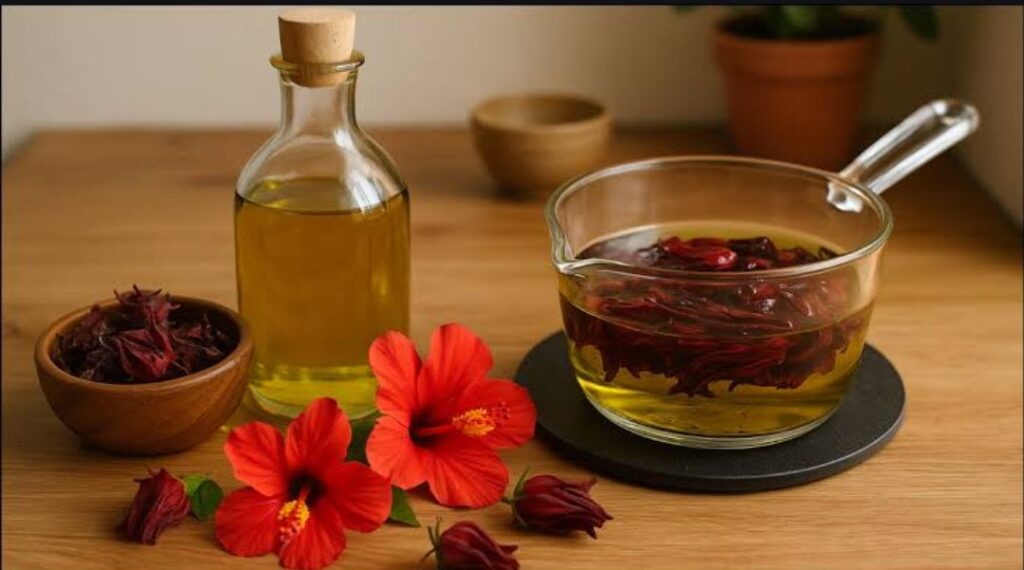
आज के आधुनिक युग में बालों का गिरना, असमय सफेद होना और कमजोर होकर टूटना एक बड़ी समस्या बन गई है। लोग महंगे-महंगे रासायनिक उत्पादों में समाधान ढूंढते हैं, लेकिन इनसे समस्या कुछ समय के लिए ही कम होती है। लंबे समय तक बालों की सेहत को बनाए रखने के लिए आयुर्वेदिक और पारंपरिक उपाय सबसे प्रभावशाली होते हैं। गुड़हल का फूल (Hibiscus Flower) उन्हीं प्राकृतिक तत्वों में से एक है, जिसका उपयोग सदियों से भारत में बालों की सुंदरता और मजबूती के लिए किया जाता रहा है। गुड़हल में भरपूर मात्रा में एंटीऑक्सीडेंट्स, अमीनो एसिड, विटामिन सी और फ्लेवेनॉइड्स पाए जाते हैं। ये तत्व बालों की जड़ों को पोषण देते हैं, उनका समय से पहले सफेद होना रोकते हैं और बालों को घना तथा चमकदार बनाते हैं। इस ब्लॉग में हम जानेंगे कि घर पर ताजे गुड़हल के फूलों से कैसे शुद्ध और असरदार तेल तैयार किया जाता है।गुड़हल के फूलों से घर पर बनाएं पोषक तेल…
गुड़हल का तेल बालों के लिए एक सम्पूर्ण औषधि माना जाता है। इसके अनेक लाभ हैं जो इसे रोजमर्रा की हेयर केयर रूटीन में शामिल करना जरूरी बनाते हैं।
बालों का गिरना रोके गुड़हल में मौजूद पोषक तत्व हेयर फॉलिकल्स को पुनर्जीवित करते हैं और बालों की जड़ों को मजबूत बनाते हैं। इससे बाल टूटने और झड़ने की समस्या धीरे-धीरे कम होती है।
सफेद बालों को रोकता है गुड़हल का तेल नियमित लगाने से बालों का प्राकृतिक काला रंग बरकरार रहता है। इसमें प्राकृतिक रंजक होते हैं जो पिग्मेंटेशन सुधारने में मदद करते हैं।
स्कैल्प की सेहत बेहतर करता है यह तेल एंटी-बैक्टीरियल गुणों से भरपूर होता है, जो डैंड्रफ, खुजली और संक्रमण को कम करता है।
बालों में घनत्व और चमक बढ़ाता है नियमित उपयोग से बाल घने और मुलायम हो जाते हैं। उनकी प्राकृतिक चमक लौट आती है।
बालों की लंबाई बढ़ाने में सहायक गुड़हल तेल बालों की जड़ों में रक्त संचार बढ़ाता है जिससे बाल तेजी से बढ़ते हैं।
1. सबसे पहले फूलों और पत्तों को साफ पानी में अच्छी तरह धो लें।
2. इन्हें 15 मिनट के लिए कपड़े पर रखकर सुखा लें।
3. अब एक कड़ाही में नारियल का तेल डालें और हल्का गर्म करें।
4. जैसे ही तेल थोड़ा गर्म हो जाए, उसमें फूल और पत्ते डालें।
5. धीमी आंच पर फूलों को पकाएं। धीरे-धीरे तेल का रंग बदलने लगेगा और फूल सिकुड़ने लगेंगे।
6. तेल को 15–20 मिनट पकाने के बाद गैस बंद कर दें।
7. तेल को कमरे के तापमान पर ठंडा होने दें।
8. 6–8 घंटे बाद इसे छान लें और एक कांच की बोतल में भर लें।
इस तरह घर में बना पोषक तेल तैयार हो जाएगा। इसे 4–6 महीने तक आराम से स्टोर किया जा सकता है।
गुड़हल के तेल को लगाने का सही तरीका
गुड़हल का तेल लगाने का सर्वोत्तम तरीका यह है कि इसे रात में बालों में लगा कर छोड़ दें। इससे पोषक तत्व बालों की जड़ों तक पूरी तरह पहुंचते हैं।
लागू करने की विधि
1. बालों की जड़ों में हल्के हाथ से मसाज करें।
2. पूरी स्कैल्प पर तेल को समान रूप से फैलाएं।
3. बालों को हल्के कपड़े से ढक लें।
4. अगली सुबह माइल्ड शैम्पू से बाल धो लें।
यदि आप रात में न लगाना चाहें, तो नहाने से 1–2 घंटे पहले भी यह तेल लगा सकते हैं।
गुड़हल तेल के अन्य उपयोग
हेयर मास्क के रूप में गुड़हल के फूलों को पीसकर पेस्ट बनाएं और बालों में लगाएं। 30–60 मिनट बाद धो लें।
गुड़हल पाउडर का उपयोग बाजार में मिलने वाला गुड़हल पाउडर नारियल तेल में मिलाकर 20–30 मिनट तक बालों में लगाएं।
मेथी और करी पत्ता के साथ मिश्रण गुड़हल, मेथी और करी पत्ते को एक साथ पकाकर तेल बनाएं और सप्ताह में दो बार उपयोग करें।
स्प्रे के रूप में फूलों को पानी में उबालकर छान लें। इस पानी को स्प्रे बोतल में भरकर बालों पर छिड़कें।
—
गुड़हल तेल से जुड़े उपयोगी सुझाव
✅ तेल हमेशा कांच की बोतल में ही रखें। ✅ इसे ठंडी और सूखी जगह पर स्टोर करें। ✅ सप्ताह में कम से कम 2 बार उपयोग करें। ✅ माइल्ड शैम्पू का ही उपयोग करें। ✅ रात में लगाने पर सर्वोत्तम परिणाम मिलते हैं।
—
निष्कर्ष
गुड़हल का तेल बालों के लिए प्रकृति का दिया एक अनमोल तोहफा है। यह बालों की जड़ों को पोषण देता है, स्कैल्प को स्वस्थ बनाता है और बालों में प्राकृतिक घनत्व तथा चमक लाता है। इसके नियमित उपयोग से असमय सफेद बालों की समस्या, बालों का झड़ना और कमजोर होना दूर हो सकता है।
यदि आप चाहते हैं कि आपके बाल लंबे समय तक घने, काले और मजबूत बने रहें, तो इस पारंपरिक उपाय को अपनी हेयर केयर रूटीन में अवश्य शामिल करें।
Top SLS free toothpaste 2025. What Is SLS in Toothpaste? In the contemporary oral care landscape, consumers are increasingly attentive to product ingredients and their impact on health. One such ingredient under scrutiny is Sodium Lauryl Sulfate (SLS).
SLS is a synthetic surfactant commonly used in toothpaste formulations to create foam and aid in cleaning the teeth and gums. While it is effective at removing debris and dispersing plaque, SLS has also been associated with certain adverse effects.
This has paved the way for the SLS-free toothpaste segment, which is rapidly gaining traction among health-conscious consumers who value both efficacy and safety. With SLS free toothpaste 2025
SLS is traditionally used because it: SLS free toothpaste
Creates Lather: Consumers equate foam with cleaning power.
Emulsifies Oils: It breaks down and disperses fats and food particles.
Enhances Spreadability: The paste distributes evenly in the mouth.
Despite these functional benefits, SLS has some drawbacks that have motivated brands to develop SLS-free alternatives.
Potential Risks of SLS in Oral Care
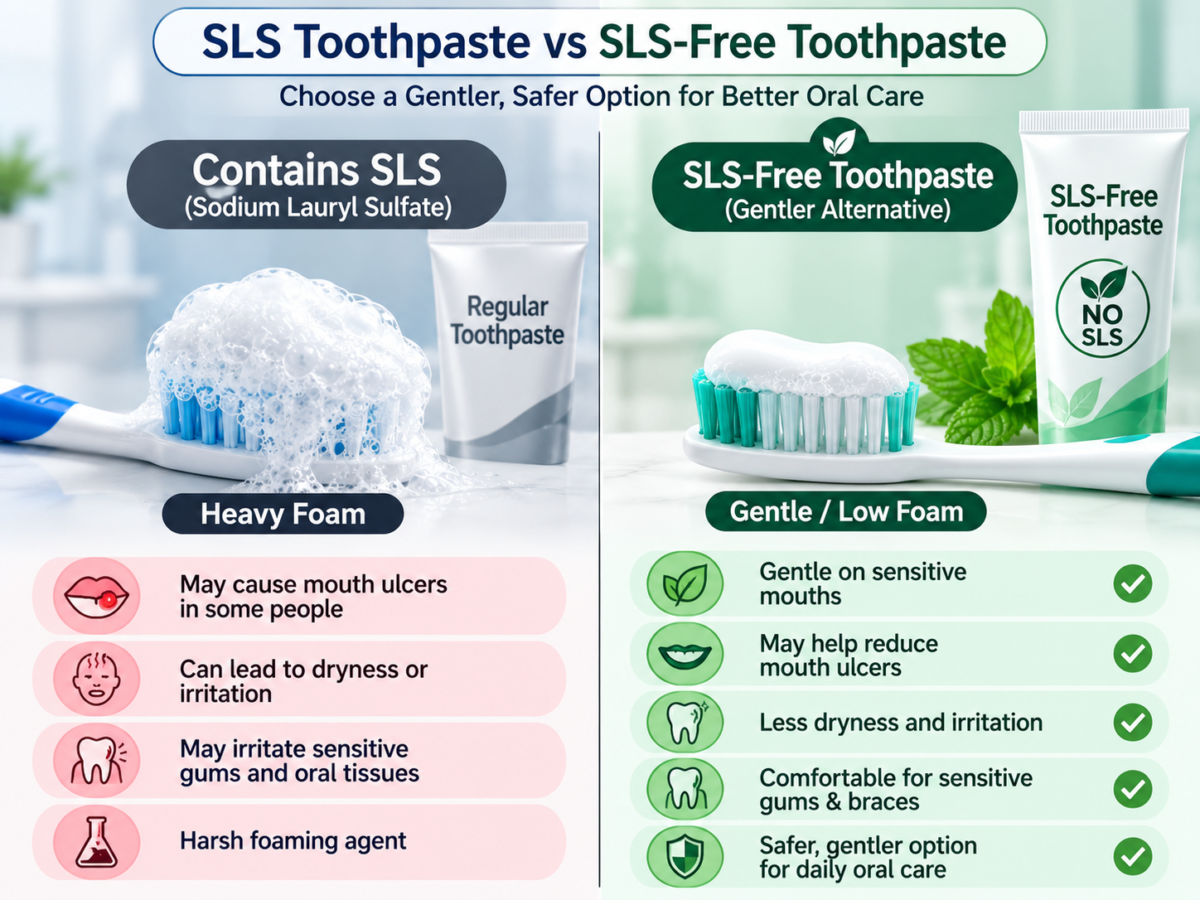
From a regulatory standpoint, SLS is considered safe within prescribed limits. However, long-term and sensitive users have reported side effects, including:
Mouth Irritation: SLS can strip the mucosal lining, causing burning or sensitivity.
Recurrent Canker Sores: Studies have linked SLS to higher incidence of aphthous ulcers.
Dry Mouth: SLS can disturb the natural saliva balance.
Altered Taste Perception: Some individuals report temporary taste alteration after brushing.
For people with sensitive gums, oral ulcers, or dry mouth syndrome, these risks are significant enough to justify a switch to SLS-free formulations.
What Is SLS-Free Toothpaste?
SLS-free toothpaste is formulated without Sodium Lauryl Sulfate. Instead, it uses alternative mild surfactants such as:
Cocamidopropyl Betaine (CAPB): Derived from coconut oil, it is gentler and less irritating.
Sodium Cocoyl Glutamate: A mild, biodegradable surfactant.
Decyl Glucoside: Plant-based foaming agent, commonly used in natural formulations.
These ingredients deliver cleaning action without the harsh side effects associated with SLS.
Safer for Children: SLS-free formulations are recommended for kids who might swallow toothpaste inadvertently.
Compatible with Homeopathic Treatments: Many homeopathic users prefer SLS-free pastes, as SLS can interfere with certain remedies.
How to Identify SLS-Free Toothpaste
When evaluating a toothpaste, check the Ingredients List on the packaging. Look for any of these labels or indications:
“SLS-Free” printed on front panel
Ingredients like Cocamidopropyl Betaine or Sodium Cocoyl Glutamate instead of Sodium Lauryl Sulfate
Certifications such as Natural, Organic, or Ayurvedic, which often avoid SLS
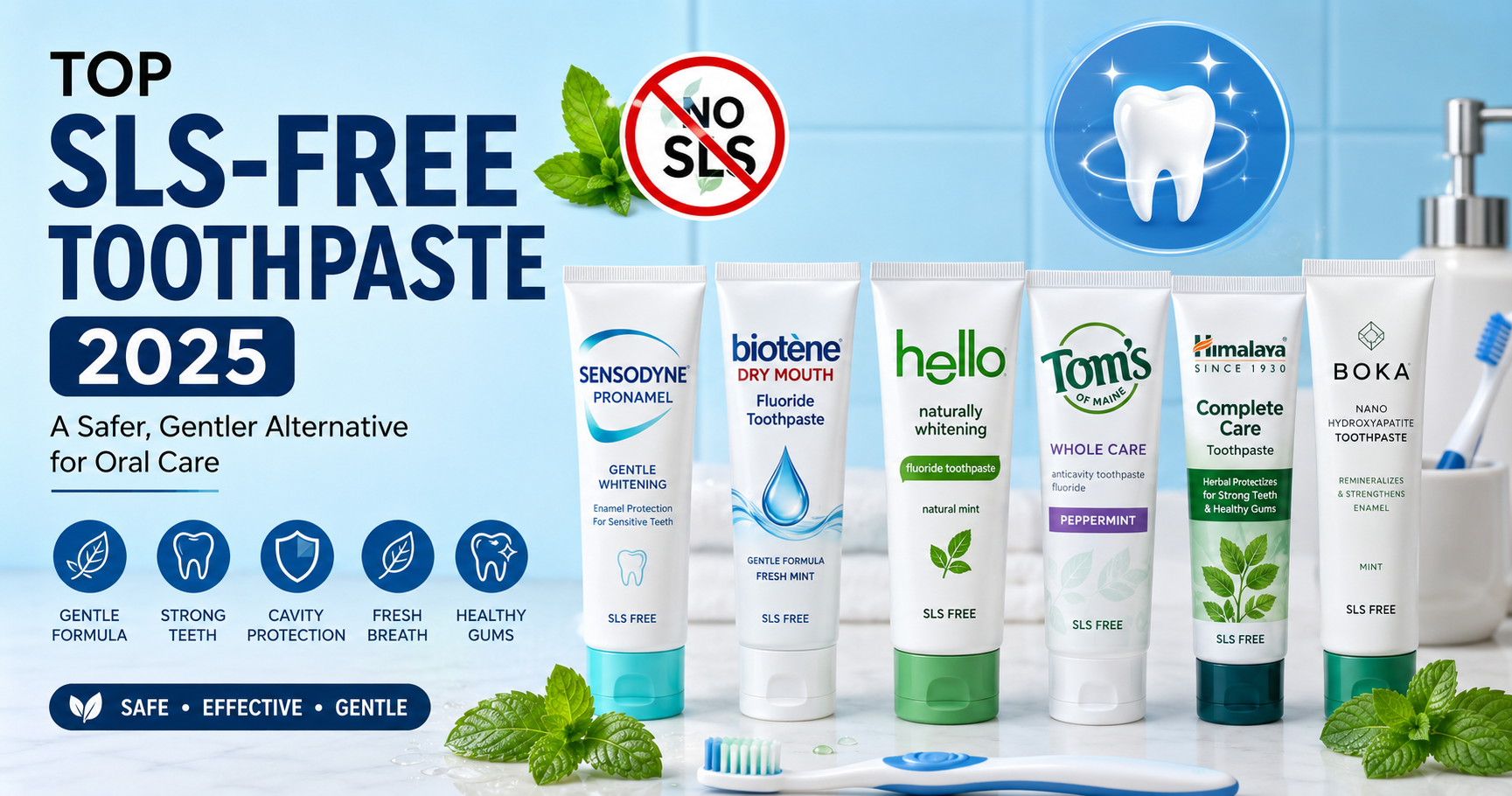
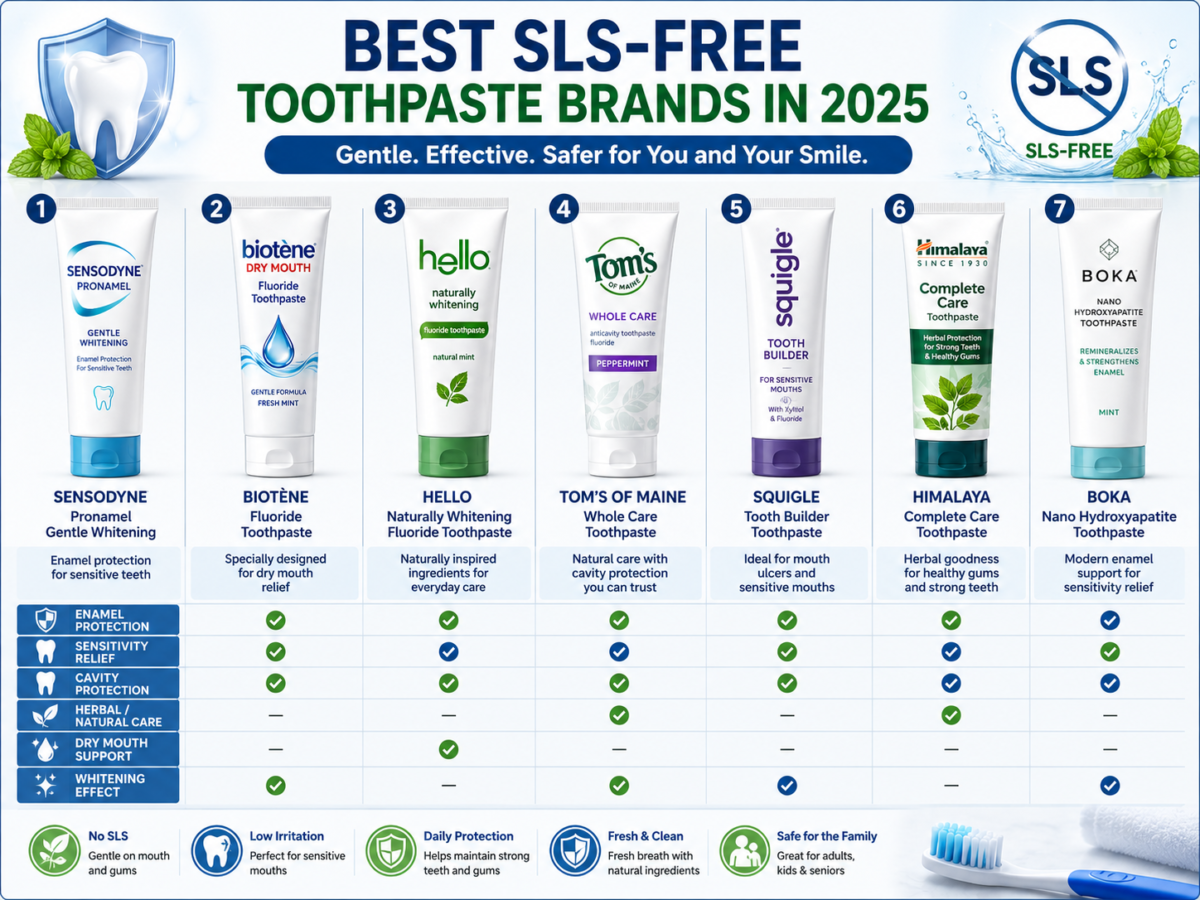
Examples of well-known SLS-free toothpaste brands:
Sensodyne SLS-Free
Tom’s of Maine
Himalaya Herbal Toothpaste
Biotene Dry Mouth Toothpaste
Is SLS-Free Toothpaste Effective in Cleaning Teeth?
A common misconception is that less foam means less cleaning power. In reality, the cleaning efficacy primarily depends on:
Abrasive agents (like silica) for plaque removal
Fluoride content to protect against cavities
Anti-bacterial essential oils or extracts
SLS simply assists in spreading and foaming but does not clean teeth itself. Therefore, SLS-free toothpaste is equally effective when formulated with proven cleaning and anti-cavity agents.
Considerations Before Switching
If you are contemplating transitioning to SLS-free toothpaste:
Assess your oral health: If you suffer from canker sores, burning sensations, or dry mouth, you are an ideal candidate.
Trial period: It may take a few days to get accustomed to less foam.
Consult your dentist: Especially if you have advanced periodontal disease or require specialized fluoride content.
Modern consumers are inclined towards eco-friendly and cruelty-free products. Many SLS-free brands also:
Avoid artificial colors and flavors
Use recyclable packaging
Offer vegan and cruelty-free certifications
This aligns with broader sustainability goals and resonates with environmentally conscious users.
How to Market SLS-Free Toothpaste (For Manufacturers & Retailers)
For cosmetic and oral care brands, highlighting these USPs can position the product effectively:
“Ideal for sensitive mouths and daily use”
“Dermatologist and dentist recommended”
“SLS-Free, Paraben-Free, and Fluoride-Optimized”
“Crafted with natural ingredients”
Clear labeling and consumer education play a pivotal role in driving adoption.
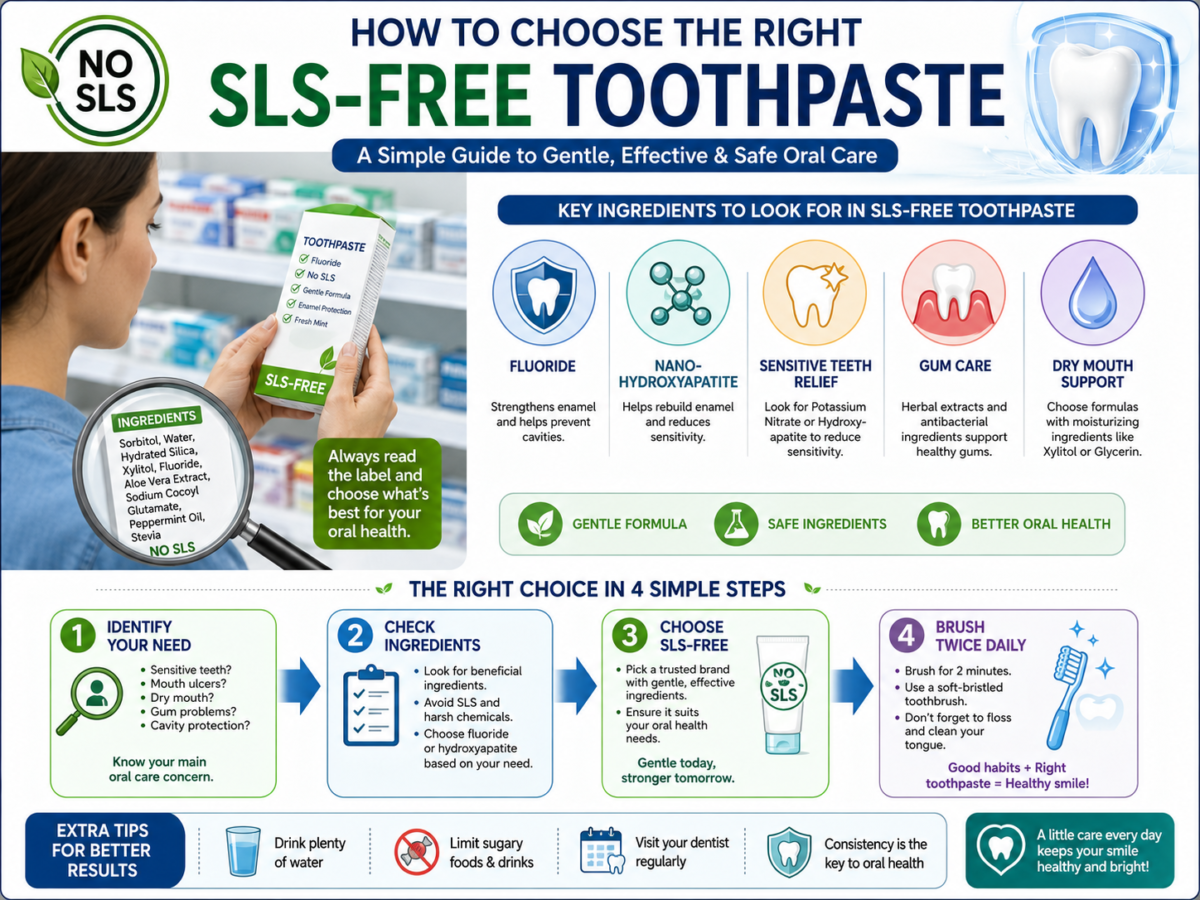
How to Choose the Best SLS-Free Toothpaste
Not every SLS-free toothpaste is the same. While they all avoid Sodium Lauryl Sulfate (SLS), they may contain different active ingredients designed for specific oral health needs.
Before buying a toothpaste, think about your biggest concern. Are you trying to prevent cavities, reduce tooth sensitivity, improve gum health, or simply avoid harsh ingredients? Choosing a product that matches your needs will give you better results than selecting one based only on brand or packaging.
Here are the most important factors to consider.
1. Check the Active Ingredients
The ingredients that actively protect your teeth are more important than the amount of foam a toothpaste produces.
Look for ingredients that match your oral health goals.
Fluoride
Fluoride is one of the most researched ingredients in dentistry. It helps strengthen enamel, reduce the risk of cavities, and repair early stages of tooth decay.
It is an excellent choice for most adults and children (when used in the recommended amount).
Nano-Hydroxyapatite
Nano-hydroxyapatite is becoming increasingly popular in modern toothpaste.
It works by helping rebuild weakened enamel and reducing tooth sensitivity. Some people choose it as an alternative to fluoride, although both ingredients can be effective when used correctly.
Xylitol
Xylitol is a natural sweetener that may help reduce the growth of cavity-causing bacteria.
It also provides a pleasant taste without adding sugar.
Potassium Nitrate
If you experience sharp pain when eating ice cream or drinking hot tea, potassium nitrate may help reduce tooth sensitivity over time.
2. Choose Based on Your Oral Health Needs
Instead of buying the most expensive toothpaste, choose one that matches your dental concerns.
For Sensitive Teeth
Look for formulas containing:
Potassium nitrate
Nano-hydroxyapatite
Fluoride
For Gum Care
Choose toothpaste with ingredients that support healthy gums, such as:
Herbal extracts
Fluoride
Mild cleansing agents
For Dry Mouth
Select products designed to retain moisture and avoid irritating ingredients.
For Everyday Protection
A simple fluoride-based SLS-free toothpaste is often enough for daily cavity prevention.
3. Avoid Buying Based Only on Whitening Claims
Many whitening toothpastes promise brighter teeth within days.
In reality, most whitening toothpaste removes only surface stains caused by coffee, tea, or smoking.
They cannot dramatically change your natural tooth color.
If a whitening toothpaste is very abrasive, using it too often may wear down enamel over time.
Choose gentle whitening formulas instead of highly abrasive products.
4. Read the Ingredient List
Marketing words like “Natural,” “Organic,” or “Herbal” do not always tell the full story.
Always read the ingredient list before purchasing.
Check for:
Fluoride (if desired)
SLS-free label
Active ingredients
Expiry date
Trusted manufacturer
Ingredients Some People Prefer to Avoid
Although not everyone needs to avoid these ingredients, some people choose gentler formulas containing fewer additives.
These may include:
Sodium Lauryl Sulfate (SLS)
Artificial colors
Excessively strong flavoring agents
Harsh abrasives (in some whitening formulas)
If you have sensitive oral tissues, a simpler formula may feel more comfortable.
Common Myths About SLS-Free Toothpaste
Many misconceptions exist about SLS-free toothpaste. Let’s clear up some of the most common ones.
Myth 1: Less Foam Means Poor Cleaning
Fact: Foam does not clean your teeth.
Brushing technique, brushing time, and active ingredients are what remove plaque effectively.
Fact: Many SLS-free toothpastes contain fluoride or other enamel-supporting ingredients that help protect against cavities just as effectively as regular toothpaste.
Myth 3: Natural Toothpaste Is Always Better
Fact: Natural ingredients can be beneficial, but they should still provide effective cavity protection.
Choose products with evidence-based active ingredients rather than relying only on marketing claims.
Myth 4: Everyone Should Stop Using SLS
Fact: Not necessarily.
Many people use SLS-containing toothpaste every day without experiencing any irritation.
Switching to SLS-free toothpaste is usually most beneficial for people with sensitive mouths, frequent mouth ulcers, or dryness.
Expert Tips for Better Oral Care
Using a good toothpaste is only one part of maintaining healthy teeth and gums. Daily habits play an even bigger role.
Brush Twice a Day
Brush your teeth every morning and before bedtime for about two minutes each time.
Use a Soft-Bristled Toothbrush
A soft toothbrush cleans effectively while reducing the risk of damaging your gums or enamel.
Replace your toothbrush every three to four months, or sooner if the bristles become worn.
Clean Between Your Teeth Daily
Brushing alone cannot remove all plaque from between teeth.
Use:
Dental floss
Interdental brushes
Water flossers (if recommended)
Limit Sugary Foods and Drinks
Frequent consumption of sugary snacks and beverages feeds bacteria that produce acids, increasing the risk of tooth decay.
Try to:
Drink more water.
Rinse your mouth after sugary foods.
Avoid frequent snacking throughout the day.
Stay Hydrated
Saliva naturally helps protect your teeth by washing away food particles and neutralizing acids.
Drinking enough water throughout the day supports a healthy oral environment, especially if you experience dry mouth.
Visit Your Dentist Regularly
Even with excellent brushing habits, regular dental check-ups are essential.
Professional cleanings and examinations can help detect problems early, making treatment easier and more effective.
Common Mistakes to Avoid
Many people unknowingly reduce the effectiveness of their oral care routine. Avoid these common mistakes:
Brushing too hard, which can wear down enamel and irritate gums.
Using a worn-out toothbrush with frayed bristles.
Brushing for less than two minutes.
Skipping flossing or cleaning between teeth.
Choosing toothpaste based only on advertisements instead of your dental needs.
Ignoring persistent symptoms like bleeding gums, mouth ulcers, or tooth sensitivity instead of consulting a dentist
Are There Any Side Effects of SLS-Free Toothpaste?
For most people, SLS-free toothpaste is safe to use every day. Since it does not contain Sodium Lauryl Sulfate, it is generally less likely to cause irritation for people with sensitive mouths.
However, keep these points in mind:
Some formulas may have a milder taste or produce less foam, which can take a few days to get used to.
Herbal toothpastes may contain plant extracts that can cause allergic reactions in some individuals.
Fluoride-free toothpaste may not provide the same level of cavity protection for everyone. If you’re unsure, ask your dentist which type is best for you.
If you notice persistent irritation, swelling, or discomfort after using any toothpaste, stop using it and consult a dental professional.
Should You Switch to SLS-Free Toothpaste?
Switching to SLS-free toothpaste is a personal choice rather than a necessity for everyone.
You may benefit from making the switch if you:
Experience frequent mouth ulcers
Have sensitive gums or a burning sensation while brushing
Suffer from dry mouth
Wear braces or other orthodontic appliances
Prefer gentle oral care products with less foam
If your current toothpaste works well and doesn’t cause irritation, there may be no need to change. The best toothpaste is the one that supports your oral health and encourages you to brush consistently.
Final Buying Checklist
Before purchasing an SLS-free toothpaste, ask yourself these questions:
✔ Is it clearly labeled SLS-Free?
✔ Does it contain fluoride or another proven enamel-supporting ingredient if cavity protection is your goal?
✔ Is it suitable for your specific concern (sensitivity, dry mouth, gum care, or whitening)?
✔ Is it made by a trusted manufacturer?
✔ Is the expiry date valid?
✔ Have you checked the ingredient list for anything you’re allergic or sensitive to?
Using this simple checklist can help you make a more informed choice.
Conclusion
SLS-free toothpaste has become a popular choice in 2025 because it offers a gentle yet effective way to care for your teeth and gums. While Sodium Lauryl Sulfate helps create foam, it isn’t responsible for cleaning your teeth. Proper brushing technique, good oral hygiene habits, and the right active ingredients are what truly make a difference.
If you have a sensitive mouth, frequent mouth ulcers, dry mouth, or simply prefer products with milder ingredients, an SLS-free toothpaste may improve your daily brushing experience.
Remember that no toothpaste can replace healthy oral habits. Brush twice a day, floss daily, limit sugary foods and drinks, and schedule regular dental check-ups to keep your smile healthy for years to come.
Choosing the right toothpaste doesn’t have to be complicated. By understanding your oral health needs and reading ingredient labels carefully, you can confidently select an SLS-free toothpaste that supports your long-term dental health.
Frequently Asked Questions (FAQs)
1. What is SLS in toothpaste?
SLS (Sodium Lauryl Sulfate) is a foaming agent used in many toothpastes. It helps spread the toothpaste while brushing but is not responsible for preventing cavities or cleaning teeth.
2. Is SLS-free toothpaste better?
It depends on your needs. SLS-free toothpaste is often a better option for people with sensitive mouths, dry mouth, or frequent mouth ulcers. For others, both SLS and SLS-free toothpaste can be effective.
3. Does SLS-free toothpaste clean teeth properly?
Yes. Cleaning effectiveness depends on your brushing technique, brushing time, and the toothpaste’s active ingredients—not the amount of foam it produces.
4. Can SLS-free toothpaste prevent cavities?
Yes. Many SLS-free toothpastes contain fluoride or nano-hydroxyapatite, which help strengthen enamel and reduce the risk of cavities.
5. Is SLS-free toothpaste safe for children?
Many SLS-free toothpastes are suitable for children, but always choose an age-appropriate product and follow the manufacturer’s instructions. Young children should use only a pea-sized amount of toothpaste unless otherwise advised by a dentist.
6. Can SLS-free toothpaste help with mouth ulcers?
Some people who frequently experience mouth ulcers find that switching to an SLS-free toothpaste reduces irritation and makes brushing more comfortable. Results can vary from person to person.
7. Is SLS-free toothpaste suitable for sensitive teeth?
Yes. Many SLS-free toothpastes are specially formulated for sensitive teeth and include ingredients like potassium nitrate or nano-hydroxyapatite to help reduce sensitivity.
8. Can I use SLS-free toothpaste every day?
Absolutely. Most SLS-free toothpastes are designed for daily use and provide effective oral care when used as part of a consistent brushing routine.


 1. बालों की जड़ों को मज़बूती प्रदान करना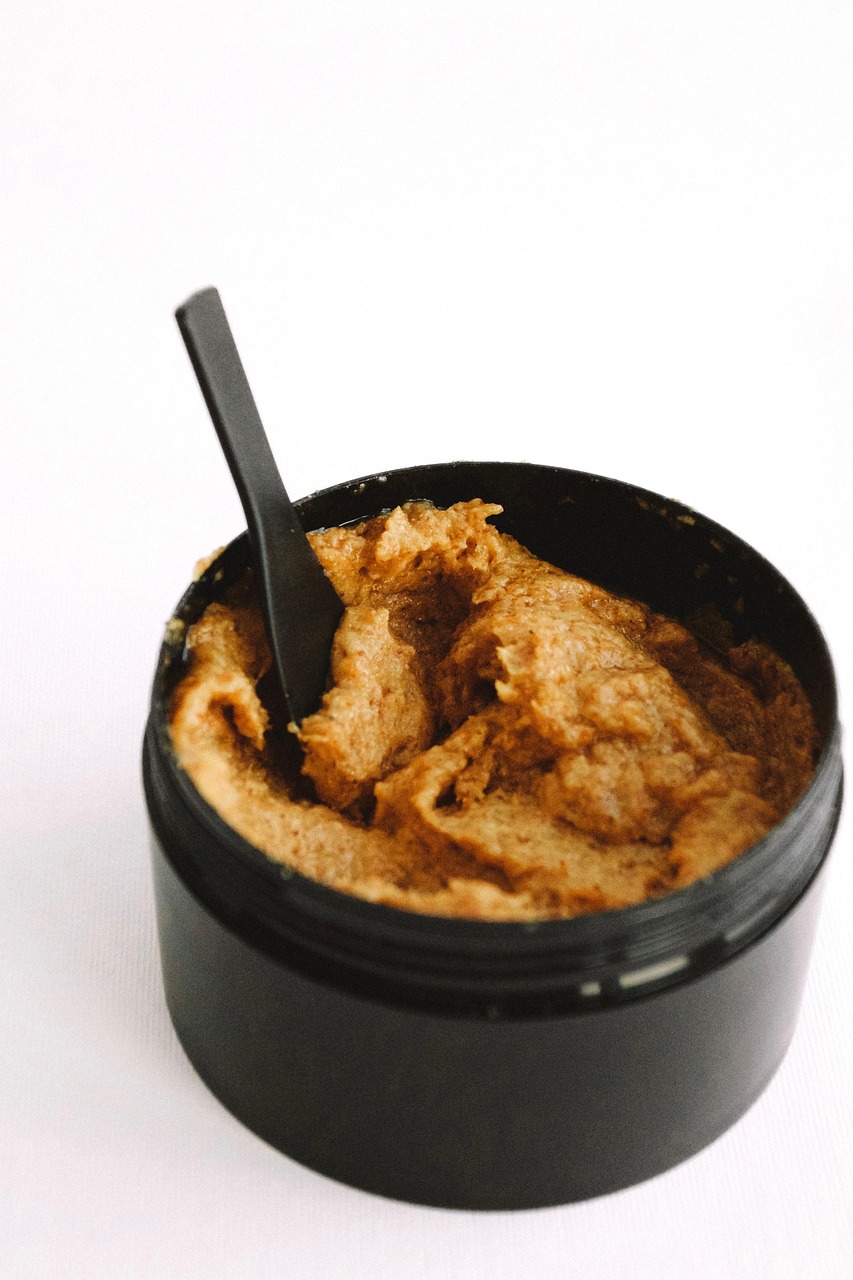
 बालों का गिरना रोके