आज के समय में पुरुषों के लिए बालों की देखभाल उतनी ही ज़रूरी हो गई है जितनी महिलाओं के लिए। बढ़ता प्रदूषण, तनाव, और गलत खान-पान बालों को नुकसान पहुँचा सकता है। ऐसे में एक अच्छा हेयर सीरम न सिर्फ आपके बालों की खूबसूरती को बनाए रखता है, बल्कि उन्हें मज़बूत भी बनाता है।
इस ब्लॉग में हम बात करेंगे:
हेयर सीरम क्या होता है?
पुरुषों के लिए हेयर सीरम के फायदे
2025 में मिलने वाले टॉप 5 बेस्ट हेयर सीरम
और कैसे चुनें अपने लिए सही हेयर सीरम
हेयर सीरम क्या होता है?
हेयर सीरम एक लिक्विड हेयर केयर प्रोडक्ट है जो आपके बालों पर एक प्रोटेक्टिव लेयर बनाता है। यह बालों को:
फ्रिज़-फ्री बनाता है
स्मूद और शाइनी लुक देता है
हीट प्रोटेक्शन प्रदान करता है
बालों को टूटने से बचाता है
✅ पुरुषों के लिए हेयर सीरम के फायदे
बालों की चमक बढ़ाता है
फ्रिज़ और ड्राइनेस से राहत
हीट और पोल्यूशन से सुरक्षा
बालों को टूटने से बचाता है
हेयर ग्रोथ में मददगार
🏆 2025 के टॉप 5 बेस्ट हेयर सीरम फॉर मेन
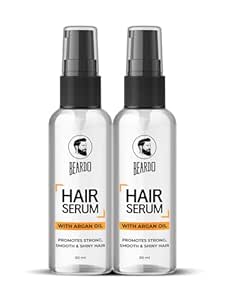
1. Beardo Hair Serum with Argan Oil
विशेषता: ड्राय और फ्रिज़ी बालों के लिए बेस्ट
फॉर्मूला: नॉन-स्टिकी और लाइट
कीमत: ₹350 – ₹500*
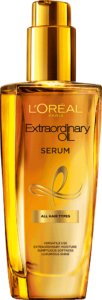
2. L’Oreal Paris Extraordinary Oil Serum
विशेषता: सभी बालों के प्रकार के लिए
फायदा: हीट प्रोटेक्शन + स्मूदनेस
कीमत: ₹600 – ₹800*
3. Mamaearth Onion Hair Serum
विशेषता: हेयर फॉल कम करने में मददगार
इंग्रीडिएंट्स: प्याज़, बायोटिन, सल्फर फ्री
कीमत: ₹350 – ₹450*
4. Ustraa Hair Growth Vitalizer
विशेषता: हेयर ग्रोथ को प्रमोट करता है
इंग्रीडिएंट्स: 17 नेचुरल एक्टिव्स
कीमत: ₹700 – ₹900*
5. The Man Company Hair Serum (Argan + Almond Oil)
विशेषता: शाइनी और मुलायम बाल
फायदा: पोषण + हेयर रिपेयर
कीमत: ₹400 – ₹550*
💡 कैसे चुनें अपने लिए सही हेयर सीरम?
समस्या
सलाह
ड्राय और रूखे बाल
Argan Oil या Almond Oil युक्त सीरम
हेयर फॉल की शिकायत
Onion Extract या Biotin वाला सीरम
स्टाइलिंग करते हैं
Silicone-based हीट प्रोटेक्शन सीरम
डैंड्रफ की समस्या
Tea Tree Oil या Neem वाला सीरम
📝 कैसे इस्तेमाल करें हेयर सीरम?
सबसे पहले बालों को धो लें (शैम्पू के बाद)
हल्के गीले बालों में 2-3 बूंद सीरम लें
हथेलियों में रगड़ें और बालों के सिरों से लगाना शुरू करें
स्कैल्प पर न लगाएं (जब तक वो स्कैल्प-फोकस्ड न हो)
अब आप बालों को कंघी करके सेट कर सकते हैं
🔚 निष्कर्ष (Conclusion)
हेयर सीरम एक ज़रूरी हेयर केयर स्टेप है, खासकर जब आप अपने बालों को फ्रिज़, टूटने और डलनेस से बचाना चाहते हैं। ऊपर बताए गए हेयर सीरम ब्रांड्स न केवल प्रभावी हैं, बल्कि आपके बजट और जरूरतों के अनुसार भी फिट बैठते हैं।
अब बालों की देखभाल बनाएं आसान – सही सीरम से पाएं दमकते और हेल्दी बाल!
Hair is one of the most important aspects of personal grooming, not just for women but also for men. Whether you’re styling for a professional look, managing frizz, fighting hair fall, or dealing with thinning hair, a good hair serum can make a massive difference. In this blog post, we explore the best hair serums for men in 2025, how to choose the right one for your needs, how to use it effectively, and frequently asked questions.
What is Hair Serum?
Hair serum is a styling and treatment product formulated to coat the surface of the hair. It adds shine, smoothness, frizz control, and often protects hair from environmental damage. Depending on the ingredients, some serums also promote hair growth, scalp nourishment, and damage repair.
🔹 Benefits of Hair Serum for Men
While traditionally associated with women’s grooming, hair serums have become essential in men’s hair care too. Here’s why:
✅ Reduces frizz and gives a neat look
✅ Adds shine without making hair greasy
✅ Protects from dust, UV rays, and heat styling
✅ Controls split ends
✅ Reduces hair breakage
✅ Improves manageability for styling
🔹 Types of Hair Serums for Men
Understanding your hair type and goal will help you choose the right serum:
Hair Concern Type of Serum You Need
Frizzy hair Argan oil-based smoothing serums Hair fall Biotin & Redensyl growth serums Dull & dry hair Nourishing serum with Vitamin E Oily scalp Lightweight, water-based serums Thinning hair Scalp-activating serum with Caffeine
Top 10 Best Hair Serums for Men in 2025
Here are the best-performing serums currently trending in India and globally:
1. L’Oréal Paris Extraordinary Oil Serum
Best For: Frizz, dryness, dullness
Key Ingredients: 6 rare flower oils
Pros: Silky shine, non-sticky, budget-friendly
Why It’s Great: Works instantly, safe for daily use
Price Range: ₹550 – ₹650
2. Beardo Hair Serum With Argan Oil
Best For: Men with thick, coarse, or frizzy hair
Key Ingredients: Argan Oil, Almond Oil
Pros: Natural feel, no parabens, dual use for beard & hair
Why It’s Great: Perfect for rough hair texture
Price Range: ₹650 – ₹800
3. Ustraa Hair Growth Vitalizer
Best For: Men facing hair thinning or early hair loss
9. WOW Skin Science Red Onion Black Seed Oil Hair Serum
Best For: Strengthening weak hair strands
Key Ingredients: Red Onion Extract, Black Seed Oil
Pros: Natural formulation, no artificial fragrance
Why It’s Great: Ayurvedic touch
Price Range: ₹500 – ₹650
10. Biotique Bio Almond & Castor Serum
Best For: Nourishing & strengthening hair
Key Ingredients: Almond Oil, Castor Oil
Pros: Herbal formula, strengthens hair roots
Why It’s Great: Eco-friendly and affordable
Price Range: ₹300 – ₹400
🔹 How to Use Hair Serum Correctly
Using hair serum the wrong way can make your hair greasy or even damage it. Here’s a step-by-step guide:
✅ Step-by-Step Usage:
1. Wash your hair – Use a mild shampoo
2. Towel-dry – Make sure your hair is damp but not dripping
3. Take 2–4 drops of serum on your palm
4. Rub your hands together to spread evenly
5. Apply on hair length, avoiding the scalp (unless it’s a growth serum)
6. Comb or style as desired
🧴 For Scalp Serums (like Minimalist or Ustraa
Apply directly on scalp
Gently massage with fingers
Best used at night before bed
Hair Serum vs Hair Oil: What's the Difference?
Feature Hair Serum Hair Oil
Texture Light & silicone-based Thick & greasy Purpose Styling, shine, protection Deep nourishment, repair Application Time Before styling Before washing (pre-wash) Wash Required? No Yes
If you want style and protection, go for serum. If you want deep nourishment, use oil once or twice a week.
Homemade Natural Hair Serums for Men
Common Mistakes to Avoid
❌ Applying too much serum — causes greasiness
❌ Using on dirty/oily hair — makes it worse
❌ Applying directly to scalp (unless it’s a growth serum)
❌ Using heat immediately after serum not meant for heat protection
Why It’s Great: This serum stimulates hair follicles, helps reduce hair fall, and promotes new hair growth. It’s lightweight, non-sticky, and suitable for all hair types.
Best For: Women with thinning hair looking for fast and visible results.
Why It’s Great: A powerful combination of five clinically proven ingredients. Many users report visible improvement in hair thickness and reduced hair fall within 4 weeks.
Best For: Those looking for a science-backed formula with no harsh chemicals or fragrance.
Have you ever stood in front of the mirror wondering, “Should I apply sunscreen before makeup or after foundation?” If yes, you’re not alone. It is one of the most common skincare questions among beginners.
Many people spend time choosing the perfect foundation, concealer, and primer but often get confused about where sunscreen fits into their routine. Some apply it after makeup, while others rely only on the SPF in their foundation. Unfortunately, both mistakes can leave your skin less protected from harmful UV rays.
Sunscreen is much more than a skincare product—it is your skin’s daily defense against sun damage. Whether you’re stepping outside for a few minutes, driving to work, or sitting near a window, your skin is exposed to ultraviolet (UV) rays that can cause tanning, pigmentation, wrinkles, and premature aging over time.
In this beginner-friendly guide, you’ll learn:
The correct time to apply sunscreen during your makeup routine
Whether sunscreen goes before or after makeup
The perfect skincare and makeup order
How to get the best sun protection without ruining your makeup
Common sunscreen mistakes you should avoid
Why Sunscreen Is the Most Important Step in Your Skincare Routine
Many people believe sunscreen is only necessary during summer vacations or beach trips. In reality, your skin is exposed to UV rays every single day—even when the weather is cloudy.
Sun damage doesn’t happen overnight. It builds up slowly over months and years, eventually leading to visible skin concerns.
Daily sun exposure can cause:
Sunburn
Tanning
Dark spots
Pigmentation
Uneven skin tone
Fine lines
Premature wrinkles
Loss of skin elasticity
Even if you have naturally healthy skin, skipping sunscreen regularly can make these problems appear much earlier than expected.
Benefits of Applying Sunscreen Every Day
A good broad-spectrum sunscreen offers several long-term benefits:
Protects against harmful UVA and UVB rays
Reduces the risk of sunburn
Helps prevent premature aging
Minimizes pigmentation and acne marks
Maintains an even skin tone
Supports healthier-looking skin over time
Should You Apply Sunscreen Before or After Makeup?
The answer is simple:
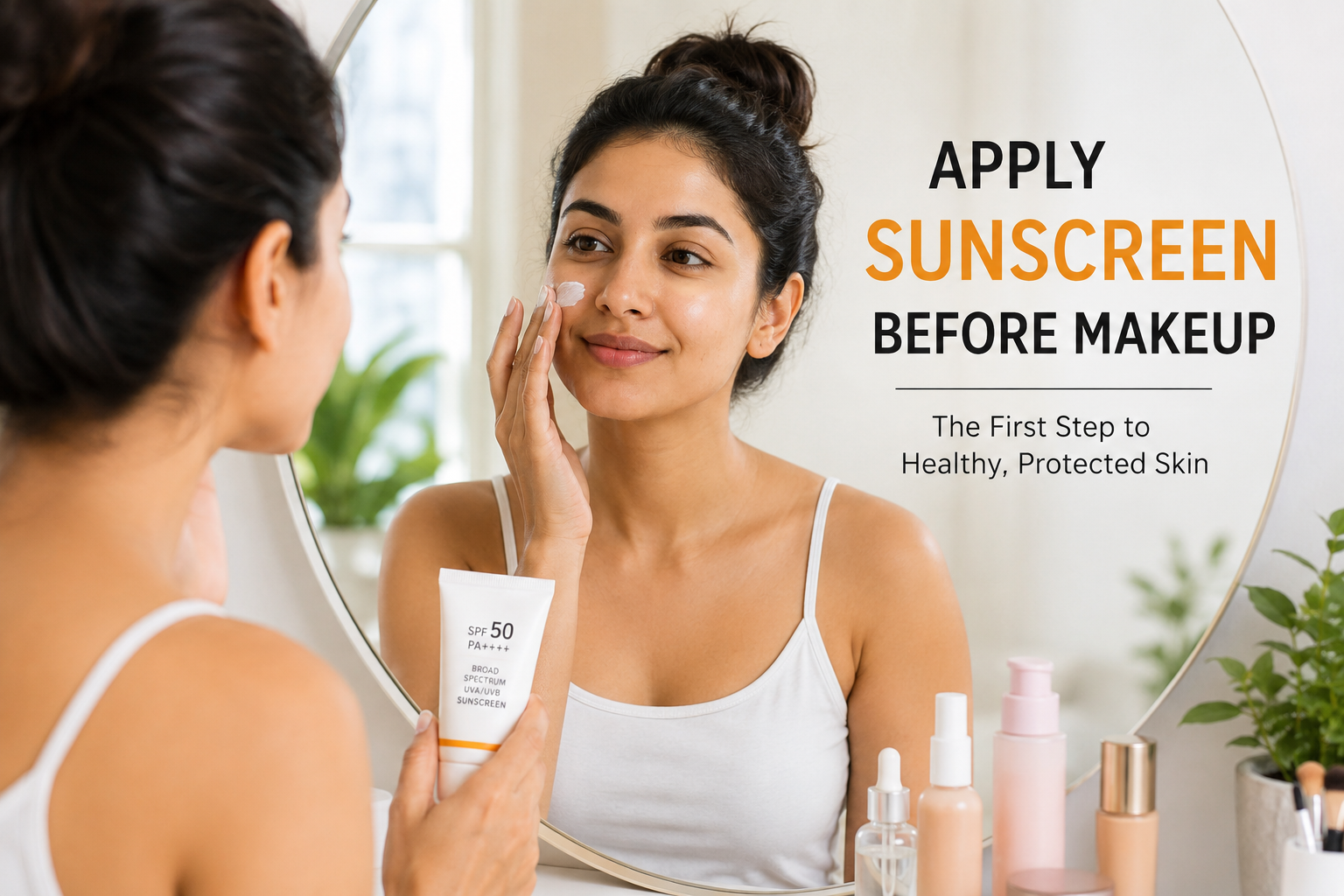
Always apply sunscreen before makeup.
Sunscreen is part of your skincare routine—not your makeup routine.
For sunscreen to provide the SPF protection mentioned on the label, it needs to be applied directly onto your skin after moisturizer and before any makeup products.
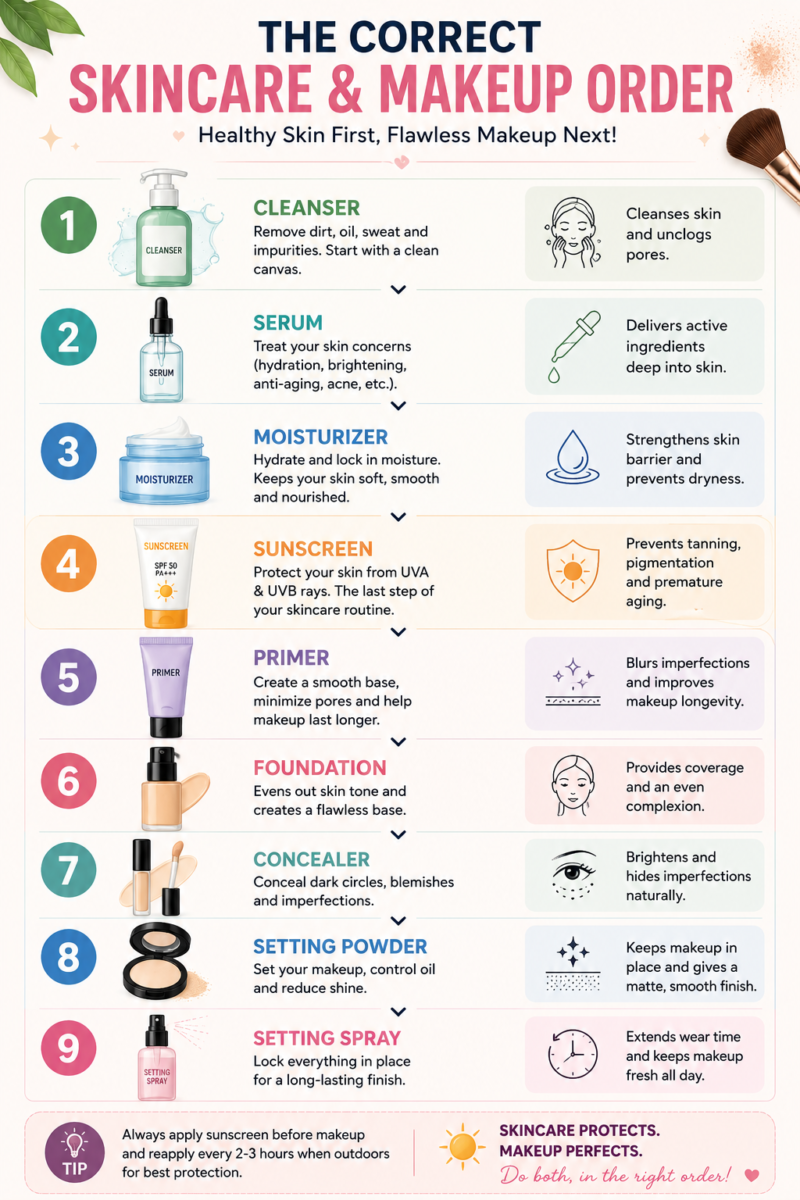
Correct Order
Cleanser
Toner (Optional)
Serum
Moisturizer
Sunscreen
Primer
Foundation
Concealer
Powder
Setting Spray
Following this order allows sunscreen to create an even protective layer before makeup is applied.
Why Sunscreen Should Never Be Applied After Makeup
Applying sunscreen over foundation or concealer may seem convenient, but it often leads to uneven protection and can ruin your makeup.
If sunscreen is applied after makeup, it may:
Smudge foundation
Lift concealer
Create patchy coverage
Reduce SPF effectiveness
Leave some areas of the face unprotected
That’s why dermatologists recommend applying sunscreen on clean, moisturized skin and allowing it to absorb before starting makeup.
The Perfect Sunscreen and Makeup Routine: Step-by-Step
A proper routine helps your sunscreen work effectively while giving you a smooth makeup finish.
Step 1: Cleanse Your Face
Start with a gentle face cleanser to remove excess oil, dirt, sweat, and impurities.
Clean skin helps skincare products absorb more effectively and creates a fresh base for makeup.
Pat your face dry with a soft towel instead of rubbing your skin.
Step 2: Apply Your Serum
After cleansing, apply any treatment serum that suits your skin concern.
For example:
Vitamin C Serum for brightening and antioxidant protection
Niacinamide Serum for oily or acne-prone skin
Hyaluronic Acid Serum for deep hydration
Allow the serum to absorb for about one minute before moving to the next step.
Step 3: Moisturize Your Skin
Many people with oily skin skip moisturizer, but this is a common mistake.
A lightweight moisturizer helps:
Keep the skin hydrated
Strengthen the skin barrier
Prevent dryness
Create a smoother base for sunscreen and makeup
Choose a moisturizer based on your skin type and let it absorb for a minute or two.
Step 4: Apply Sunscreen Generously
Now comes the most important step.
Choose a sunscreen that offers:
SPF 30 or SPF 50
Broad-spectrum protection
PA+++ or PA++++ rating
A lightweight, non-greasy formula suitable for daily use
How Much Sunscreen Should You Use?
A common mistake is applying too little sunscreen.
For your face and neck, use approximately two fingers’ length of sunscreen or about ¼ teaspoon.
Apply it evenly across:
Forehead
Cheeks
Nose
Chin
Neck
Ears
Hairline
Instead of rubbing aggressively, gently spread the product until it forms an even layer.
Step 5: Wait Before Applying Makeup
This is one step many people overlook.
After applying sunscreen, wait 5–10 minutes before applying primer or foundation.
This waiting time allows the sunscreen to settle properly and form an even protective film on your skin.
Skipping this step may cause:
Makeup pilling
Uneven foundation
Patchiness
Reduced sun protection
Use this short break to style your hair, choose your outfit, or prepare the rest of your makeup products.
Step 6: Apply Primer
Once the sunscreen has settled, apply a thin layer of primer.
A good primer helps:
Blur pores
Control excess oil
Improve makeup longevity
Create a smoother finish
Only a small amount is needed.
Step 7: Complete Your Makeup
Now continue with your regular makeup routine.
Apply products in this order:
Foundation
Concealer
Cream products
Setting powder
Blush
Bronzer
Highlighter
Eye makeup
Lip products
Setting spray
Because your sunscreen was applied correctly underneath, your makeup will sit better while your skin remains protected from UV damage throughout the day.
One of the biggest skincare mistakes beginners make is applying products in the wrong order. Even if you buy an expensive sunscreen with SPF 50, it won’t provide full protection if it’s not applied correctly.
The good news is that the right skincare order is simple to follow.
The Correct Skincare Order
Follow this routine every morning:
Cleanser
Toner (Optional)
Serum
Eye Cream (Optional)
Moisturizer
Sunscreen
Primer
Makeup
A simple way to remember it is:
Skincare → Sunscreen → Makeup
Sunscreen should always be the last step of your skincare routine and the first step before makeup.
This allows it to form an even protective layer over your skin before cosmetic products are applied.
How Long Should You Wait After Applying Sunscreen?
Applying sunscreen is only half the job.
You also need to give it enough time to settle before moving on to makeup.
Experts generally recommend waiting 5–10 minutes before applying primer or foundation.
This waiting time helps:
Form an even SPF layer
Reduce product pilling
Prevent streaky foundation
Improve makeup longevity
If you’re in a hurry, even waiting five minutes is much better than applying foundation immediately.
What Happens If You Apply Makeup Too Soon?
Many people rush through their morning routine and apply foundation immediately after sunscreen.
This can cause several problems.
Common issues include:
Makeup rolling off the skin
Patchy foundation
Uneven sunscreen coverage
Reduced SPF protection
Cakey makeup finish
Giving sunscreen a few minutes to absorb makes a noticeable difference in both skin protection and makeup application.
Sunscreen or Primer First? (And Other Common Questions)
Still confused about the correct order? Don’t worry—these are some of the most common questions people ask when combining sunscreen with makeup.
Can You Apply Makeup After Sunscreen?
Yes, you can—and you should. Once your sunscreen has fully absorbed into your skin, it’s perfectly safe to apply your makeup. Waiting about 10–15 minutes allows the sunscreen to form an even protective layer before you start with primer, foundation, or concealer.
When applied correctly, your makeup won’t affect your sunscreen’s performance, and you’ll enjoy both sun protection and a smooth makeup finish.
Sunscreen or Foundation First?
Always apply sunscreen before foundation. Sunscreen is an essential skincare product, while foundation is a makeup product. Applying sunscreen first ensures that your skin receives proper UV protection before any cosmetic products are layered on top.
Even if your foundation contains SPF, it shouldn’t replace a dedicated sunscreen, as most people don’t apply enough foundation to achieve the advertised level of protection.
Can You Apply Sunscreen After Foundation?
For your first application of the day, it’s not recommended. Sunscreen works best when it is applied directly to clean, moisturized skin. Applying it over foundation can disturb your makeup, create uneven coverage, and reduce the effectiveness of your SPF.
If you need extra protection later in the day, there are makeup-friendly options such as sunscreen sprays, sticks, or powder sunscreens that make reapplication much easier.
Should Sunscreen Be Applied Before or After Foundation?
Sunscreen should always be applied before foundation. It should be the final step in your skincare routine and the first step before makeup. This allows it to create a protective barrier on your skin, helping shield it from harmful UVA and UVB rays.
After allowing the sunscreen to absorb completely, you can continue with primer, foundation, and the rest of your makeup routine without compromising your sun protection.
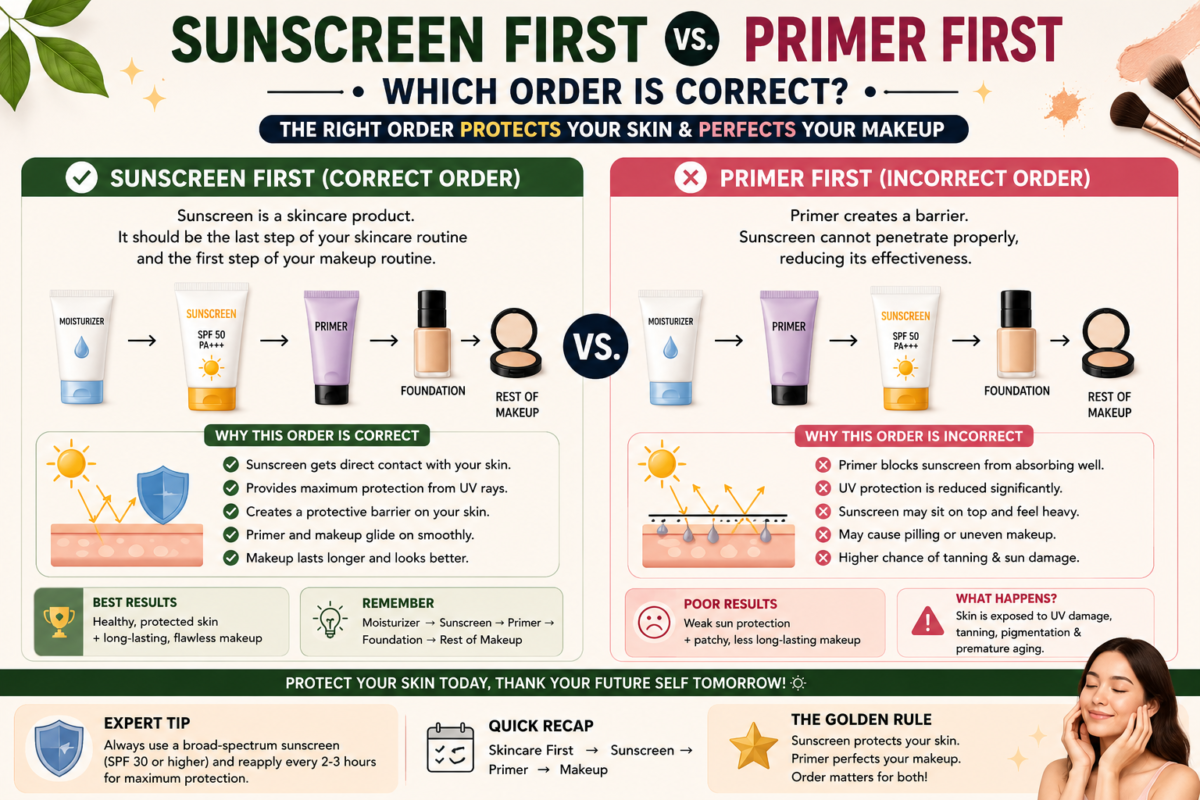
If you’re unsure whether to apply sunscreen or primer first, the answer is simple: always apply sunscreen before primer. Sunscreen is the final step in your skincare routine, while primer is the first step of your makeup routine. Applying sunscreen directly onto moisturized skin allows it to form an even protective barrier against harmful UVA and UVB rays. After waiting 5–10 minutes for the sunscreen to absorb completely, you can apply primer to create a smooth base for your foundation. Applying primer before sunscreen can reduce SPF effectiveness because sunscreen needs direct contact with your skin to provide maximum protection. For healthy skin and long-lasting makeup, follow this order: Moisturizer → Sunscreen → Primer → Foundation → Makeup.
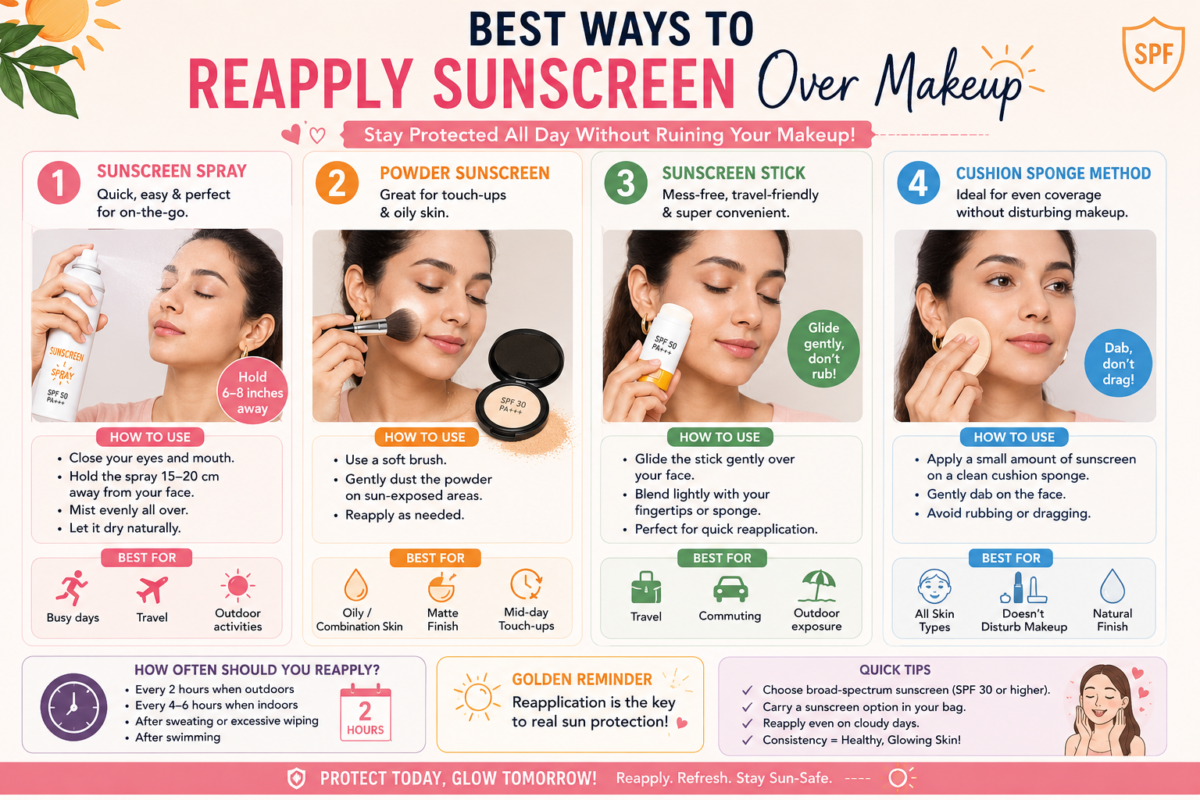
How to Reapply Sunscreen Over Makeup
Applying sunscreen in the morning is an excellent habit, but it isn’t enough to protect your skin all day. If you’re spending time outdoors, sweating, or exposed to direct sunlight, sunscreen should be reapplied every 2 hours to maintain effective protection.
The challenge is that many people avoid reapplying sunscreen because they don’t want to ruin their makeup. Fortunately, there are several easy ways to refresh your sun protection without starting your makeup routine all over again.
Why Is Reapplying Sunscreen Important?
No sunscreen lasts all day. Over time, sweat, oil, touching your face, and sun exposure gradually reduce its effectiveness.
Reapplying sunscreen helps:
Maintain SPF protection
Prevent sunburn
Reduce tanning and pigmentation
Protect against premature aging
Keep your skin healthy throughout the day
Even if you’re wearing long-lasting makeup, your sunscreen still needs to be refreshed.
A sunscreen spray is one of the easiest ways to reapply SPF without disturbing your makeup.
Hold the bottle about 15–20 cm (6–8 inches) away from your face and spray an even layer over your makeup. Let it dry naturally instead of rubbing it into your skin.
This option works well for office workers, travelers, and anyone looking for a quick touch-up during the day.
2. Apply a Powder Sunscreen
Powder sunscreens are a great choice if you have oily or combination skin.
Using a soft makeup brush, gently dust the powder over your face, paying extra attention to areas that receive the most sunlight, such as the forehead, nose, and cheeks.
In addition to SPF protection, powder sunscreen also helps absorb excess oil and keeps your makeup looking fresh.
3. Use a Sunscreen Stick
Sunscreen sticks are compact, mess-free, and travel-friendly.
Instead of rubbing the stick back and forth aggressively, gently glide it over your face and lightly blend the product with a clean makeup sponge or your fingertips.
This method is ideal for quick touch-ups while travelling or commuting.
4. Reapply with a Cushion Sponge
If you’re using a lightweight fluid sunscreen, apply a small amount onto a clean makeup sponge and gently dab it onto your skin.
Avoid dragging or rubbing the sponge across your face, as this can disturb your foundation.
Dabbing provides more even coverage while helping your makeup stay intact.
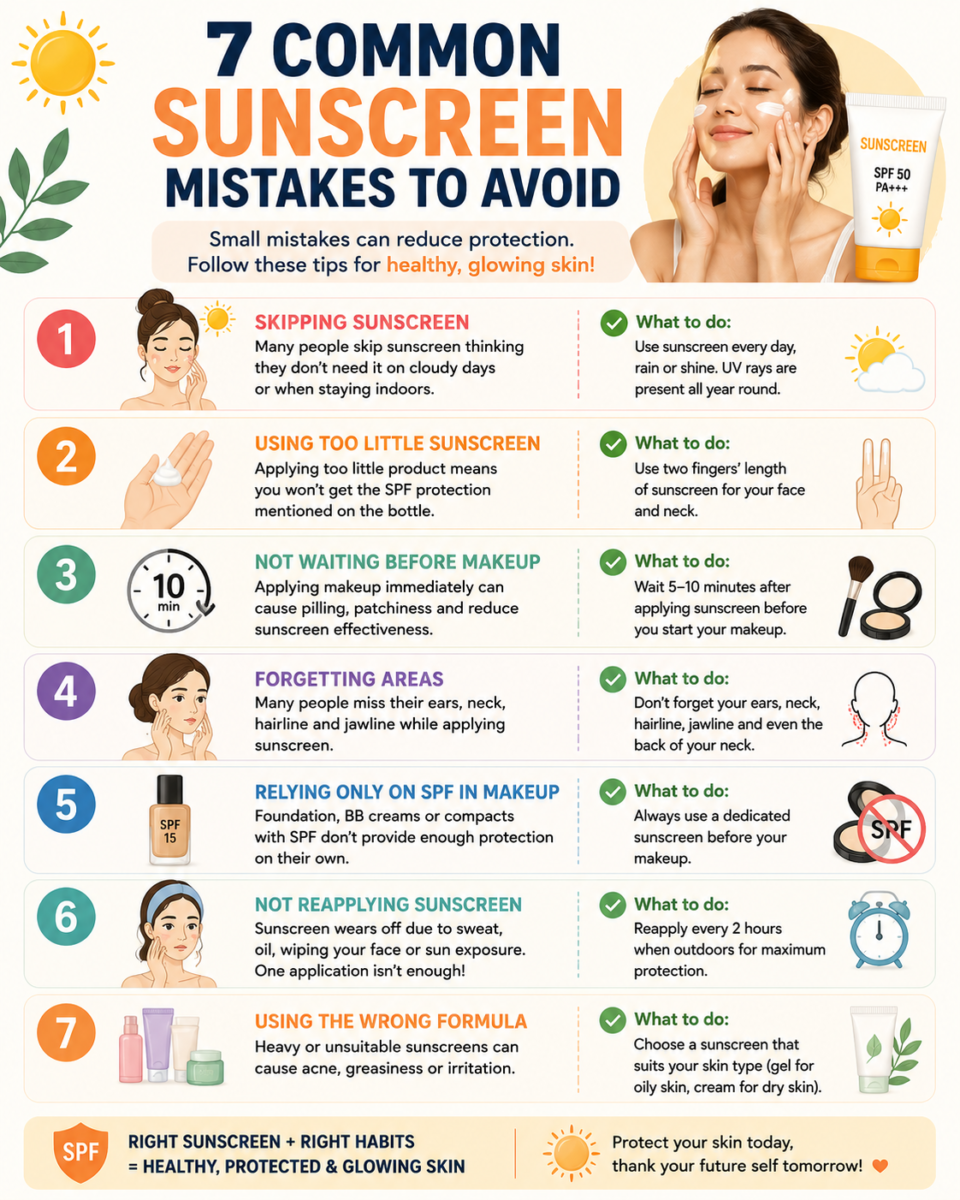
Common Sunscreen and Makeup Mistakes to Avoid
Even high-quality sunscreen won’t work properly if it’s used incorrectly. Here are some of the most common mistakes people make.
1. Skipping Sunscreen Because Your Foundation Contains SPF
This is one of the biggest skincare myths.
Although many foundations and BB creams contain SPF, they don’t provide enough protection on their own because most people apply only a thin layer.
Always apply a dedicated sunscreen before your makeup.
2. Applying Too Little Sunscreen
Using only a small drop significantly reduces the SPF protection.
For your face and neck, apply about two fingers’ length of sunscreen or approximately ¼ teaspoon.
3. Applying Makeup Immediately After Sunscreen
Many people don’t allow sunscreen enough time to settle.
Applying foundation too quickly can:
Cause pilling
Create patchy makeup
Reduce sunscreen effectiveness
Wait 5–10 minutes before applying primer or foundation.
4. Forgetting the Neck and Ears
Your face isn’t the only area exposed to sunlight.
Don’t forget to apply sunscreen on your:
Neck
Ears
Hairline
Jawline
Back of the neck (if exposed)
These areas are often overlooked but are equally vulnerable to sun damage.
5. Mixing Sunscreen with Foundation
Some people mix sunscreen directly into their foundation to save time.
This is not recommended because it dilutes the sunscreen formula and prevents it from forming an even protective layer.
Instead, apply sunscreen first, allow it to absorb, and then apply foundation separately.
6. Choosing the Wrong Sunscreen Formula
A heavy or greasy sunscreen may cause makeup to slide off during the day.
For the best results:
Oily skin: Choose a gel-based or matte sunscreen.
Dry skin: Use a moisturizing cream sunscreen.
Sensitive skin: Look for fragrance-free, non-comedogenic formulas.
Using a sunscreen suited to your skin type helps improve both comfort and makeup wear.
7. Forgetting to Reapply
Applying sunscreen only once in the morning isn’t enough if you’re outdoors for several hours.
Carry a sunscreen spray, stick, or powder in your bag so you can easily reapply throughout the day.
Setting Spray or Sunscreen First?
This is another question many makeup lovers ask.
The correct order is:
Moisturizer → Sunscreen → Wait 5–10 Minutes → Primer → Foundation → Makeup → Setting Spray
Setting spray should always be the last step of your makeup routine. Its purpose is to lock your makeup in place and improve its wear time.
Sunscreen, on the other hand, needs to be applied directly to your skin before makeup so it can create an effective protective barrier.
If you’re using a setting spray that contains SPF, remember that it should only be used for touch-ups during the day. It should never replace your regular sunscreen applied in the morning.
Final Thoughts
Using sunscreen correctly is one of the simplest yet most effective ways to protect your skin. Whether you wear makeup every day or prefer a minimal skincare routine, sunscreen should never be skipped.
The key to getting maximum SPF protection is following the correct order. Always apply sunscreen after your moisturizer and before your primer or foundation. Give it a few minutes to absorb, then continue with your makeup as usual. This simple habit helps protect your skin from UV damage while ensuring your makeup looks smooth and lasts longer.
Remember that sunscreen isn’t just for sunny days or beach vacations. Harmful UV rays are present throughout the year, even on cloudy days and indoors near windows. That’s why daily sunscreen application—and reapplication when needed—is essential for maintaining healthy, youthful-looking skin.
By following the tips in this guide, you can confidently build a skincare and makeup routine that offers both excellent sun protection and a flawless finish. Consistency is the secret to healthier skin, so make sunscreen a non-negotiable part of your daily routine.
Frequently Asked Questions (FAQs)
1. Should I apply sunscreen before or after makeup?
Always apply sunscreen before makeup. It should be the last step of your skincare routine and the first step before primer, foundation, or any other makeup products. This allows the sunscreen to create an even protective barrier on your skin.
2. Should sunscreen be applied before or after primer?
Sunscreen should always be applied before primer. After applying sunscreen, wait 5–10 minutes for it to absorb completely before using primer.
3. Can I wear foundation over sunscreen?
Yes. Once your sunscreen has absorbed properly, you can apply foundation, concealer, and the rest of your makeup without affecting your sun protection.
4. Can I skip sunscreen if my foundation has SPF?
No. SPF in foundation or BB cream is not enough to provide full sun protection because most people don’t apply enough makeup to achieve the advertised SPF level. Always use a dedicated sunscreen first.
5. How much sunscreen should I apply to my face?
Dermatologists recommend using approximately two fingers’ length of sunscreen or about ¼ teaspoon for your face and neck to achieve the SPF protection listed on the product.
6. How long should I wait after applying sunscreen before makeup?
Wait around 5–10 minutes before applying primer or foundation. This allows the sunscreen to form an even protective layer and helps prevent makeup from becoming patchy.
7. How often should I reapply sunscreen?
If you’re outdoors, reapply sunscreen every 2 hours. If you’re mostly indoors, reapplication every 4–6 hours is usually sufficient, especially if you’re near windows or exposed to sunlight.
8. Can I reapply sunscreen without removing my makeup?
Yes. You can reapply sunscreen over makeup using SPF setting sprays, sunscreen sticks, or powder sunscreens. These options help maintain protection without disturbing your makeup.
9. Does sunscreen make makeup look greasy?
Not always. Choosing a lightweight, non-greasy sunscreen designed for your skin type helps create a smooth base for makeup. Gel-based sunscreens work well for oily skin, while hydrating formulas are ideal for dry skin.
10. Is sunscreen necessary on cloudy or rainy days?
Yes. Up to 80% of UV rays can penetrate clouds, so sunscreen should be applied every day, regardless of the weather. Daily use helps protect your skin from tanning, pigmentation, and premature aging.

![{"type":"elementor","siteurl":"https://cosmeticgyaan.com/wp-json/","elements":[{"id":"49b90d0","elType":"widget","isInner":false,"isLocked":false,"settings":{"editor":"आजकल की भागदौड़ भरी जिंदगी, धूल-मिट्टी, प्रदूषण और खराब खान-पान की वजह से पुरुषों के बालों में गिरावट, ड्राईनेस और डलनेस आम समस्या बन चुकी है। ऐसे में हेयर सीरम (Hair Serum) एक जरूरी प्रोडक्ट बन गया है जो बालों को स्मूद, शाइनी और मजबूत बनाता है।इस ब्लॉग में हम जानेंगे:हेयर सीरम क्या होता है?हेयर सीरम लगाने के फायदेपुरुषों के लिए बेस्ट हेयर सीरम कौन-कौन से हैं?हेयर सीरम कैसे लगाना चाहिए?","drop_cap":"","text_columns":"","text_columns_tablet":"","text_columns_mobile":"","column_gap":{"unit":"px","size":"","sizes":[]},"column_gap_tablet":{"unit":"px","size":"","sizes":[]},"column_gap_mobile":{"unit":"px","size":"","sizes":[]},"align":"","align_tablet":"","align_mobile":"","typography_typography":"","typography_font_family":"","typography_font_size":{"unit":"px","size":"","sizes":[]},"typography_font_size_tablet":{"unit":"px","size":"","sizes":[]},"typography_font_size_mobile":{"unit":"px","size":"","sizes":[]},"typography_font_weight":"","typography_text_transform":"","typography_font_style":"","typography_text_decoration":"","typography_line_height":{"unit":"em","size":"","sizes":[]},"typography_line_height_tablet":{"unit":"em","size":"","sizes":[]},"typography_line_height_mobile":{"unit":"em","size":"","sizes":[]},"typography_letter_spacing":{"unit":"px","size":"","sizes":[]},"typography_letter_spacing_tablet":{"unit":"px","size":"","sizes":[]},"typography_letter_spacing_mobile":{"unit":"px","size":"","sizes":[]},"typography_word_spacing":{"unit":"em","size":"","sizes":[]},"typography_word_spacing_tablet":{"unit":"em","size":"","sizes":[]},"typography_word_spacing_mobile":{"unit":"em","size":"","sizes":[]},"text_shadow_text_shadow_type":"","text_shadow_text_shadow":{"horizontal":0,"vertical":0,"blur":10,"color":"rgba(0,0,0,0.3)"},"paragraph_spacing":{"unit":"px","size":"","sizes":[]},"paragraph_spacing_tablet":{"unit":"px","size":"","sizes":[]},"paragraph_spacing_mobile":{"unit":"px","size":"","sizes":[]},"text_color":"","link_color":"","link_hover_color":"","link_hover_color_transition_duration":{"unit":"s","size":"","sizes":[]},"drop_cap_view":"default","drop_cap_primary_color":"","drop_cap_secondary_color":"","drop_cap_shadow_text_shadow_type":"","drop_cap_shadow_text_shadow":{"horizontal":0,"vertical":0,"blur":10,"color":"rgba(0,0,0,0.3)"},"drop_cap_size":{"unit":"px","size":5,"sizes":[]},"drop_cap_space":{"unit":"px","size":10,"sizes":[]},"drop_cap_border_radius":{"unit":"%","size":"","sizes":[]},"drop_cap_border_width":{"unit":"px","top":"","right":"","bottom":"","left":"","isLinked":true},"drop_cap_typography_typography":"","drop_cap_typography_font_family":"","drop_cap_typography_font_size":{"unit":"px","size":"","sizes":[]},"drop_cap_typography_font_size_tablet":{"unit":"px","size":"","sizes":[]},"drop_cap_typography_font_size_mobile":{"unit":"px","size":"","sizes":[]},"drop_cap_typography_font_weight":"","drop_cap_typography_text_transform":"","drop_cap_typography_font_style":"","drop_cap_typography_text_decoration":"","drop_cap_typography_line_height":{"unit":"em","size":"","sizes":[]},"drop_cap_typography_line_height_tablet":{"unit":"em","size":"","sizes":[]},"drop_cap_typography_line_height_mobile":{"unit":"em","size":"","sizes":[]},"drop_cap_typography_word_spacing":{"unit":"em","size":"","sizes":[]},"drop_cap_typography_word_spacing_tablet":{"unit":"em","size":"","sizes":[]},"drop_cap_typography_word_spacing_mobile":{"unit":"em","size":"","sizes":[]},"_title":"","_margin":{"unit":"px","top":"","right":"","bottom":"","left":"","isLinked":true},"_margin_tablet":{"unit":"px","top":"","right":"","bottom":"","left":"","isLinked":true},"_margin_mobile":{"unit":"px","top":"","right":"","bottom":"","left":"","isLinked":true},"_padding":{"unit":"px","top":"","right":"","bottom":"","left":"","isLinked":true},"_padding_tablet":{"unit":"px","top":"","right":"","bottom":"","left":"","isLinked":true},"_padding_mobile":{"unit":"px","top":"","right":"","bottom":"","left":"","isLinked":true},"_element_width":"","_element_width_tablet":"","_element_width_mobile":"","_element_custom_width":{"unit":"%","size":"","sizes":[]},"_element_custom_width_tablet":{"unit":"px","size":"","sizes":[]},"_element_custom_width_mobile":{"unit":"px","size":"","sizes":[]},"_grid_column":"","_grid_column_tablet":"","_grid_column_mobile":"","_grid_column_custom":"","_grid_column_custom_tablet":"","_grid_column_custom_mobile":"","_grid_row":"","_grid_row_tablet":"","_grid_row_mobile":"","_grid_row_custom":"","_grid_row_custom_tablet":"","_grid_row_custom_mobile":"","_element_vertical_align":"","_element_vertical_align_tablet":"","_element_vertical_align_mobile":"","_position":"","_offset_orientation_h":"start","_offset_x":{"unit":"px","size":0,"sizes":[]},"_offset_x_tablet":{"unit":"px","size":"","sizes":[]},"_offset_x_mobile":{"unit":"px","size":"","sizes":[]},"_offset_x_end":{"unit":"px","size":0,"sizes":[]},"_offset_x_end_tablet":{"unit":"px","size":"","sizes":[]},"_offset_x_end_mobile":{"unit":"px","size":"","sizes":[]},"_offset_orientation_v":"start","_offset_y":{"unit":"px","size":0,"sizes":[]},"_offset_y_tablet":{"unit":"px","size":"","sizes":[]},"_offset_y_mobile":{"unit":"px","size":"","sizes":[]},"_offset_y_end":{"unit":"px","size":0,"sizes":[]},"_offset_y_end_tablet":{"unit":"px","size":"","sizes":[]},"_offset_y_end_mobile":{"unit":"px","size":"","sizes":[]},"_z_index":"","_z_index_tablet":"","_z_index_mobile":"","_element_id":"","_css_classes":"","_animation":"","_animation_tablet":"","_animation_mobile":"","animation_duration":"","_animation_delay":"","_transform_rotate_popover":"","_transform_rotateZ_effect":{"unit":"px","size":"","sizes":[]},"_transform_rotateZ_effect_tablet":{"unit":"deg","size":"","sizes":[]},"_transform_rotateZ_effect_mobile":{"unit":"deg","size":"","sizes":[]},"_transform_rotate_3d":"","_transform_rotateX_effect":{"unit":"px","size":"","sizes":[]},"_transform_rotateX_effect_tablet":{"unit":"deg","size":"","sizes":[]},"_transform_rotateX_effect_mobile":{"unit":"deg","size":"","sizes":[]},"_transform_rotateY_effect":{"unit":"px","size":"","sizes":[]},"_transform_rotateY_effect_tablet":{"unit":"deg","size":"","sizes":[]},"_transform_rotateY_effect_mobile":{"unit":"deg","size":"","sizes":[]},"_transform_perspective_effect":{"unit":"px","size":"","sizes":[]},"_transform_perspective_effect_tablet":{"unit":"px","size":"","sizes":[]},"_transform_perspective_effect_mobile":{"unit":"px","size":"","sizes":[]},"_transform_translate_popover":"","_transform_translateX_effect":{"unit":"px","size":"","sizes":[]},"_transform_translateX_effect_tablet":{"unit":"px","size":"","sizes":[]},"_transform_translateX_effect_mobile":{"unit":"px","size":"","sizes":[]},"_transform_translateY_effect":{"unit":"px","size":"","sizes":[]},"_transform_translateY_effect_tablet":{"unit":"px","size":"","sizes":[]},"_transform_translateY_effect_mobile":{"unit":"px","size":"","sizes":[]},"_transform_scale_popover":"","_transform_keep_proportions":"yes","_transform_scale_effect":{"unit":"px","size":"","sizes":[]},"_transform_scale_effect_tablet":{"unit":"px","size":"","sizes":[]},"_transform_scale_effect_mobile":{"unit":"px","size":"","sizes":[]},"_transform_scaleX_effect":{"unit":"px","size":"","sizes":[]},"_transform_scaleX_effect_tablet":{"unit":"px","size":"","sizes":[]},"_transform_scaleX_effect_mobile":{"unit":"px","size":"","sizes":[]},"_transform_scaleY_effect":{"unit":"px","size":"","sizes":[]},"_transform_scaleY_effect_tablet":{"unit":"px","size":"","sizes":[]},"_transform_scaleY_effect_mobile":{"unit":"px","size":"","sizes":[]},"_transform_skew_popover":"","_transform_skewX_effect":{"unit":"px","size":"","sizes":[]},"_transform_skewX_effect_tablet":{"unit":"deg","size":"","sizes":[]},"_transform_skewX_effect_mobile":{"unit":"deg","size":"","sizes":[]},"_transform_skewY_effect":{"unit":"px","size":"","sizes":[]},"_transform_skewY_effect_tablet":{"unit":"deg","size":"","sizes":[]},"_transform_skewY_effect_mobile":{"unit":"deg","size":"","sizes":[]},"_transform_flipX_effect":"","_transform_flipY_effect":"","_transform_rotate_popover_hover":"","_transform_rotateZ_effect_hover":{"unit":"px","size":"","sizes":[]},"_transform_rotateZ_effect_hover_tablet":{"unit":"deg","size":"","sizes":[]},"_transform_rotateZ_effect_hover_mobile":{"unit":"deg","size":"","sizes":[]},"_transform_rotate_3d_hover":"","_transform_rotateX_effect_hover":{"unit":"px","size":"","sizes":[]},"_transform_rotateX_effect_hover_tablet":{"unit":"deg","size":"","sizes":[]},"_transform_rotateX_effect_hover_mobile":{"unit":"deg","size":"","sizes":[]},"_transform_rotateY_effect_hover":{"unit":"px","size":"","sizes":[]},"_transform_rotateY_effect_hover_tablet":{"unit":"deg","size":"","sizes":[]},"_transform_rotateY_effect_hover_mobile":{"unit":"deg","size":"","sizes":[]},"_transform_perspective_effect_hover":{"unit":"px","size":"","sizes":[]},"_transform_perspective_effect_hover_tablet":{"unit":"px","size":"","sizes":[]},"_transform_perspective_effect_hover_mobile":{"unit":"px","size":"","sizes":[]},"_transform_translate_popover_hover":"","_transform_translateX_effect_hover":{"unit":"px","size":"","sizes":[]},"_transform_translateX_effect_hover_tablet":{"unit":"px","size":"","sizes":[]},"_transform_translateX_effect_hover_mobile":{"unit":"px","size":"","sizes":[]},"_transform_translateY_effect_hover":{"unit":"px","size":"","sizes":[]},"_transform_translateY_effect_hover_tablet":{"unit":"px","size":"","sizes":[]},"_transform_translateY_effect_hover_mobile":{"unit":"px","size":"","sizes":[]},"_transform_scale_popover_hover":"","_transform_keep_proportions_hover":"yes","_transform_scale_effect_hover":{"unit":"px","size":"","sizes":[]},"_transform_scale_effect_hover_tablet":{"unit":"px","size":"","sizes":[]},"_transform_scale_effect_hover_mobile":{"unit":"px","size":"","sizes":[]},"_transform_scaleX_effect_hover":{"unit":"px","size":"","sizes":[]},"_transform_scaleX_effect_hover_tablet":{"unit":"px","size":"","sizes":[]},"_transform_scaleX_effect_hover_mobile":{"unit":"px","size":"","sizes":[]},"_transform_scaleY_effect_hover":{"unit":"px","size":"","sizes":[]},"_transform_scaleY_effect_hover_tablet":{"unit":"px","size":"","sizes":[]},"_transform_scaleY_effect_hover_mobile":{"unit":"px","size":"","sizes":[]},"_transform_skew_popover_hover":"","_transform_skewX_effect_hover":{"unit":"px","size":"","sizes":[]},"_transform_skewX_effect_hover_tablet":{"unit":"deg","size":"","sizes":[]},"_transform_skewX_effect_hover_mobile":{"unit":"deg","size":"","sizes":[]},"_transform_skewY_effect_hover":{"unit":"px","size":"","sizes":[]},"_transform_skewY_effect_hover_tablet":{"unit":"deg","size":"","sizes":[]},"_transform_skewY_effect_hover_mobile":{"unit":"deg","size":"","sizes":[]},"_transform_flipX_effect_hover":"","_transform_flipY_effect_hover":"","_transform_transition_hover":{"unit":"px","size":"","sizes":[]},"motion_fx_transform_x_anchor_point":"","motion_fx_transform_x_anchor_point_tablet":"","motion_fx_transform_x_anchor_point_mobile":"","motion_fx_transform_y_anchor_point":"","motion_fx_transform_y_anchor_point_tablet":"","motion_fx_transform_y_anchor_point_mobile":"","_background_background":"","_background_color":"","_background_color_stop":{"unit":"%","size":0,"sizes":[]},"_background_color_stop_tablet":{"unit":"%","size":"","sizes":[]},"_background_color_stop_mobile":{"unit":"%","size":"","sizes":[]},"_background_color_b":"#f2295b","_background_color_b_stop":{"unit":"%","size":100,"sizes":[]},"_background_color_b_stop_tablet":{"unit":"%","size":"","sizes":[]},"_background_color_b_stop_mobile":{"unit":"%","size":"","sizes":[]},"_background_gradient_type":"linear","_background_gradient_angle":{"unit":"deg","size":180,"sizes":[]},"_background_gradient_angle_tablet":{"unit":"deg","size":"","sizes":[]},"_background_gradient_angle_mobile":{"unit":"deg","size":"","sizes":[]},"_background_gradient_position":"center center","_background_gradient_position_tablet":"center center","_background_gradient_position_mobile":"center center","_background_image":{"url":"","id":"","size":""},"_background_image_tablet":{"url":"","id":"","size":""},"_background_image_mobile":{"url":"","id":"","size":""},"_background_position":"","_background_position_tablet":"","_background_position_mobile":"","_background_xpos":{"unit":"px","size":0,"sizes":[]},"_background_xpos_tablet":{"unit":"px","size":0,"sizes":[]},"_background_xpos_mobile":{"unit":"px","size":0,"sizes":[]},"_background_ypos":{"unit":"px","size":0,"sizes":[]},"_background_ypos_tablet":{"unit":"px","size":0,"sizes":[]},"_background_ypos_mobile":{"unit":"px","size":0,"sizes":[]},"_background_attachment":"","_background_repeat":"","_background_repeat_tablet":"","_background_repeat_mobile":"","_background_size":"","_background_size_tablet":"","_background_size_mobile":"","_background_bg_width":{"unit":"%","size":100,"sizes":[]},"_background_bg_width_tablet":{"unit":"px","size":"","sizes":[]},"_background_bg_width_mobile":{"unit":"px","size":"","sizes":[]},"_background_video_link":"","_background_video_start":"","_background_video_end":"","_background_play_once":"","_background_play_on_mobile":"","_background_privacy_mode":"","_background_video_fallback":{"url":"","id":"","size":""},"_background_slideshow_gallery":[],"_background_slideshow_loop":"yes","_background_slideshow_slide_duration":5000,"_background_slideshow_slide_transition":"fade","_background_slideshow_transition_duration":500,"_background_slideshow_background_size":"","_background_slideshow_background_size_tablet":"","_background_slideshow_background_size_mobile":"","_background_slideshow_background_position":"","_background_slideshow_background_position_tablet":"","_background_slideshow_background_position_mobile":"","_background_slideshow_lazyload":"","_background_slideshow_ken_burns":"","_background_slideshow_ken_burns_zoom_direction":"in","_background_hover_background":"","_background_hover_color":"","_background_hover_color_stop":{"unit":"%","size":0,"sizes":[]},"_background_hover_color_stop_tablet":{"unit":"%","size":"","sizes":[]},"_background_hover_color_stop_mobile":{"unit":"%","size":"","sizes":[]},"_background_hover_color_b":"#f2295b","_background_hover_color_b_stop":{"unit":"%","size":100,"sizes":[]},"_background_hover_color_b_stop_tablet":{"unit":"%","size":"","sizes":[]},"_background_hover_color_b_stop_mobile":{"unit":"%","size":"","sizes":[]},"_background_hover_gradient_type":"linear","_background_hover_gradient_angle":{"unit":"deg","size":180,"sizes":[]},"_background_hover_gradient_angle_tablet":{"unit":"deg","size":"","sizes":[]},"_background_hover_gradient_angle_mobile":{"unit":"deg","size":"","sizes":[]},"_background_hover_gradient_position":"center center","_background_hover_gradient_position_tablet":"center center","_background_hover_gradient_position_mobile":"center center","_background_hover_image":{"url":"","id":"","size":""},"_background_hover_image_tablet":{"url":"","id":"","size":""},"_background_hover_image_mobile":{"url":"","id":"","size":""},"_background_hover_position":"","_background_hover_position_tablet":"","_background_hover_position_mobile":"","_background_hover_xpos":{"unit":"px","size":0,"sizes":[]},"_background_hover_xpos_tablet":{"unit":"px","size":0,"sizes":[]},"_background_hover_xpos_mobile":{"unit":"px","size":0,"sizes":[]},"_background_hover_ypos":{"unit":"px","size":0,"sizes":[]},"_background_hover_ypos_tablet":{"unit":"px","size":0,"sizes":[]},"_background_hover_ypos_mobile":{"unit":"px","size":0,"sizes":[]},"_background_hover_attachment":"","_background_hover_repeat":"","_background_hover_repeat_tablet":"","_background_hover_repeat_mobile":"","_background_hover_size":"","_background_hover_size_tablet":"","_background_hover_size_mobile":"","_background_hover_bg_width":{"unit":"%","size":100,"sizes":[]},"_background_hover_bg_width_tablet":{"unit":"px","size":"","sizes":[]},"_background_hover_bg_width_mobile":{"unit":"px","size":"","sizes":[]},"_background_hover_video_link":"","_background_hover_video_start":"","_background_hover_video_end":"","_background_hover_play_once":"","_background_hover_play_on_mobile":"","_background_hover_privacy_mode":"","_background_hover_video_fallback":{"url":"","id":"","size":""},"_background_hover_slideshow_gallery":[],"_background_hover_slideshow_loop":"yes","_background_hover_slideshow_slide_duration":5000,"_background_hover_slideshow_slide_transition":"fade","_background_hover_slideshow_transition_duration":500,"_background_hover_slideshow_background_size":"","_background_hover_slideshow_background_size_tablet":"","_background_hover_slideshow_background_size_mobile":"","_background_hover_slideshow_background_position":"","_background_hover_slideshow_background_position_tablet":"","_background_hover_slideshow_background_position_mobile":"","_background_hover_slideshow_lazyload":"","_background_hover_slideshow_ken_burns":"","_background_hover_slideshow_ken_burns_zoom_direction":"in","_background_hover_transition":{"unit":"px","size":"","sizes":[]},"_border_border":"","_border_width":{"unit":"px","top":"","right":"","bottom":"","left":"","isLinked":true},"_border_width_tablet":{"unit":"px","top":"","right":"","bottom":"","left":"","isLinked":true},"_border_width_mobile":{"unit":"px","top":"","right":"","bottom":"","left":"","isLinked":true},"_border_color":"","_border_radius":{"unit":"px","top":"","right":"","bottom":"","left":"","isLinked":true},"_border_radius_tablet":{"unit":"px","top":"","right":"","bottom":"","left":"","isLinked":true},"_border_radius_mobile":{"unit":"px","top":"","right":"","bottom":"","left":"","isLinked":true},"_box_shadow_box_shadow_type":"","_box_shadow_box_shadow":{"horizontal":0,"vertical":0,"blur":10,"spread":0,"color":"rgba(0,0,0,0.5)"},"_box_shadow_box_shadow_position":" ","_border_hover_border":"","_border_hover_width":{"unit":"px","top":"","right":"","bottom":"","left":"","isLinked":true},"_border_hover_width_tablet":{"unit":"px","top":"","right":"","bottom":"","left":"","isLinked":true},"_border_hover_width_mobile":{"unit":"px","top":"","right":"","bottom":"","left":"","isLinked":true},"_border_hover_color":"","_border_radius_hover":{"unit":"px","top":"","right":"","bottom":"","left":"","isLinked":true},"_border_radius_hover_tablet":{"unit":"px","top":"","right":"","bottom":"","left":"","isLinked":true},"_border_radius_hover_mobile":{"unit":"px","top":"","right":"","bottom":"","left":"","isLinked":true},"_box_shadow_hover_box_shadow_type":"","_box_shadow_hover_box_shadow":{"horizontal":0,"vertical":0,"blur":10,"spread":0,"color":"rgba(0,0,0,0.5)"},"_box_shadow_hover_box_shadow_position":" ","_border_hover_transition":{"unit":"px","size":"","sizes":[]},"_mask_switch":"","_mask_shape":"circle","_mask_image":{"url":"","id":"","size":""},"_mask_notice":"","_mask_size":"contain","_mask_size_tablet":"","_mask_size_mobile":"","_mask_size_scale":{"unit":"%","size":100,"sizes":[]},"_mask_size_scale_tablet":{"unit":"px","size":"","sizes":[]},"_mask_size_scale_mobile":{"unit":"px","size":"","sizes":[]},"_mask_position":"center center","_mask_position_tablet":"","_mask_position_mobile":"","_mask_position_x":{"unit":"%","size":0,"sizes":[]},"_mask_position_x_tablet":{"unit":"px","size":"","sizes":[]},"_mask_position_x_mobile":{"unit":"px","size":"","sizes":[]},"_mask_position_y":{"unit":"%","size":0,"sizes":[]},"_mask_position_y_tablet":{"unit":"px","size":"","sizes":[]},"_mask_position_y_mobile":{"unit":"px","size":"","sizes":[]},"_mask_repeat":"no-repeat","_mask_repeat_tablet":"","_mask_repeat_mobile":"","hide_desktop":"","hide_tablet":"","hide_mobile":""},"defaultEditSettings":{"defaultEditRoute":"content"},"elements":[],"widgetType":"text-editor","htmlCache":"\t\t\n\t\t\t\t\t\t\t\t\t\t\n\t\t\t\tआजकल की भागदौड़ भरी जिंदगी, धूल-मिट्टी, प्रदूषण और खराब खान-पान की वजह से पुरुषों के बालों में गिरावट, ड्राईनेस और डलनेस आम समस्या बन चुकी है। ऐसे में हेयर सीरम (Hair Serum) एक जरूरी प्रोडक्ट बन गया है जो बालों को स्मूद, शाइनी और मजबूत बनाता है।इस ब्लॉग में हम जानेंगे:हेयर सीरम क्या होता है?हेयर सीरम लगाने के फायदेपुरुषों के लिए बेस्ट हेयर सीरम कौन-कौन से हैं?हेयर सीरम कैसे लगाना चाहिए?\t\t\t\t\t\n\t\t\t\t\t\t\t\t\n\t\t","editSettings":{"defaultEditRoute":"content","panel":{"activeTab":"content","activeSection":"section_editor"}}}]}](https://cosmeticgyaan.com/wp-content/uploads/2025/06/file_0000000053ec61f799da685503793309.png)