
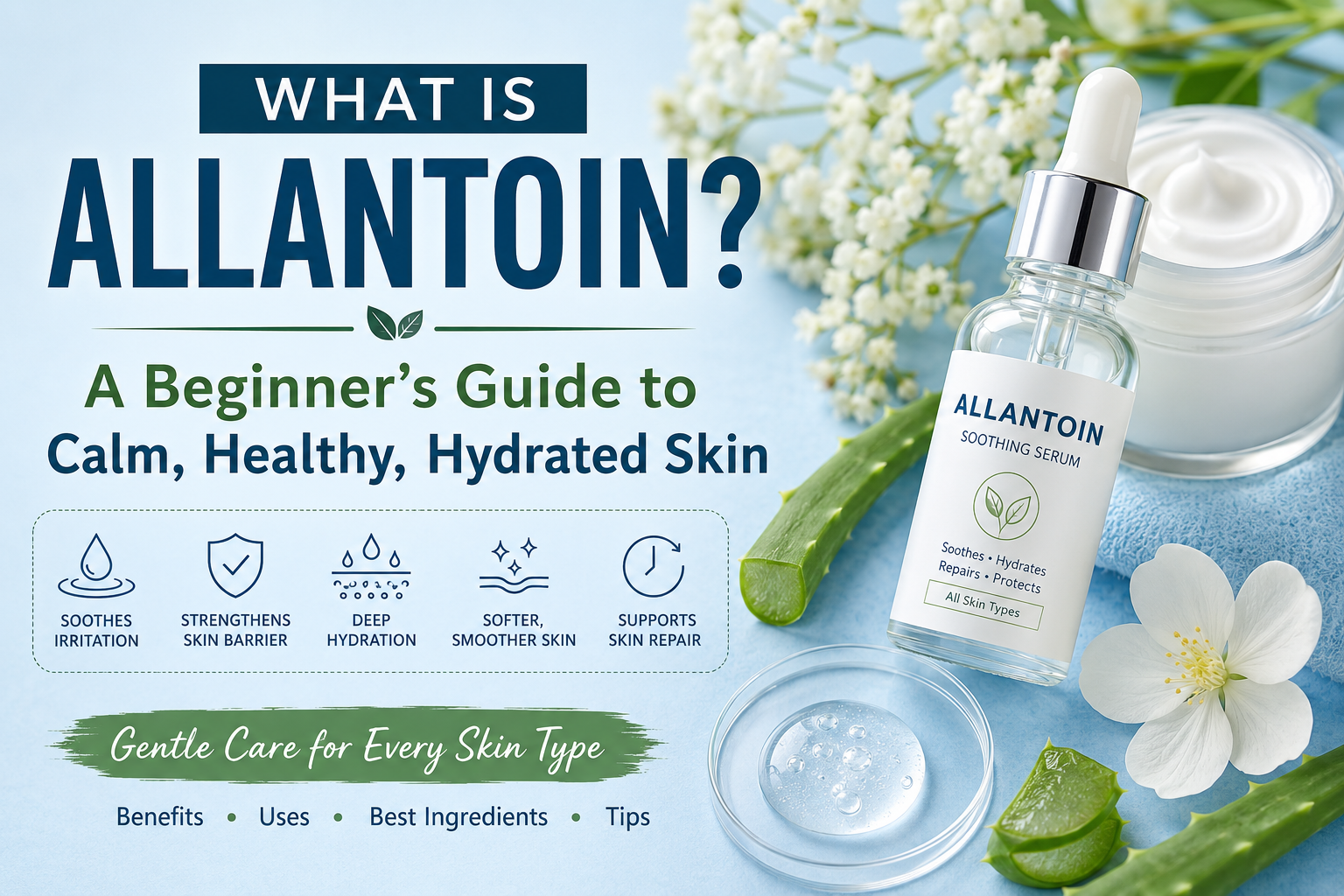
Have you ever wondered why some moisturizers instantly make your skin feel softer and calmer? The answer is often hidden in the ingredient list. One ingredient that skincare experts trust for dry, irritated, and sensitive skin is Allantoin.
Although many beginners overlook it because of its scientific name, Allantoin is actually one of the gentlest and most effective skincare ingredients available today. It helps soothe irritated skin, supports healing, reduces roughness, and keeps the skin feeling comfortable without causing heaviness or irritation.
Many people even search for “Allantoin Acid,” but this creates confusion. Despite the common search term, Allantoin is not an acid. It belongs to a group of skin-conditioning ingredients that focus on repairing, moisturizing, and protecting the skin barrier rather than exfoliating it like glycolic acid or salicylic acid.
Because it is so gentle, you will find Allantoin in facial cleansers, moisturizers, serums, sunscreens, lip balms, body lotions, baby skincare products, and even products designed for sensitive skin after cosmetic treatments.
In this complete beginner’s guide, you’ll learn what Allantoin is, how it works, its benefits, who should use it, how to include it in your skincare routine, and why dermatologists recommend it for healthy-looking skin.
Read More: What Is Hyaluronic Acid? A Complete Beginner’s Guide (2026)
What Is Allantoin?
Allantoin is a skin-conditioning ingredient that helps keep the skin soft, smooth, hydrated, and protected. It is widely used in cosmetic and skincare products because of its soothing and healing properties.
Its main job is not to remove dead skin like exfoliating acids. Instead, it helps damaged or irritated skin recover faster while making the outer layer of the skin feel softer and healthier.
Today, almost all skincare brands use lab-made Allantoin, which is safe, stable, and environmentally friendly. Although Allantoin naturally exists in plants such as comfrey, modern cosmetic formulations usually rely on synthetic Allantoin because it provides consistent quality and purity.
One reason Allantoin has remained popular for decades is that it works well for almost every skin type without causing irritation.
Simple Example
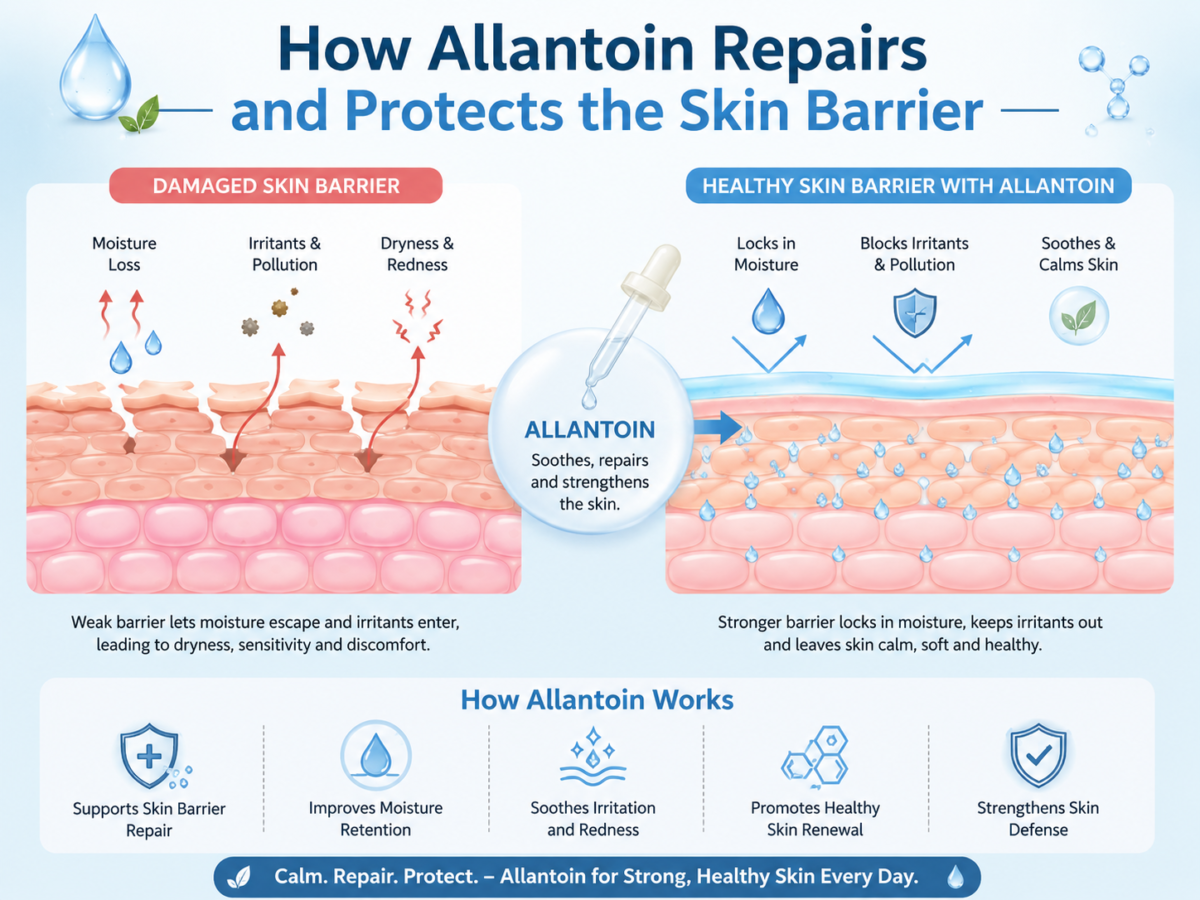
Imagine your skin is like a brick wall.
The skin cells are the bricks, while natural oils act like the cement holding everything together.
When the cement becomes weak because of harsh weather, over-cleansing, or strong skincare products, tiny gaps appear in the wall. Water escapes easily, and irritants enter more quickly.
Allantoin acts like a repair helper. It calms the damaged area, supports the skin’s natural repair process, and helps the surface become smoother and stronger.
Read More: What is Glycerin? A Beginner’s Complete Guide to Healthy and Hydrated Skin
This is why people often notice that their skin feels softer after using products containing Allantoin regularly.
Is Allantoin an Acid?
This is one of the most common questions beginners ask.
The simple answer is No.
Despite many online searches for “Allantoin Acid,” Allantoin is not an exfoliating acid.
Unlike Alpha Hydroxy Acids (AHAs) or Beta Hydroxy Acids (BHAs), Allantoin does not dissolve dead skin cells or increase skin peeling.
Instead, it focuses on:
- Soothing irritation
- Supporting skin repair
- Softening rough skin
- Improving moisture retention
- Protecting the skin barrier
This makes it an excellent ingredient for people who cannot tolerate stronger active ingredients.
Where Does Allantoin Come From?
Historically, Allantoin was discovered in several natural sources, especially the comfrey plant, which has long been used in traditional skincare.
Today, cosmetic companies mostly produce Allantoin in laboratories. This method offers several advantages:
- Better purity
- Consistent quality
- Vegan-friendly production
- More stable skincare formulations
- Environmentally sustainable manufacturing
Because of these benefits, synthetic Allantoin has become the standard ingredient used in modern skincare products around the world.
How Does Allantoin Work on the Skin?
Allantoin improves skin health in several ways at the same time.
Instead of targeting just one skin concern, it supports the skin’s overall condition.
When applied to the skin, Allantoin creates a comfortable environment that encourages natural repair while reducing dryness and discomfort.
Its gentle action makes it especially valuable for people whose skin barrier has been weakened by pollution, harsh weather, excessive cleansing, or active ingredients like retinol and exfoliating acids.
Here are the main ways Allantoin works:
It Softens Rough Skin
Dry skin often develops rough patches because dead skin cells accumulate on the surface.
Allantoin gently softens these areas without aggressive exfoliation, leaving the skin smoother over time.
It Supports Skin Renewal
Healthy skin naturally replaces old cells with new ones.
Allantoin supports this natural renewal process by creating favorable conditions for healthier-looking skin.
It Helps Reduce Moisture Loss
Hydrated skin looks healthier and feels more comfortable.
Allantoin helps improve moisture retention so that the skin stays soft for longer.
It Comforts Sensitive Skin
People with sensitive skin often experience tightness, redness, or irritation after washing their face.
Allantoin helps reduce this uncomfortable feeling by calming the skin surface.
It Strengthens the Skin Barrier
A healthy skin barrier protects against pollution, bacteria, and environmental damage.
By supporting barrier recovery, Allantoin helps skin become stronger and more resilient over time.
Why Is Allantoin So Popular in Modern Skincare?
Some skincare ingredients become popular for a few years before disappearing from the market.
Allantoin is different.
It has remained one of the most trusted cosmetic ingredients for decades because it delivers reliable results while being gentle enough for daily use.
Dermatologists and skincare formulators appreciate Allantoin because it can easily be combined with many other skincare ingredients without increasing irritation.
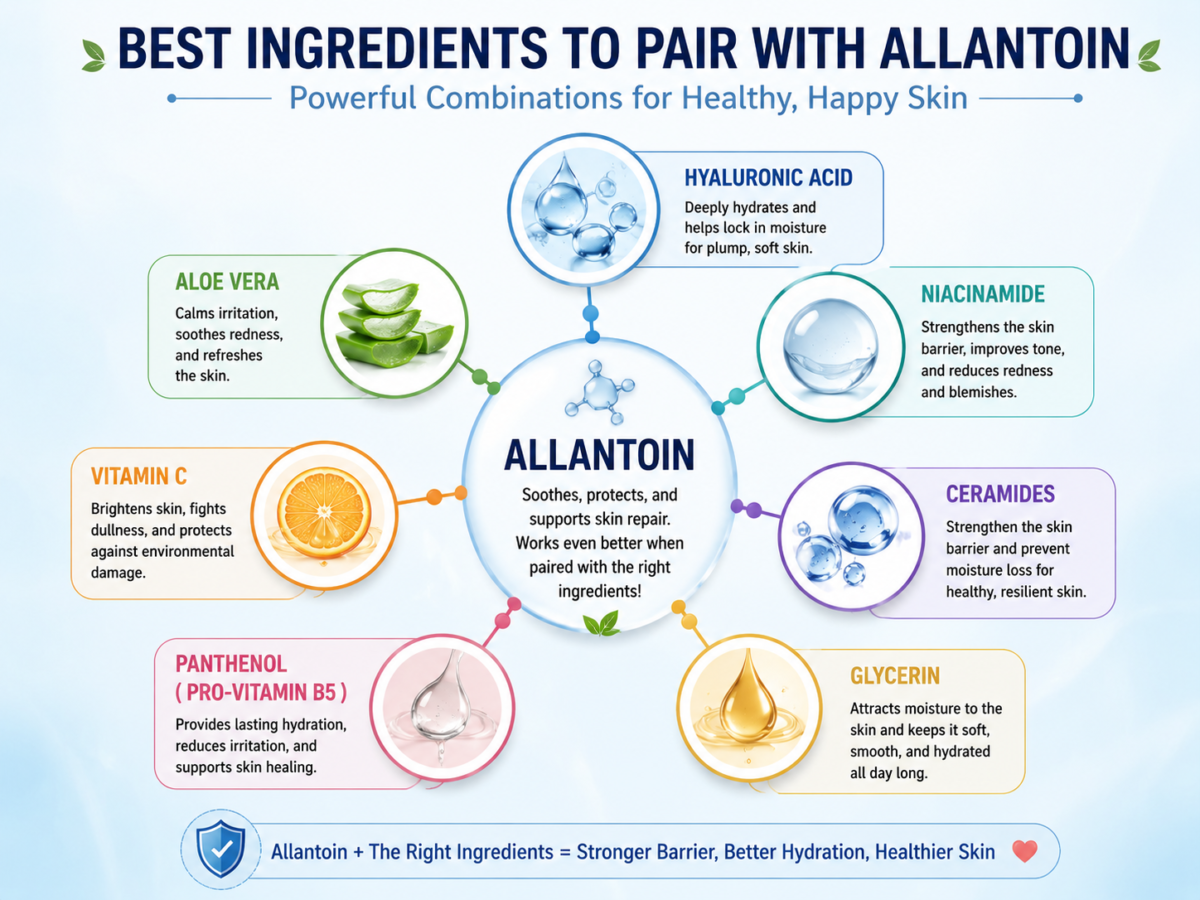
It is commonly included in products containing:
- Hyaluronic Acid
- Niacinamide
- Ceramides
- Glycerin
- Panthenol
- Aloe Vera
- Vitamin E
These combinations create products that hydrate, soothe, and strengthen the skin at the same time, making them suitable for beginners as well as experienced skincare users.
Read More: Best Face Wash for Glowing Skin: A Complete Guide for Healthy and Radiant Skin
Top Benefits of Allantoin for Your Skin
One of the biggest reasons Allantoin is found in so many skincare products is that it offers multiple skin benefits without being harsh. Whether your skin is dry, oily, combination, or sensitive, this ingredient can improve your skin’s overall health when used regularly.
Unlike strong active ingredients that focus on a single concern, Allantoin supports your skin in several ways at once. It helps keep the skin comfortable, hydrated, and smooth while strengthening its natural protective barrier.
Let’s look at its benefits in detail.
1. Soothes Irritated Skin
If your skin often feels red, itchy, or uncomfortable, Allantoin can help calm it.
Daily exposure to pollution, sunlight, air conditioning, cold weather, and harsh cleansers can leave your skin feeling stressed. Allantoin helps reduce that uncomfortable feeling by supporting the skin’s natural recovery process.
This is one reason why many products designed for sensitive skin include Allantoin as a key ingredient.
Example
Imagine spending an entire day outdoors in hot weather. Your face may feel tight and slightly irritated by the evening. A moisturizer containing Allantoin can help restore comfort while reducing dryness.
2. Keeps Skin Soft and Smooth
Dry skin often feels rough because dead skin cells build up on the surface.
Instead of aggressively removing these cells, Allantoin gently softens them. Over time, your skin becomes smoother without excessive peeling.
This makes it especially useful during winter when skin tends to become flaky and uncomfortable.
3. Helps Maintain Healthy Hydration
Hydrated skin looks brighter, healthier, and more youthful.
Although Allantoin is not a heavy moisturizing ingredient by itself, it supports the skin’s ability to hold moisture for longer. When combined with ingredients such as Glycerin or Hyaluronic Acid, it helps create long-lasting hydration.
People with dehydrated skin often notice that their skin feels less tight after adding products containing Allantoin to their routine.
4. Supports the Skin Barrier
Your skin barrier acts like a protective shield.
It prevents moisture from escaping while keeping harmful environmental irritants out.
When this barrier becomes damaged, you may experience:
- Dryness
- Redness
- Burning
- Sensitivity
- Rough patches
Allantoin supports the skin’s natural repair process, helping the barrier become stronger over time.
A stronger skin barrier usually means healthier, more comfortable skin.
5. Reduces Skin Roughness
Areas like the nose, forehead, elbows, knees, and heels often become rough due to dryness.
Regular use of products containing Allantoin helps soften these rough areas, making the skin feel smoother and look healthier.
Many body lotions include Allantoin for this reason.
6. Supports Natural Skin Renewal
Healthy skin naturally replaces old skin cells with new ones.
When this process slows down, the skin may appear dull and uneven.
Allantoin encourages healthy skin renewal by creating an environment where the skin can recover more effectively.
Over time, this contributes to smoother and fresher-looking skin.
7. Makes Active Ingredients Easier to Tolerate
Many beginners start using ingredients like Retinol, Vitamin C, Glycolic Acid, or Salicylic Acid and experience irritation during the first few weeks.
Products containing Allantoin can help reduce dryness and discomfort caused by these stronger ingredients.
For this reason, many skincare brands combine Allantoin with active ingredients to create more balanced formulations.
8. Suitable for Everyday Use
Some skincare ingredients need to be introduced slowly because they may cause irritation if used too often.
Allantoin is different.
It is gentle enough for daily use, making it an excellent choice for both morning and evening skincare routines.
Most people can use products containing Allantoin without worrying about overuse.
Who Should Use Allantoin?
One of Allantoin’s greatest strengths is its versatility.
It works well for almost every skin type because its primary goal is to support healthy skin rather than aggressively changing it.
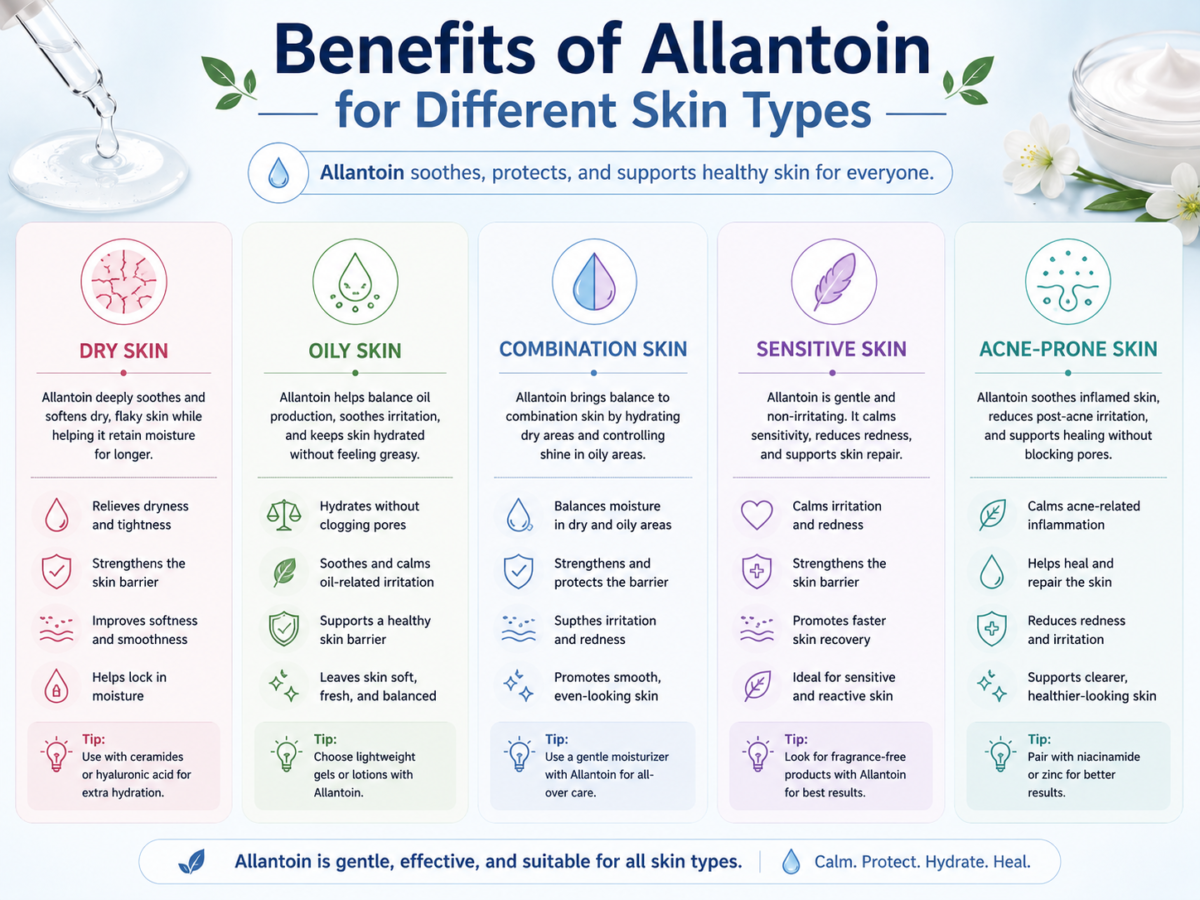
Dry Skin
Dry skin often lacks moisture and feels tight after cleansing.
Allantoin helps soften rough patches while supporting hydration, leaving the skin more comfortable throughout the day.
Sensitive Skin
People with sensitive skin usually react easily to harsh skincare products.
Because Allantoin is known for its calming properties, it is commonly included in products designed specifically for sensitive skin.
Oily Skin
Many people assume oily skin doesn’t need moisturizing ingredients.
In reality, oily skin can also become dehydrated.
Lightweight gel moisturizers containing Allantoin help maintain hydration without making the skin feel greasy.
Combination Skin
Combination skin includes both oily and dry areas.
Allantoin helps balance comfort across different parts of the face by supporting hydration wherever it’s needed.
Acne-Prone Skin
Although Allantoin does not directly treat acne, it helps calm the skin around blemishes and supports recovery after breakouts.
Many acne-friendly moisturizers include Allantoin because it reduces dryness caused by acne treatments.
Mature Skin
As we age, the skin naturally loses moisture and becomes thinner.
Allantoin helps improve softness while supporting smoother-looking skin, making it a useful ingredient in anti-aging skincare routines.
Which Skincare Products Usually Contain Allantoin?
Because it works well with many ingredients, Allantoin appears in a wide variety of skincare products.
You can commonly find it in:
- Facial cleansers
- Hydrating serums
- Moisturizers
- Face creams
- Body lotions
- Hand creams
- Lip balms
- Sunscreens
- Face masks
- After-sun gels
- Shaving creams
- Baby skincare products
Its versatility makes it one of the most widely used skin-conditioning ingredients in the cosmetic industry.
How to Use Allantoin in Your Skincare Routine
One of the best things about Allantoin is how easy it is to include in your daily skincare routine. Unlike some active ingredients that require careful planning, Allantoin is gentle enough for regular use and works well with almost every skin type.
Whether you are building your first skincare routine or improving your current one, products containing Allantoin can fit naturally into both morning and evening routines.
The key is to apply products in the correct order so your skin receives the maximum benefit.
Morning Routine
A simple morning routine with Allantoin may look like this:
- Cleanse your face with a gentle cleanser.
- Apply a hydrating toner if you use one.
- Use an Allantoin serum or another hydrating serum containing Allantoin.
- Apply a moisturizer.
- Finish with a broad-spectrum sunscreen.
This routine helps keep your skin hydrated, calm, and protected throughout the day.
Evening Routine
At night, your skin naturally repairs itself while you sleep. Using Allantoin in your nighttime routine can support this process.
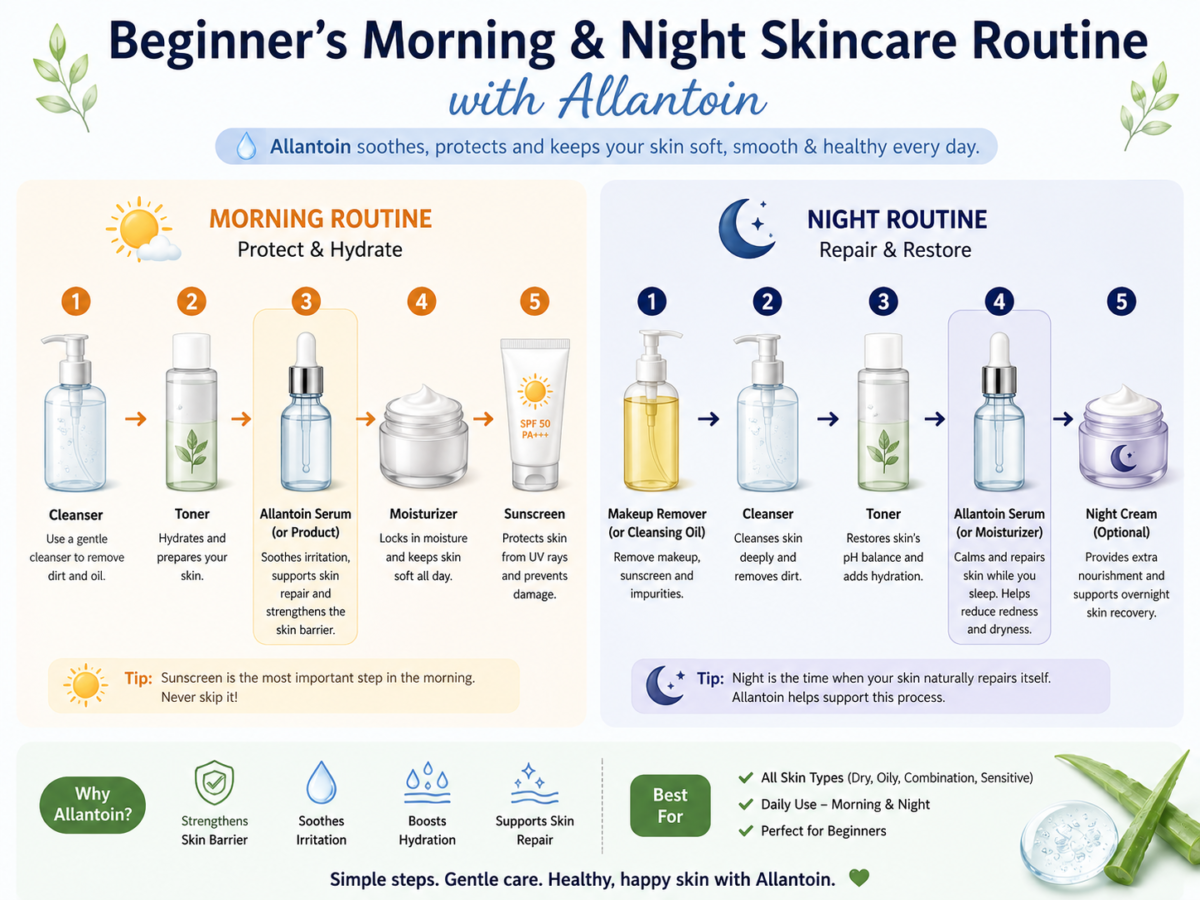
A beginner-friendly evening routine is:
- Remove makeup and sunscreen.
- Cleanse your face.
- Apply treatment products if needed.
- Use an Allantoin serum or moisturizer.
- Finish with a nourishing night cream if your skin feels dry.
Consistent use often leads to softer, healthier-looking skin over time.
Which Ingredients Work Well with Allantoin?
Another reason skincare experts love Allantoin is that it blends well with many popular skincare ingredients.
Instead of competing with other ingredients, it often helps balance their effects by reducing dryness and supporting the skin barrier.
Here are some of the best ingredient combinations.
Allantoin and Hyaluronic Acid
This is one of the most popular hydration combinations.
Hyaluronic Acid attracts water to the skin, while Allantoin helps keep the skin comfortable and supports moisture retention.
Together, they leave the skin feeling soft, plump, and refreshed.
Allantoin and Niacinamide
Niacinamide helps improve skin tone, strengthen the skin barrier, and reduce excess oil.
Adding Allantoin helps calm the skin, making this combination suitable for beginners and sensitive skin.
Allantoin and Ceramides
Ceramides strengthen the skin’s protective barrier.
When combined with Allantoin, they create an excellent moisturizing formula for dry or damaged skin.
This combination is commonly found in barrier repair creams.
Allantoin and Glycerin
Glycerin is a powerful humectant that attracts moisture.
Allantoin complements Glycerin by softening the skin and helping reduce roughness.
Many daily moisturizers use both ingredients together.
Allantoin and Aloe Vera
Both ingredients are known for their soothing properties.
Products containing Aloe Vera and Allantoin are often used after sun exposure or whenever the skin feels dry and irritated.
Allantoin and Panthenol
Panthenol, also known as Pro-Vitamin B5, helps improve hydration and skin softness.
When combined with Allantoin, it creates a highly soothing formula that supports skin recovery.
Allantoin and Retinol
Retinol is a powerful ingredient that can sometimes cause dryness and irritation, especially for beginners.
Allantoin helps reduce that discomfort by supporting the skin barrier and keeping the skin feeling calm.
Many beginner-friendly Retinol products include Allantoin for this reason.
Can Allantoin Be Used with Vitamin C?
Yes.
Allantoin works well with Vitamin C and can help reduce the feeling of dryness or tightness that some people experience when introducing Vitamin C into their routine.
Using both ingredients together can support brighter, healthier-looking skin while keeping it comfortable.
Can Allantoin Be Used with Exfoliating Acids?
Yes.
Allantoin pairs well with exfoliating ingredients such as:
- Glycolic Acid
- Lactic Acid
- Mandelic Acid
- Salicylic Acid
Since exfoliating acids remove dead skin cells, some people experience temporary dryness.
Allantoin helps balance the routine by calming and softening the skin after exfoliation.
Does Allantoin Have Any Side Effects?
For most people, Allantoin is considered one of the safest skincare ingredients available.
When used in cosmetic products at recommended concentrations, it is generally well tolerated by all skin types.
However, as with any skincare ingredient, individual reactions can vary.
In rare cases, some people may experience:
- Mild irritation
- Temporary redness
- Itching
- Skin sensitivity due to other ingredients in the product
Often, these reactions are caused by fragrances, preservatives, or other active ingredients rather than Allantoin itself.
If you have highly reactive skin, it’s always a good idea to perform a patch test before using a new product on your entire face.
How to Perform a Patch Test
A patch test is a simple way to check how your skin reacts to a new skincare product.
Follow these steps:
- Apply a small amount of the product behind your ear or on your inner forearm.
- Leave it on for 24 hours.
- Watch for signs of irritation such as redness, itching, or swelling.
- If your skin remains comfortable, you can begin using the product on your face.
This small step can help prevent unwanted reactions, especially if you have sensitive skin.
Common Mistakes Beginners Should Avoid
Even though Allantoin is easy to use, a few simple mistakes can reduce its benefits.
Expecting Instant Results
Allantoin improves skin gradually.
While your skin may feel softer after a few uses, noticeable improvements in texture and comfort usually require consistent use over several weeks.
Ignoring Moisturizer
Some people rely only on a serum.
To lock in hydration, it’s important to apply a moisturizer after your serum, especially if your skin is dry.
Overusing Strong Active Ingredients
If your routine already includes Retinol or exfoliating acids, avoid introducing too many new active ingredients at the same time.
Allantoin supports the skin, but giving your skin time to adjust is still important.
Skipping Sunscreen
Healthy skin needs daily sun protection.
Even if your routine contains soothing ingredients like Allantoin, applying sunscreen every morning helps protect your skin from UV damage and supports long-term skin health.
Is Allantoin Good for Acne-Prone Skin?
Yes, Allantoin can be a great addition to an acne-prone skincare routine. While it does not kill acne-causing bacteria or unclog pores like Salicylic Acid, it helps reduce the dryness and irritation that often come with acne treatments.
Many people use products containing ingredients such as Benzoyl Peroxide, Retinoids, or exfoliating acids to treat breakouts. These ingredients can sometimes leave the skin feeling tight, flaky, or uncomfortable. Allantoin helps soothe the skin and supports its natural repair process, making these treatments easier to tolerate.
If you have acne-prone skin, look for lightweight, non-comedogenic moisturizers or serums that include Allantoin along with ingredients like Niacinamide or Ceramides.
Is Allantoin Suitable for Sensitive Skin?
Absolutely.
Allantoin is one of the most recommended ingredients for sensitive skin because of its gentle nature. It helps calm irritation without causing additional stress to the skin.
People with sensitive skin often experience redness after cleansing, shaving, weather changes, or trying new skincare products. Using products that contain Allantoin can help keep the skin feeling comfortable and balanced.
For this reason, you’ll often find Allantoin in products made specifically for sensitive or easily irritated skin.
Can People with Dry Skin Benefit from Allantoin?
Yes.
Dry skin usually lacks both water and protective oils, which can lead to roughness, flaking, and tightness. Allantoin helps soften dry areas while supporting the skin’s ability to retain moisture.
When paired with hydrating ingredients such as Glycerin, Hyaluronic Acid, or Ceramides, it creates an excellent routine for maintaining soft and healthy-looking skin.
During colder months, switching to a richer moisturizer with Allantoin can help prevent seasonal dryness.
Allantoin vs. Hyaluronic Acid
Although these ingredients are often found together, they have different roles.
Allantoin
- Soothes irritated skin
- Softens rough patches
- Supports the skin barrier
- Helps improve skin comfort
Hyaluronic Acid
- Attracts and holds water
- Provides deep hydration
- Helps skin appear plumper
- Reduces the feeling of dryness
Which is better?
Neither is better than the other because they work in different ways. Using both together provides excellent hydration and skin-soothing benefits.
Allantoin vs. Aloe Vera
Both ingredients are known for calming the skin, but they are not identical.
Allantoin
- Helps soften the skin
- Supports skin repair
- Strengthens the skin barrier
- Works well in creams and serums
Aloe Vera
- Provides a cooling sensation
- Delivers lightweight hydration
- Helps refresh the skin after sun exposure
Many skincare products combine these ingredients because they complement each other well.
Expert Tips to Get the Best Results from Allantoin
Using Allantoin correctly can make your skincare routine even more effective. These simple tips can help you get the most from this gentle ingredient.
- Use Allantoin consistently rather than expecting overnight results.
- Apply your moisturizer while the skin is slightly damp to help lock in hydration.
- Pair Allantoin with Ceramides or Hyaluronic Acid for extra moisture.
- Choose fragrance-free products if your skin is highly sensitive.
- Always wear sunscreen during the day to protect your skin barrier.
- Avoid over-cleansing, as it can strip away natural moisture.
- Introduce only one new skincare product at a time so you can easily monitor how your skin responds.
- Follow a simple routine instead of using too many active ingredients at once.
Small, consistent habits often lead to healthier skin than using a large number of products.
How to Choose the Best Allantoin Product
Not every product containing Allantoin is the same. Before buying one, consider the following points:
- Check that Allantoin appears in the ingredient list.
- Select a product designed for your skin type.
- Choose fragrance-free options if your skin is sensitive.
- Look for trusted skincare brands with transparent ingredient lists.
- Avoid products that contain unnecessary irritants if your skin is easily reactive.
Remember, the overall formula matters more than a single ingredient.
Frequently Asked Questions (FAQs)
1. Is Allantoin an acid?
No. Despite the common search term “Allantoin Acid,” Allantoin is not an acid. It is a skin-conditioning ingredient that helps soothe, soften, and protect the skin.
2. Can I use Allantoin every day?
Yes. Allantoin is gentle enough for daily use in both morning and evening skincare routines.
3. Is Allantoin suitable for oily skin?
Yes. Lightweight products containing Allantoin can hydrate oily skin without making it feel greasy.
4. Does Allantoin help with acne?
Allantoin does not treat acne directly, but it helps calm irritated skin and supports recovery, especially when using acne treatments that may cause dryness.
5. Can Allantoin be used with Retinol?
Yes. Allantoin pairs well with Retinol and helps reduce the dryness and irritation that some people experience while using Retinol.
6. Is Allantoin safe for sensitive skin?
Yes. It is considered one of the gentlest skincare ingredients and is widely used in products formulated for sensitive skin.
7. Can Allantoin be used with Vitamin C?
Yes. These ingredients work well together. Vitamin C helps brighten the skin, while Allantoin keeps it calm and comfortable.
8. How long does it take to see results?
Many people notice softer skin within a few days, while improvements in skin texture and overall comfort usually become more noticeable after several weeks of consistent use.
Conclusion
Allantoin may not be the most talked-about skincare ingredient, but it is one of the most reliable. Its ability to soothe irritation, soften rough skin, support the skin barrier, and improve overall comfort makes it a valuable addition to almost any skincare routine.
Whether you have dry, oily, combination, acne-prone, or sensitive skin, Allantoin offers gentle care without the harshness associated with many active ingredients. It also works beautifully alongside popular ingredients like Hyaluronic Acid, Niacinamide, Ceramides, and Retinol, making it easy to include in both beginner and advanced skincare routines.
The most important thing to remember is that healthy skin is built through consistency, not quick fixes. Choosing well-formulated products, following a simple routine, and protecting your skin with daily sunscreen will help you get the best long-term results.