cosmeticgyaan

Garmiyon ke liye Best Body Lotion 2025

Garmiyon Ke Liye Best Body Lotion 2025 Thandak, Hydration Aur Protection Ka Combo

Jab baat garmiyon ki hoti hai, to sabse pehle dimaag mein aata hai heat, sweat aur skin problems. Humari skin summers mein oily bhi ho sakti hai ya fir itni dry ho jati hai ki chip-chipahat aur itching hone lagti hai. Bahar ki garmi aur andar ka AC, dono milke skin ka balance bigaad dete hain. Isliye ek lightweight, non-greasy aur hydrating body lotion hona zaroori hai jo skin ko moisturize kare bina chipchipaapan ke.Toh chaliye aaj baat karte hain 2025 ke best body lotions ki jo specially Indian summers ke liye perfect hain.

Garmi Mein Body Lotion Kyun Zaroori Hai?

Kayi log sochte hain ki lotion sirf sardi ke liye hota hai. Lekin garmi mein bhi lotion lagana utna hi zaroori hai. Kyun?

Aise mein ek acha body lotion aapki skin ko hydrate, soothe aur protect karta hai.

2025 Ke Best Body Lotions For Summer (Top 7 Picks)

Yeh sare lotions latest ingredients aur skin-friendly formulations ke sath aate hain jo aapko denge soft, cool aur fresh skin all day long.


1. Nivea Aloe Hydration Body Lotion

Key Features:

  • Aloe vera se bana

  • Lightweight & non-sticky

  • 48 hours hydration

Kyun Pasand Karein:
Aloe vera ka cooling effect aur hydration dono milta hai. Ye lotion sweat-proof bhi hai, isliye daily use ke liye best hai.

Price: ₹299 for 400ml
Skin Type: Normal to dry skin

https://cosmeticgyaan.com/


2. Vaseline Intensive Care Aloe Soothe Lotion

Key Ingredients: Aloe Vera + Microdroplets of Vaseline Jelly

Khaas Baat:

  • Fast-absorbing formula

  • Cooling sensation

  • Light fragrance

Perfect For: Garmi ke dino mein jab skin par redness ya irritation ho.

Price: ₹325 for 400ml
Skin Type: All skin types

https://cosmeticgyaan.com/


3. Parachute Advansed Body Lotion – Cocolipid + Mint

Kya Khaas Hai:

  • Coconut Milk + Mint

  • Instant thandak aur deep moisturization

Best For: Those who want cooling effect + nourishment dono.

Price: ₹260 for 400ml
Skin Type: Dry to normal


4. The Body Shop Moringa Body Milk

Luxury + Summer Friendly:

  • Lightweight body milk

  • Floral fragrance

  • Paraben-free

Downside: Thoda expensive hai but quality top-notch.

Price: ₹995 for 250ml
Skin Type: Normal to slightly dry

https://cosmeticgyaan.com/


5. Plum BodyLovin’ Hawaiian Rumba Gel Lotion

Unique Gel Formula:

  • Super light texture

  • No stickiness

  • Sulphate-free & vegan

Cool Factor: Yeh lotion gel-based hai toh skin ko instantly thanda feel deta hai.

Price: ₹450 for 250ml
Skin Type: Oily to combination skin


6. Biotique Bio Morning Nectar

Ayurvedic Touch:

  • Honey + Wheatgerm oil

  • Nourishes & brightens skin

Best For: Natural product lovers

Price: ₹280 for 400ml
Skin Type: Normal to dry skin


7. Cetaphil Daily Advance Ultra Hydrating Lotion

Dermatologist Recommended:

  • Fragrance-free

  • Long-lasting moisture

  • No irritation

Ideal For: Sensitive skin users jinko garmi mein breakouts hote hain.

Price: ₹470 for 100g
Skin Type: Sensitive & very dry skin

Body Lotion Lagane Ka Sahi Tarika – Pro Tips

  1. Snan ke baad lotion lagayein: Jab skin thodi moist hoti hai, tab lotion zyada absorb hota hai.

  2. Zyada mat lagayein: Garmi mein halka sa layer kaafi hota hai.

  3. Focus karein elbows, knees aur ankles par: In jagah par dryness zyada hoti hai.

  4. Fragrance-free lotion use karein agar aapki skin sensitive hai.


DIY Natural Lotion Alternatives for Summer

Agar aap ghar par kuch natural try karna chahte hain, to yeh DIY body lotions bhi best hain:

  • Aloe Vera Gel + Rose Water

  • Cucumber Juice + Coconut Oil (thoda sa)

  • Milk Cream + Honey (week mein 2 baar)

Yeh sab chemical-free aur cooling hote hain.


Final Verdict – Kaunsa Lotion Hai Sabse Best?

Agar aap budget-friendly aur effective option chahte hain to Nivea Aloe Hydration ya Vaseline Aloe Soothe best hai.

Agar aap thoda premium aur exotic feel chahte hain, to Plum Hawaiian Rumba ya The Body Shop Moringa Body Milk choose karein.

Sensitive skin walon ke liye Cetaphil ya Biotique ideal hain.


Conclusion

Garmiyon mein body lotion sirf ek luxury nahi, zarurat hai. Yeh aapki skin ko sun se, AC se aur pollution se bachata hai. 2025 ke ye top lotions latest skincare trends par based hain – light formula, cooling effect aur long-lasting hydration.

Toh ab lotion lagana sirf sardi tak seemit nahi hai – is garmi, apni skin ko bhi ek thandak bhara treat dijiye.

Aapka favourite summer lotion kaunsa hai? Niche comment mein batayein!

✅ Customer FAQ

🚹 Best Body Lotion for Men

आज की भागदौड़ भरी जिंदगी में सिर्फ चेहरा नहीं, पूरे शरीर की स्किन का ख्याल रखना भी बहुत जरूरी है। खासतौर पर पुरुषों की स्किन ज्यादातर रूखी, सख्त और डल हो जाती है। ऐसे में एक अच्छा बॉडी लोशन आपकी स्किन को मॉइस्चराइज और हेल्दी बनाए रखता है।

इस ब्लॉग में हम जानेंगे:

बॉडी लोशन क्या होता है?

पुरुषों के लिए बॉडी लोशन क्यों जरूरी है?

भारत में पुरुषों के लिए बेस्ट बॉडी लोशन कौन-कौन से हैं?

बॉडी लोशन लगाने का सही तरीका

✅ बॉडी लोशन क्या होता है? (What is Body Lotion?)

बॉडी लोशन एक हल्का, मॉइस्चराइजिंग प्रोडक्ट होता है जो स्किन को ड्रायनेस, डलनेस और रूखेपन से बचाता है।
ये स्किन पर एक प्रोटेक्टिव लेयर बनाता है जो स्किन को लंबे समय तक हाइड्रेट रखता है।

💡 पुरुषों के लिए बॉडी लोशन क्यों जरूरी है? (Why Men Need Body Lotion)

पुरुषों की स्किन सामान्यतः महिलाओं की तुलना में ज्यादा मोटी और ड्राय होती है।

डेली शेविंग, पसीना, धूल-मिट्टी, धूप – ये सब स्किन को नुकसान पहुंचाते हैं।

सही बॉडी लोशन स्किन को नमी देता है और उसे सॉफ्ट, हेल्दी और अट्रैक्टिव बनाता है।

🔥 भारत में पुरुषों के लिए बेस्ट बॉडी लोशन (Best Body Lotions for Men in India)

1. NIVEA Men Maximum Hydration Body Lotion

48 घंटे तक हाइड्रेशन देता है

Non-sticky और जल्दी अब्जॉर्ब होने वाला

Fresh masculine fragrance

2. Vaseline Men Extra Strength Body Lotion

Deep moisturization

Fast-absorbing formula

Ideal for extremely dry skin

3. The Man Company Body Lotion

Enriched with Shea Butter and Vitamin E

Non-greasy और long-lasting softness

Perfect for daily use

4. Parachute Advansed Men Body Lotion

Lightweight formula

Coconut Milk से बना, जो स्किन को instantly smooth बनाता है

Budget-friendly

5. Beardo Ultraglow Body Lotion

https://cosmeticgyaan.com/

Nourishes skin with SPF protection

Subtle fragrance

Reduces roughness and dryness effectively

📝 बॉडी लोशन लगाने का सही तरीका (How to Apply Body Lotion)

1. सबसे पहले नहाने के बाद हल्की नम स्किन पर बॉडी लोशन लगाएं।

2. एक छोटे amount में लोशन लें और हाथों में रगड़कर पूरे शरीर पर लगाएं।

3. खासकर ड्राय एरिया जैसे कोहनी, घुटने और एड़ियों पर अच्छे से लगाएं।

4. हल्के हाथ से मसाज करें जब तक स्किन में अच्छे से absorb न हो जाए।

https://cosmeticgyaan.com/

5. रोजाना सुबह और रात में लगाना ज्यादा फायदेमंद रहेगा।

⚡ प्रो टिप:

अगर स्किन ज्यादा ड्राय है तो Vaseline Men यूज करो।

अगर हल्का और सुगंधित लोशन चाहिए तो Beardo ट्राय करो।

गर्मियों में लाइट लोशन, सर्दियों में हेवी लोशन यूज करना चाहिए।

what is body lotion used for ?

Body lotion is a skincare product designed to moisturize and hydrate the skin, especially on the body. It’s particularly helpful for areas prone to dryness such as the elbows, knees, and heels. Regular use of body lotion keeps the skin soft, smooth, and helps maintain a healthy skin barrier, promoting overall skin health and radiance.

Uses and Benefits of Body Lotion

  • Hydration and Moisture Retention
    Body lotions contain nourishing ingredients like oils, butters, and humectants that lock in moisture and prevent water loss. This keeps the skin hydrated throughout the day.

  • Softening and Smoothing the Skin
    Daily use helps to soften rough or dry areas, making the skin smoother and more comfortable — especially on elbows, knees, and heels.

  • Strengthening the Skin Barrier
    Lotions help support the skin’s natural protective barrier, shielding it from harsh environmental elements like pollution and dry air.

  • Relieving Dryness, Itching, and Irritation
    Body lotions can soothe itchy or irritated skin, and help to soften tough, callused areas.

  • Enhancing Skin Appearance
    Consistent use improves skin texture and tone, giving the skin a healthy glow and more supple appearance.

  • Minimizing Signs of Aging
    Many body lotions contain anti-aging ingredients that help reduce the appearance of wrinkles, fine lines, and stretch marks.

  • Complements Your Skincare Routine
    Body lotions can be used alongside other skincare products like sunscreen or serums to provide complete skin care.

Which body lotion is best for glowing skin?

🌟 Top Body Lotions for Glowing Skin

  1. Vaseline Healthy Bright Daily Brightening Body Lotion
    Price: ₹226
    Highlights: Combines micro-droplets of Vaseline Jelly with a triple sunscreen formula to lock in moisture and protect against UV rays. Ideal for daily use to enhance skin’s natural glow.
    Where to Buy: Myntra

  2. Mamaearth Daily Glow Body Lotion
    Price: ₹351
    Highlights: Enriched with turmeric and kokum butter, this lotion nourishes the skin, reduces scars, and enhances overall complexion. Free from harmful chemicals, making it suitable for all skin types.
    Where to Buy: Mamaearth

  3. Vaseline Gluta Hya Dewy Radiance Serum-In-Lotion
    Price: ₹189
    Highlights: Infused with glutathione and hyaluronic acid, this serum-in-lotion brightens skin and provides deep hydration, leaving a dewy finish.
    Where to Buy: Myntra

  4. Dove Body Love Nourished Radiance Body Lotion
    Price: ₹338
    Highlights: Contains a blend of nourishing oils that absorb quickly, leaving skin soft and radiant without a greasy feel.
    Where to Buy: Amazon.in

  5. Sol de Janeiro Delícia Drench Body Butter
    Price: ₹1 (Sample Size)
    Highlights: Known for its rich, creamy texture and delightful scent, this body butter deeply moisturizes and imparts a luminous glow.
    Where to Buy: Sephora India


🛒 Quick Comparison

LotionKey IngredientsBest ForPrice
Vaseline Healthy BrightVaseline Jelly, SunscreenDaily Glow₹226
Mamaearth Daily GlowTurmeric, Kokum ButterSkin Brightening₹351
Vaseline Gluta Hya Dewy RadianceGlutathione, Hyaluronic AcidDeep Hydration₹189
Dove Nourished RadianceNourishing OilsSoft, Radiant Skin₹338
Sol de Janeiro Delícia DrenchCupuaçu Butter, FragranceLuxurious Moisture₹1 (Sample)

Understanding CAPA in the Cosmetics Industry

In the cosmetics industry, CAPA stands for Corrective and Preventive Action. It's a quality management system used to identify, investigate, and resolve issues related to product quality, safety, and compliance. CAPA ensures that problems are not just fixed, but also prevented from recurring by addressing their root causes.

Corrective and Preventive Action (CAPA) is a critical component of quality management systems (QMS) used across various industries, including cosmetics, to ensure product safety, quality, and regulatory compliance. In the cosmetics industry, CAPA refers to a systematic approach to identifying, investigating, and resolving quality issues while preventing their recurrence or occurrence. It involves two key elements: Corrective Action, which addresses existing problems, and Preventive Action, which proactively mitigates potential issues. CAPA ensures that cosmetic products meet consumer expectations, adhere to regulatory standards, and maintain brand reputation.
In the cosmetics industry, where consumer safety, product efficacy, and regulatory compliance are paramount, CAPA plays a vital role in addressing issues like contamination, incorrect labeling, defective packaging, or non-compliance with standards such as Good Manufacturing Practices (GMP) or regulations set by bodies like the FDA, EU Cosmetics Regulation, or ISO 22716. By implementing CAPA, cosmetic manufacturers can enhance product quality, reduce risks, and foster a culture of continuous improvement

CAPA in the Cosmetics Industry: A Comprehensive Guide to Quality Management

The cosmetics industry thrives on delivering safe, effective, and high-quality products to consumers. However, issues like product contamination, mislabeling, or packaging defects can jeopardize consumer trust and regulatory compliance. This is where Corrective and Preventive Action (CAPA) comes into play. CAPA is a cornerstone of quality management systems (QMS) that helps cosmetic manufacturers identify, resolve, and prevent quality issues. In this blog, we’ll explore what CAPA is, its importance in the cosmetics industry, the CAPA process, and best practices for implementation, all tailored to ensure compliance and consumer satisfaction.

What is CAPA?

CAPA stands for Corrective and Preventive Action, a structured methodology used to address quality issues and prevent their recurrence or occurrence. In the cosmetics industry, CAPA is integral to maintaining product safety, efficacy, and compliance with regulations like the FDA’s 21 CFR Part 820, ISO 22716 (Cosmetics GMP), and the EU Cosmetics Regulation (EC No 1223/2009).
Corrective Action: Focuses on identifying the root cause of an existing issue (e.g., a batch of contaminated lipstick) and implementing measures to eliminate it, ensuring the problem does not recur.
Preventive Action: Proactively identifies potential risks (e.g., a packaging machine prone to errors) and implements measures to prevent issues before they arise.
CAPA is not just about fixing problems; it’s about building a robust quality system that ensures consistent product quality and regulatory adherence.

Why is CAPA Important in the Cosmetics Industry?
The cosmetics industry faces unique challenges, from ensuring ingredient safety to meeting stringent regulatory requirements. CAPA is critical for several reasons:
Consumer Safety: Cosmetics are applied directly to the skin, eyes, or hair, making safety a top priority. CAPA helps address issues like microbial contamination or harmful ingredients, protecting consumers from adverse effects.
Regulatory Compliance: Regulatory bodies like the FDA and EU require cosmetic manufacturers to have systems in place to address non-conformities. Failure to implement CAPA can result in warning letters, product recalls, or fines.
Brand Reputation: A single quality issue, such as mislabeled products or allergic reactions, can damage a brand’s reputation. CAPA ensures issues are resolved swiftly and prevented in the future.
Cost Efficiency: By addressing root causes and preventing recurrence, CAPA reduces costs associated with recalls, rework, and customer complaints.
Continuous Improvement: CAPA fosters a culture of quality, encouraging manufacturers to analyze trends, improve processes, and enhance product reliability.

The CAPA Process in the Cosmetics Industry
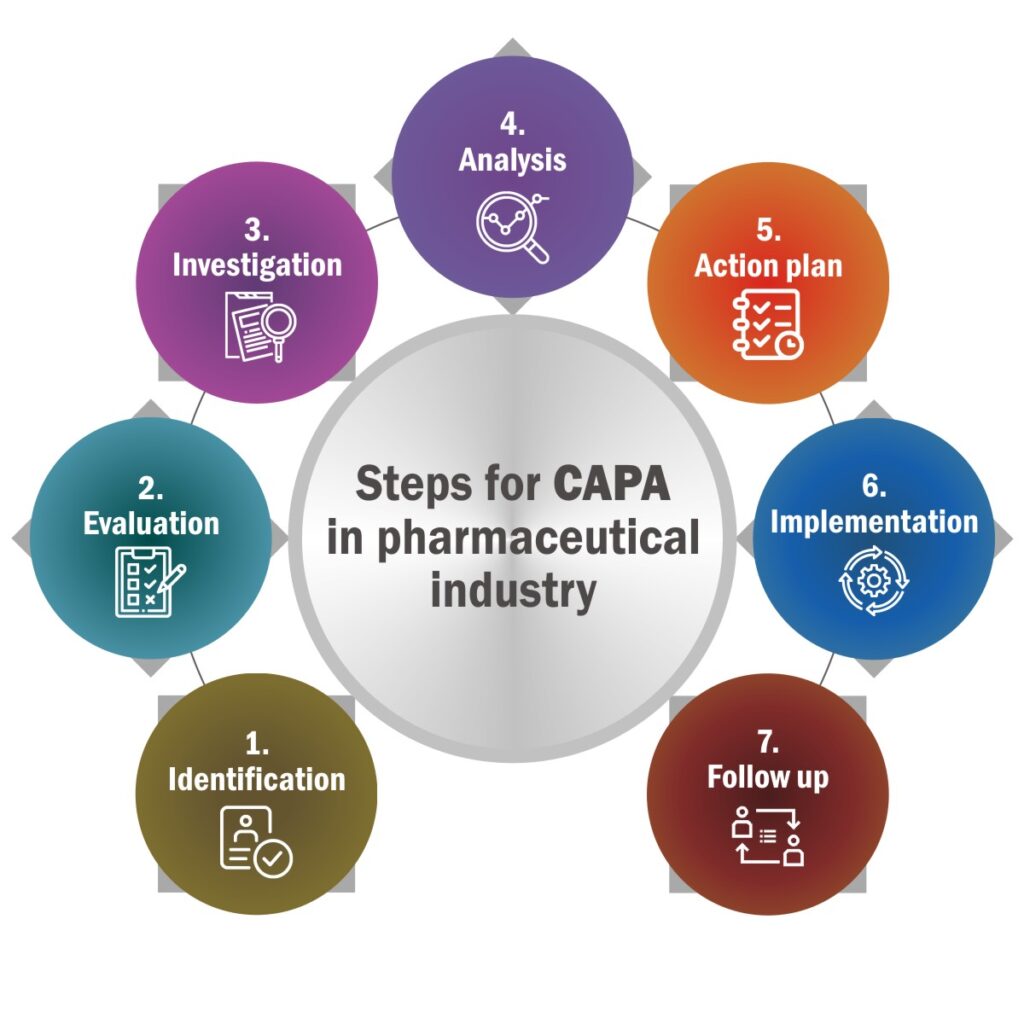
The CAPA process is a systematic, step-by-step approach to managing quality issues. Below are the key steps tailored to the cosmetics industry:

1. Identify the Issue
The first step is to detect and document any quality issue or non-conformity. Issues in cosmetics can arise from various sources, such as:
Customer complaints (e.g., skin irritation from a moisturizer).
Internal audits revealing deviations from GMP standards.
Production issues, like inconsistent batch mixing or defective packaging.
Regulatory inspections identifying non-compliance.
Example: A customer reports that a batch of foundation causes skin redness. The issue is documented with details like batch number, date, and customer feedback.

2. Contain the Problem
Immediate action is taken to limit the impact of the issue. This may involve:
Quarantining affected products.
Halting production or distribution.
Notifying retailers or consumers.
Example: The manufacturer quarantines all foundation batches from the same production line and pauses distribution until the issue is investigated.

3. Perform/SD-3 Conduct Root Cause Analysis
Root cause analysis (RCA) identifies the underlying cause of the issue. Common tools include:
5 Whys: Asking “why” repeatedly to drill down to the root cause.
Fishbone Diagram: Categorizing causes (e.g., materials, processes, equipment).
Pareto Analysis: Prioritizing the most significant causes.
Example: RCA reveals that the foundation’s redness was caused by an unlisted allergen in a new ingredient batch.

4. Develop Corrective Actions
Corrective actions address the root cause to eliminate the issue. These actions should be:
Specific: Clearly defined (e.g., update ingredient sourcing protocols).
Measurable: Trackable via metrics or audits.
Achievable: Feasible within resources and timelines.
Relevant: Directly tied to the root cause.
Time-bound: Completed within a set deadline.
Example: The manufacturer revises supplier quality checks to ensure allergen-free ingredients.

5. Implement Corrective Actions
Execute the corrective actions, ensuring proper communication and training for staff. Track progress to avoid delays.
Example: The supplier quality team is trained on new allergen detection protocols, and checks are implemented immediately.

6. Develop Preventive Actions
Preventive actions address potential risks to avoid similar issues elsewhere. This may include:
Process improvements (e.g., automated quality checks).
Staff training on new procedures.
Equipment upgrades to prevent errors.
Example: The manufacturer installs allergen detection sensors on all production lines.

7. Verify Effectiveness
Confirm that corrective and preventive actions have resolved the issue and prevented recurrence. This involves:
Follow-up audits.
Testing (e.g., product safety tests).
Monitoring customer feedback.
Example: Post-implementation testing shows no further allergen complaints, and audits confirm compliance.

8. Document and Close the CAPA
Thorough documentation is essential for compliance and future reference. Include:
Issue description and evidence.
Root cause findings.
Action plans and outcomes.
Effectiveness verification results.
Example: The CAPA report is archived in the QMS, and the case is closed after QA approval.

https://cosmeticgyaan.com/what-is-gmp-good-manufacturing-practices/

Best Practices for CAPA in Cosmetics
To ensure an effective CAPA system in the cosmetics industry, follow these best practices:
Use CAPA Software: Tools like MasterControl or Qualio streamline documentation, workflows, and trend analysis, ensuring compliance with ISO 22716 and FDA regulations.Train Employees: Regular training on CAPA processes fosters a quality-driven culture. Employees should know how to report issues and contribute to solutions.
Integrate with QMS: CAPA should align with other QMS processes, such as complaint handling and risk management, for a holistic approach.
Conduct Regular Audits: Proactive audits help identify potential issues before they escalate, reducing the need for corrective actions.
Leverage Data: Analyze trends from customer feedback, production data, and audits to inform preventive actions.
Engage Cross-Functional Teams: Involve quality assurance, production, and regulatory teams to ensure comprehensive problem-solving.

Real-World Example: CAPA in Action
A cosmetic company discovers that a batch of mascara causes eye irritation due to improper mixing of preservatives. Here’s how CAPA is applied:
Identification: Customer complaints trigger an investigation.
Containment: The affected batch is recalled, and production is paused.
Root Cause Analysis: The 5 Whys reveals a calibration error in the mixing equipment.
Corrective Action: The equipment is recalibrated, and operators are retrained.
Preventive Action: Automated calibration checks are added to all mixing machines.
Verification: Post-implementation testing confirms no further irritation complaints.
Documentation: The CAPA report is filed, detailing all steps and outcomes.
This process resolves the issue, prevents recurrence, and ensures compliance with GMP standards.

Challenges and Solutions
Implementing CAPA in the cosmetics industry can be challenging. Common issues include:
Resource Constraints: Small manufacturers may lack resources for robust CAPA systems. Solution: Use cost-effective CAPA software to automate processes.

Complex Investigations: Identifying root causes can be time-consuming. Solution: Train staff on RCA tools like Fishbone Diagrams and 5 Whys.
Documentation Burden: Extensive record-keeping can overwhelm teams. Solution: Adopt electronic QMS platforms for efficient documentation.

Conclusion

CAPA is a vital tool for ensuring quality, safety, and compliance in the cosmetics industry. By systematically addressing existing issues and preventing future ones, CAPA helps manufacturers deliver safe, effective products while meeting regulatory requirements. A well-executed CAPA process enhances operational efficiency, reduces costs, and builds consumer trust. By following the steps outlined—identification, containment, root cause analysis, corrective and preventive actions, verification, and documentation—cosmetic companies can create a culture of continuous improvement.
To optimize CAPA, invest in training, leverage technology, and integrate it with your QMS. Whether you’re addressing a contamination issue or preventing packaging errors, CAPA empowers you to maintain high standards and stay competitive in the fast-paced cosmetics market.