cosmeticgyaan

How to Use Hair Oil

Introduction

Hair is often considered a crown of beauty and confidence. In many cultures, hair oiling is not just a beauty routine but also a ritual passed down through generations. While modern shampoos, conditioners, and serums dominate the market, none can truly replace the nourishing effect of natural hair oil. Hair oil penetrates the scalp, strengthens the roots, and improves hair texture in ways synthetic products cannot.

Today, hair oils are available in many forms — pure natural oils, blended herbal oils, and even essential oil–infused formulas. The secret lies in knowing how to use them effectively and choosing the right ingredients for your hair type.

Table of Contents

1. Introduction

2. Why Hair Oiling is Important

3. How to Use Hair Oil Correctly

4. Major Uses of Hair Oil

5. Benefits of Regular Hair Oiling

6. 20 Natural Ingredients in Hair Oil and Their Benefits

7. Frequently Asked Questions (FAQs)

8. Conclusion

Why Hair Oiling is Important

Keeps scalp moisturized and prevents dryness

Strengthens hair follicles

Improves blood circulation in the scalp

Prevents hair thinning and split ends

Reduces stress through massaging

Promotes natural shine and smoothness

How to Use Hair Oil Correctly

Applying hair oil is not about just pouring oil on your scalp; technique matters a lot.

1. Choose the right oil based on your hair type and concern (e.g., coconut for nourishment, castor for growth, almond for shine).

2. Warm the oil slightly before application for deeper penetration.

3. Section your hair into parts for even distribution.

4. Massage gently with fingertips in circular motions for 5–10 minutes.

5. Leave the oil on for at least 1–2 hours; overnight application gives better results.

6. Wash with a mild shampoo followed by conditioner.

7. Repeat 1–2 times a week for best results.

Major Uses of Hair Oil

Prevents hair fall and breakage

Controls dandruff and scalp flakiness

Adds shine and smooth texture

Improves manageability and reduces frizz

Protects hair from pollution and sun damage

Promotes hair growth naturally

Benefits of Regular Hair Oiling

1. Stronger Hair Roots – Nourishes scalp and strengthens follicles.

2. Improved Blood Circulation – Massaging boosts nutrient delivery.

3. Stress Relief – Reduces tension and headaches.

4. Moisturization – Prevents dryness and itchiness.

5. Better Hair Growth – Encourages new, healthier strands.

6. Youthful Shine – Natural glow without synthetic serums.

7. Damage Repair – Reverses damage from styling and chemicals.

20 Natural Ingredients in Hair Oil and Their Benefits

1. Coconut Oil – Deeply nourishes, prevents protein loss, and strengthens roots.

2. Almond Oil – Rich in vitamin E, adds shine, and reduces split ends.

3. Castor Oil – Promotes hair growth, thickens strands, and prevents hair fall.

4. Olive Oil – Moisturizes dry scalp, prevents dandruff, and adds softness.

5. Jojoba Oil – Balances scalp’s natural sebum and prevents dryness.

6. Argan Oil – Repairs damage, controls frizz, and protects from UV rays.

7. Amla Oil (Indian Gooseberry) – Boosts hair growth, prevents premature greying.

8. Bhringraj Oil – Known as the “king of herbs” for hair, it treats hair fall and promotes growth.

9. Neem Oil – Treats dandruff, itchy scalp, and has antibacterial properties.

10. Tea Tree Oil – Fights fungal infections, dandruff, and scalp irritation.

11. Rosemary Oil – Stimulates circulation, encourages faster hair growth.

12. Fenugreek Oil – Prevents hair thinning and adds volume.

13. Brahmi Oil – Strengthens hair roots and reduces stress.

14. Hibiscus Oil – Repairs damaged hair and promotes thicker growth.

15. Sesame Oil – Deeply penetrates scalp, prevents greying, and nourishes.

16. Mustard Oil – Improves circulation, strengthens follicles, and prevents infections.

17. Onion Seed Oil – Rich in sulfur, reduces hair fall and supports regrowth.

18. Avocado Oil – Loaded with fatty acids, hydrates and restores shine.

19. Sunflower Oil – Lightweight oil that prevents dryness and breakage.

20. Peppermint Oil – Refreshes scalp, boosts circulation, and supports new hair growth.

Frequently Asked Questions (FAQs)

Q1. How often should I oil my hair?
Most people benefit from oiling 1–2 times a week. Excess oiling can lead to build-up.

Q2. Can I leave hair oil overnight?
Yes, leaving hair oil overnight allows deeper nourishment. Just be sure to wash it off the next morning.

Q3. Which is the best oil for hair growth?
Castor oil, rosemary oil, and amla oil are among the best for promoting natural hair growth.

Q4. Is it okay to mix different oils together?
Yes, mixing oils (like coconut + castor + almond) can enhance benefits, but balance the ratio.

Q5. Does oiling cause dandruff?
No, in fact, the right oils (like neem or tea tree) help fight dandruff. However, not washing off excess oil can sometimes worsen flakiness.

Conclusion

Hair oiling is not just a beauty step but a wellness ritual that improves scalp health, strengthens roots, and enhances hair growth naturally. With so many natural oils available — from coconut to rosemary — you can easily customize your hair oil routine based on your needs. By choosing oils enriched with natural ingredients, you give your hair the nourishment it truly deserves.

Make hair oiling a regular habit, and you’ll notice your locks becoming stronger, shinier, and healthier than ever before.

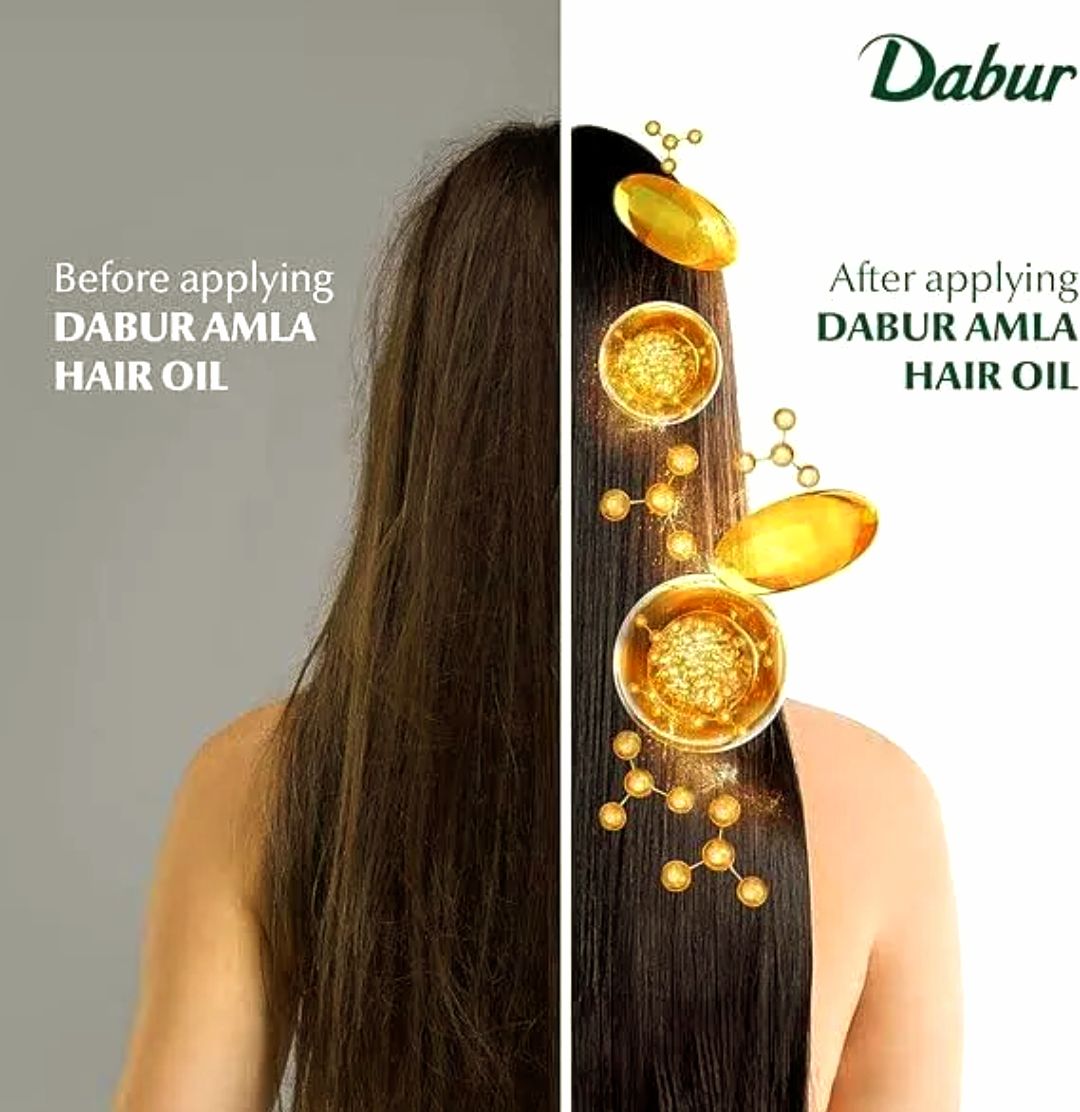
Dabur Amla Hair Oil: Complete Guide for Healthy, Strong, and Shiny Hair

Discover the benefits, uses, and effectiveness of Dabur Amla Hair Oil. Learn how and when to use it for stronger, healthier hair along with FAQs and expert tips. A comprehensive guide for hair care enthusiasts

Introduction

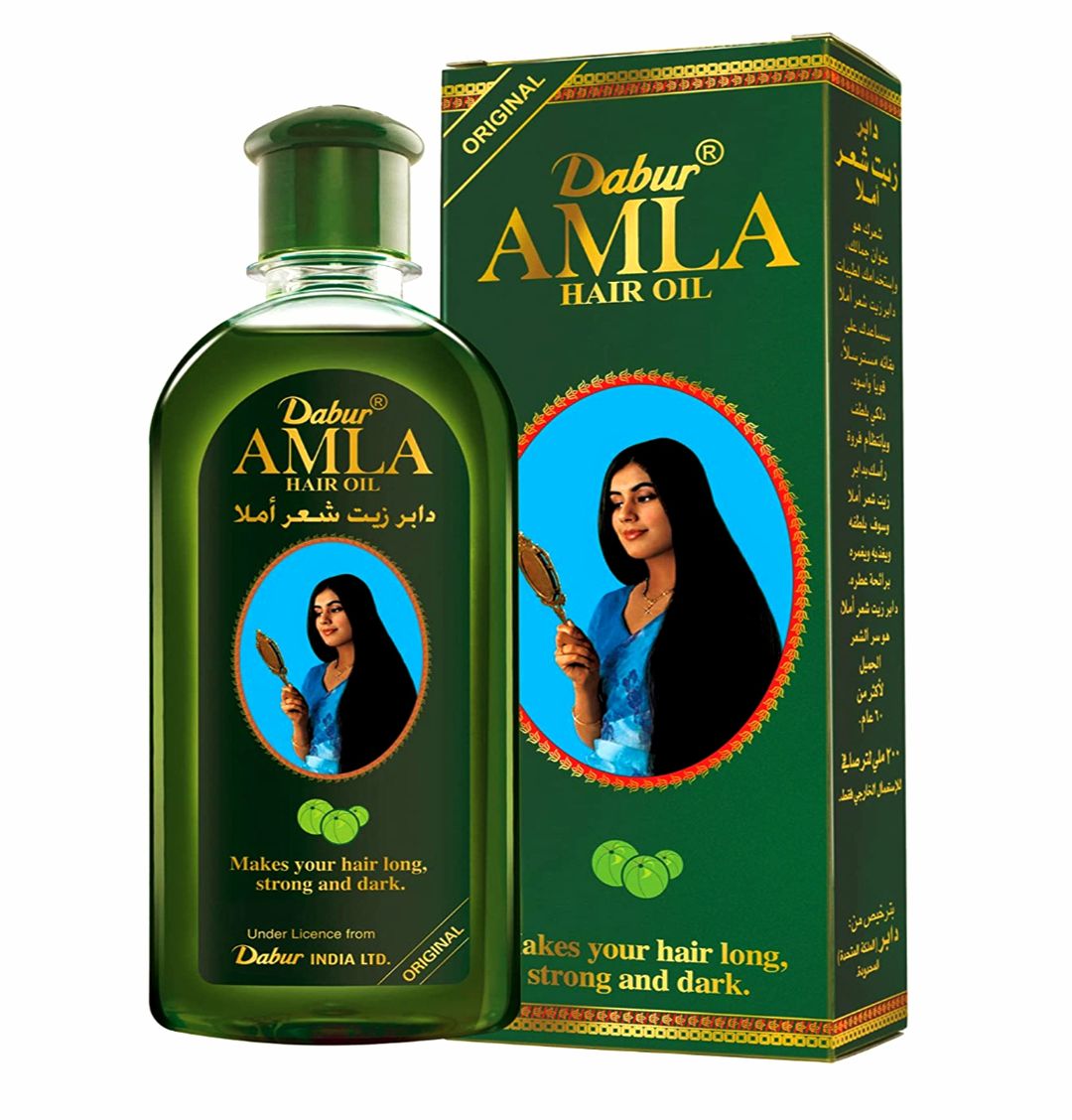
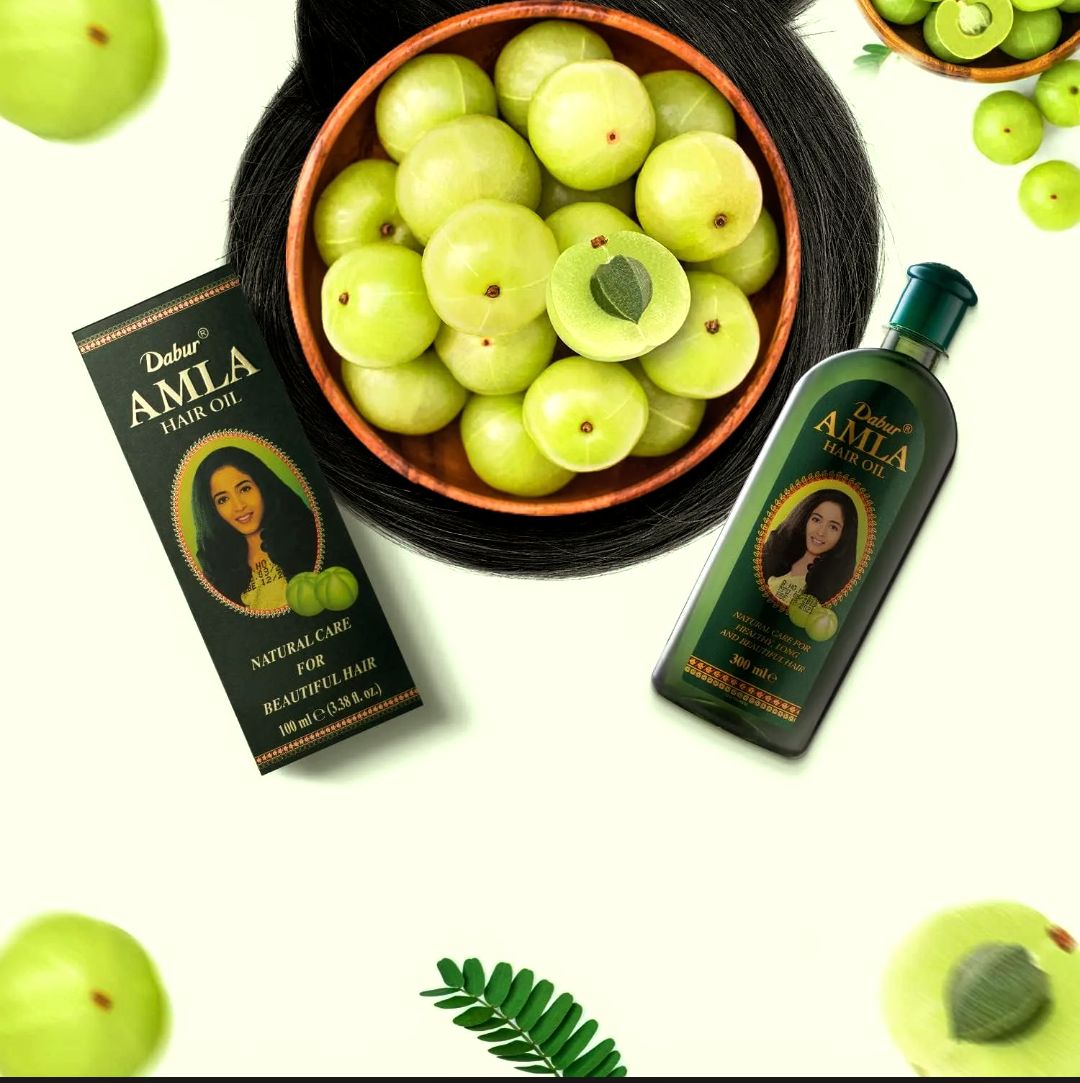
Healthy, shiny, and strong hair is something most people aspire for, but in today’s environment—filled with pollution, stress, and harmful hair products—it’s not easy to maintain. This is where Dabur Amla Hair Oil, a trusted name in Ayurvedic hair care, comes into play. Dabur Amla Hair Oil is enriched with the goodness of Amla (Indian Gooseberry) and other herbal ingredients known for their nourishing and strengthening properties. It not only helps improve hair texture but also tackles issues like hair fall, dryness, and scalp irritation.

For generations, Amla has been celebrated in Ayurvedic practices for its high vitamin C content and ability to nourish hair from the roots. Dabur has harnessed this age-old wisdom to craft a formula that ensures deep nourishment and long-lasting results.

In this blog, we’ll cover everything you need to know about Dabur Amla Hair Oil—its uses, benefits, how and when to apply it, and common FAQs—so you can make an informed choice for your hair care routine.

Table of Contents

1. What is Dabur Amla Hair Oil?


2. Ingredients and Their Benefits


3. Uses of Dabur Amla Hair Oil


4. Benefits of Regular Use


5. How and When to Apply It


6. Precautions to Keep in Mind


7. Frequently Asked Questions (FAQs)


8. Conclusion

1. What is Dabur Amla Hair Oil?

Dabur Amla Hair Oil is a premium herbal hair oil enriched with Amla extract, a powerful ingredient revered in Ayurveda. It is designed to strengthen hair strands, improve scalp health, and add natural shine to hair. Unlike chemical-laden oils, this product offers a holistic approach to hair care by combining nature’s best resources with modern processing techniques.

The oil is lightweight, non-sticky, and easy to apply, making it suitable for daily use. It is free from harsh chemicals and additives that could damage the hair, making it ideal for all hair types—be it dry, oily, curly, or straight.

2. Ingredients and Their Benefits

Amla (Indian Gooseberry)

Amla is rich in vitamin C, antioxidants, and minerals. It boosts collagen production, strengthens hair roots, and prevents premature greying.

Bhringraj (False Daisy)

Known as the “King of Herbs” for hair care, Bhringraj helps in enhancing hair growth, reducing hair fall, and improving scalp circulation.

Henna (Lawsonia inermis)

Henna is used to condition the hair, reduce dandruff, and give a natural sheen.

Jojoba Oil

This oil mimics the scalp’s natural oils and deeply nourishes hair without making it greasy.

Coconut Oil Base

Coconut oil penetrates the hair shaft, locks moisture, and prevents protein loss, which is essential for healthy hair growth.

3. Uses of Dabur Amla Hair Oil

Dabur Amla Hair Oil is versatile and can be used for multiple hair concerns:

✔ Daily nourishment – Keeps hair soft and healthy
✔ Pre-wash treatment – Reduces hair fall and dryness
✔ Scalp massage – Relieves stress and improves circulation
✔ Split-end care – Prevents hair damage and breakage
✔ Dandruff control – Soothes itchy, flaky scalp
✔ Hair growth booster – Helps maintain thickness and strength

This makes it a perfect addition to your daily or weekly hair care routine.

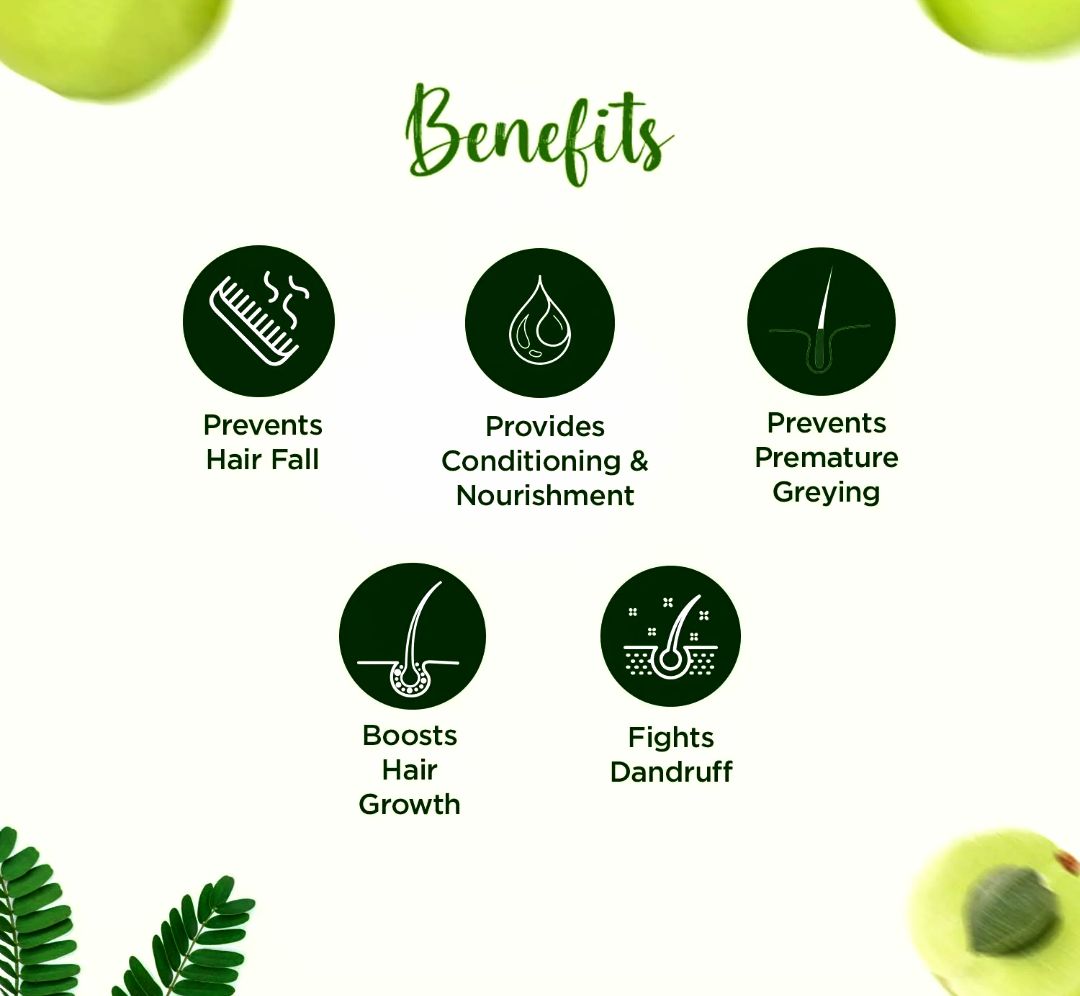
4. Benefits of Regular Use

Strengthens Hair Roots

The vitamin-rich ingredients help nourish hair roots and prevent hair fall by providing essential nutrients.

Adds Shine and Smoothness

Regular use softens hair strands, giving them a silky texture and natural gloss.

Reduces Hair Breakage

By locking moisture and strengthening hair fibers, the oil reduces split ends and breakage.

Prevents Dandruff and Itchy Scalp

The cooling properties of Amla and the conditioning effects of coconut oil soothe irritation and maintain scalp health.

Delays Premature Greying

With its antioxidant properties, Amla helps combat oxidative stress, which is one of the causes of premature greying.

Improves Blood Circulation in Scalp

Massaging the oil increases blood flow to the scalp, ensuring that hair follicles receive adequate nutrients for healthy growth.

5. How and When to Apply It

Best Time to Apply

At night: Applying the oil before sleeping allows it to work overnight, deeply nourishing your scalp and hair.

Before washing: Apply it 1–2 hours before a shampoo session for best results.

Daily or alternate days: Depending on your hair type, you can use it daily or at least 3–4 times a week.

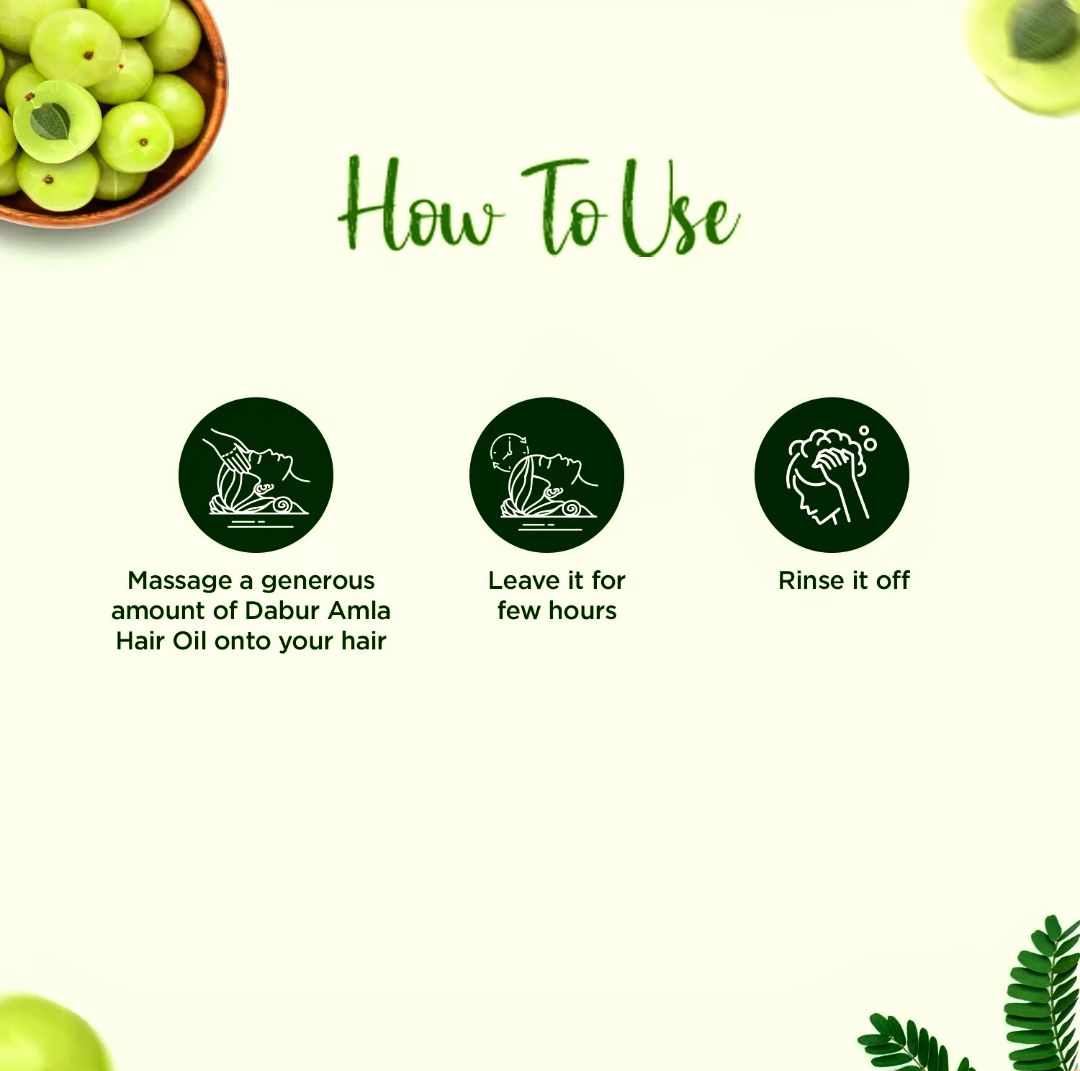
Step-by-Step Application

1. Part your hair using a comb to expose the scalp.

2. Warm a small amount of oil by placing the bottle in warm water for a few minutes (optional but recommended).

3. Apply the oil directly to the scalp using fingertips.

4. Massage gently in circular motions for 5–10 minutes to stimulate circulation.

5. Apply on hair strands from roots to tips for added nourishment.

6. Leave it on overnight or for a few hours before washing with a mild shampoo.

7. Comb through the hair once the oil is applied evenly.

Tips for Best Results

✔ Combine with a gentle shampoo like Dabur Vatika or herbal cleansers.
✔ Avoid excessive heat styling after application.
✔ Cover hair with a soft towel or cap overnight for deeper absorption.
✔ Maintain a balanced diet rich in protein, iron, and vitamins for better hair health.

6. Precautions to Keep in Mind

Perform a patch test before first use to check for allergies.

Avoid contact with eyes; if it occurs, rinse thoroughly with water.

Do not use on already greasy hair without proper washing.

People with scalp infections or skin conditions should consult a dermatologist before use.

Store in a cool, dry place away from direct sunlight to preserve effectiveness.

7. Frequently Asked Questions (FAQs)

Q1. Can Dabur Amla Hair Oil be used on all hair types?
Yes, it is suitable for dry, oily, curly, straight, and chemically treated hair types.

Q2. How long does it take to see results?
With consistent use, you may see improvements like reduced hair fall and increased shine within 3–4 weeks.

Q3. Can pregnant or breastfeeding women use this oil?
It is generally safe, but consult a healthcare provider before use during pregnancy or lactation.

Q4. Can this oil replace other hair treatments?
It can be used alongside other treatments but should not replace prescribed hair care therapies for medical conditions.

Q5. How often should I wash my hair after applying this oil?
Washing 1–2 times a week after applying oil is sufficient for most hair types.

Q6. Does it help with hair regrowth in bald patches?
It supports healthy hair follicles but may not fully reverse baldness. Consult a healthcare professional for targeted treatment.

8. Conclusion

Dabur Amla Hair Oil is more than just an ordinary hair oil—it is a holistic hair care solution inspired by Ayurveda. Its natural ingredients, especially Amla, provide deep nourishment, strengthen hair roots, reduce hair fall, and add a healthy shine to your hair. Suitable for all hair types and age groups, this oil can be seamlessly incorporated into your daily or weekly hair care routine.

With regular use, you can not only enhance the texture and appearance of your hair but also boost scalp health and prevent common hair issues like dryness, dandruff, and premature greying.

For anyone looking for a natural, effective, and affordable hair care product, Dabur Amla Hair Oil is a must-try. Pair it with a healthy lifestyle and gentle hair practices, and watch your hair transform into its healthiest self!

How to Use Shampoo with Conditioner: Unlock the Secret to Silky, Strong Hair!

Discover the ultimate guide on how to use shampoo with conditioner for healthy, shiny hair. Learn the best shampoos, top conditioners, benefits, ingredients, and expert tips for scalp care!

Table of Contents

1. Introduction

2. Why Using Shampoo with Conditioner is Essential

3. How to Use Shampoo with Conditioner – Step by Step

4. Best 5 Shampoos for Every Hair Type

5. Best 5 Conditioners for Smooth and Nourished Hair

6. How to Apply on Scalp and Hair Properly

7. Benefits of Using Shampoo and Conditioner Together

8. Important Ingredients to Look For

9. FAQs

10. Conclusion

1. Introduction

Are you tired of lifeless, dry, or frizzy hair? Do you spend hours styling your hair only to see it lose its shine within hours? Most people use shampoo and conditioner but don’t know how to apply them correctly, which prevents them from getting the full benefits.

In this blog, we’ll dive deep into the correct way to use shampoo with conditioner, why it’s important, the best products on the market, and how it can transform your hair from dull to vibrant!

2. Why Using Shampoo with Conditioner is Essential

Shampoo cleans your hair by removing dirt, oil, and impurities. However, it can also strip away natural oils, making hair dry and brittle. Conditioner helps to restore moisture, protect hair from damage, and lock in nutrients.

When used together properly, shampoo and conditioner:

Clean deeply without over-drying

Nourish and strengthen hair strands

Prevent breakage and split ends

Improve hair texture and shine

Protect hair from environmental stressors.

3. How to Use Shampoo with Conditioner – Step by Step

Step 1 – Wet Your Hair Thoroughly

Start by soaking your hair under lukewarm water. Hot water can damage hair and strip its natural oils, while lukewarm water helps open hair cuticles gently.

Step 2 – Apply Shampoo

Take a quarter-sized amount of shampoo in your palm. Apply it to the scalp and massage gently with your fingertips (not nails!) to remove buildup and dirt. Focus on the roots and avoid scrubbing harshly.

Step 3 – Rinse Well

Rinse thoroughly until all shampoo is washed out. Residue can clog pores and dull hair.

Step 4 – Apply Conditioner

Squeeze out excess water from your hair. Take conditioner (amount depends on hair length), and apply it mainly to the mid-lengths and ends where moisture is needed the most.

Step 5 – Leave It for a Few Minutes

Let the conditioner sit for 2-5 minutes. This allows it to deeply hydrate and coat the hair strands.

Step 6 – Rinse with Cool Water

Rinse with cool water to seal the hair cuticles and lock in moisture, making your hair shinier and smoother.

4. Best 5 Shampoos for Every Hair Type

✅ 1. Dove Nutritive Solutions Daily Moisture Shampoo

Great for dry and normal hair, it gently cleans without stripping moisture.

✅ 2. Pantene Pro-V Repair & Protect Shampoo

Strengthens hair from roots, helps reduce breakage and repair damage.

✅ 3. OGX Nourishing + Coconut Milk Shampoo

Perfect for frizzy hair, enriched with coconut milk and egg white proteins.

✅ 4. L’Oréal Paris Total Repair 5 Shampoo

Repairs five hair problems: dryness, dullness, roughness, split ends, and weakness.

✅ 5. Himalaya Herbals Gentle Daily Care Shampoo

Herbal and sulfate-free option, ideal for sensitive scalps and daily use.

5. Best 5 Conditioners for Smooth and Nourished Hair

✅ 1. Dove Daily Moisture Conditioner

Provides deep hydration while making hair soft and easy to comb.

✅ 2. Tresemme Keratin Smooth Conditioner

Smooths frizz and gives hair a salon-finished look.

✅ 3. OGX Renewing Argan Oil Conditioner

Restores shine and softness with argan oil’s powerful nourishment.

✅ 4. Biotique Bio Kelp Fresh Growth Nourishing Conditioner

Enriched with seaweed extract for natural hair growth and volume.

✅ 5. The Body Shop Banana Truly Nourishing Conditioner

Adds moisture and softness with banana puree and creamy textures.

6. How to Apply on Scalp and Hair Properly

Shampoo: Focus on the scalp as this is where oil and dirt accumulate. Use fingertips in a circular motion to stimulate blood flow and cleanse thoroughly.

Conditioner: Apply from the mid-shaft to ends. Avoid applying it to the roots if your hair is oily to prevent weighing it down.

Leave-on time: Allow conditioner to sit for a few minutes for best absorption, but not too long to avoid buildup.

7. Benefits of Using Shampoo and Conditioner Together

1. Deep Cleanse Without Dryness

2. Improved Hair Texture and Shine

3. Better Moisture Retention

4. Prevention of Hair Breakage

5. Enhanced Hair Growth

6. Reduced Frizz and Split Ends

7. Balanced Scalp pH

8. Protection from Heat Styling and Pollution.

8. Important Ingredients to Look For

✅ Moisturizers – Glycerin, panthenol, aloe vera

✅ Proteins – Keratin, silk proteins, hydrolyzed wheat protein

✅ Oils – Argan oil, coconut oil, jojoba oil

✅ Botanical Extracts – Green tea, chamomile, rosemary

✅ Strengthening Agents – Niacinamide, biotin

✅ pH Balancers – Citric acid, apple cider vinegar derivatives

Avoid sulfates, parabens, and artificial fragrances if you have a sensitive scalp.

9. FAQs

Q1: Can I use conditioner every day?
Yes, but only if it’s lightweight and suitable for daily use. Avoid heavy formulas that may weigh hair down.

Q2: Should conditioner be applied to the scalp?
No, conditioner is best applied to mid-lengths and ends. Applying it to the scalp may cause buildup and make hair greasy.

Q3: How long should I leave conditioner in my hair?
2 to 5 minutes is sufficient for hydration. Leaving it too long may not necessarily improve results.

Q4: Can I mix shampoo and conditioner together?
It’s not recommended. Shampoos and conditioners have different purposes, and mixing them may reduce their effectiveness.

Q5: How often should I wash my hair?
2–3 times a week is ideal for most hair types. Daily washing may strip natural oils and cause dryness.

10. Conclusion

Knowing how to properly use shampoo with conditioner can make a world of difference in your hair’s health, texture, and appearance. Whether you struggle with dryness, frizz, or hair fall, the right products combined with correct application can unlock your hair’s full potential.

Start today! Choose the right shampoo and conditioner for your hair type, follow the simple steps outlined in this guide, and embrace healthy, beautiful hair like never before!


How To Use Arata Hair Growth serum

Hair Growth Serum

Complete Guide to Using Arata Intensive Hair Growth Serum with Derma Roller

Hair fall, thinning hair, balding patches, and slow growth are concerns faced by millions of people today. Stress, hormonal imbalances, nutritional deficiencies, pollution, and harsh chemical treatments all contribute to weak hair follicles and premature hair loss.

To address these concerns, Arata’s Intensive Hair Growth Serum offers a science-backed, dermatologically tested solution that rejuvenates follicles, stimulates blood circulation, and promotes visible regrowth. When paired with a derma roller, the serum becomes even more effective, as micro needling helps improve absorption and reactivates dormant follicles.

In this detailed guide, we’ll cover:

  • Who can use Arata Hair Growth Serum

  • The science behind its clinically proven actives

  • Key natural boosters and their role

  • Complete benefits of using the serum

  • Step-by-step application with and without a derma roller

  • Safety tips, precautions, and storage

  • FAQs to clarify common doubts

By the end, you’ll know exactly how to use the serum correctly to achieve stronger, thicker, and healthier hair.

Suitable For

Arata Intensive Hair Growth Serum is designed for all scalp and hair types, making it safe and effective whether your hair is straight, curly, wavy, chemically treated, or colored.

It is especially beneficial if you are experiencing:

  • Thinning hair or receding hairlines

  • Balding patches due to weak follicles

  • Slow or stunted hair growth

  • Excessive hair fall from stress, pollution, or genetics

If your hair loss is linked to poor follicle activity, this serum provides the follicle rejuvenation your scalp needs.

Why Arata Intensive Hair Growth Serum Stands Out

Unlike cosmetic hair oils that only coat the strands, Arata’s serum targets the root cause of hair fall by working directly on the scalp. It combines three clinically studied active ingredients — Redensyl (3%), Procapil (3%), and Kopexil (5%) — with natural boosters like rice water, onion, turmeric, caffeine, and amla.

This dual action ensures:

  • Clinically proven effectiveness in reducing hair loss

  • Nutritional support for healthier, shinier, and denser hair

  • A lightweight, non-greasy texture for daily use

The Science-Backed Formula

🔬 Redensyl (3%)

Redensyl is widely known as the “hair galvanizer” in cosmetic science. It targets stem cells in the hair follicle (ORSc) and dermal papilla cells (HFDPc), which are responsible for initiating new hair cycles. Clinical trials show Redensyl can significantly increase hair density and reactivate dormant follicles.

🔬 Procapil (3%)

Procapil combines biotinyl-GHK (a vitaminated matrikine peptide) with apigenin (a natural flavonoid) and oleanolic acid. Together, they:

  • Strengthen follicle anchoring proteins

  • Block DHT (dihydrotestosterone), a major cause of androgenetic alopecia

  • Extend the anagen (growth) phase of hair

🔬 Kopexil (5%)

Kopexil, a derivative of minoxidil-like molecules, improves blood circulation in the scalp. It also prevents follicle hardening and promotes thicker, denser strands.

🌿 Natural Boosters

  • Rice Water Extract – Rich in inositol and amino acids, helps repair damaged strands

  • Onion Extract – Provides sulfur for keratin production, reducing breakage

  • Turmeric Extract – Anti-inflammatory, soothes scalp irritations

  • Caffeine Extract – Stimulates microcirculation, energizing follicles

  • Amla (Gooseberry Extract) – Packed with vitamin C and antioxidants for stronger roots

  • Aloe Vera Extract – Hydrates scalp, prevents dryness and dandruff.

Key Benefits of Arata Intensive Hair Growth Serum

With regular use, you can expect multiple benefits:

  • Reduces hair loss and thinning by reactivating follicles

  • Promotes visible regrowth in approximately 90 days*

  • Improves hair thickness and density for fuller volume

  • Strengthens roots and reduces breakage

  • Boosts scalp blood circulation

  • Balances scalp pH to create a healthy growth environment

  • Non-greasy, lightweight texture that absorbs quickly

  • Dermatologically tested & toxin-free (no parabens, sulfates, silicones, or mineral oils)

*Based on clinical studies of Redensyl, Procapil, and Kopexil. Individual results may vary.

Step-by-Step Guide: How to Use Arata Hair Growth Serum

You can use the serum in two ways — direct scalp application or in combination with a derma roller for enhanced penetration.


Method 1: Direct Application (Daily Use)

  1. Cleanse Your Scalp: Wash with a mild, sulfate-free shampoo.

  2. Dry Hair Gently: Pat with a towel. The scalp should be slightly damp.

  3. Apply Serum: Take one full dropper (≈1ml) of serum.

  4. Divide Hair into Sections: Apply directly to the scalp using the dropper.

  5. Massage: Use fingertips to massage for 3–5 minutes in circular motions.

  6. Leave Overnight: Do not rinse; allow the serum to absorb fully.

  7. Frequency: Use every night for best results.

Method 2: With Derma Roller (2–3 times a week)

Using a derma roller enhances absorption by creating tiny micro-channels in the scalp.

Steps:

  1. Sterilize the Derma Roller: Spray with 70–90% isopropyl alcohol before use.

  2. Prepare Your Scalp: Wash and dry your hair. Ensure the scalp is clean.

  3. Roll the Derma Roller:

    • Apply very light pressure.

    • Roll horizontally, vertically, and diagonally 3–4 times each.

  4. Apply Serum Immediately: Take one dropper (1ml) of serum and spread evenly.

  5. Massage: Use fingertips to ensure even absorption.

  6. Leave Overnight: Let the serum work while you sleep.

Post-care for Derma Roller:

  • Rinse with warm water and mild soap.

  • Soak in isopropyl alcohol (70–90%) for 5–10 minutes.

  • Air dry and store in a clean, dry place.

Frequency:

  • Use the serum daily.

  • Use the derma roller only 2–3 times per week.

Extra Tips for Best Results

  • Stay hydrated — dehydration can affect scalp health.

  • Reduce stress through meditation, yoga, or regular exercise.

  • Avoid excessive heat styling, harsh dyes, or chemical treatments.

  • Get enough sleep — cell regeneration for hair growth is most active during rest.

Ingredients List (Full Formula)

  • Aqua

  • Rice Water Extract

  • Aloe Vera Extract

  • Redensyl (3%)

  • Procapil (3%)

  • Kopexil (5%)

  • Glycerin

  • Xylitylglucoside, Anhydroxylitol, Xylitol

  • Maltitol

  • PEG-40 Hydrogenated Castor Oil

  • Gooseberry Extract (Amla)

  • Turmeric Extract

  • Sodium Benzoate & Potassium Sorbate

  • Coffee Extract

  • Xanthan Gum

  • Propanediol

  • Onion Extract

  • Glycine

  • Sodium Gluconate

  • Allantoin

  • Fragrance


Shelf Life

24 months from manufacturing.
Store in a cool, dry place away from direct sunlight.

Precautions

  • Conduct a patch test before first use.

  • For external use only.

  • Avoid applying to broken or irritated skin.

  • If irritation persists, stop use and consult a dermatologist.

  • Keep out of reach of children.

FAQs

Q1. How soon will I see results?
You may see reduced hair fall in 4–5 weeks. Visible regrowth usually occurs within 90 days of consistent use.

Q2. Can men use Arata Hair Growth Serum?
Yes, it is suitable for both men and womens.

Q3. Does it work for all hair types?
Yes, it’s effective on straight, curly, wavy, chemically treated, and colored hair.

Q4. Do I need a derma roller for results?
Not mandatory, but using it 2–3 times a week enhances absorption and accelerates regrowth.

Q5. Does it make the scalp oily or sticky?
No, it has a lightweight, non-greasy texture.

Q6. Is it safe for long-term use?
Yes, it’s toxin-free and dermatologically tested, making it safe for daily and long-term application.

Q7. Can I wash my hair after applying the serum?
No, it is a leave-in treatment. Apply at night and let it absorb fully.

Final Thoughts

Arata Intensive Hair Growth Serum is more than a cosmetic product — it’s a clinically proven, science-backed, and plant-powered solution for hair fall and thinning. With actives like Redensyl, Procapil, and Kopexil, combined with natural extracts like rice water, onion, turmeric, caffeine, and amla, it addresses hair concerns at the root level.

When paired with a derma roller routine, the serum’s penetration and effectiveness increase significantly, helping you achieve visible results in 3 months.

If you’re struggling with hair fall, thinning, or slow regrowth, incorporating Arata Hair Growth Serum into your daily routine could be a game-changer for your confidence and hair health.

✨ Remember: Hair wellness is a journey — combine this serum with a healthy lifestyle, nutrition, and stress management for long-lasting results.

How to use Dabur vatika shampoo

Dabur Vatika Shampoo

 Introduction

Healthy and shiny hair is something everyone desires, but environmental pollution, stress, and improper hair care routines often lead to hair fall, dryness, and dullness. Dabur Vatika Shampoo is a trusted name in herbal hair care that promises nourishment, repair, and protection. Enriched with natural ingredients, it’s designed to address multiple hair concerns while being gentle on the scalp.

Table of Contents

1. Introduction

2. Product Benefits

3. How to Use Dabur Vatika Shampoo

4. Ingredients and Their Benefits

5. Customer Reviews

6. Frequently Asked Questions (FAQs)

7. Conclusion

“Herbal ingredients used in Dabur Vatika Shampoo including amla, aloe vera, and henna.”

Product Benefits

✅ Deep Nourishment – Helps to nourish hair from root to tip using natural oils and herbs.

✅ Strengthens Hair – Reduces hair fall and breakage by improving hair health.

✅ Controls Dandruff – Contains ingredients that soothe the scalp and reduce dandruff.

✅ Adds Shine and Softness – Makes hair look glossy, smooth, and manageable.

✅ Prevents Damage – Protects against dryness, split ends, and environmental stressors.

✅ Herbal Formula – Free from harsh chemicals, parabens, and sulfates in many variants.

✅ Suitable for Daily Use – Gentle enough for regular hair care routines.

“Herbal ingredients used in Dabur Vatika Shampoo including amla, aloe vera, and henna.”

How to Use Dabur Vatika Shampoo

1. Wet your hair thoroughly with lukewarm water.

2. Apply a small amount of shampoo on the scalp and hair.

3. Massage gently using fingertips in circular motions to stimulate the scalp and encourage blood circulation.

4. Leave it for 2–3 minutes to let the nutrients work.

5. Rinse thoroughly with water.

6. Repeat if necessary for oily or very dirty hair.

7. For best results, follow with a conditioner from the Vatika range.

Ingredients and Their Benefits

“Herbal ingredients used in Dabur Vatika Shampoo including amla, aloe vera, and henna.”

Ingredient Benefits

Amla (Indian Gooseberry) Rich in vitamin C, strengthens hair roots, promotes growth, and prevents premature graying.
Reetha (Soapnut) Natural cleanser that removes dirt and excess oil without stripping moisture.
Shikakai Enhances hair softness, prevents dandruff, and reduces hair fall.
Henna Repairs damaged hair, adds natural shine, and conditions strands.
Bhringraj Nourishes the scalp and supports hair regrowth while improving texture.
Olive Oil / Coconut Oil (in variants) Deeply hydrates hair, prevents dryness, and smoothens frizz.
Vitamin E Acts as an antioxidant, protecting hair from environmental damage.

Customer Reviews

★★★★★ – “Best Herbal Shampoo!”
“I’ve been using Dabur Vatika Shampoo for over a year. It’s gentle and effective. My hair fall has reduced and my scalp feels refreshed.”

★★★★☆ – “Good for Daily Use”
“The natural ingredients are a bonus. It keeps my hair soft without weighing it down, but I wish it had a stronger fragrance.”

★★★★★ – “Perfect for Oily Hair”
“It cleanses really well and leaves my hair feeling light and fresh throughout the day.”

★★★☆☆ – “Decent but not a miracle”
“I use it because it’s chemical-free, but I didn’t see major hair regrowth. Still, it helps maintain scalp health.”

Frequently Asked Questions (FAQs)

1. Is Dabur Vatika Shampoo suitable for all hair types?
Yes, it is formulated for various hair concerns including dry, oily, normal, and damaged hair.

2. Can I use this shampoo every day?
Yes, it’s gentle and safe for daily use, but using it 3–4 times a week is sufficient for most hair types.

3. Does it contain sulfates or parabens?
Most variants of Dabur Vatika Shampoo are free from sulfates and parabens, making them safe for sensitive scalps.

“Herbal ingredients used in Dabur Vatika Shampoo including amla, aloe vera, and henna.”

4. Will it help with hair fall?
Yes, regular use strengthens hair and reduces breakage, which can help manage hair fall.

5. Can I use it along with other hair treatments?
Absolutely. It works well with conditioners, oils, and other Ayurvedic hair masks.

Conclusion

Dabur Vatika Shampoo is a reliable, herbal solution for people looking to maintain healthy, strong, and shiny hair. With natural ingredients like amla, reetha, shikakai, and bhringraj, it delivers nourishment while gently cleansing the scalp. Whether you’re dealing with hair fall, dandruff, or dryness, this shampoo provides a balanced approach to hair care without harsh chemicals. Regular use helps protect your hair from damage, making it softer, shinier, and healthier over time. If you’re searching for an affordable and effective hair care option, Dabur Vatika Shampoo is definitely worth trying.

How to Use Conditioner Correctly

“Rinse-out conditioner bottle placed in bathroom

Introduction

Hair care is not just about using the right shampoo — it’s also about knowing how to use conditioner correctly. Many people either skip conditioner or apply it the wrong way, which can leave hair greasy, heavy, or lifeless. In reality, conditioner is one of the most important steps in your hair care routine. It helps restore moisture, reduces frizz, protects from damage, and makes your hair soft and manageable. Shampoo cleans the scalp but also removes natural oils, which can make hair dry. Conditioner brings back that hydration, adds shine, and improves overall texture. Whether you have curly, straight, oily, or dry hair, applying conditioner properly can make a big difference in the health of your hair. In this blog, we’ll guide you step by step on how to use conditioner correctly, common mistakes to avoid, and tips for choosing the right type of conditioner for your hair.

Step by step guide on how to use conditioner correctly”

Why Conditioner is Essential for Hair Health

Many people underestimate the role of conditioner, but it is more than just a “bonus” step after shampooing. Conditioner is designed to:

  • Restore lost moisture after shampooing.

  • Protect the hair cuticle from damage.

  • Make detangling easier and prevent breakage.

  • Reduce frizz and improve manageability.

  • Add shine and softness.

  • Create a protective layer against pollution, sun, and heat styling.

Without conditioner, your hair may feel dry, rough, and prone to tangling. Over time, this can lead to breakage, split ends, and dullness.

Step by step guide on how to use conditioner correctly”

Types of Conditioners

Before learning how to use conditioner correctly, it’s important to understand the different types available:

1. Rinse-Out Conditioner

  • The most common type.

  • Applied after shampoo and rinsed out after 2–5 minutes.

  • Ideal for everyday use.

2. Leave-In Conditioner

  • Lightweight formula that stays in the hair.

  • Provides ongoing hydration and protection throughout the day.

  • Great for curly, dry, or frizzy hair.

3. Deep Conditioner or Hair Mask

  • Rich, intensive treatment.

  • Used once a week or biweekly.

  • Helps repair damage, dryness, or color-treated hair.

4. Co-Wash (Conditioner Wash)

  • A cleansing conditioner designed for those who skip shampoo.

  • Popular for curly or textured hair to prevent dryness.

“Rinse-out conditioner bottle placed in bathroom

How to Use Hair Serum for Women: A Complete Guide

Step-by-Step Guide: How to Use Conditioner Correctly

Step 1: Wash Your Hair with Shampoo

Always begin with shampoo to remove oil, dirt, and buildup. Conditioner works best on clean hair because it can penetrate the strands more effectively.

Step 2: Squeeze Out Excess Water

After rinsing out shampoo, gently squeeze water out of your hair. Overly wet hair will dilute the conditioner, reducing its effectiveness.

Step 3: Take the Right Amount

  • Short hair: a coin-sized amount.

  • Medium-length hair: two coin-sized amounts.

  • Long or thick hair: a palm-sized amount.

Using too much can make hair greasy, while too little won’t give enough hydration.

Step 4: Apply to Mid-Lengths and Ends

Avoid the scalp (unless you’re using a scalp-specific conditioner). Focus on the mid-lengths and ends where hair is driest and most damaged.

Step 5: Distribute Evenly

Use your fingers or a wide-tooth comb to spread conditioner evenly through your hair. This ensures every strand is coated.

Step 6: Let It Sit

Leave the conditioner on for 2–5 minutes for rinse-out types, or as directed. Deep conditioners may require 10–20 minutes. This allows the product to absorb properly.

Step 7: Rinse Thoroughly

Rinse with lukewarm or cool water. Hot water can strip moisture, while cool water seals the cuticle and adds shine.

How Often Should You Use Conditioner?

  • Daily: If you have dry, curly, or frizzy hair.

  • Every wash: For normal to slightly oily hair.

  • Once or twice a week: For very fine or oily hair (use lightweight formulas).

Consistency matters. Skipping conditioner too often can lead to dryness and long-term damage.

Common Mistakes When Using Conditioner

  1. Applying to the Scalp – This can make hair greasy and weigh it down.

  2. Using Too Much Product – Leads to buildup and heaviness.

  3. Rinsing Too Quickly – Not giving conditioner time to work.

  4. Not Rinsing Enough – Leaving residue that causes dullness.

  5. Using the Wrong Formula – Lightweight vs. rich conditioners matter depending on hair type.

How to use conditioner correctly for shiny healthy hair

Choosing the Right Conditioner for Your Hair Type

For Fine or Oily Hair

  • Use lightweight, volumizing formulas.

  • Avoid heavy creams and oils.

For Dry or Damaged Hair

  • Choose rich, moisturizing conditioners with shea butter, keratin, or argan oil.

  • Deep condition weekly.

For Curly or Frizzy Hair

  • Go for hydrating and anti-frizz conditioners.

  • Leave-in products work well for defining curls.

For Color-Treated Hair

  • Use color-safe conditioners.

  • Look for UV protection and strengthening ingredients.

Benefits of Using Conditioner Correctly

  • Softer, shinier hair.

  • Reduced breakage and split ends.

  • Easier detangling.

  • Protection against styling tools.

  • Long-term improvement in hair strength and elasticity.

Expert Tips for Maximum Results

  • Always comb conditioner through with a wide-tooth comb.

  • Alternate between rinse-out and deep conditioner for best results.

  • Don’t skip conditioner, even if your hair is oily — just use a lightweight version.

  • Apply leave-in conditioner before heat styling for protection.

  • Use sulfate-free shampoos to retain conditioner’s benefits longer.

Frequently Asked Questions (FAQ) About Using Conditioner

1. Can I use conditioner every day?

Yes, you can use a lightweight conditioner daily, especially if your hair is dry, curly, or frizzy. For oily or fine hair, stick to every wash or 2–3 times a week.

2. Should I apply conditioner on the scalp?

No, unless it’s a scalp-specific conditioner. Regular conditioner should be applied only to the mid-lengths and ends to avoid greasiness.

3. How long should I leave conditioner in my hair?

Leave regular conditioner for 2–5 minutes. Deep conditioners or masks should stay for 10–20 minutes, depending on the product instructions.

4. Can conditioner damage my hair?

No, but overusing or not rinsing properly can cause buildup, making hair look greasy or heavy.

5. What’s the difference between conditioner and hair mask?

Conditioner is for everyday use, while a hair mask is a deep treatment used once a week for extra nourishment and repair.

6. Is leave-in conditioner the same as regular conditioner?

No. Leave-in conditioner is lightweight and designed to stay in your hair, while rinse-out conditioner must be washed off.

7. Do men need to use conditioner?

Yes! Conditioner is important for all hair types and genders. It keeps hair soft, manageable, and prevents dryness.

8. Can I skip shampoo and only use conditioner?

Yes, this is called “co-washing,” popular for curly or textured hair. However, shampooing is still necessary occasionally to remove buildup.

9. What type of conditioner is best for oily hair?

Choose lightweight, volumizing conditioners that won’t weigh hair down. Avoid heavy creams or oils.

10. Should I rinse conditioner with cold or warm water?

Use lukewarm or cool water. Warm water opens the cuticle, and cool water helps seal it, locking in shine and moisture.

Conclusion

Conditioner isn’t just an optional step — it’s essential for maintaining strong, shiny, and healthy hair. By understanding your hair type, choosing the right product, and applying it correctly, you can transform your hair care routine. Remember: focus on the mid-lengths and ends, leave it on long enough to absorb, and rinse properly. Whether you have fine, oily, curly, or color-treated hair, conditioner will keep your strands nourished and protected. With the right technique, your hair will not only look better but also stay healthier in the long run.


How to Use Shampoo or Conditioner

Introduction

We all dream of glossy, silky, and manageable hair. But here’s the shocking truth— most people don’t know how to use shampoo or conditioner properly. That’s why even after buying expensive hair care products, your hair often looks dull, frizzy, or lifeless.

The way you wash your hair directly impacts your hair health. If done wrongly, it can lead to dryness, dandruff, hair fall, and split ends. If done correctly, it can transform your hair into something that looks like it just came out of a salon session.

How to Use Shampoo or Conditioner

In this detailed guide, we will uncover:

  • The right way to shampoo your hair

  • How to use conditioner for maximum results

  • Common mistakes and myths that damage your hair

  • Smart tips professionals follow (and don’t tell you!)

  • How to choose shampoo and conditioner for your specific hair type

By the end of this blog, you’ll know exactly how to give your hair the care it deserves.

1. Why Shampoo Alone Is Not Enough

Shampoo is essential for cleaning, but that’s just half the story. Shampoo removes dirt, sweat, oils, and product build-up from the scalp. Without shampoo, your scalp pores clog and cause dandruff or excessive oil.


Charcoal face wash se kya hota hai 

But there’s a hidden problem: shampoo alone also strips away natural oils. This is where conditioner comes to your rescue. Conditioner rehydrates, smoothens, and protects your hair shaft after the cleansing process.

⚡Golden rule:
Shampoo = Cleansing. Conditioner = Protection. You need both!

2. How to Use Shampoo (Step-by-Step)

Step 1: Wet Your Hair Properly

Always start with lukewarm water. It opens hair cuticles, loosening dirt and oil. Avoid hot water—it dries out your hair.

Step 2: Dilute Shampoo Before Applying

Never pour shampoo straight onto your scalp. Instead, take a coin-sized amount, mix it with water in your palm, and then apply. This ensures even spread and prevents product overload.

Step 3: Focus on the Scalp, Not the Ends

Massage shampoo gently into the scalp only. Your scalp produces oils, while your ends simply collect buildup. Ends will get cleaned naturally when you rinse.

How to Use Shampoo or Conditioner

Step 4: Gentle Massage, No Scratching

Use your fingertips (not nails) in circular motions. Scratching the scalp can cause micro-cuts and irritation.

Step 5: Rinse Thoroughly

Shampoo residue left behind = dandruff, itchiness, and hair fall. Always rinse until your hair feels squeaky clean.

How to use face wash for oily skin


3. How to Use Conditioner (Step-by-Step)

Step 1: Remove Excess Water

After shampooing, squeeze out extra water. Conditioner works best when hair is damp, not dripping wet.

How to Use Shampoo or Conditioner

Step 2: Apply from Mid-Length to Ends

Never apply conditioner to the scalp—it can clog pores and make the scalp greasy. Start from mid-length and apply until the tips.

Step 3: Leave It On for 2–3 Minutes

Allowing the conditioner to absorb gives your hair maximum hydration.

Step 4: Rinse with Cold Water

Cold water helps seal the cuticle, locking in shine and smoothness.

4. Common Mistakes People Make

Here are the most damaging mistakes that are ruining your hair every wash day:

  • Using too much shampoo, thinking “more means cleaner”

  • Skipping conditioner or using it only once in a while

  • Applying conditioner on the scalp instead of hair lengths

  • Washing with hot water daily

  • Washing hair every day (bad for scalp health)

  • Using shampoo + conditioner 2-in-1 products (they rarely work effectively!)

5. How Often Should You Wash Your Hair?

  • Oily hair/scalp: Every alternate day

  • Normal hair: 2–3 times a week

  • Dry/curly hair: Once or twice a week

👉 Remember: By over-washing, you strip natural oils. By under-washing, you risk buildup and dandruff. Balance is the key.

How to Use Shampoo or Conditioner

6. Choosing the Right Shampoo & Conditioner

  • Dry & Damaged Hair → Moisturizing shampoo + Hydrating conditioner (look for shea butter, argan oil)

  • Oily Scalp → Gentle clarifying shampoo + Lightweight conditioner

  • Dandruff/Itchy Scalp → Anti-dandruff shampoo (zinc, ketoconazole) + Calming conditioner

  • Colored or Treated Hair → Sulfate-free shampoo + Color-protect conditioner

Always check labels. Avoid shampoos loaded with harsh sulfates, parabens, and too much silicone.

7. Myths Busted!

❌ Myth 1: Conditioner causes hair fall.
✔️ Truth: Conditioner on the scalp can, but when used only on lengths, it actually strengthens hair.

❌ Myth 2: Shampoo daily keeps hair healthy.
✔️ Truth: Daily shampoo strips oils, weakening roots.

❌ Myth 3: Any shampoo is okay for everyone.
✔️ Truth: Hair needs differ—choose products based on scalp and hair type.

❌ Myth 4: Cold water alone can clean your hair.
✔️ Truth: Hair needs proper cleansing agents (shampoo).

8. Bonus Pro Tips (Salon Secrets!)

  • Always comb hair before shampooing to reduce tangling.

  • Double shampoo if you have heavy styling product buildup.

  • Add a deep conditioning mask once a week for extra hydration.

  • Finish washing with a cold rinse for glossy shine.

  • Pat dry with a microfiber towel instead of rubbing aggressively.

Conclusion

Your hair is your crown—and you wear it every day. Learning how to use shampoo or conditioner correctly can completely transform the health and beauty of your hair.

To recap:

  • Shampoo is for cleansing, conditioner is for protection.

  • Focus shampoo on the scalp, conditioner on the lengths.

  • Avoid hot water, over-washing, and product misuse.

  • Choose products based on YOUR hair type, not someone else’s.

Follow these steps, avoid the common mistakes, and you’ll notice a dramatic change. Your hair will feel softer, shinier, and healthier—exactly what you’ve always wanted.


charcoal face wash se kya hota hai full details

Charcoal face wash se kya hota hai

Charcoal Face Wash  Kya Ye Skin ke Liye Useful Hai?

🌟 Introduction_

Skincare ke world me ek ingredient bahut zyada popular ho raha hai – Charcoal Face Wash. Har brand apni product range me ise include kar raha hai aur log bhi isse use karne ke liye excited hote hain. Lekin asli sawal ye hai ki Charcoal Face Wash lagane se skin par kya असर होता है?

Charcoal, especially Activated Charcoal, apni absorbing power ke liye famous hai. Ye skin ke pores ke andar ghus kar dust, oil aur pollution particles ko kheench kar nikal deta hai. Isi wajah se ise “skin detoxifier” bhi kaha jata hai, kyunki ye skin ko deeply clean karke fresh aur glowing banata hai.

Charcoal face wash bottle for deep cleansing and glowing skin"

🧴 Charcoal Face Wash Kya Hota Hai?

Charcoal Face Wash ek cleanser hai jisme Activated Charcoal particles mix hote hain. Activated charcoal ko high heat se process karke banaya jata hai jisse iski surface bahut porous (छिद्रदार) ho jaati hai.

Ye pores ek magnet ki tarah kaam karte hain aur skin ke andar se:

Excess Oil

Dead Skin Cells

Pollution ke particles

Dirt & Impurities

sabhi ko attract karke skin ko clean kar dete hain.

🌟 Charcoal Face Wash ke Major Benefits

1. Excess Oil Control kare
Oily skin walo ke liye best – ye face se extra oil ko absorb karke skin ko oil-free aur fresh banata hai.

2. Deep Cleansing kare
Ye sirf upar se hi nahi balki pores ke andar tak ghus kar impurities ko unclog karta hai.

Charcoal face wash se kya hota hai

3. Acne aur Pimples kam kare
Jab pores clean rahte hain to pimples aur blackheads naturally kam ho jaate hain. Acne-prone skin ke liye helpful hai.

4. Pollution Protection
Roz ka pollution skin par chipak jata hai, charcoal face wash ise detoxify karke clear kar deta hai.

5. Instant Freshness & Glow
Use karne ke turant baad skin clean, smooth aur glowing lagti hai.

6. Blackheads aur Whiteheads ko Reduce kare
Charcoal impurities ko soften karke blackheads aur whiteheads ko remove karne me help karta hai.

7. Skin Detoxifier
Ek natural detox agent hone ki wajah se ye skin ko andar se saaf karta hai.

8. Unisex Product
Men aur women dono ke liye equally effective hai.

9. Skin Balance kare
Agar sahi formulation use ho to dryness kam hoti hai aur skin hydrated feel karti hai.

10. Daily Skincare Routine me Fit
Din me ek ya do baar use karne par skin naturally healthy dikhti hai.

Charcoal face wash se kya hota hai

https://cosmeticgyaan.com/%f0%9f%a7%bc-clean-and-clear-face-wash-lagane-se-kya-hota-hai/

🧼 Charcoal Face Wash Kaise Use Karein?

1. Sabse pehle face ko halka sa paani se wet karein.

2. Palm par thoda sa face wash nikaal kar face par lagayein.

3. Gentle circular motion me 30 seconds tak massage karein.

4. T-zone aur nose area par extra focus karein (yaha oil zyada hota hai).

5. Normal paani se wash karke soft towel se pat dry karein.

6. Dry skin wale log turant moisturizer apply karein.

Charcoal face wash se kya hota hai


👉 Best results ke liye ise subah aur raat ko use karna sahi hai.

⚠️ Charcoal Face Wash Use Karne Ki Savdhaniyan

Dry skin walo ke liye roz use karna suitable nahi, week me 3–4 baar hi best hai.

Sensitive skin par use karne se pehle patch test zaroor karein.

Overuse na karein, warna skin ke natural oils bhi nikal jaate hain.

Ye product kids ke liye recommended nahi hai.

Charcoal face wash se kya hota hai

❓ FAQs – Frequently Asked Questions

Q1. Kya Charcoal Face Wash oily skin ke liye best hai?
👉 Haan, ye excess oil ko remove karke skin ko fresh aur balanced banata hai.

Q2. Dry skin wale ise use kar sakte hain?
👉 Haan, lekin limited use karein aur moisturizer ka sath lena zaroori hai.

Q3. Kya pimples completely thik ho jaate hain isse?
👉 Ye pimples ko kam karta hai, lekin severe acne me dermatologist ki salah lena zaroori hai.

Q4. Kya Charcoal Face Wash daily use ho sakta hai?
👉 Oily skin walo ke liye daily use safe hai, lekin dry skin walo ke liye alternate days better hain.

Q5. Kya men bhi ise use kar sakte hain?
👉 Bilkul! Ye unisex product hai jo har skin type ke liye beneficial ho sakta hai.

Charcoal face wash se kya hota hai
💧 “Glow ka Secret — Top 10 Cosmetic Face Wash jo karein Deep Clean & Skin Bright!”

📝 Conclusion

Charcoal Face Wash ek powerful natural cleanser hai jo skin se oil, dirt aur pollution ko nikal kar face ko fresh aur glowing banata hai. Agar aapki skin oily ya acne-prone hai to ye aapke skincare routine ka best part ban sakta hai.

Bas dhyaan rakhein – apni skin type ke hisaab se use karein. Oily skin ke liye daily use best hai, par dry aur sensitive skin ke liye limited usage hi safe hai.

👉 Agar aapko pollution aur oil se skin dull lagti hai, to Charcoal Face Wash ek perfect solution ho sakta hai.

How to Use Face Wash for Oily Skin

Introduction

Oily skin is one of the most common skin types, yet also one of the trickiest to manage. If you have oily skin, you’re probably familiar with problems like excess shine, clogged pores, acne breakouts, and an uneven complexion. While genetics and lifestyle play a role, the foundation of clear and balanced skin starts with the right cleansing routine.

Using a face wash specifically designed for oily skin can make a world of difference. Unlike regular soap or random cleansers, a proper face wash helps remove excess oil, dirt, and impurities without stripping away your skin’s natural moisture barrier. But here’s the catch—many people don’t know how to use face wash correctly, which often leads to dryness, irritation, or even more oil production.

This guide will walk you through everything you need to know about using face wash for oily skin—from why it matters to step-by-step instructions, expert tips, and the best skincare practices to keep your skin fresh, healthy, and shine-free.

What Is Face Wash and Why It Matters for Oily Skin

A face wash is a specially formulated cleanser designed to clean your facial skin gently but effectively. Unlike harsh soaps that can disrupt your skin’s natural balance, a face wash is milder, pH-balanced, and often enriched with ingredients tailored to different skin concerns.

For oily skin, face washes are designed to:

  • Remove excess sebum (oil).

  • Prevent clogged pores and breakouts.

  • Keep skin feeling fresh without over-drying.

  • Maintain the skin’s natural protective barrier.

Why You Shouldn’t Use Regular Soap on Oily Skin

One of the most common mistakes people with oily skin make is using regular bar soap. While it may give a “squeaky clean” feeling, it actually harms your skin in the long run.

Here’s why soap is bad for oily skin:

  • High pH (9–10): Disrupts skin’s natural pH (4.5–6.5).

  • Over-drying effect: Strips natural oils, causing skin to produce even more oil.

  • Irritation: Can lead to redness, tightness, and sensitivity.

  • Breakouts: Harsh ingredients may trigger acne.

On the other hand, a good oily-skin face wash maintains balance while tackling excess oil gently.

Types of Face Wash for Oily Skin

When choosing a face wash, it’s important to know the different types available:

1. Foaming Face Wash

  • Creates a light lather.

  • Best for very oily and acne-prone skin.

  • Helps deep clean pores.

2. Gel-Based Face Wash

  • Lightweight and refreshing.

  • Controls oil without over-drying.

  • Ideal for daily use.

3. Exfoliating Face Wash

  • Contains small beads or acids (like salicylic acid).

  • Removes dead skin cells and unclogs pores.

  • Use only 2–3 times a week to avoid irritation.

4. Clay or Charcoal Face Wash

  • Absorbs excess oil.

  • Detoxifies skin by drawing out impurities.

  • Great for evening use.

Step-by-Step Guide: How to Use Face Wash for Oily Skin

Step 1: Prepare Your Skin

  • Wash your hands to avoid transferring bacteria.

  • Splash your face with lukewarm water (not hot, not cold).

Step 2: Apply the Face Wash

  • Squeeze a pea-sized amount onto your palm.

  • Rub your hands gently to activate the formula.

Step 3: Massage Gently

  • Using fingertips, massage in circular motions.

  • Focus on oily areas like the T-zone (forehead, nose, chin).

  • Avoid scrubbing too hard—it can irritate your skin.

Step 4: Rinse Thoroughly

  • Rinse with lukewarm water until all product is gone.

  • Make sure no residue remains, especially around the nose and jawline.

Step 5: Pat Dry

  • Use a clean, soft towel.

  • Gently pat—don’t rub—to avoid irritation.

Step 6: Follow Up with Moisturizer

  • Always use an oil-free, non-comedogenic moisturizer.

  • Moisturizing prevents over-drying and controls oil production.

Important Tips for Oily Skin Care

1. Wash Twice a Day

Over-washing can strip your skin and increase oil production. Stick to morning and night cleansing.

2. Use Lukewarm Water

Hot water strips natural oils, while cold water doesn’t cleanse properly. Lukewarm water is ideal.

3. Don’t Over-Exfoliate

Exfoliation is good but too much can irritate oily skin. Limit to 2–3 times a week.

4. Choose Oil-Free Products

Look for labels like “oil-free,” “non-comedogenic,” and “mattifying.”

5. Avoid Touching Your Face

Hands carry bacteria and oils that can worsen acne and shine.

How to Choose the Right Face Wash for Oily Skin
  • For Acne-Prone Skin: Choose a face wash with salicylic acid or benzoyl peroxide.

  • For Sensitive Oily Skin: Go for fragrance-free, sulfate-free cleansers.

  • For Dull Oily Skin: Try a face wash with vitamin C or mild exfoliants.

  • For Men with Oily Skin: Men often have thicker, oilier skin—so gel-based or foaming cleansers work best.

http://L: /face-wash-for-acne

Common Myths About Oily Skin and Face Wash

Myth 1: “Oily skin doesn’t need moisturizer.”

❌ Wrong! Skipping moisturizer can actually trigger your skin to produce even more oil to make up for lost hydration. The key is to use a lightweight, oil-free moisturizer.

Myth 2: “The harsher the cleanser, the better.”

❌ No. Harsh cleansers strip away your skin’s natural protective oils, leading to dryness, irritation, and even more breakouts.

Myth 3: “If I wash my face more often, my skin will be less oily.”

❌ Over-washing has the opposite effect. When you wash too often, your skin compensates by producing even more oil, which can clog pores and worsen acne.

Myth 4: “Face wash alone can cure oily skin problems.”

❌ Not true. While a face wash is essential for managing excess oil, it cannot solve oily skin on its own. A complete routine with moisturizer, sunscreen, and healthy lifestyle choices is necessary for long-term results.

Myth 5: “Natural oils on the skin are always bad.”

❌ False. Your skin’s natural oils help protect and hydrate your skin. The goal of a face wash is not to remove all oil, but to balance it so your skin stays healthy without becoming greasy.

Lifestyle Habits That Support Oil Control

  • Diet: Avoid excessive fried foods; eat more fruits and vegetables.

  • Hydration: Drink at least 8 glasses of water daily.

  • Sleep: Poor sleep increases stress and oil production.

  • Exercise: Sweating helps detoxify pores, but always wash your face after workouts.

Conclusion

Managing oily skin doesn’t have to be complicated. The key is to use a gentle yet effective face wash that removes excess oil without damaging your skin’s barrier. By following the correct technique—preparing your skin, applying the right amount, massaging gently, rinsing well, and moisturizing—you can maintain a fresh, balanced, and shine-free complexion.

Pair this with healthy lifestyle choices and the right skincare products, and your oily skin will not only look better but also feel healthier.

Remember: Consistency is everything. Stick to a proper routine, and you’ll notice the difference in just a few weeks.

क्रीम लगाने से क्या फायदे होते हैं?

Acne Glow Lotion

हर कोई चाहता है कि उसकी त्वचा साफ, मुलायम और ग्लोइंग दिखे। लेकिन प्रदूषण, धूप, तनाव और बदलते मौसम के कारण त्वचा की देखभाल बेहद जरूरी हो जाती है।
स्किन केयर में क्रीम (Moisturizer, Sunscreen, Night Cream, Day cream, Lotion आदि) का अहम रोल है। सही क्रीम लगाने से न सिर्फ त्वचा हाइड्रेट रहती है बल्कि कई स्किन प्रॉब्लम्स से भी बचाव होता है।

चेहरे पर क्रीम लगाने के फायदे"

क्रीम लगाने के मुख्य फायदे

1. त्वचा में नमी बनाए रखना

क्रीम लगाने से स्किन ड्राई नहीं होती और त्वचा मुलायम बनी रहती है।

2. प्रदूषण और धूप से सुरक्षा

क्रीम त्वचा पर एक परत बना देती है, जिससे धूल, धूप और प्रदूषण से बचाव होता है।

3. मेकअप के लिए बेस्ट बेस

मॉइस्चराइज़र मेकअप प्रोडक्ट्स लगाने से पहले एक स्मूद बेस देता है।

4. एंटी-एजिंग में मददगार

एंटी-एजिंग क्रीम झुर्रियों और फाइन लाइन्स को कम करने में सहायक होती है।

https://cosmeticgyaan.com/niacinamide-in-skincare-benefits-uses-and-side-effects/

5. सन प्रोटेक्शन

सनस्क्रीन क्रीम UV किरणों से बचाव करती है और टैनिंग व स्किन कैंसर का खतरा कम करती है।

6. दाग-धब्बों में कमी

कई क्रीम्स पिगमेंटेशन, डार्क स्पॉट और मेलाज्मा जैसी समस्याओं में मदद करती हैं।

स्किन केयर रूटीन में क्रीम की भूमिका

🕙 डे-टाइम रूटीन

सुबह चेहरा धोकर हल्की मॉइस्चराइज़र लगाएं।

SPF 30+ सनस्क्रीन जरूर लगाएं।

🌙 नाइट-टाइम रूटीन

रात को चेहरा धोकर नाइट क्रीम लगाएं जिसमें हायल्यूरोनिक एसिड, सेरामाइड्स या पैप्टाइड्स हों।

यह स्किन रिपेयर और डीप हाइड्रेशन देती है।

👀 आई क्रीम

डार्क सर्कल और पफीनेस कम करने के लिए आई क्रीम इस्तेमाल करें।

✨ एक्सफोलिएशन और फेस ऑयल

हफ्ते में 2-3 बार स्क्रब करें।

जरूरत पड़ने पर हल्का फेस ऑयल लगाएं।

त्वचा के प्रकार अनुसार सही क्रीम

ड्राई स्किन

मोटी, ऑयल-बेस्ड क्रीम चुनें।

विटामिन E और सेरामाइड्स वाले प्रोडक्ट्स फायदेमंद।

ऑयली स्किन

ऑयल-फ्री, जेल बेस्ड या वाटर बेस्ड मॉइस्चराइज़र चुनें।

संवेदनशील त्वचा

बिना खुशबू और केमिकल वाली हल्की क्रीम लगाएं।

पैच टेस्ट जरूर करें।

पिंपल्स/एक्ने वाली त्वचा

नॉन-कॉमेडोजेनिक (पोर्स ब्लॉक न करने वाली) क्रीम लगाएं।

क्रीम लगाने के घरेलू उपाय

एलोवेरा जेल – त्वचा को ठंडक व हाइड्रेशन देता है।

बेसन, हल्दी, दही, ओट्स पैक – नेचुरल ग्लो के लिए।

पपीता और आलू का पैक – दाग-धब्बे और टैनिंग हटाने के लिए।

ग्रीन टी पैक – एंटीऑक्सीडेंट गुणों के लिए।

क्रीम लगाने के नुकसान (Side Effects)

गलत क्रीम से पिंपल्स और एक्ने बढ़ सकते हैं।

केमिकल वाली क्रीम से एलर्जी, जलन या लालिमा हो सकती है।

स्टेरॉयड वाली क्रीम से त्वचा पतली और डार्क हो सकती है।

डॉक्टर की सलाह के बिना दवा-बेस्ड क्रीम का इस्तेमाल न करें।

क्रीम चुनते समय ध्यान देने की बातें

अपनी स्किन टाइप के अनुसार क्रीम चुनें।

Ingredients और Expiry Date जरूर देखें।

नया प्रोडक्ट लगाने से पहले Patch Test करें।

गर्मी में हल्की और सर्दी में थोड़ी मोटी क्रीम चुनें।

बच्चों और बुजुर्गों के लिए mild व hypoallergenic क्रीम लें।

अक्सर पूछे जाने वाले सवाल (FAQ)

Q1. क्रीम कब लगानी चाहिए?
👉 सुबह नहाने के बाद और रात को सोने से पहले।

Q2. क्या क्रीम से गोरे हो सकते हैं?
👉 क्रीम से नेचुरल ग्लो और रंगत निखर सकती है, पर स्थायी गोरेपन का दावा झूठा है।

Q3. ऑयली स्किन वालों के लिए कौन सी क्रीम सही है?
👉 ऑयल-फ्री और वॉटर बेस्ड क्रीम।

Q4. नाइट क्रीम कितनी जरूरी है?
👉 नाइट क्रीम स्किन रिपेयर और डीप मॉइस्चराइजिंग में मदद करती है।

निष्कर्ष

क्रीम लगाना स्किन केयर का जरूरी हिस्सा है। लेकिन हर क्रीम हर किसी के लिए सही नहीं होती। हमेशा अपनी त्वचा के प्रकार और मौसम के अनुसार क्रीम चुनें।
सही स्किन केयर रूटीन + हेल्दी डाइट + पानी + घरेलू उपाय = ग्लोइंग और हेल्दी स्किन।